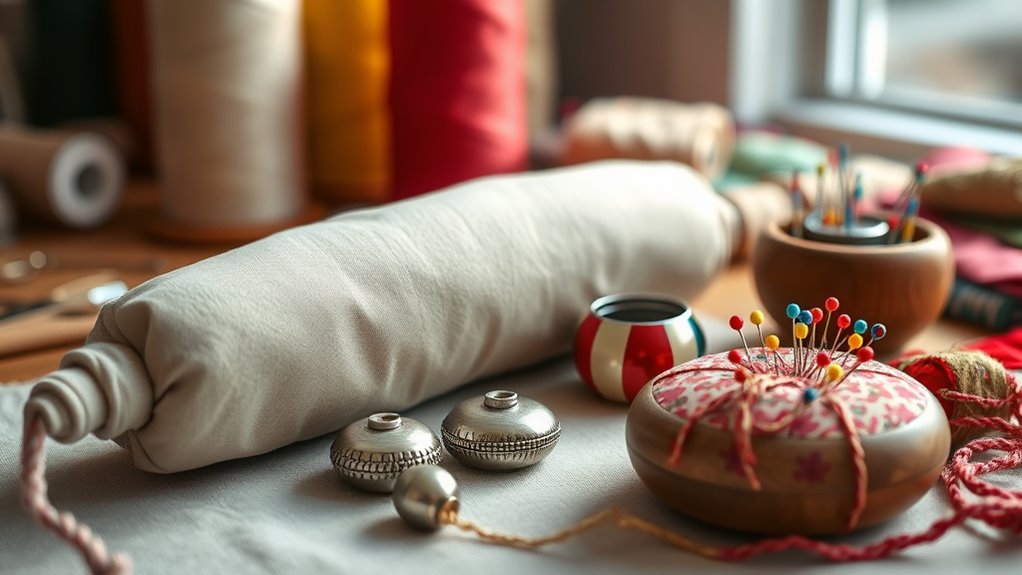

Making your own sewing tools like pressing hams and seam weights is simple and budget-friendly. You can craft a pressing ham from scrap fabric and stuffing, shaping it to fit your projects, while seam weights from fabric scraps and small weights keep fabric steady during cutting and sewing. These DIY tools are customizable and effective, helping you achieve professional results. Keep exploring, and you’ll discover even more clever ways to enhance your sewing space and techniques.
Key Takeaways
- Learn to craft a pressing ham using scrap fabric, stuffing, and fabric covering for curved seam pressing.
- Create seam weights from fabric scraps with metal or bead inserts to hold fabrics during cutting or tracing.
- Use scrap fabric and batting to make customizable, firm pressing hams tailored to specific project needs.
- Organize your sewing space with labeled containers and dedicated storage for fabrics, patterns, and notions.
- DIY sewing tools are cost-effective, customizable, and enhance workflow by improving pressing and fabric handling techniques.
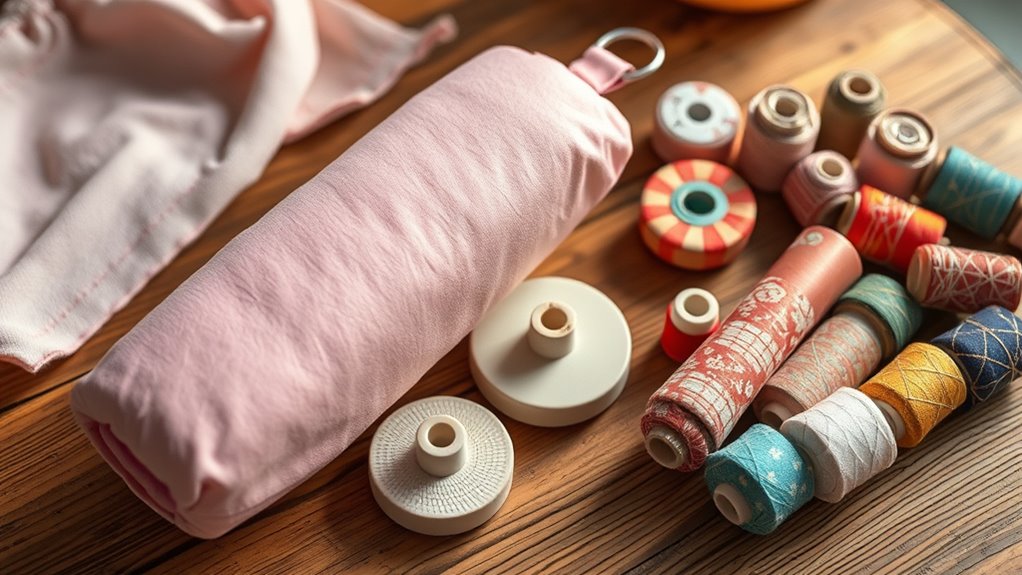
Another useful DIY sewing tool is a pressing ham, which helps you achieve sharp, professional-looking curves and seams. To make a pressing ham, you’ll need scrap fabric—preferably wool or cotton—stuffing, and a sturdy fabric cover. Cut a large oval or rounded shape from your scrap fabric, then sew it into a tube, leaving one end open. Stuff it firmly with batting or scrap fabric, then sew the open end shut. Cover the stuffed shape with a layer of fabric, secure it tightly, and you’ve got a custom pressing ham. This tool is especially useful for pressing curved seams and small areas, and making it yourself means you can tailor it to your preferred size and firmness. Color accuracy in projectors can also influence the appearance of your fabric colors when displaying your sewing projects on a screen.
Another essential DIY sewing tool is seam weights, which replace the need for pins when tracing or holding fabric layers together temporarily. To make seam weights, gather small fabric scraps—like old scraps from your fabric storage—that you no longer need. Cut them into uniform shapes, such as squares or circles, and sew or glue a small weight, like a metal washer or bead, into the center of each piece. Seal the edges securely, and you’ll have lightweight, handy seam weights. These are perfect for holding fabric in place while you trace sewing patterns or cut fabric, especially on delicate or slippery fabrics that tend to shift.
Beyond individual tools, you can also create organizational solutions that improve your sewing space. For example, using labeled jars or small containers, you can organize your sewing patterns and notions. Dedicate a storage box or drawer specifically for your fabric storage, where you keep different types of fabric sorted by weight, fiber content, or project. Label each section clearly so you can quickly find the right fabric when inspiration strikes. When you organize fabric storage efficiently, you not only keep your workspace tidy but also make pattern selection easier, allowing you to focus on creating rather than searching.
Frequently Asked Questions
What Materials Are Safest for DIY Sewing Tool Projects?
For safe DIY sewing tools, you should choose heat-resistant, non-toxic materials like cotton, wool, or felt, which are safe for pressing and handling. Always follow safety precautions and test materials first to make certain they don’t emit fumes or degrade with heat. Avoid plastics or cheap synthetic fabrics, as they can release harmful fumes. Proper material testing helps prevent accidents and ensures your homemade tools are both safe and effective.
How Can I Customize Homemade Pressing Tools for Different Fabrics?
Oh, sure, because who doesn’t love playing mad scientist with fabric types? To customize your homemade pressing tools, adjust the padding and shape based on your fabric’s delicate or tough nature. Use different fillings or covers for silk versus denim. Simply tweak the tool’s size, firmness, or heat resistance—think of it as giving your pressing ham a personality suited for every fabric adventure you undertake!
Are There Eco-Friendly Options for Making Sewing Tools at Home?
Yes, you can make eco-friendly sewing tools at home by recycling fabric scraps for padding or covers, reducing waste. Opt for biodegradable materials like natural wool, cotton, or cork for filling or external parts, which break down naturally and are safer for the environment. These sustainable choices help you create functional sewing tools while minimizing your ecological footprint, making your sewing practice both creative and eco-conscious.
How Do I Ensure the Durability of DIY Sewing Tools?
To guarantee the durability of your DIY sewing tools, focus on choosing materials with good material strength, like sturdy fabrics or heat-resistant padding. Reinforce seams and edges to improve tool longevity, and consider applying protective coatings or using heat-resistant covers. Regularly inspect your tools for wear and tear, and repair or replace parts as needed. Properly stored, your homemade tools will last longer and maintain their effectiveness over time.
Can I Make Professional-Quality Sewing Tools With Basic Supplies?
Can you really make professional-quality sewing tools with basic supplies? Absolutely, if you select the right fabric types and focus on proper tool maintenance. Using sturdy materials like wool, felt, or tightly woven fabrics can give your tools a professional feel. Regularly cleaning and storing them properly guarantees they stay in top shape. While they might not match store-bought tools exactly, with care and quality choices, your DIY creations can perform impressively.
Conclusion
By making your own sewing tools, you’re turning everyday items into trusted companions on your craft journey. Just like a garden needs tending, your skills flourish with each personalized tool you create. These DIY projects not only save money but also deepen your connection to your work. Embrace the process, knowing that your efforts are the seeds of future masterpieces. With patience and creativity, you’re planting the roots for a sewing adventure that grows stronger with each stitch.