When sewing on buttons, choose hand sewing for delicate fabrics or detailed work, as it gives you more control and precision. Use a sewing machine for sturdier fabrics or larger projects, ensuring consistent stitches and faster results. Both methods require selecting the right thread and tension to secure the button properly. Learning how each technique works can help you achieve a professional finish—continue exploring to master the best method for your fabrics and projects.
Key Takeaways
- Hand sewing offers greater control and is ideal for delicate fabrics or detailed button work.
- Machine sewing provides speed and consistent stitches, suitable for bulk or sturdy fabric projects.
- Thread selection depends on fabric type; lighter threads for delicate fabrics, heavier threads for thicker materials.
- Proper tension adjustment, whether manual or automatic, ensures secure, neat button attachment.
- Choosing between methods depends on fabric, project complexity, and desired durability.

When it comes to sewing buttons, you have two main options: doing it by hand or using a machine. Your choice depends on factors like fabric types, the project’s complexity, and the desired durability. Hand sewing offers precision, especially when working with delicate fabrics such as silk or chiffon, where delicate stitches prevent damage. Machines excel on sturdy fabrics like denim or canvas, where speed and consistency matter. No matter which method you lean toward, thread selection plays a vital role in guaranteeing your buttons stay secure and your stitches look neat.
Choosing hand or machine sewing depends on fabric type, project complexity, and durability needs.
If you opt to sew buttons by hand, you can choose a thread that matches your fabric to achieve a seamless look or select a contrasting color for decorative purposes. For lightweight fabrics, a fine, strong thread such as polyester or silk works best, as it won’t add bulk or cause puckering. For thicker or tougher materials, thicker threads like heavy-duty polyester or nylon provide extra strength. When selecting thread, consider its durability and how well it will hold up over time, especially if the button will experience frequent use or stress. Hand sewing allows you to carefully control tension and stitch placement, which is beneficial for fabrics that require gentle handling or intricate detail.
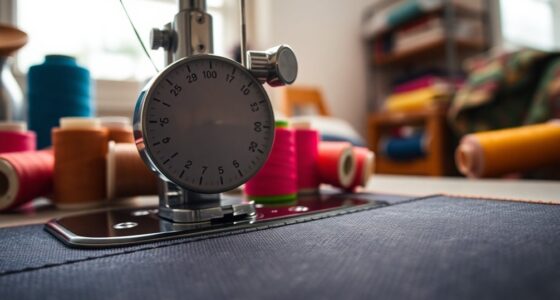
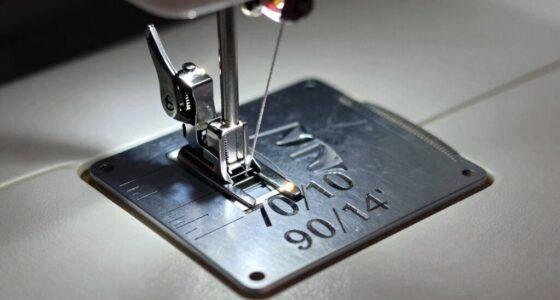
Using a sewing machine simplifies the process markedly, particularly for larger projects or garments requiring multiple buttons. Machine sewing also ensures uniformity, making it easier to produce consistent stitches and secure buttons reliably. When working with a machine, you’ll want to select a thread suitable for your fabric type—generally polyester for its strength and versatility. For heavier fabrics, a thicker or multi-ply thread can provide the necessary durability, while lighter fabrics benefit from finer threads to avoid bulk. Many sewing machines have specific settings for button sewing, which help maintain even tension and stitch length, ensuring your buttons are firmly attached without damaging the fabric.
In both methods, thread tension is essential. Too tight, and it might puck or strain the fabric; too loose, and the button could fall off prematurely. For hand sewing, adjusting tension as you go allows for precise control, whereas machine settings usually handle this automatically once correctly adjusted. Ultimately, whether you choose to sew buttons by hand or machine, understanding fabric types and selecting the right thread will determine the longevity and appearance of your finished project. Both methods have their advantages, but the key to success lies in proper thread choice and careful technique tailored to your fabric and project needs.
A good understanding of fabric types and how they interact with different threads can greatly improve the durability and appearance of your sewn buttons.
Frequently Asked Questions
Can You Sew Buttons Onto Delicate Fabrics Without Damage?
Yes, you can sew buttons onto delicate fabrics without harm. Use gentle button attachment techniques, like sewing through the button’s shanks or holes carefully, avoiding excessive tension. To maintain the fabric, choose fine needles and lightweight thread, and work slowly. Also, consider reinforcing the area with lightweight interfacing or fabric scraps before sewing. These fabric preservation tips ensure your buttons stay secure without compromising delicate material integrity.
How Do You Choose the Best Thread for Button Sewing?
Imagine your fabric as a canvas; you want the thread to blend seamlessly. When choosing thread for button sewing, opt for a thread that matches your fabric’s color for a discreet look, or pick a contrasting shade for a decorative touch. Consider thread strength and material—cotton or polyester work well. Good thread selection, color matching, and durability make certain your buttons stay secure and look great.
Are There Specific Buttons Suited Better for Hand or Machine Sewing?
Certain button types, like shank or sew-through, are better suited for hand sewing because they require precise placement or extra reinforcement. Machine sewing works well with flat, sew-through buttons that match your fabric’s thickness. Always consider fabric compatibility—delicate fabrics may need careful handling, while heavier materials can support more robust buttons. Matching button types to your fabric and project guarantees durability and a polished look, whether sewing by hand or machine.
What Are Common Mistakes to Avoid When Sewing Buttons?
Ever heard the phrase “things can go awry”? When sewing buttons, avoid common mistakes like uneven button spacing and improper thread tension. You might think tight thread is best, but it can damage fabric; too loose, and the button falls off. Keep your stitches even and consistent, ensuring the button is secure without puckering the fabric. Paying attention to these details helps your work look neat and last longer.
How Can You Reinforce Buttons for Heavy or Frequently Used Garments?
To reinforce buttons for heavy or frequently used garments, choose the right button shank type, like a shank or bar button, for added strength. Use sturdy, thick thread and adjust your thread tension for secure stitching. Sew multiple tight passes, especially around the shank, and reinforce with extra stitches. This approach guarantees your buttons stay firmly attached, even with constant use or heavy fabric.
Conclusion
Whether you choose to sew buttons by hand or with a machine, the key is to enjoy the process and guarantee your garment stays secure. Hand sewing offers precision and a personal touch, while machines can save you time for larger projects. So, why not experiment with both methods and see which one feels right for you? After all, isn’t the joy of sewing in making something uniquely yours? Happy stitching!