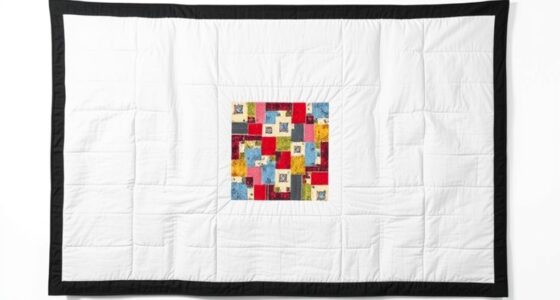
Choosing the right interfacing depends on your fabric type and project needs. Light to medium-weight fabrics like cotton or silk work best with lightweight fusible or sew-in interfacing, offering support without stiffness. For heavier fabrics like denim or canvas, opt for sturdier, often sew-in options for durability. Always match the fabric weight and support level for a professional look, and follow manufacturer instructions. Keep exploring to discover the best options for your next project.
Key Takeaways
- Choose lightweight fusible interfacing for lightweight fabrics like cotton and silk to maintain flexibility.
- Use heavier, sew-in interfacing for durable projects such as bags or coats requiring extra support.
- Always test a small fabric piece with the interfacing to check compatibility and adhesion quality.
- Match interfacing type and weight to your fabric for a professional look and proper drape.
- Follow manufacturer instructions carefully to ensure correct application and avoid issues like puckering or stiffness.
Choosing the right interfacing type is crucial for ensuring your project functions smoothly and looks professional. One of the most important considerations is fabric weight. Light to medium-weight fabrics, like cotton or silk, typically require a lightweight interfacing, which adds just enough support without overpowering delicate textures. Heavier fabrics, such as denim or canvas, need a sturdier interfacing to provide the necessary structure. Matching the fabric weight with the appropriate interfacing ensures your finished piece maintains its shape and drape, avoiding issues like stiffness or sagging.
Another key factor is understanding the different types of interfacing adhesives. Interfacing adhesives help you attach the interfacing securely to your fabric, and choosing the right adhesive depends on your project’s needs. Fusible interfacing has an adhesive layer on one or both sides that bonds when heat is applied, making it quick and easy to use, especially for projects like shirts, collars, or facings. Sew-in interfacing, on the other hand, doesn’t have adhesive; instead, you sew it into your project, offering more flexibility and durability, ideal for items that need to withstand frequent washing or wear. There’s also non-woven interfacing, which is made from fibers bonded together and can be fusible or sew-in. It’s often more stable and less prone to stretching, making it perfect for bags or structured garments.
When selecting interfacing, consider the fabric’s fiber content and how it reacts to heat and adhesives. For instance, natural fibers like cotton or linen work well with fusible interfacing, but synthetic fabrics such as polyester might require a special adhesive or a different type altogether. Testing a small piece beforehand can help you determine if the interfacing adheres properly without damaging your fabric or altering its appearance.
Additionally, think about how much support your project needs. For example, a shirt collar benefits from a lightweight fusible interfacing that adds structure without stiffness, while a bag or a coat might need a heavyweight, sew-in interfacing for maximum durability. Always refer to the manufacturer’s instructions on the interfacing packaging to ensure compatibility with your fabric and project goals. Understanding fabric compatibility can help prevent common issues like puckering or poor adhesion, ensuring a professional finish.
Frequently Asked Questions
Can I Combine Different Interfacing Types in One Project?
Yes, you can combine different interfacing types in one project, but you need to take into account interfacing compatibility and project design considerations. Mixing interfaces can enhance functionality, but make sure they work well together without causing signal issues or power conflicts. Plan your wiring carefully, check voltage levels, and test each interface separately before integrating. Doing so helps you avoid problems and ensures your project runs smoothly and efficiently.
How Does Temperature Affect Interfacing Material Performance?
Did you know that high temperatures can cause up to 10% fiber shrinkage? When exposed to heat, interfacing materials may weaken, leading to adhesive melting and reduced durability. Temperature fluctuations can compromise the bond, affecting your project’s quality. To prevent issues, always check the interfacing’s temperature tolerance, and avoid ironing or pressing at excessively high heat, ensuring your fabric stays stable and your project lasts.
Are There Eco-Friendly Interfacing Options Available?
Yes, eco-friendly interfacing options are available. You can choose biodegradable options made from natural fibers like cotton or hemp, which break down more easily in the environment. Additionally, recycled fabrics, such as polyester made from plastic bottles, provide sustainable alternatives. These options help reduce your ecological footprint while maintaining quality, so you can sew confidently knowing you’re making environmentally conscious choices.
What Are Common Mistakes to Avoid When Sewing Interfacing?
When sewing interfacing, avoid common mistakes like incorrect sewing machine settings, which can cause puckering or weak seams. Always check fabric compatibility to make sure the interfacing bonds properly without damaging your fabric. Don’t stretch or pull the interfacing while sewing, as it can distort your project. Test on scrap fabric first, and adjust your tension and stitch length accordingly to achieve a smooth, professional finish.
How Can I Test the Quality of Interfacing Before Purchasing?
You can test the quality of interfacing by feeling its durability and checking its fabric compatibility. Gently stretch a small piece to see if it maintains its shape without tearing or wrinkling. Also, stitch it to a scrap fabric similar to your project to observe how well it adheres and responds. High-quality interfacing should be durable, flexible, and compatible with your fabric for best results.
Conclusion
Choosing the right interface is like finding the perfect key for a lock—you need to match it precisely for smooth operation. Consider your project’s needs, compatibility, and future scalability to make the best choice. Whether it’s USB, HDMI, or another type, understanding their differences helps you avoid hiccups down the line. So, take your time, weigh your options, and pick the one that fits best—because the right interface is the bridge that connects your ideas to reality.