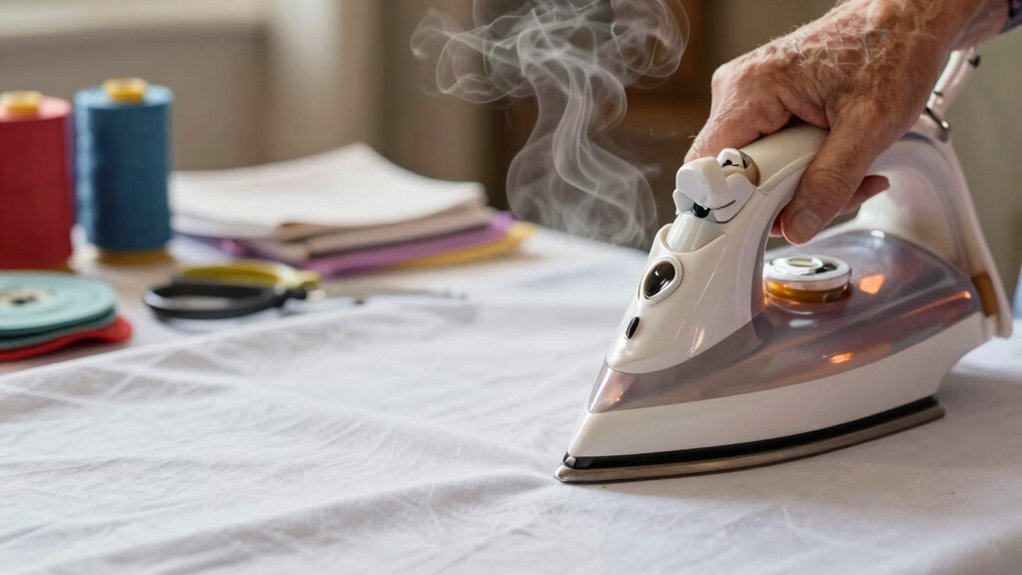

As a serious sewist, you know that managing iron recovery time is essential for achieving professional results. It helps you maintain fabric tension, prevent puckering, and create crisp seams. Proper recovery ensures your fabric reacts predictably to heat, giving you smoother, more durable finishes. Skipping this step can lead to uneven seams and distorted fabric. Keep these practices in mind, and you’ll discover how mastering recovery time elevates your sewing projects even further.

Get business pricing on tools and workshop supplies
- Business-only prices and quantity discounts
- Tax-exempt purchasing
- Multiple users, one account, clear invoices
Key Takeaways
- Proper iron recovery time maintains fabric tension and prevents puckering or distortion during pressing.
- It ensures seams stay crisp and aligned for a professional finish.
- Adequate recovery avoids fabric stretching or shrinking caused by uneven heat application.
- Managing recovery time improves pressing consistency, leading to smoother seams and better fabric control.
- It reduces rework and enhances overall sewing quality by preserving fabric integrity.
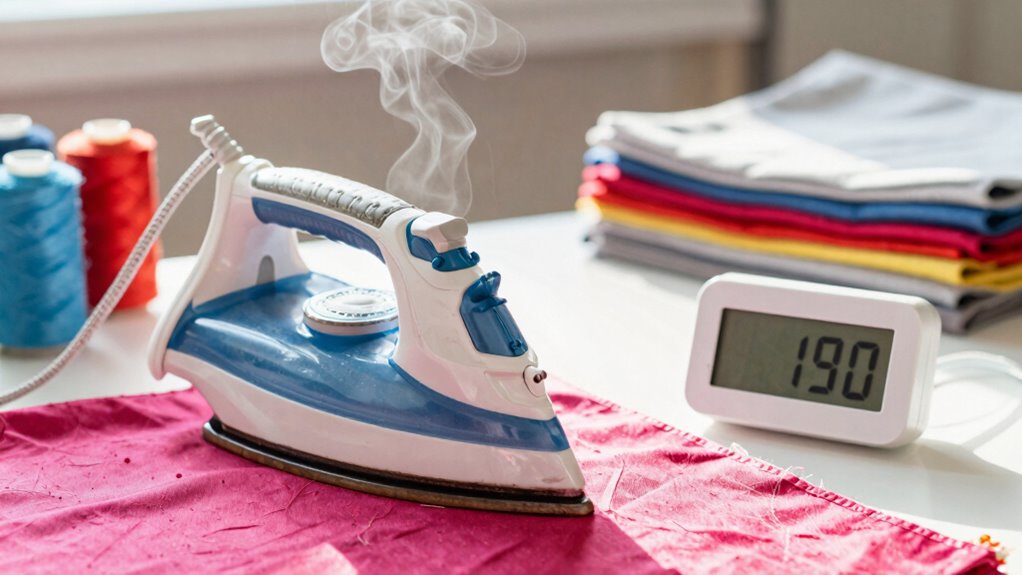
If you’re serious about sewing, you’ve probably noticed that ironing is an essential part of the process—and that it can take more time than you’d like. One of the main reasons is that proper pressing techniques are crucial to achieving professional-looking results. You know that fabric tension, if not managed well, can cause wrinkles or uneven seams, making your project look less polished. So, you invest in the right tools, set your iron correctly, and pay close attention to your pressing methods. But what really makes a difference is your iron recovery time—the pause between pressing different sections or fabrics. It might seem like a minor detail, but it’s actually a key factor in maintaining fabric tension and ensuring your seams stay crisp. Proper iron temperature control is vital to optimize recovery time and prevent fabric distortion.
When you press, your goal is to apply just enough heat and pressure to set the fibers without distorting the fabric. If you rush the process or don’t let the iron recover properly, you risk creating uneven tension or stretching the fabric. This can cause puckering or misalignment later on. That’s why understanding pressing techniques—like using a steam iron, pressing rather than sliding, and lifting the iron carefully—is so important. These techniques help you control fabric tension and keep your project looking sharp. But they also rely heavily on the iron recovery time. If your iron is still hot from a previous section, it can inadvertently soften stitches or distort fabric tension when you press again. Conversely, if it’s cooled down too much, you may not get the crisp press you need, leading to uneven seams or puckering. Additionally, understanding the fabric composition can help you better judge the ideal recovery time, as different materials react differently to heat and moisture. Proper temperature regulation also ensures you’re not wasting time waiting for the iron to cool down or reheat excessively. Moreover, having knowledge of the appropriate pressing techniques for various fabrics can further improve your efficiency and results.
Serious sewists know that managing your iron’s temperature and recovery time isn’t just about convenience; it directly impacts your fabric’s integrity and the overall quality of your work. A well-timed pause allows the iron to reach the right temperature again, ensuring consistent pressure and heat. This consistency helps you keep fabric tension even across your project, preventing issues like stretching or shrinking. It also means you can apply the correct pressing techniques each time, without guesswork. Over time, paying attention to your iron recovery time becomes second nature, allowing you to work faster and with greater precision. Ultimately, those extra seconds spent waiting for the iron to recover pay off in smoother seams, better fabric tension, and a more professional finish.
steam iron with adjustable temperature
As an affiliate, we earn on qualifying purchases.
As an affiliate, we earn on qualifying purchases.
Frequently Asked Questions
How Does Iron Temperature Affect Fabric Quality?
Higher iron temperatures can soften fabric texture, making it easier to press out wrinkles but risking damage if too hot. Conversely, lower temperatures help preserve delicate fibers and dye retention, maintaining fabric quality. You should modify iron heat based on fabric type to prevent scorching or dulling colors. Proper temperature control ensures your fabric stays smooth, vibrant, and in top condition, making your sewing projects look professional and last longer.
Can Using Steam Reduce Iron Recovery Time?
Yes, using steam can reduce your iron’s recovery time. Steam efficiency helps loosen fibers quickly, so your iron doesn’t need to work as hard to smooth fabric. Plus, steam retains heat better, allowing the iron to stay hot longer and recover faster between pressing sessions. This means less waiting and more efficient sewing, helping you complete projects faster without sacrificing fabric quality.
What Are the Best Tips for Maintaining an Iron’s Performance?
To maintain your iron’s performance, focus on proper fabric care and smart ironing techniques. Regularly clean the soleplate to prevent buildup, and always use the right temperature for each fabric type. Avoid pressing too hard, and utilize steam when appropriate to ease wrinkles. Store your iron properly, and don’t forget to empty water tanks after use. These habits keep your iron functioning efficiently and guarantee your sewing projects look polished and professional.
Does Iron Brand Influence Recovery Speed?
Iron brand definitely influences recovery speed. Some brands design irons with faster heat recovery, allowing you to iron continuously without waiting. Other brands prioritize durability or features, which might slow down recovery. You’ll notice that premium brands often invest in better heating elements, resulting in quicker recovery times. So, yes, choosing a reputable iron brand can make a significant difference in how fast your iron recovers and keeps up with your sewing pace.
How Often Should I Descale My Iron for Optimal Use?
You should descale your iron every 1-2 months to maintain ideal performance and prolong its lifespan. Regular descaling is essential for fabric care, preventing mineral buildup that can stain fabrics or cause uneven ironing. Follow your iron’s instructions and take ironing precautions, like using distilled water, to reduce mineral deposits. This routine ensures smooth gliding and consistent heat, making your sewing projects look professional and well-finished.
Conclusion
As a serious sewist, you know that every minute counts, especially when it comes to iron recovery time. Did you realize that an average iron can take up to 10 minutes to fully heat back up? That’s all the time you could spend waiting instead of sewing. Choosing an iron with quick recovery can save you hours over a project, keeping your workflow smooth and your creativity flowing. Don’t let slow recovery hold you back—invest in efficiency today.
Fall Picks
fall essentials
As an affiliate, we earn on qualifying purchases.