To stop ruining fabric with the wrong temperature, always check the care label to determine the right heat setting for your fabric. Use high for cotton, medium for silk, and low for delicate synthetics like polyester. Regularly test your iron on a hidden spot and keep it clean to guarantee consistent heat. Understanding these steps helps prevent damage. Keep going to learn more about perfecting your ironing technique and protecting your clothes.
Key Takeaways
- Always check fabric labels for recommended temperature settings before ironing.
- Use high heat for cotton and linen, medium to low for silk and wool, and low for polyester and nylon.
- Test the iron on a hidden fabric area or a heat-sensitive cloth to verify correct temperature.
- Keep the iron clean and regularly calibrate controls to prevent overheating and fabric damage.
- Use pressing cloths and steam to protect delicate fabrics from direct heat exposure.
Why Using the Right Iron Temperature Prevents Damage
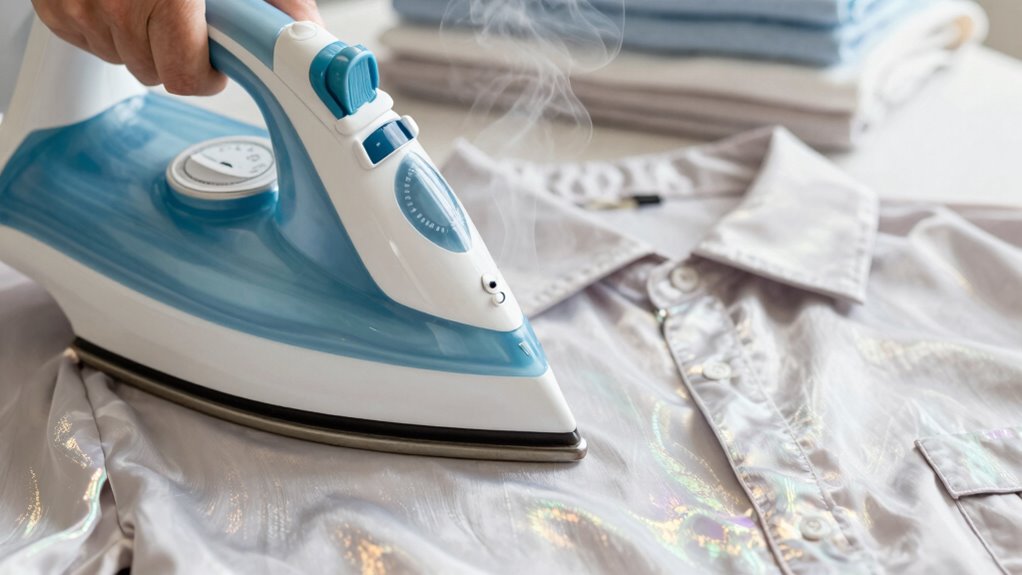
Using the correct iron temperature is essential because it helps prevent damage to your clothes. Different fabric fibers react differently to heat, and setting the right temperature minimizes the risk of heat damage. For example, delicate fibers like silk or polyester can scorch or melt if exposed to high heat, while thicker fabrics like cotton or linen need higher temperatures to smooth out wrinkles effectively. By selecting the proper temperature, you ensure that the fibers retain their strength and appearance, avoiding shiny marks, burns, or holes. Proper heat control also extends the lifespan of your clothing, keeping fabrics looking fresh and new longer. Additionally, modern energy-efficient irons can help maintain optimal temperatures while reducing energy consumption. Incorporating smart technology into your ironing routine can further optimize temperature settings based on fabric type and condition. Always pay attention to the fabric type to safeguard your clothes from unnecessary heat damage.
How to Set Your Iron for Different Fabrics
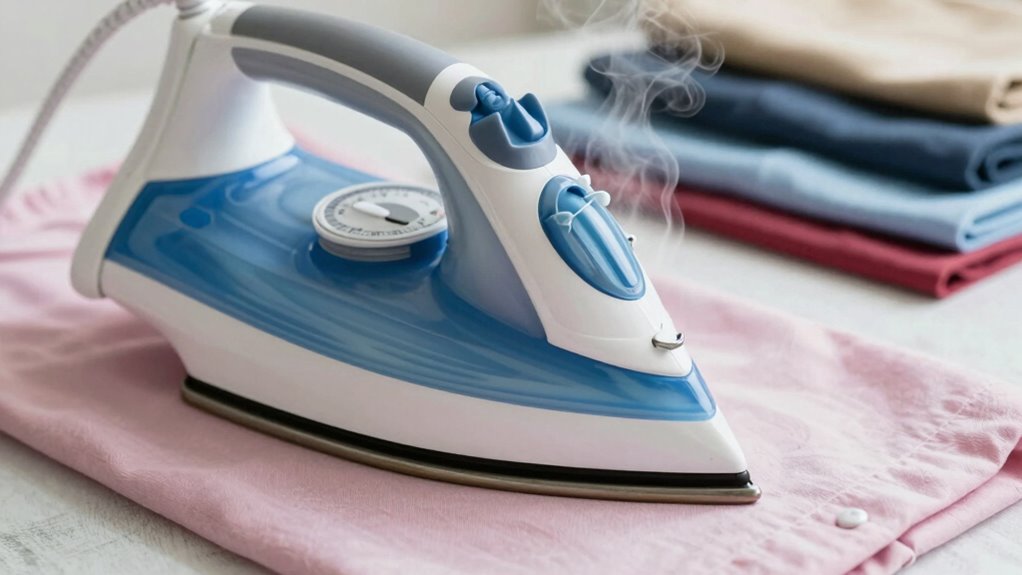
Wondering how to set your iron for different fabrics? It is crucial to match your iron settings with fabric types to avoid damage. Start by identifying the fabric you’re ironing, then adjust the temperature accordingly. Use the following table as a quick reference:
| Fabric Type | Iron Setting |
|---|---|
| Cotton & Linen | High (Full heat) |
| Silk & Wool | Medium to low |
| Polyester & Nylon | Low (Delicate) |
| Acrylic | Very low or steam |
Knowing these settings helps you prevent scorching or melting delicate fabrics. Always check the care label first, and when in doubt, start with a lower setting and gradually increase. Properly setting your iron ensures crisp results without risking fabric damage. Referencing fabric care guidelines can further help you choose the correct heat settings for various materials. Additionally, understanding fabric composition can assist in selecting the most appropriate temperature to extend the life of your garments. Maintaining a consistent iron temperature is essential for achieving professional-looking results and preserving fabric quality over time.
Common Ironing Mistakes and How to Avoid Them
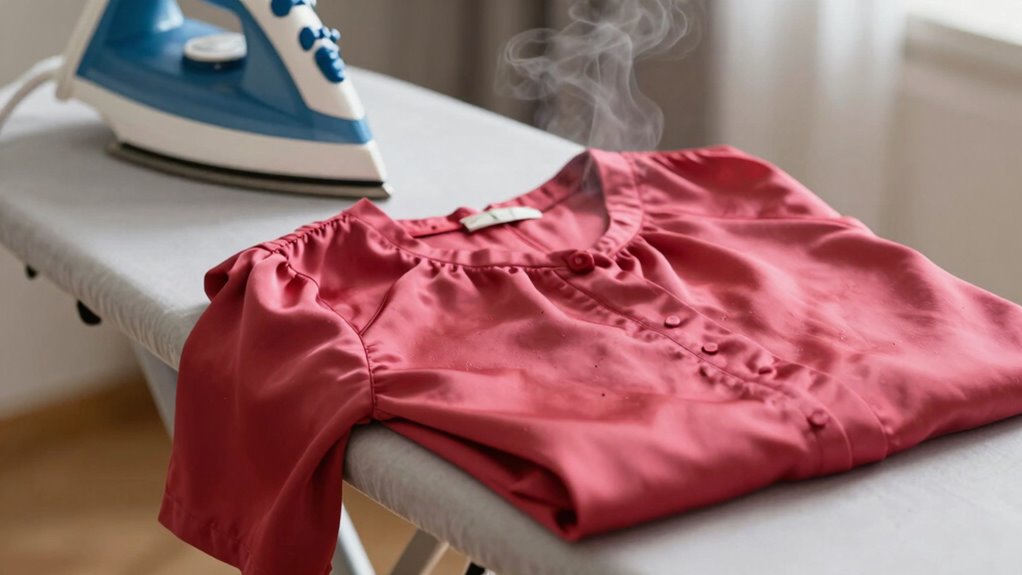
One of the most common ironing mistakes is setting the wrong temperature for your fabric, which can lead to damage or unsatisfactory results. Different fabric types require specific heat settings, so using the wrong one can cause burns or shine marks. Avoid this by paying attention to your iron’s temperature controls and fabric labels. Additionally, neglecting the use of proper ironing accessories, like pressing cloths or spray bottles, can worsen the problem. These tools help protect delicate fabrics and smooth out stubborn wrinkles without direct heat contact. Properly adjusting your iron and using the right accessories guarantees your clothes stay looking their best and last longer. Being aware of fabric care labels can also be beneficial for those seeking financial security beyond clothing care. Understanding home preservation techniques can help extend the lifespan of your clothing and household textiles, contributing to overall clothing maintenance.
Testing and Maintaining Your Iron’s Temperature
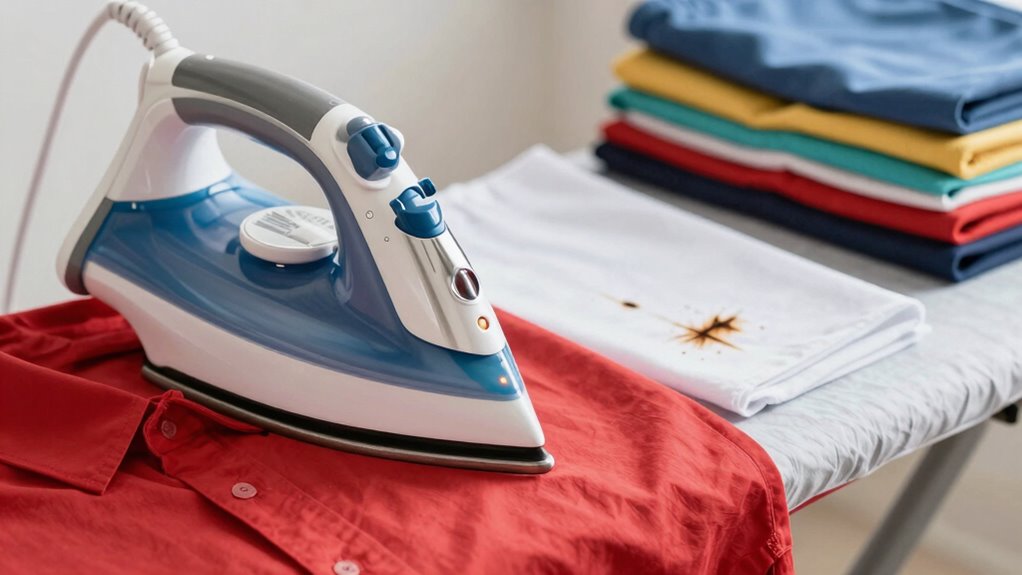
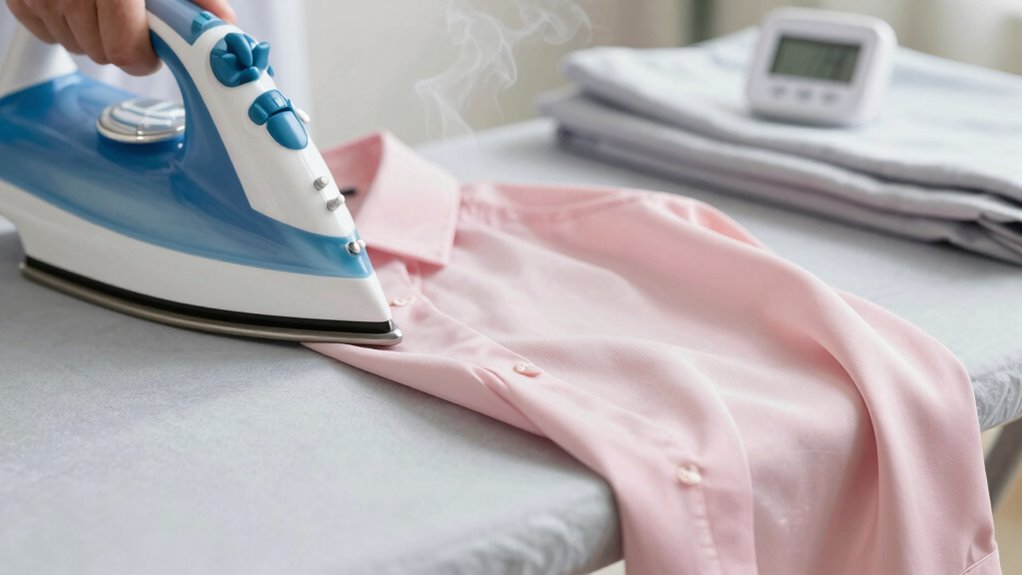
To guarantee your iron heats correctly and consistently, it’s essential to test and maintain its temperature regularly. Proper temperature calibration ensures you avoid damaging fabrics and promotes iron safety. Start by using a fabric tester or heat-sensitive cloth to check if the iron reaches the right setting before ironing your clothes. Keep an eye on the dial or digital display, ensuring it aligns with the manufacturer’s recommended temperature. Regularly clean the soleplate to prevent buildup that can affect heat distribution. Also, store your iron in a safe, dry place to prevent accidental temperature shifts. Additionally, inspecting the temperature controls regularly helps maintain consistent heat output and prevents overheating or underheating.
Quick Tips for Perfectly Ironed Clothes Every Time
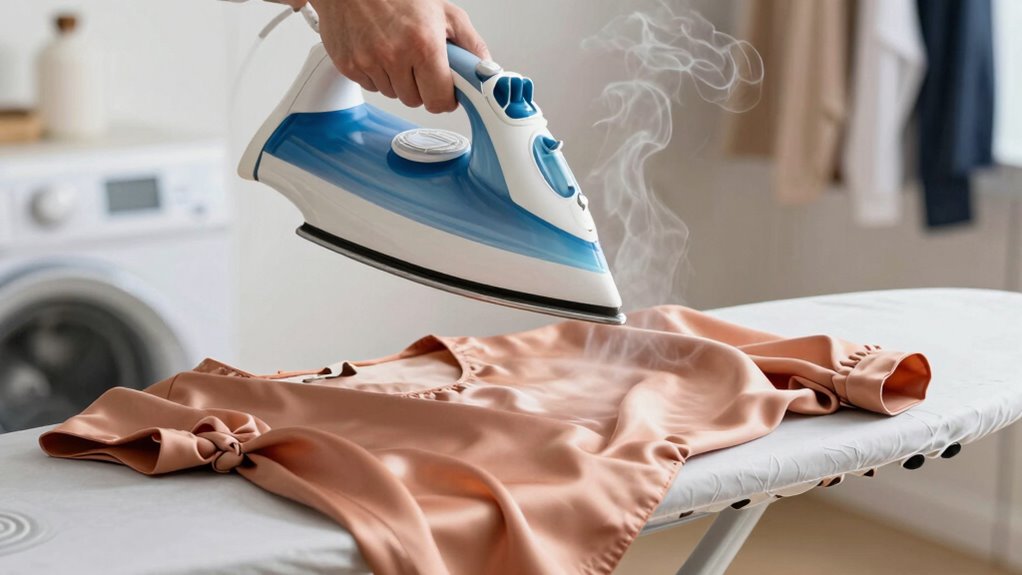
Achieving perfectly ironed clothes every time is simple when you follow a few quick tips. First, use the correct heat setting for each fabric to avoid damage and ensure effective wrinkle removal. Keep your iron clean to prevent fabric softening issues and unwanted stains. Always iron on the right side to maintain fabric quality. For best results, slightly dampen clothes or use a steam function to assist in wrinkle removal. To prevent over-pressing, don’t linger too long on delicate fabrics. Use a pressing cloth for sensitive materials. Additionally, understanding the fabric composition helps determine the optimal temperature and technique for each garment. Proper piercing care and hygiene can also contribute to a more relaxed and comfortable ironing experience. Incorporating sound healing science principles, such as using specific frequencies or vibrations, can also promote a more relaxing ironing experience and enhance the overall ironing process for improved consistency. Using appropriate tools and accessories can further ensure that each garment is pressed to perfection.
Frequently Asked Questions
Can Over-Ironing Weaken Fabric Fibers Over Time?
Yes, over-ironing can weaken fabric fibers over time, causing damage. When you apply too much heat or iron for too long, it can break down the fibers, leading to thinning or weakening of the fabric. To prevent ironing damage, always use the correct temperature for your fabric type and avoid excessive pressing. This helps preserve the integrity of your clothes and keeps them looking their best longer.
How Does Humidity Affect Ironing Temperature Settings?
Humidity effects your ironing temperature settings because moisture influences fabric behavior. When the air is humid, fabrics tend to retain more moisture, so you should lower the heat to prevent damage. Conversely, in dry conditions, fabrics dry out faster, allowing for higher temperatures. Adjust your iron’s temperature accordingly to avoid scorching or under-ironing, ensuring your clothes stay in great shape while reducing the risk of fabric damage caused by humidity effects.
Are There Eco-Friendly Alternatives to Traditional Ironing?
You can explore eco-friendly alternatives like steamers or natural, chemical-free solutions for ironing. These options reduce energy consumption and avoid harsh chemicals, making them better for the environment. Using a steamer, for example, minimizes heat damage and is gentle on fabrics. Additionally, opting for reusable, eco-conscious ironing aids helps you maintain your clothes without relying on traditional methods that may harm the planet.
What Safety Precautions Should I Take When Using a Hot Iron?
You might worry about accidents, but practicing proper iron safety and hot iron handling keeps you safe. Always unplug the iron after use, keep it out of reach of children, and never leave it unattended while hot. Use a heat-resistant surface and adjust the temperature appropriately for your fabric. These precautions protect you from burns and damage, ensuring ironing remains a safe, stress-free task.
Is Steam From the Iron Damaging to Delicate Fabrics?
Steam from the iron can damage delicate fabrics if you’re not careful. It increases the risk of steam damage, especially on highly sensitive materials like silk or lace. To protect your fabrics, use a low steam setting or turn off the steam entirely for delicate items. Always test a small, hidden area first, and keep the iron at the right temperature to prevent any harm caused by fabric sensitivity.
Conclusion
Now that you know how to choose the right temperature, your clothes will thank you. But be careful—one wrong setting could still ruin your favorite fabric. Are you ready to master your iron and unfasten perfectly pressed garments every time? The secret lies in paying attention and staying vigilant. Don’t let a small mistake undo all your efforts. Keep practicing, stay curious, and discover the true potential of your ironing skills—your wardrobe’s transformation awaits.