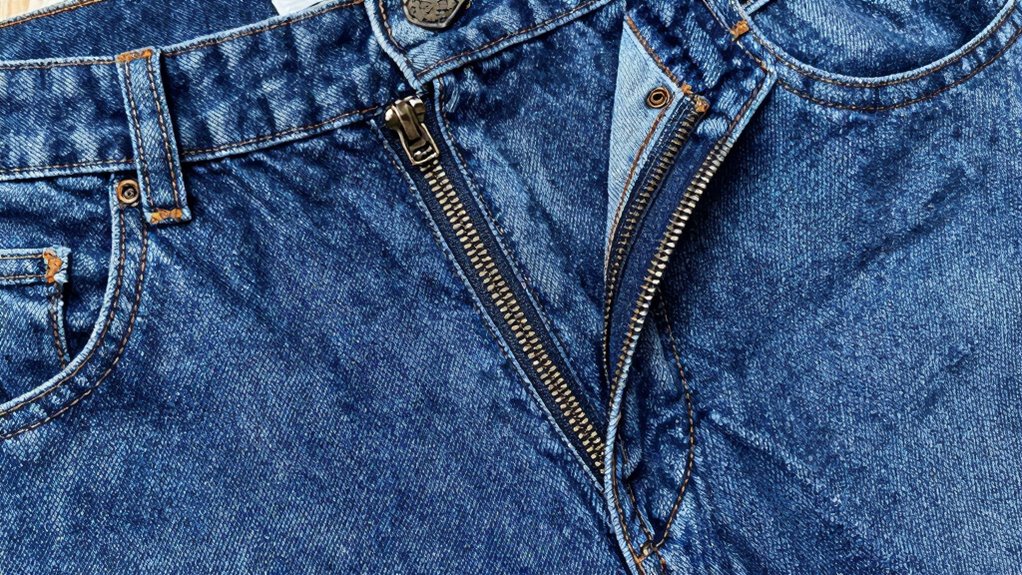

Lapped zippers give jeans a sleek, professional look with a flat, seamless finish that sits flush with the fabric. They’re sturdy, durable, and work well with various hardware styles. To get this clean finish, you’ll need specific tools and proper preparation, but once mastered, sewing a lapped zipper can elevate your jean craftsmanship. Keep exploring, and you’ll discover detailed tips and techniques for perfecting this stylish detail.
Key Takeaways
- Lapped zippers create a sleek, flat finish, offering a seamless and modern look ideal for jeans.
- Proper tools, fabric preparation, and precise sewing techniques ensure professional, durable results.
- Installing a lapped zipper involves aligning, pinning, sewing close to the tape, and pressing for a clean finish.
- Finishing touches like seam reinforcement, topstitching, and proper seam allowances enhance longevity and appearance.
- Attention to detail and correct methods help achieve a polished, high-quality zipper finish similar to commercial jeans.
What Are Lapped Zippers and Why Are They Great for Jeans?
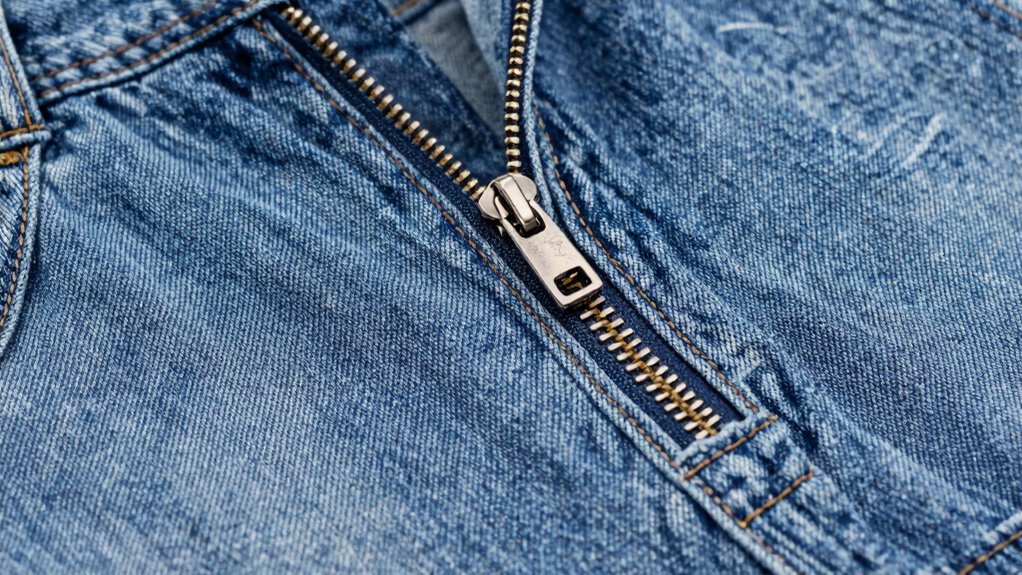
Lapped zippers are a popular choice for jeans because they offer a sleek, flat finish that looks clean and modern. Their design allows the zipper to sit flush with the fabric, creating a seamless appearance. You’ll find various hardware options, from classic metal to subtle plastic, giving you flexibility to match your style. Style variations include different zipper pulls, finishes, and sizes, letting you customize your jeans’ look. Lapped zippers are durable and sturdy, making them ideal for everyday wear. Plus, their hidden construction helps prevent fabric bunching and adds to the neat, polished look of your jeans. Their popularity in youngster choice styles highlights their versatility and timeless appeal. The construction technique used in lapped zippers enhances their strength and clean finish, ensuring long-lasting wear. An understanding of garment construction can help you appreciate why these zippers are a reliable choice for high-quality jeans. Additionally, the manufacturing process ensures consistent quality and durability across different styles. The seam alignment in lapped zippers contributes to their professional appearance and structural integrity. Whether you prefer a traditional or contemporary vibe, the variety of hardware options and style choices ensures you can achieve the perfect finish.
Tools and Materials Needed for Sewing a Lapped Zipper

To sew a lapped zipper effectively, you’ll need a specific set of tools and materials. Precision is key for smooth zipper insertion and a professional finish. You’ll want sharp scissors, pins or clips, a zipper foot, and matching thread. Additionally, a ruler or seam gauge helps set the correct stitch length, usually around 2.5mm for neat stitching. A marking pen or tailor’s chalk is useful for precise placement. Here’s a quick overview:
| Tool/Material | Purpose |
|---|---|
| Sharp scissors | Trim fabric and zipper ends |
| Pins or clips | Hold layers in place |
| Zipper foot | Attach the zipper accurately |
| Thread | Match fabric color for seamless look |
| Ruler or seam gauge | Set correct stitch length |
Using the correct sewing techniques ensures a clean, professional zipper insertion. Proper technique is essential for achieving a neat and durable finish, especially when working with precision sewing tools and methods. Being familiar with flat iron bike techniques can also help press seams smoothly for a polished look. Additionally, practicing accurate measurement helps ensure the zipper aligns perfectly with the fabric edges.
Preparing Fabric and Zipper for a Seamless Installation
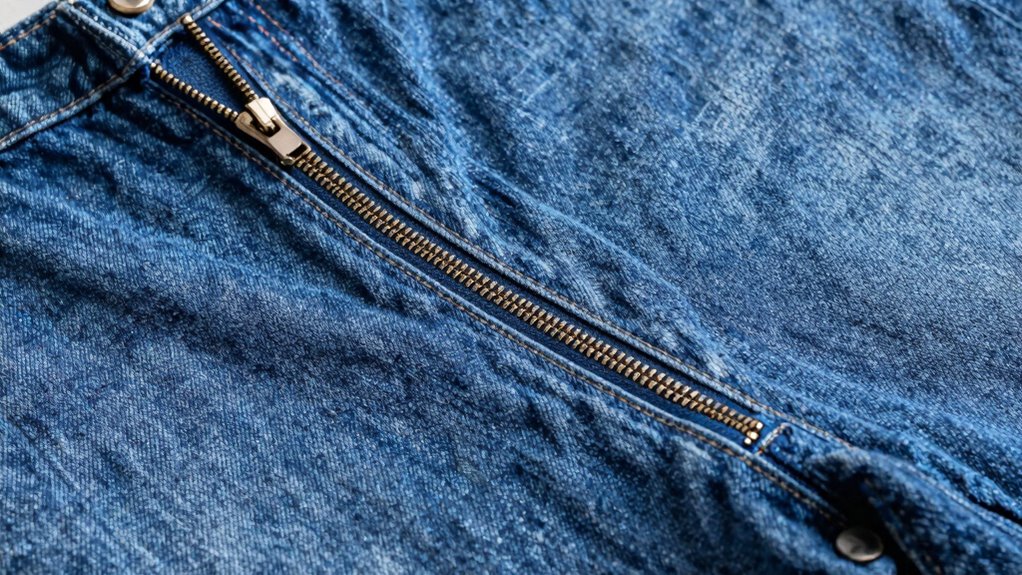
Before attaching the zipper, it’s vital to prepare both the fabric and the zipper itself to guarantee a smooth installation. Proper fabric preparation involves pressing the edges and stabilizing the fabric to prevent shifting. For the zipper, ensure it’s clean, free of dirt, and that the zipper teeth are aligned. To achieve a seamless fit, follow these steps:
- Carefully press the fabric edges where the zipper will sit, creating a crisp, even fold.
- Check the zipper for smooth operation and align the zipper teeth with your seam line before pinning.
- Position the zipper to confirm zipper alignment with the fabric, making adjustments if necessary.
- Ensuring the zipper’s proper maintenance and alignment can help improve the sewing process and final appearance.
- Additionally, using interfacing on the fabric edges can provide extra stability during sewing. Applying proper pressing techniques can further enhance the accuracy of the installation. Paying attention to fabric stability can prevent puckering and ensure a professional finish. Incorporating sewing machine settings optimized for zipper insertion can also contribute to a cleaner, more precise seam.
This preparation ensures your zipper installation will be neat and secure, resulting in a professional finish.
How to Sew a Lapped Zipper on Jeans: Step-by-Step
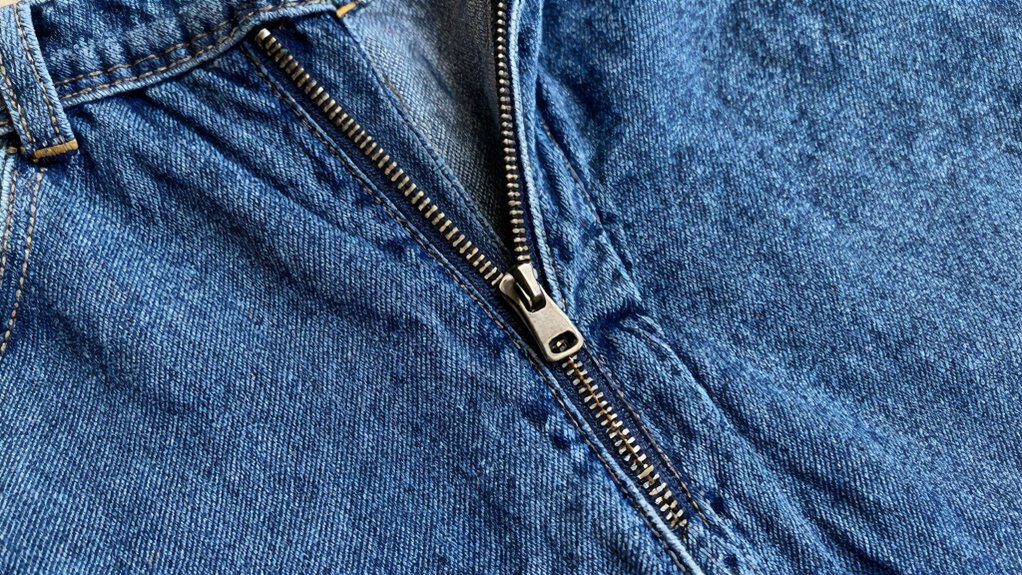
Sewing a lapped zipper onto jeans might seem challenging, but with careful steps, you can achieve a professional look. Begin by ensuring your fabric preparation is complete—press the edges of your jeans and the zipper opening to keep everything flat. For zipper installation, position the zipper face down on the right side of the fabric, aligning the zipper tape with the seam allowance. Use pins or clips to secure it in place. Sew along the zipper tape, staying close to the edges, and then press the seams open. Next, fold back the fabric’s edge over the zipper tape, creating a clean finish. Stitch in place to secure the flap, making sure your zipper operates smoothly. Take your time for precise, even stitches. Proper technique and attention to detail will ensure a durable and polished result. Additionally, understanding sewing fundamentals can help you troubleshoot any issues during installation. Gaining familiarity with fabric handling techniques can also improve your overall sewing accuracy and ease. Practicing these skills regularly will help you perfect your sewing skills and achieve professional results.
Troubleshooting Common Lapped Zipper Problems
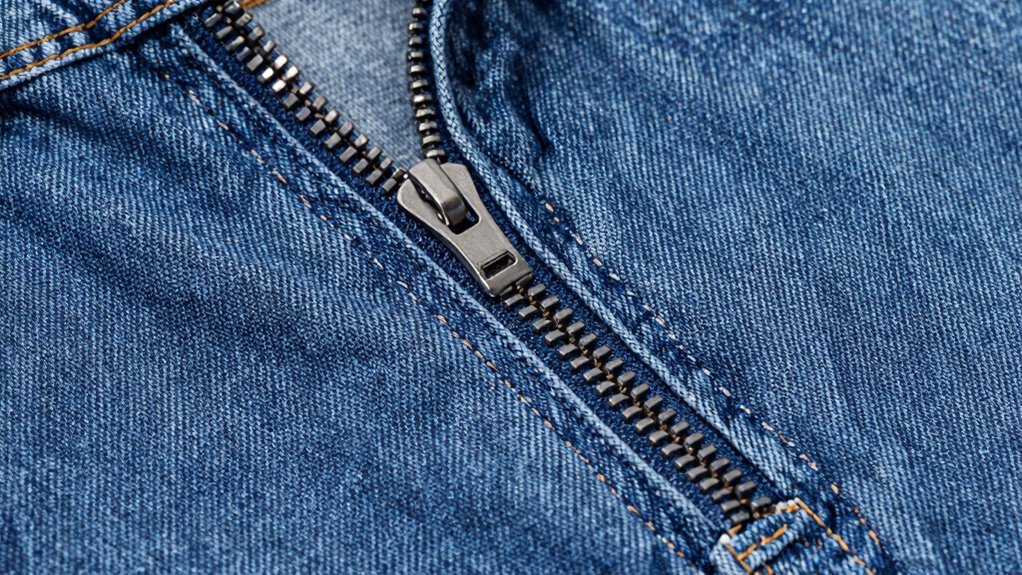
Even with careful sewing, lapped zippers can sometimes present issues that affect both appearance and functionality. You might notice zipper pull issues making it hard to open or close smoothly. Fabric puckering is another common problem, causing uneven seams and a bulky look. To troubleshoot, consider these points:
Even with careful sewing, zipper issues like puckering and stiff pulls can affect your finished project.
- Check the zipper installation—ensure it’s aligned properly and not too tight, which can cause puckering. Proper zipper placement is essential for a clean finish.
- Inspect the zipper pull—if it’s sticking or too stiff, replacing or adjusting it can improve operation.
- Reinforce the fabric around the zipper—adding extra stitching can help prevent puckering and improve durability.
- Verify that the zipper tape is properly interfaced or stabilized—this can help maintain a smooth, professional finish using suitable stabilizers.
- Additionally, choosing the right type of zipper and sewing techniques can make a significant difference in the final look and function. Employing correct sewing techniques ensures the zipper is securely attached and operates smoothly.
- Consider incorporating smart sewing tools, such as automatic zipper foot attachments or sewing machines with built-in stabilization features, to enhance precision and ease during construction. Proper sewing machine maintenance also plays a vital role in achieving a flawless finish.
Addressing these issues promptly keeps your zipper functional and your finished project looking professional.
Finishing Techniques for a Professional-Looking Zipper
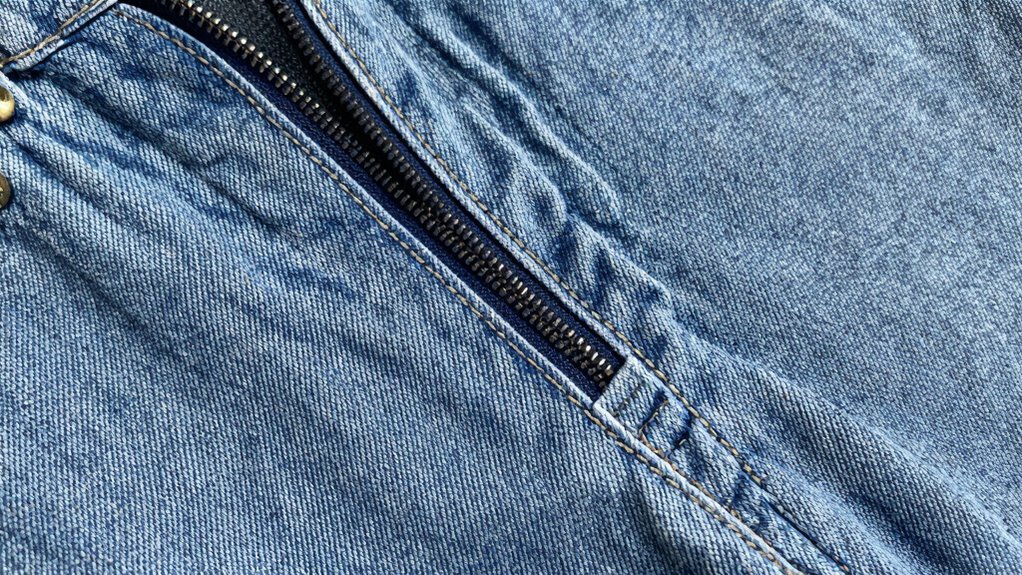
To achieve a polished zipper finish, focus on seam finishing techniques that prevent fraying and give your project a clean look. Precision in topstitching ensures the zipper stays flat and looks professional, so pay attention to your stitch placement. Aligning seams accurately throughout the process helps create a seamless, high-quality result that elevates your craftsmanship. Using techniques such as seam reinforcement can further enhance durability and a clean appearance. Additionally, understanding fabric types can help you select the best finishing methods for different materials, ensuring your zipper remains secure and visually appealing over time.
Seam Finishing Techniques
Achieving a professional-looking zipper finish depends on choosing the right seam finishing techniques. The type of zipper you select, like a lapped zipper, influences how you handle seam allowances. Proper finishing guarantees durability and a clean appearance.
Consider these key techniques:
- Finish seam allowances with a zigzag or serger to prevent fraying, especially for raw edges.
- Use narrow seam allowances for a smooth, flat finish, which helps the zipper lie flat against the fabric.
- Press seam allowances toward the zipper’s side to create a neat, secure finish that conceals raw edges and enhances durability.
These methods work best with different zipper types, ensuring your project looks polished and professional every time.
Topstitching Precision Tips
Precise topstitching is essential for a professional zipper finish, as it secures the zipper in place and adds a polished look. To achieve this, choose a topstitching color that matches or complements your fabric for a seamless appearance. Use a slightly longer stitch length, around 3.0 to 3.5 mm, to ensure even, clean stitches without puckering. Before you start, test on scrap fabric to adjust your tension and stitch length. Keep your sewing machine steady, maintaining consistent speed for uniform stitches. Use a straight edge or seam guide to help keep the stitching straight and evenly spaced. Taking your time with accuracy ensures your zipper looks professional and durable, elevating the overall quality of your finished garment.
Seam Alignment Strategies
Have you ever noticed how perfectly aligned seams can elevate the look of a finished zipper? Achieving this starts with strategic seam alignment. First, ensure proper pocket placement so seams line up smoothly at the zipper area. Next, stabilize your fabric with interfacing or stay tape to prevent shifting during sewing. Finally, take your time pinning and basting the seams before stitching, ensuring they stay aligned as you sew. Proper fabric stabilization reduces puckering and misalignment, giving your zipper a clean, professional finish. Remember, paying attention to pocket placement and carefully aligning seams make a noticeable difference in the final look. With these seam alignment strategies, your zipper will look seamless and polished every time.
Frequently Asked Questions
Can Lapped Zippers Be Used on Different Types of Fabrics Besides Denim?
Yes, lapped zippers can be used on various fabrics beyond denim. You should consider fabric compatibility and zipper variations to guarantee a smooth finish. Lightweight fabrics like silk or chiffon may need a different zipper type or reinforcement, while heavier materials like canvas work well with standard lapped zippers. Always choose the right zipper and technique to match your fabric, giving your project a professional, clean look.
What Are the Common Mistakes to Avoid When Installing a Lapped Zipper?
Did you know that 70% of sewing errors happen due to poor installation? When installing a lapped zipper, avoid common mistakes like uneven stitching, ignoring fabric compatibility, or rushing the process. Focus on sewing precision, ensuring the zipper aligns perfectly with the fabric. Use the right needle and thread for your fabric, and take your time to prevent puckering or misalignment. This guarantees a neat, durable finish every time.
How Do You Maintain or Replace a Lapped Zipper in Jeans?
To maintain or replace a lapped zipper, start with zipper repair if it’s just stuck or broken. If you need a full zipper replacement, carefully remove the old zipper using a seam ripper. Measure the new zipper to fit perfectly, then sew it in securely, ensuring smooth operation. Regularly check for loose stitches or fabric wear, and address issues early to keep your jeans looking great and functioning well.
Are Lapped Zippers Suitable for All Jean Styles and Designs?
Ever wonder if a lapped zipper fits your style? They suit many jeans, offering sleek, clean finishes that enhance fashion versatility. However, are they compatible with every design? While lapped zippers work well with classic or modern styles, they might not match more elaborate or vintage looks. Consider your jeans’ overall design and desired aesthetic—lapped zippers excel when they align with your fashion goals.
Can You Sew a Lapped Zipper Without a Sewing Machine?
Yes, you can sew a lapped zipper without a sewing machine by using hand sewing techniques. For zipper installation, you’ll need a strong needle and durable thread. Carefully pin the zipper in place, then use a backstitch or running stitch to secure it along the edges. Hand sewing takes more time, but it’s a great option if you don’t have a machine or want more control over your zipper installation.
Conclusion
Mastering the art of sewing lapped zippers transforms your jeans into a work of art. Once you get the hang of it, you’ll find it’s as smooth as butter and just as satisfying. Think of it as giving your denim a flawless, polished smile—hidden yet impactful. With patience and practice, you’ll craft clean, professional finishes that make your jeans stand out like a shining star in a sea of ordinary.