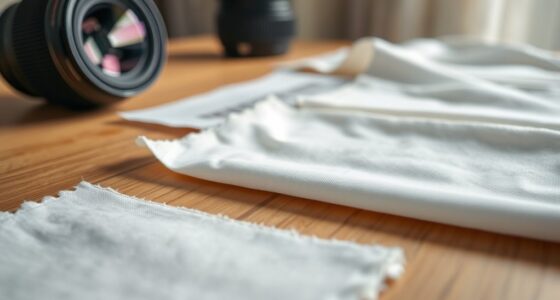
A good marking tool for dark fabrics should provide high contrast, so your markings are clearly visible and easy to follow. It needs to be easy to remove without smudging or damaging the fabric, ideally washing out or erasing quickly. Safety is key, so choose non-toxic and eco-friendly options that won’t stain or weaken delicate fibers. Reliability and precision matter too—your lines should stay sharp and visible. Keep exploring to discover the best options for your projects.

Get business pricing on tools and workshop supplies
- Business-only prices and quantity discounts
- Tax-exempt purchasing
- Multiple users, one account, clear invoices
Key Takeaways
- Provides high contrast against dark fabrics for clear visibility during marking and sewing.
- Is easily erasable or washable without smudging or damaging the fabric.
- Is non-toxic, safe for delicate fabrics, and environmentally friendly.
- Produces precise, sharp lines that do not fade or smudge during handling.
- Balances visibility, removability, safety, and fabric compatibility for reliable use.
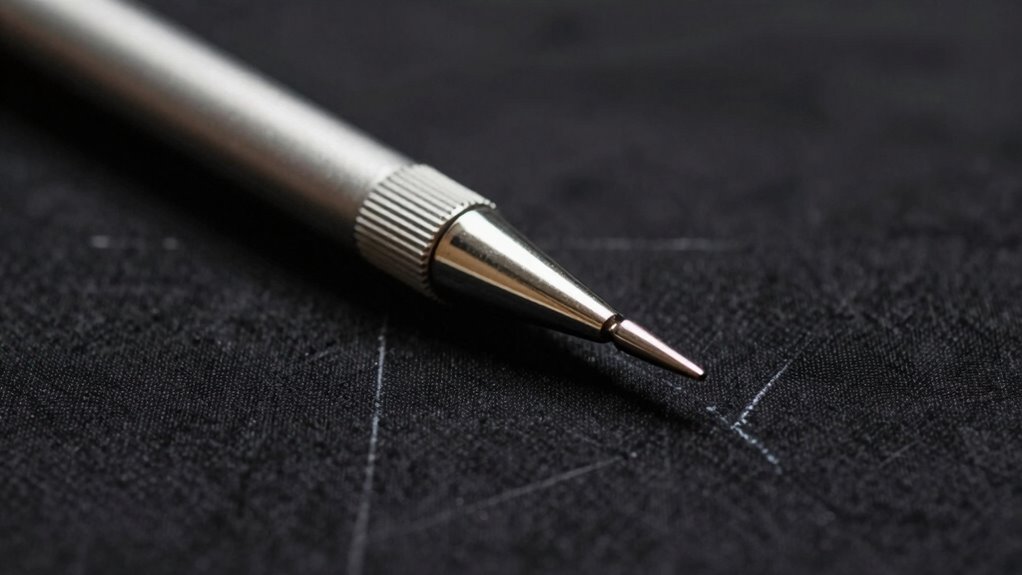
Have you ever struggled to mark dark fabrics clearly without leaving unsightly stains? If so, you know how tricky it can be to find the right marking tools. Dark fabrics tend to hide traditional chalk or fabric pens, making it hard to see your markings clearly. That’s why choosing a good marking tool for dark fabrics is essential for precise sewing, tailoring, or quilting projects. A quality tool should offer visibility, easy removal, and minimal risk of damage. You might have relied on fabric dye or chalk alternatives before, but not all options are created equal. Some fabric dyes can stain or bleed, and chalk alternatives vary greatly in quality and ease of use.
A good marking tool for dark fabrics should be highly visible against a deep background. This means selecting something that contrasts well with dark colors, such as white or light-colored markings. Fabric dye can work, but it’s often risky because it might bleed or stain if not applied carefully. It’s best to use dyes specifically made for fabric marking, which are designed to wash out easily once your project is complete. Chalk alternatives, like tailor’s chalk or marking pencils, are popular because they tend to be less messy and easier to control. For dark fabrics, chalk alternatives often come in wax-based or chalk-like formulas that leave a clear, visible line without risking permanent damage. Additionally, biodiversity in fabric marking options offers a variety of environmentally friendly and safe choices tailored for different fabric types. Considering the environmental impact of your fabric marking tools is becoming increasingly important to many crafters. When selecting a marking tool, it’s also helpful to choose options that are non-toxic, especially if you’re working with sensitive or delicate fabrics.
Ease of removal is another key factor. You want a tool that leaves marks that are easy to erase or wash out without smudging or fading. Some chalk alternatives are designed to be completely erasable with a brush or a damp cloth. Others, like certain fabric pens, can be easily wiped away with a damp rag shortly after marking. The availability of safe and eco-friendly marking options has increased, giving more choices that are gentle on fabrics and the environment. The best marking tools for dark fabrics combine high contrast with gentle removal. You don’t want to risk tearing or staining the fabric, so test your chosen tool on a scrap piece first. Selecting a reliable product ensures that your markings remain consistent and do not fade unexpectedly during handling.
Durability and precision also matter. A good marking tool should produce fine, sharp lines for accuracy. It shouldn’t fade quickly or smudge during handling. When choosing a fabric dye or chalk alternative, look for products known for their reliability and consistency. The ideal marking tool for dark fabrics balances visibility, ease of removal, and safety for the fabric. With the right tool, you’ll be able to mark your dark fabrics confidently, ensuring your sewing or tailoring projects turn out perfectly every time.
fabric marking pens for dark fabrics
As an affiliate, we earn on qualifying purchases.
As an affiliate, we earn on qualifying purchases.
Frequently Asked Questions
Can Marking Tools Be Reused on Multiple Dark Fabrics?
Yes, marking tools like chalk markers and tracing pencils can be reused on multiple dark fabrics. You simply need to erase or wash out the markings after each use. Chalk markers often wipe away easily with a damp cloth, while tracing pencils can be smudged or erased with a suitable eraser. Just make certain you’re using the right type of marker or pencil for your fabric to avoid permanent marks.
Are There Eco-Friendly Marking Options for Dark Textiles?
Yes, you can choose eco-friendly marking options for dark textiles. Look for tools that use eco-friendly inks, which are non-toxic and biodegradable, reducing environmental impact. Reusable chalks are also a great choice—they produce visible marks and can be used multiple times, minimizing waste. These options help you mark dark fabrics effectively while staying environmentally conscious, making your sewing or tailoring projects more sustainable and eco-friendly.
How Long Do Marking Lines Typically Last on Dark Fabrics?
You’ll find that marking lines on dark fabrics typically last long enough for detailed work, but chalk smudging can sometimes blur your precision. To keep your marks clear, choose tools designed for durability, like tailor’s chalk or specialized fabric markers. With proper application and care, your lines should stay visible throughout your project, giving you the marking precision needed without worry about smudging or fading too quickly.
Do Marking Tools Affect Fabric Dye or Color?
Marking tools can affect fabric dye or color if they’re not compatible with your dark fabrics. You should choose tools that are fabric dye compatible and won’t cause color transfer or fading. Look for markings that preserve color and don’t bleed or smudge. Using the right tool helps maintain your fabric’s original hue, ensuring your design remains vibrant and intact without risking damage or unwanted color changes.
What Safety Precautions Should Be Taken When Using Marking Tools?
When using marking tools, prioritize marking tool safety by working in well-ventilated areas and wearing gloves if necessary. Always read instructions carefully, especially for fabric marking precautions, to avoid skin irritation or damage to the fabric. Keep your tools away from children and pets, and clean your workspace afterward. Proper handling guarantees safe usage and maintains the quality of your dark fabrics without risking accidental stains or injuries.
Conclusion
Just as a master painter chooses the perfect brush for their masterpiece, selecting the right marking tool for dark fabrics guarantees your sewing projects come to life with precision and confidence. With the right tool, you can craft your vision effortlessly, leaving behind only the subtle, almost ghostly lines that guide your hand. Remember, as with all great artistry, it’s the subtle details that make your work truly stand out—so choose wisely and mark with purpose.
Fall Picks
fall essentials
As an affiliate, we earn on qualifying purchases.