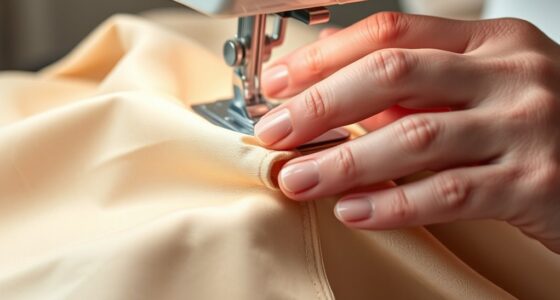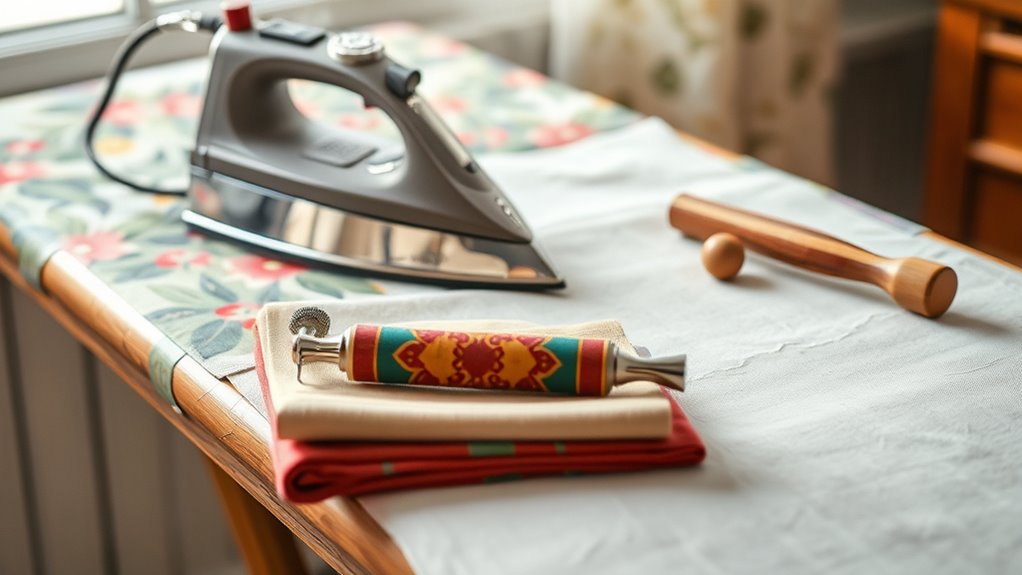

To get better sewing results, choose the right ironing tools like a quality iron with adjustable temperature and a pressing cloth to safeguard delicate fabrics. Always select the proper heat and steam settings for your fabric type to prevent puckering or shine. Use a clutter-free, well-ventilated space and handle hot tools with care. Proper technique ensures crisp seams and professional finishes; continue exploring these tips for truly polished garments.
Key Takeaways
- Use appropriate heat and steam settings based on fabric weight and fiber content for optimal pressing results.
- Employ pressing cloths to prevent shine, puckering, and fabric damage during ironing.
- Maintain a clean, organized workspace and unplug the iron when not in use to ensure safety.
- Select the right pressing tools, such as tailored irons or seam rollers, for specific sewing tasks.
- Check fabric care labels and test on scrap fabric to determine proper pressing techniques and temperature.
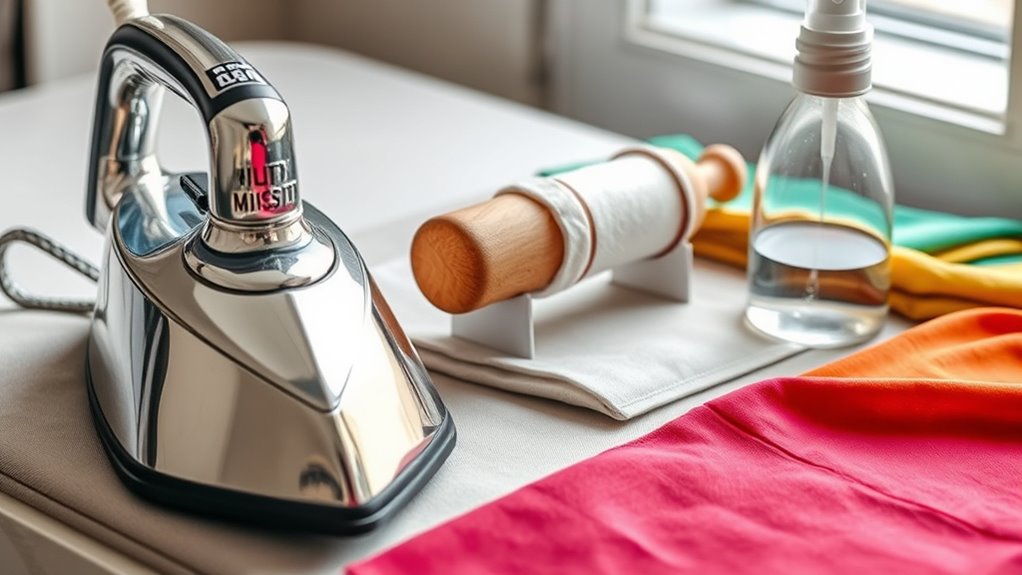
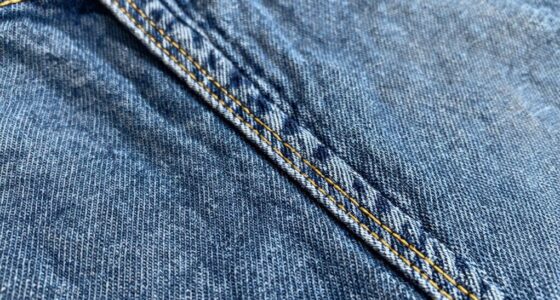
Have you ever wondered what issues are truly demanding your attention right now? “Pressing Matters” dives into the urgent challenges facing our communities, from climate change and economic instability to social justice concerns. But beyond global issues, there are practical matters that directly impact your sewing projects. One of these is fabric selection, which plays a pivotal role in achieving the best sewing results. Choosing the right fabric isn’t just about appearance; it affects how your garment will fit, drape, and wear over time. When selecting fabric, consider the weight, fiber content, and how it responds to pressing. Some fabrics, like silk or lightweight cotton, require gentle handling and specific pressing techniques, while heavier fabrics like denim or canvas need more robust heat and steam. Proper fabric choice helps prevent issues such as puckering, stretching, or fabric damage, making your sewing more precise and enjoyable. Additionally, understanding the fire safety standards associated with your pressing tools ensures a safer workspace and reduces the risk of accidents.
Pressing safety is equally essential. You want to protect yourself and your workspace while ensuring your pressed seams and fabric stay in perfect condition. Always check your iron’s settings before applying heat—using too high a temperature on delicate fabrics can cause scorching or melting. Keep your pressing station well-ventilated and free of clutter to avoid accidents. Use a pressing cloth when necessary to shield sensitive fabrics from direct heat or steam, which also prevents shiny marks and fabric distortion. Never leave an iron unattended, and unplug it when not in use. Be cautious with the cord—ensure it’s out of the way to prevent tripping or pulling the iron off your table. Additionally, be mindful of hot surfaces; always allow the iron to cool before storing it away.
Incorporating these safety measures not only protects your fabric but also preserves your wellbeing. When you handle your pressing tools with care and attention to fabric type, you reduce the risk of accidents or damage that could ruin your project. Remember, pressing isn’t just about making seams look crisp; it’s a critical step to ensure your finished piece has professional quality and durability. By selecting the right fabric and practicing pressing safety, you set a solid foundation for successful sewing. It’s a simple yet powerful way to elevate your craft, giving your projects a polished look while keeping you safe and confident in your workspace. Ultimately, paying close attention to these pressing matters makes your sewing experience smoother, more satisfying, and results in garments or items you’ll be proud of.
Frequently Asked Questions
What Are the Best Temperature Settings for Different Fabric Types?
For the best fabric temperature, you should adjust your ironing settings based on the fabric type. Use a low setting for delicate fabrics like silk and polyester, a medium for cotton and linen, and high for heavy materials like denim. Always check the fabric’s care label to avoid damage. Proper fabric temperature guarantees smooth pressing and prevents scorching, giving your sewing projects a professional finish.
How Can I Prevent Fabric From Shining or Burning During Ironing?
Think of your iron as a gentle artist, not a blazing sun. To prevent fabric sheen or scorching marks, always keep the temperature low for delicate fabrics, and use a pressing cloth as a barrier. Move the iron smoothly without lingering, and don’t press too hard. This careful approach preserves your fabric’s natural luster and keeps those unsightly scorch marks at bay, ensuring your sewing projects look flawless.
What Are Eco-Friendly Alternatives to Traditional Ironing Methods?
You can choose eco-friendly alternatives like recycled ironing boards, which reduce waste and plastic use, and biodegradable ironing sprays that are safer for the environment. Opt for steam instead of chemical sprays when possible, and avoid disposable pads. Using these sustainable options minimizes your ecological footprint while maintaining effective ironing results. These choices help protect the planet without sacrificing the quality of your sewing projects.
How Do I Remove Stubborn Wrinkles From Delicate Fabrics Safely?
To remove stubborn wrinkles from delicate fabrics safely, start by adjusting your iron’s steam settings to low or medium. Use a pressing cloth to protect the fabric from direct heat and prevent shine or damage. Gently press the wrinkles, avoiding excessive pressure, and keep the iron moving. This method guarantees smooth results without risking harm to your delicate textiles, keeping them looking fresh and well-maintained.
What Accessories Can Enhance My Pressing and Ironing Effectiveness?
Think of your pressing tools as a symphony, each accessory playing a crucial role. Upgrade with a high-quality ironing board cover for smooth gliding, and use a steam generator iron for consistent, powerful steam. These accessories boost your effectiveness, ensuring crisp, professional results. Together, they transform your ironing routine into a harmonious process, making sewing projects look polished and neat with less effort and more confidence.
Conclusion
Mastering your pressing tools and techniques is like tending a delicate garden—you nurture each detail for beautiful results. When you press with care and the right tools, your sewing projects come to life with crisp seams and polished finishes. Remember, patience and attention to detail are your best allies. Keep practicing, and you’ll see your skills blossom like a well-tended landscape. With each press, you’re shaping your craft into something truly remarkable.