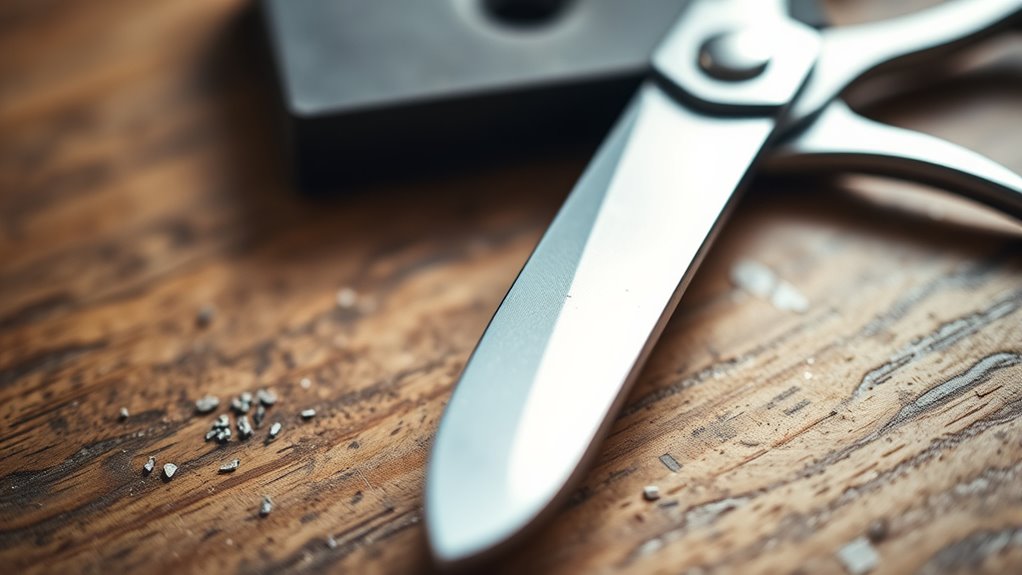

To keep your scissors and rotary cutters sharp, regularly inspect them for dullness, nicks, or tears, and clean the blades with a soft cloth and mild solution. When sharpening, use dedicated sharpening stones or scissors sharpeners, following the manufacturer’s instructions and maintaining the correct angle. For best results, consider professional sharpening services and always store blades properly in protective cases. Staying on top of maintenance will ensure clean cuts and extend your tools’ lifespan. Keep going to discover more tips!
Key Takeaways
- Regularly inspect blades for dullness, nicks, or damage, and sharpen promptly using dedicated sharpening tools or services.
- Clean blades after each use with a soft cloth and mild solution to prevent buildup and corrosion.
- Lubricate the pivot area with a drop of oil to ensure smooth cutting action.
- Store scissors and rotary cutters in protective sheaths or cases to prevent dulling and damage.
- Follow manufacturer guidelines for sharpening angles and techniques to maintain optimal cutting performance.
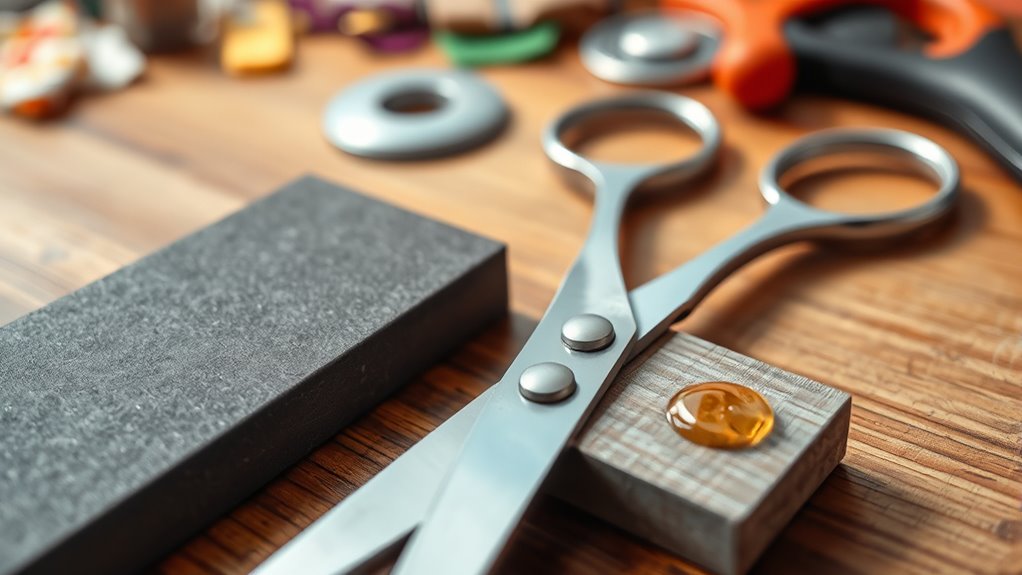
Have you ever struggled with dull scissors that tear or crush your materials instead of cutting cleanly? If so, you know how frustrating it can be to get precise cuts, especially when working on detailed projects or fabrics. The key to maintaining your scissors’ cutting precision lies in regular blade maintenance. When you keep the blades sharp and well-cared for, you not only improve their performance but also extend their lifespan. Proper blade maintenance involves more than just sharpening; it’s about understanding how to care for your tools so they stay in top condition.
Keeping your scissors sharp and well-maintained ensures precise cuts and longer tool life.
First, regularly inspect your scissors for signs of dullness or nicks. When the blades begin to catch or tear material, it’s a clear sign they need sharpening. Avoid forcing dull scissors through thick or tough materials, as this can damage the blades further. Instead, sharpen them promptly to restore their cutting ability. Maintaining sharp blades isn’t just about convenience; it directly impacts your cutting precision. Sharp scissors glide smoothly through fabric or paper, giving you clean, accurate cuts without fraying or jagged edges. This level of control is essential for projects that require meticulous detail.
To sharpen your scissors effectively, you can use a dedicated sharpening stone or a specialized scissor sharpener. Carefully follow the manufacturer’s instructions, ensuring you maintain the correct angle when sharpening. If you’re uncomfortable doing it yourself, professional sharpening services are a reliable option—they’ll restore your blades without risking damage. Remember, the act of sharpening isn’t a one-time fix; it’s a regular part of blade maintenance that keeps your scissors performing at their best. Additionally, choosing high-quality blades made from durable materials can help maintain sharpness longer and reduce the frequency of sharpening needed.
In addition to sharpening, clean your scissors regularly to prevent buildup of adhesive, fabric fibers, or dirt that can dull the blades prematurely. Wipe the blades with a soft cloth dipped in alcohol or a mild cleaning solution, and keep the pivot area lubricated with a drop of oil to ensure smooth operation. Proper blade maintenance also involves storing your scissors correctly—preferably in a protective sheath or a designated case—to avoid accidental nicks or dulling.
Frequently Asked Questions
How Often Should Scissors Be Sharpened for Optimal Performance?
You should sharpen your scissors when you notice they’re not cutting smoothly or the blade alignment feels off. Typically, every few months is enough for regular use, but heavy-duty tasks may require more frequent sharpening. Use quality sharpening tools designed for scissors to maintain their edge, and check the blades regularly for dullness or nicks. Proper maintenance keeps your scissors performing well and extends their lifespan.
Can I Sharpen Scissors at Home Without Professional Tools?
Yes, you can sharpen scissors at home using DIY sharpening techniques with household tools. Try using aluminum foil, which can help realign and sharpen the blades, or use a sharpening stone or fine-grit sandpaper for more precise results. Be sure to open and close the scissors slowly to avoid damage. Just remember, if your scissors are very dull or expensive, professional sharpening might be your best option for peak performance.
What Types of Scissors Are Easiest to Sharpen Myself?
Did you know that 60% of users find DIY sharpening easier with small, lightweight scissors? You’ll find that small, standard scissors are the easiest types of scissors for DIY sharpening since their blades are simple and accessible. Use household items like a nail file or honing stone, and follow step-by-step tutorials. These methods work best for common scissors, making maintenance quick and budget-friendly without needing professional tools.
How Do I Know if My Scissors Need Sharpening?
You’ll know your scissors need sharpening if you notice blade dullness or cutting difficulty. When they don’t glide smoothly through fabric or paper, it’s a sign the blades have lost their edge. You might also see uneven cuts or require extra effort to cut. Trust your senses—if it feels harder than usual to cut, it’s time to sharpen your scissors for peak performance.
Are There Specific Cleaning Tips to Maintain Sharpness Longer?
Imagine you notice your scissors aren’t cutting as smoothly. To maintain their sharpness longer, regularly clean blades with a damp cloth to remove debris and prevent blade corrosion. After cleaning, apply a few drops of oil using proper oiling techniques to keep the blades lubricated and protected. This simple routine reduces rust and keeps your scissors sharp, ensuring they perform well and last longer.
Conclusion
Now that you know how to sharpen and maintain your scissors and rotary cutters, you’ll find they stay sharper longer—almost as if they’re thanking you. It’s funny how a simple routine can prevent those frustrating snags and uneven cuts, turning your sewing or crafting sessions into smooth sailing. So, next time you reach for your tools, remember, a little care today keeps your scissors cutting perfectly tomorrow—and maybe, just maybe, that’s exactly what they’ve been waiting for.