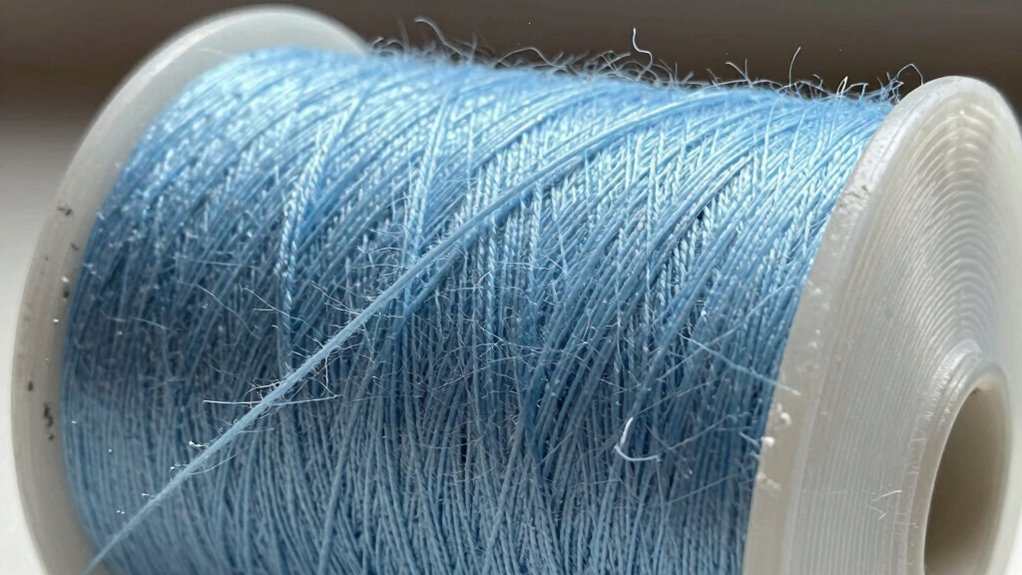
If you use cheap spools, you’ll notice more lint accumulating because their poor-quality materials often generate static, increase friction, and cause fibers to shed more easily. These spools tend to be rough or poorly made, which can snag the thread and loosen fibers during sewing. Static attracts dust and lint, making buildup worse over time. Taking care of your spools and choosing better-quality ones can help reduce this issue—there’s more to uncover on how to improve your sewing environment.

Get business pricing on tools and workshop supplies
- Business-only prices and quantity discounts
- Tax-exempt purchasing
- Multiple users, one account, clear invoices
Key Takeaways
- Cheap spools often have rough surfaces that cause increased friction and fiber shedding from threads.
- Low-quality spools generate static, attracting dust and lint to the thread and spool surface.
- Inexpensive spools are typically made from lightweight plastics that attract more dust and static.
- Poor spool material and manufacturing can lead to increased fiber snagging and lint accumulation.
- Lack of proper spool maintenance allows static and dust buildup, accelerating lint accumulation.
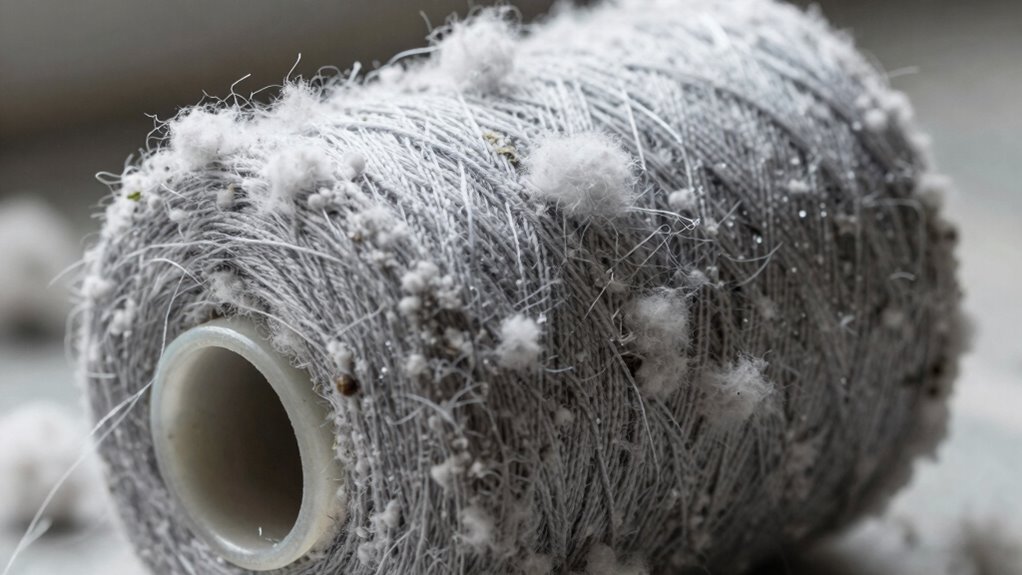
If you’re using cheap spools of thread, you might notice lint building up faster than with higher-quality options. That’s because the quality of the thread directly impacts how much lint accumulates during sewing. Cheaper threads often have lower thread quality, which means they’re more likely to shed tiny fibers as you work. These loose fibers become airborne or cling to your fabric, creating a buildup of lint on your sewing machine and workspace. When the thread isn’t made from tightly spun or well-processed materials, it tends to unravel more easily, releasing fibers that contribute to that pesky lint.
The spool material plays a significant role in this issue. Cheaper spools are often made from lightweight plastics or lower-grade materials that can sometimes produce static or attract dust, exacerbating lint accumulation. High-quality spools tend to be made from sturdier, smoother materials that minimize static and resist collecting dust or fibers. This difference in spool material affects not only the durability of the spool but also how the thread interacts with the spool during unwinding. When the spool material is rough or poorly manufactured, it can cause more friction, which in turn loosens more fibers from the thread. This friction also increases the chances of the thread snagging or breaking, leading to more fiber shedding and lint buildup. Additionally, thread quality directly influences how much lint is produced during sewing, with higher-quality threads generating less debris overall. Using a spool with better manufacturing standards can significantly reduce static and fiber shedding, helping to keep your workspace cleaner. Proper spool maintenance is also crucial, as neglecting it can lead to increased static, dust, and lint accumulation over time.
high quality sewing thread spool
As an affiliate, we earn on qualifying purchases.
As an affiliate, we earn on qualifying purchases.
Frequently Asked Questions
Does Thread Material Affect Lint Accumulation?
Yes, thread material affects lint accumulation. You’ll notice that threads with different fiber compositions produce varying amounts of lint. For example, polyester tends to shed more because of its smooth, synthetic fiber structure. Also, the thread texture plays a role; rougher or loosely spun threads shed more fibers, leading to faster lint buildup. Choosing high-quality threads with a tight, smooth texture can help reduce lint accumulation during your sewing projects.
Can Storage Conditions Impact Lint Buildup?
Surprisingly, storage conditions can speed up lint buildup more than you’d think. If you keep your spools in high humidity levels or in poorly sealed storage containers, lint particles cling more easily to the thread. Ironically, keeping your spools in a cool, dry, airtight container actually reduces lint accumulation, making your sewing smoother. Proper storage isn’t just about safety; it’s about keeping your thread lint-free.
Is There a Difference in Lint Between New and Old Spools?
Yes, there’s a difference in lint between new and old spools. Over time, older spools tend to shed more lint due to fiber breakdown, especially if the fiber composition includes low-quality materials. Spool design also matters; cheaper spools often have rougher surfaces that cause more fiber to shed. So, newer spools with better fiber quality and smoother designs generally produce less lint, making your sewing cleaner and easier.
How Often Should I Clean My Sewing Machine for Lint?
Ever wonder how often you should clean your sewing machine for lint? Regular maintenance is key—aim to clean and oil your machine after every few bobbins or at least once a month, especially if you sew frequently. Proper machine maintenance helps prevent lint buildup, which can cause jams or stitching issues. By staying proactive, you guarantee smooth sewing and extend your machine’s lifespan, making lint prevention a simple yet essential part of your routine.
Do Higher-Quality Threads Produce Less Lint Overall?
Higher-quality threads tend to produce less lint overall because they have better fiber consistency, which enhances thread longevity and reduces loose fibers. You’ll notice fewer lint buildup and less spool color variation over time, making your sewing cleaner and more efficient. Investing in good thread not only improves your project quality but also means less frequent cleaning of your machine, saving you time and effort.
Conclusion
So, next time you notice more lint on your sewing machine, think of cheap spools as a leaky faucet—constantly dripping lint that quickly fills your workspace. Investing in quality thread is like fixing that faucet; it flows smoothly and leaves fewer messes behind. By choosing better spools, you’re not just saving time cleaning up; you’re ensuring your sewing journey stays neat and enjoyable, like a well-oiled machine running seamlessly.
Halloween Picks
halloween
As an affiliate, we earn on qualifying purchases.