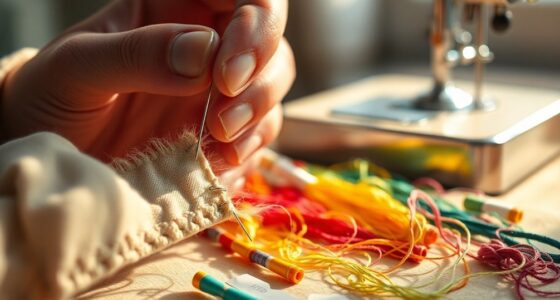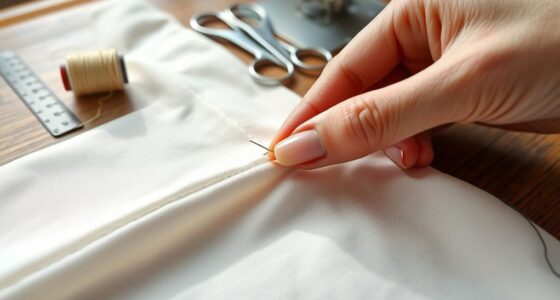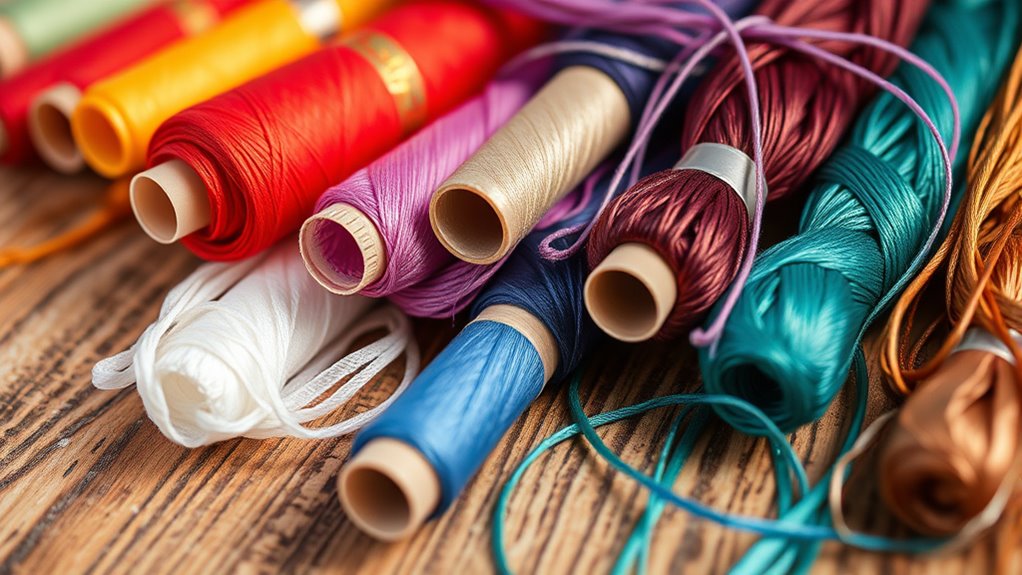
Choosing the right thread depends on your fabric and project needs. For delicate fabrics, use lightweight cotton or polyester threads for gentle seams. Heavy upholstery or denim requires thicker, strong polyester or nylon threads for durability. Consider the material’s stretch and strength; polyester is versatile, while nylon offers elasticity. Matching thread weight and type to your project guarantees better stitches and a polished finish. Keep exploring to get more tips on selecting the perfect thread for every sewing task.
Key Takeaways
- Match thread type and weight to fabric weight and project durability needs.
- Use upholstery threads for heavy-duty projects; cotton or polyester for lighter fabrics.
- Choose elastic nylon threads for stretch fabrics and activewear items.
- Select finer threads for delicate fabrics and detailed sewing work to prevent puckering.
- Consider mechanical strength and stretch properties to ensure stitch durability and project longevity.
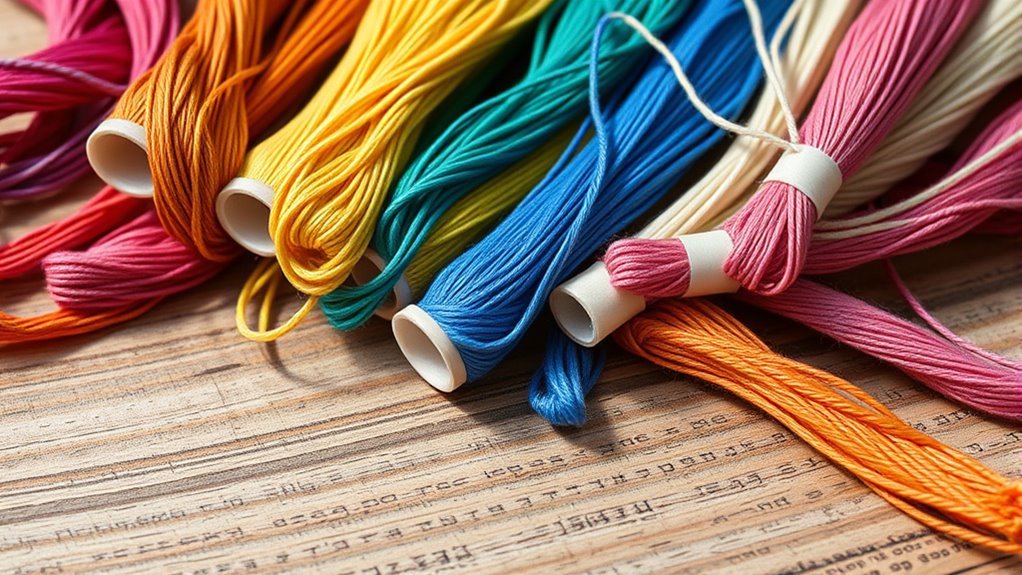
Ever wondered what distinguishes one sewing thread from another? The answer lies in the variety of sewing machine threads available and how each type is designed for specific fabrics and projects. When you’re selecting the right thread, it’s essential to consider the material you’re working with and the purpose of your project. For example, upholstery threads are specially made to handle the stress and weight of heavy furniture covers, cushions, and home decor items. These threads tend to be thicker, stronger, and more durable than standard sewing machine threads, ensuring that your upholstered pieces remain intact over time. They are often made from polyester or nylon, which provide the strength needed for heavy-duty applications.
On the other hand, sewing machine threads come in a broad range of types suited for different fabrics and sewing techniques. Cotton threads work well with natural fabrics like linen, cotton, and lightweight materials, offering a soft finish and ease of sewing. Polyester threads are versatile and popular because they combine strength with a bit of stretch, making them ideal for sewing garments and general purpose projects. Nylon threads, known for their elasticity and resilience, are excellent choices for stretch fabrics or items that require a lot of movement, such as activewear or swimwear. When choosing sewing machine threads, you should also think about the thread’s thickness or weight, which influences how strong and visible the stitch will be. Lighter threads are perfect for delicate fabrics, while heavier threads are suited for denim, canvas, or upholstery projects. Additionally, understanding the mechanical properties of different threads can help prevent common sewing issues like skipped stitches or puckering.
Understanding the differences between these thread types helps you avoid common sewing pitfalls, like broken stitches or puckering. For instance, using upholstery threads in a lightweight dress could lead to a stiff, uncomfortable garment that doesn’t hang well. Conversely, using a lightweight thread on upholstery might cause the stitches to break under stress, compromising the piece’s durability. If your project involves heavy fabrics or furniture upholstery, selecting the right upholstery thread ensures your work holds up over time. For sewing projects that demand fine detail or delicate fabrics, choosing the appropriate sewing machine thread ensures smooth stitching and a professional finish. Ultimately, knowing the qualities of different thread types allows you to match them precisely to your project needs, resulting in stronger, more durable, and visually appealing results.
Frequently Asked Questions
How Does Thread Strength Vary Across Different Materials?
You’ll notice thread strength varies across materials because of material compatibility and thread elasticity. Harder fabrics like denim provide stronger support, while softer ones like silk need more elastic threads to prevent breakage. When selecting thread, consider the material’s elasticity and strength. Using the right thread guarantees durability and prevents damage, especially when working with different textiles, so your project remains secure and long-lasting.
Can Specific Thread Types Be Used Interchangeably?
Yes, you can often use specific thread types interchangeably, but it’s important to take into account compatibility. You’ll want to match thread color for aesthetic appeal and rely on proper thread storage solutions to prevent tangling or deterioration. Different materials and projects demand different thread types, so while interchangeability is possible, ensuring proper matching and storage safeguards your sewing success. Always test before committing to a particular thread type for your project.
What Environmental Factors Affect Thread Durability?
Environmental factors like moisture, UV exposure, and temperature fluctuations considerably impact your thread’s durability. These elements can weaken or degrade threads over time, especially if they lack recycling potential or biodegradable properties. To guarantee longevity, choose threads designed for your environment, such as UV-resistant or water-repellent options. Proper selection helps your projects withstand environmental stresses and aligns with eco-friendly goals, reducing waste and supporting sustainability.
Are There Eco-Friendly Thread Options Available?
Absolutely, eco-friendly threads are a game-changer! You can find biodegradable fibers that vanish into the environment without a trace, or recycled materials that breathe new life into old plastics and textiles. These options help protect the planet, making your projects not just beautiful but sustainable. By choosing biodegradable fibers and recycled materials, you’re actively reducing waste and supporting a greener future—your sewing can be as kind to Earth as it is to your creativity.
How Do Thread Sizes Impact Sewing Speed and Quality?
Thread sizes directly impact your sewing speed and quality. Thinner threads, like fine embroidery thread, move easily through the fabric and sewing machine, allowing for faster stitching with less tension adjustment. Thicker threads require slower speeds and proper thread tension to prevent issues like puckering or breakage. Always check your sewing machine compatibility to guarantee the thread size matches its capabilities, ensuring smooth sewing and professional-looking results.
Conclusion
Now that you’ve mastered the myriad of thread types, you’re fully equipped to forge flawless fabrics. Whether you’re sewing, stitching, or shaping, choosing the right thread transforms your project from mediocre to marvelous. Remember, the right thread turns tedious tasks into fulfilling feats and transforms textiles into treasures. So, select smartly, sew passionately, and let your projects proudly portray your precision and passion. Your perfect, professional finish is just a thread away!