To make an envelope pillow cover without a zipper, start by selecting sturdy fabric like cotton or linen and measure your pillow, adding an inch for seam allowances. Cut two rectangles for the front and back and a smaller strip for the flap. Sew the pieces together, leaving the top open, then press and finish the edges. Fold the flap inward, insert your pillow, and enjoy a stylish, no-zip cushion cover—keep exploring for more detailed steps.
Key Takeaways
- Measure pillow dimensions and cut two fabric rectangles with seam allowances for the envelope style.
- Sew three sides of each rectangle, leaving the top open for pillow insertion.
- Create a flap by sewing a smaller strip to one rectangle’s top edge for overlapping closure.
- Turn the cover right-side out, press seams, and secure the flap edges with stitches.
- Insert the pillow, fold the flap inward, and enjoy a stylish, zipper-free cushion cover.
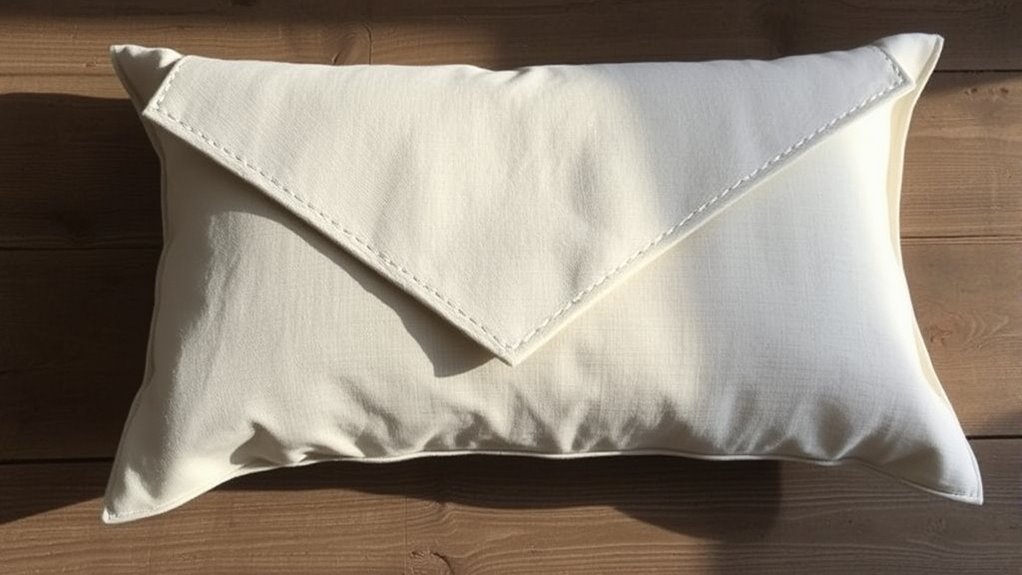
Creating an envelope pillow cover without a zipper is an easy and stylish way to update your cushions. The first step involves choosing the right fabric. Your fabric selection is essential because it sets the tone for your pillow’s look and durability. Opt for sturdy, medium-weight fabrics like cotton, linen, or a blend that holds its shape well. These materials are easy to sew and maintain, making them perfect for cushion covers. If you’d like a more luxurious feel, consider adding a layer of batting or a soft lining inside. Before you start cutting, make sure your fabric is clean and pressed to remove wrinkles, which helps achieve crisp, precise seams.
Choose sturdy, medium-weight fabrics like cotton or linen for a durable, stylish pillow cover.
Next, gather your sewing tools. You’ll need these essentials: fabric scissors or rotary cutter, pins or clips, a sewing ruler or measuring tape, fabric chalk or a fabric marking pen, and a sewing machine with a straight stitch. Having sharp scissors is key to clean cuts, and using pins or clips will keep your fabric layers aligned while sewing. A measuring tape ensures your dimensions are accurate, especially since pillow sizes can vary. Marking your fabric with chalk or a pen helps you sew straight lines and achieve clean edges. The sewing machine is your main tool, but hand sewing needles and thread can be useful for finishing touches or small adjustments.
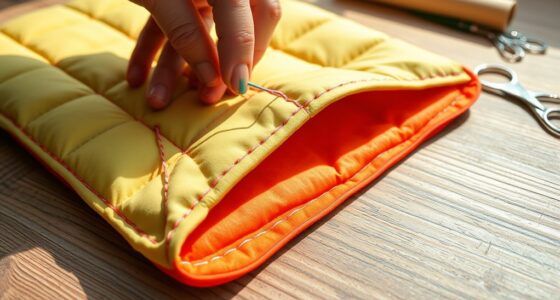
To create the envelope cover, start by measuring your pillow to determine the dimensions of your fabric pieces. Add an extra inch to each side for seam allowances. Cut out two rectangles for the front and back, and a smaller strip for the overlap flap. Fold the edges of each piece about a quarter inch and press to create a clean hem. Pin the pieces together, aligning the edges carefully. Sew along the edges, leaving the top open for the pillow insertion. When sewing, use a straight stitch and backstitch at the beginning and end for durability.
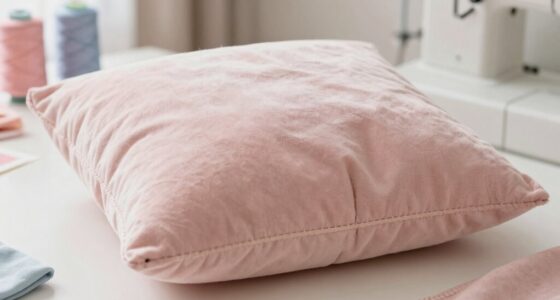
Once the main seams are finished, turn the cover right-side out and press the seams flat. Fold the overlapping flap inward to create a polished finish, then sew across the edges to secure it. The final step is to insert your pillow, and you’ll have a fresh, stylish cushion cover that’s easy to remove and wash. With the right fabric and simple sewing tools, making an envelope pillow cover without a zipper becomes a fun and rewarding project that instantly elevates your space.
Frequently Asked Questions
Can I Make an Envelope Pillow Cover With Waterproof Fabric?
Yes, you can make an envelope pillow cover with waterproof fabric. When choosing waterproof options, look for durable fabrics like coated polyester or laminated cotton, which resist water and wear well. These options guarantee your cushion cover is both functional and long-lasting. Just keep in mind that waterproof fabrics might be stiffer, so select a material that balances water resistance with fabric durability for a comfortable, practical pillow cover.
What Fabric Types Are Best for a No-Zip Envelope Cover?
You should choose fabrics like cotton, linen, or canvas for a no-zip envelope cover, as they offer great fabric choices and durability factors. These materials are sturdy, washable, and maintain their shape well over time. Avoid delicate fabrics that may tear or lose form easily. By selecting durable options, you guarantee your cushion cover remains functional and attractive, even with frequent use or washing.
How Do I Wash and Care for This Cushion Cover?
You should wash your envelope pillow cover on a gentle cycle with cold water to protect the fabric. Use mild detergent and avoid bleach to maintain its color and fabric integrity. For fabric maintenance, air dry whenever possible, or tumble dry on low heat. Iron on a low setting if needed, and always check the care label for specific instructions. This keeps your cushion cover looking fresh and prolongs its lifespan.
Can I Add Decorative Trims or Embellishments?
Yes, you can add decorative trims or embellishments to your envelope pillow cover. Use embellishment techniques like sewing on lace, beads, or appliqués to enhance its look. Attach decorative trims along the edges or corners for a stylish touch. Just guarantee the trims are securely sewn and compatible with your fabric type. This way, you personalize your cushion cover while maintaining its durability and aesthetic appeal.
How Do I Adjust the Size for Different Pillow Dimensions?
Imagine your pillow as a blank canvas waiting for your touch. To modify for different pillow sizing, measure your pillow’s dimensions carefully, then add a seam allowance—usually about 1/2 inch—using a ruler. For fabric adjustments, cut your fabric slightly larger than your measurements to ensure a snug fit. By tailoring your fabric and pillow sizing, you’ll create a custom cover that fits perfectly, like a glove.
Conclusion
Now that you’ve mastered this envelope pillow cover, your cushions will look stunning without a single zipper in sight. With just a few simple steps, you’ve created a DIY masterpiece that transforms your space instantly. Imagine your friends marveling at your stylish, no-fuss decor—your sewing skills might just outshine professional designers! Keep experimenting and refining your technique; soon, you’ll be turning out gorgeous cushion covers faster than you can say “home makeover.”