To make a no-pattern fabric basket with neat boxed corners, choose sturdy fabrics like canvas or denim for structure. Use sharp scissors, pins, and a ruler for precise cuts and folds. Fold the corners carefully, sew across about 1.5 inches from the point, then press and fold the seams inward for crisp edges. Practice these steps to create a polished basket, and if you keep exploring, you’ll discover even more tips to perfect your craft.
Key Takeaways
- Use sturdy fabrics like canvas or denim to maintain shape when creating no-pattern fabric baskets.
- Fold corners precisely, aligning side seams and bottom edges before sewing for sharp boxed corners.
- Sew across the folded corners about 1.5 inches from the point with a straight stitch for clean edges.
- Press seam allowances open and fold inward to shape crisp, professional-looking boxed corners.
- Practice trimming seam allowances and pinning accurately to troubleshoot and perfect your boxed corners.
Top picks for "pattern fabric basket"
Open Amazon search results for this keyword.
As an affiliate, we earn on qualifying purchases.
Choose the Right Fabric and Tools for Your No-Pattern Basket

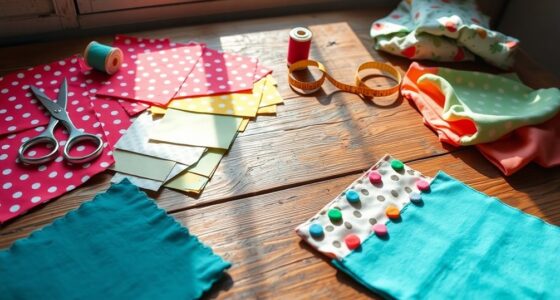
Choosing the right fabric and tools is essential to creating a sturdy and attractive fabric basket with boxed corners. When selecting fabric, opt for sturdy materials like canvas, denim, or heavy cotton that hold their shape well. Avoid flimsy or stretchy fabrics, as they can make your basket less stable. Your tool essentials include sharp scissors, fabric pins or clips, a ruler or measuring tape, and a sewing machine with a straight stitch setting. Using quality tools ensures cleaner cuts and precise seams, which contribute to a polished finished product. Keeping your workspace organized and having all your tools within reach is also beneficial for efficiency. Additionally, understanding fabric types and their properties can help you choose the most suitable material for your project. Being aware of sewing techniques and tips can further enhance your basket’s durability and appearance. Properly preparing your fabric by washing and pressing it before sewing can also improve the final outcome. To ensure your fabric maintains its shape and strength over time, consider fabric reinforcement techniques during construction. Incorporating stabilizers or interfacing can provide extra support and structure to your basket. With careful fabric selection and the right tools, you set a solid foundation for a durable, professional-looking fabric basket.
Beginner’s Guide: Understanding No-Pattern Fabric Baskets and How They Work

Understanding how no-pattern fabric baskets work can open up a world of creative possibilities for your sewing projects. These baskets are flexible, allowing you to customize size, shape, and style without following a strict pattern. Your fabric choice plays a key role: sturdy materials like canvas or denim give structure, while lighter fabrics like quilting cotton create softer baskets. Tool essentials include a sewing machine, scissors, pins, and a ruler to ensure precise measurements. No-pattern baskets rely on simple techniques like folding and sewing seams to form their shape, making them accessible for beginners. By mastering the basic concepts of fabric handling and construction, you’ll gain confidence to experiment and create unique baskets tailored to your needs. European cloud innovation offers inspiring ideas for sustainable and secure storage solutions, even in sewing projects.
How to Master Boxed Corners in Your Fabric Basket : Step-by-Step

Mastering boxed corners is essential for giving your fabric basket a professional, structured look. To start, fold each corner using precise fabric folding techniques, aligning the side seams and bottom edges. Adjust your sewing machine settings to a straight stitch, with a medium stitch length, ensuring durability. Pin the corners securely before sewing. When sewing, keep the folded edges aligned and sew across the corner, about 1.5 inches from the point. To achieve crisp corners, press the seam allowances open and fold the corners inward. Incorporating proper sewing techniques can further improve your results and ensure your fabric basket holds its shape well. Using fabric stabilization methods can also help maintain sharp corners and a neat finish. Implementing smart home automation principles, such as setting routines for your sewing projects, can streamline your workflow and improve consistency. Practicing these steps will help you master boxed corners effortlessly.
Troubleshooting Common Boxed Corner Problems and How to Fix Them

Even with careful sewing, boxed corners can sometimes turn out less than perfect. To fix common issues related to corner shaping and seam accuracy, try these steps:
- Uneven corners: Trim excess seam allowances and press them flat before resewing for sharper corner shaping.
- Misaligned seams: Carefully pin and check seam alignment before sewing to ensure accurate corner shaping.
- Twisted corners: Gently reshape the fabric, then press the corner to encourage proper seam accuracy.
- Bulky corners: Trim seam allowances at an angle or clip into the seam to reduce bulk and improve corner sharpness.
Addressing these issues improves the overall look of your basket while reinforcing proper corner shaping and seam accuracy. With patience, you’ll master perfect boxed corners every time.
Personalize Your Fabric Basket: Creative Tips and Easy Variations

Adding personal touches to your fabric basket can transform a simple project into a unique storage piece that reflects your style. Try DIY embellishments like embroidered patches, fabric paint designs, or decorative ribbons to make your basket stand out. Color coordination also plays a key role—choose fabrics and accessories that match your room’s palette or create a bold contrast for visual interest. You can add a fabric lining with fun patterns or sew on small pockets for extra organization. Experiment with different textures and colors to customize your basket to suit your space and personality. These easy variations don’t require advanced skills, but they add a distinctive flair that turns a basic fabric basket into a true reflection of your creativity.
Frequently Asked Questions
Can I Make a Fabric Basket Without Sewing Skills?
Yes, you can make a fabric basket without sewing skills using a beginner-friendly sewing alternative like fabric glue or fusible web. These methods let you create a sturdy basket without stitching, making it easy for beginners. Just cut your fabric, apply the adhesive along the edges, and fold into the desired shape. It’s a quick, simple project that doesn’t require sewing experience, perfect for starting your fabric craft journey.
What Types of Fabric Are Best for Durability?
You should choose fabrics like denim, canvas, or heavy-duty linen for durability. When selecting fabric, consider durability factors like thickness, weave tightness, and fiber strength. These materials withstand daily use and maintain their shape better, making them ideal for fabric baskets. Avoid delicate fabrics like silk or chiffon, which may tear or wear quickly. Opt for sturdy, tightly woven fabrics to guarantee your basket lasts longer and handles weight comfortably.
How Do I Clean and Maintain My Fabric Basket?
To keep your fabric basket clean, start with fabric care by spot cleaning stains as soon as they happen using a mild detergent and water. For regular maintenance, gently vacuum or brush off dust. If needed, hand wash with cold water and mild soap, then air dry. Avoid harsh chemicals that could damage the fabric. Stain removal is easier when acted on promptly, ensuring your basket stays fresh and durable.
Are There Alternative Materials to Fabric for No-Pattern Baskets?
Yes, you can explore synthetic alternatives like nylon or polyester, which are durable and moisture-resistant. Eco-friendly options include recycled plastic, biodegradable materials, or natural fibers like jute and hemp. These materials offer different aesthetics and strengths, making them suitable for no-pattern baskets. By choosing these alternatives, you can create functional, sustainable storage solutions that suit your style and environmental values.
How Can I Make My Basket More Stable and Sturdy?
Think of your basket as a sturdy ship ready to brave any storm. To make it more stable, use reinforcement techniques like adding interfacing or a cardboard base, which strengthens the structure. Focus on proper weight distribution by placing heavier items at the bottom, preventing tipping. These steps help your basket hold its shape and stand tall, turning it into a reliable, durable container that’s up for any task you throw its way.
Conclusion
Think of your fabric basket like a well-packed suitcase—you want everything to fit just right. When I first tried boxed corners, it felt tricky, like folding a map, but now it’s second nature. With a little practice, you’ll master the technique and create personalized baskets that hold their shape beautifully. Remember, every mistake is just a step closer to a perfect finish. Keep sewing, and soon you’ll be crafting baskets that are both functional and uniquely yours.