To sew a pet bandana that stays put without ties, use durable fabrics like canvas or denim and choose a secure fastening method like Velcro or snap buttons. Measure your pet’s neck carefully to make certain a snug but comfy fit, and incorporate adjustable closures to prevent slipping. Reinforce seams and add extra stitching at stress points for durability. If you want tips on creating a custom, secure bandana, keep exploring for detailed guidance.
Key Takeaways
- Use durable fabrics like canvas or denim with reinforced edges for long-lasting, slip-resistant bandanas.
- Opt for secure fastening methods such as snap buttons or velcro closures instead of traditional ties.
- Measure your pet’s neck accurately and incorporate adjustable closures for a snug, comfortable fit.
- Reinforce seams and stress points with double stitching to prevent slipping and ensure durability during active movement.
- Personalize with decorative features while maintaining a secure fit to combine style with functionality.
Why Traditional Ties Fail to Keep Pet Bandanas Secure
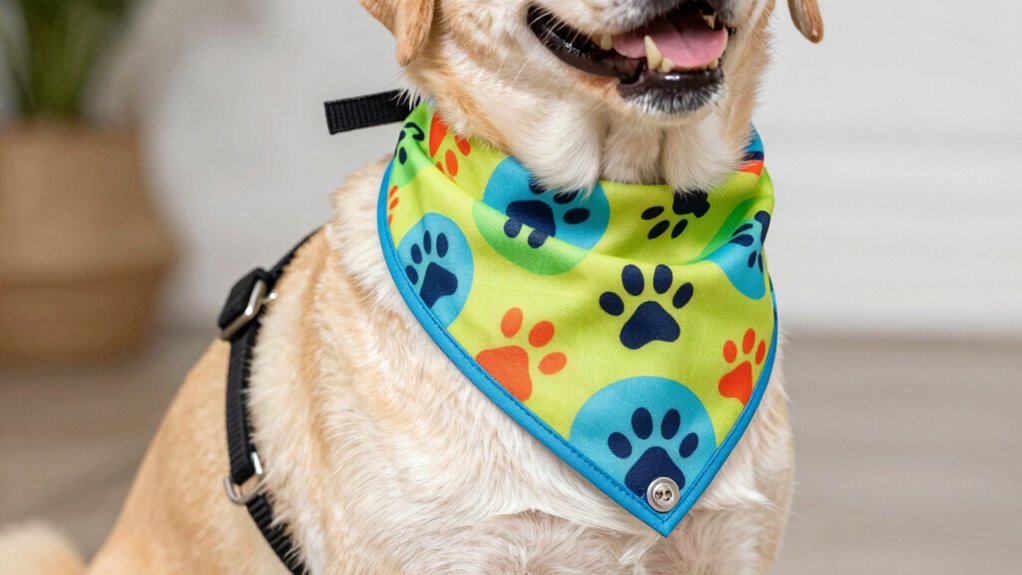
Traditional ties often fail to keep pet bandanas secure because they can easily come undone or loosen as your pet moves around. When you choose bandana patterns, you might notice that simple knots don’t hold well during play or walks. These tie alternatives, like snap closures or elastic options, offer a more reliable solution. Ribbons or fabric ties can slip or loosen over time, especially with active pets. By opting for different fastening methods, you guarantee your pet’s bandana stays in place, preventing it from falling off or becoming a nuisance. Understanding the limitations of traditional ties helps you select better fastening options, keeping your pet comfortable and stylish without constant readjustments. Additionally, secure fastening methods can help reduce the risk of the bandana causing discomfort or irritation during active use, especially when designed with pet-safe materials. Using fasteners designed with durability and safety in mind ensures the bandana remains secure no matter how energetic your pet is. Moreover, choosing appropriate closure types that incorporate adjustability features can significantly improve the overall fit and stability of the bandana during various activities.
Choosing the Right Fabric and Bandana Style for Stability

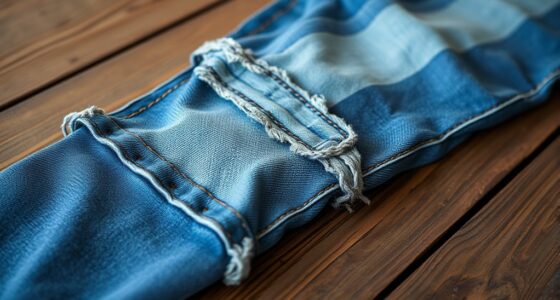
To guarantee your pet’s bandana stays secure, choosing the right fabric and style is essential. Durable fabric ensures the bandana won’t easily tear or fray, keeping it in place longer. When selecting fabric, look for sturdy options like canvas, denim, or thick cotton. Fabric durability** is crucial because it directly impacts how well the bandana withstands wear and tear over time. Additionally, considering material strength can help ensure the bandana remains intact during active pets and rough play. Choosing a fabric with high tensile strength can further enhance the bandana’s ability to resist ripping. Incorporating backup fasteners such as snaps or Velcro can also improve security and prevent slipping. Style options also matter; a bandana with a wider, reinforced edge provides extra stability and prevents slipping. Consider these key points: 1. Fabric durability: opt for strong, long-lasting materials. 2. Style options: choose designs that offer a snug fit and reinforcement. 3. Secure fit** design: look for styles with built-in features like adjustable closures or slip-on designs.
Step-by-Step Guide to Sewing a No-Tie, Secure Pet Bandana
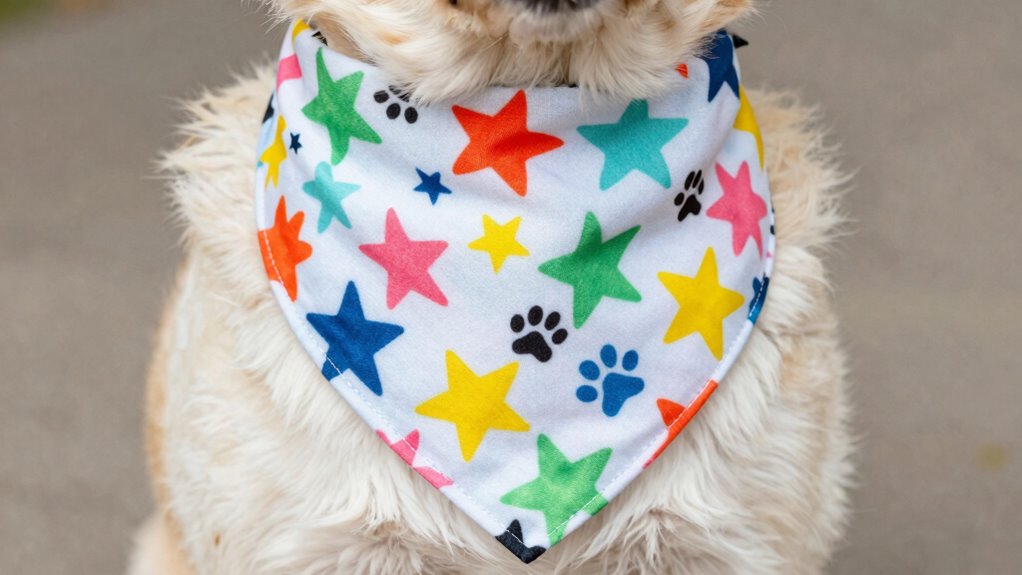
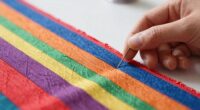
Sewing a no-tie, secure pet bandana is a straightforward process that guarantees your furry friend stays comfortable and stylish without the hassle of knots or ties. Start by choosing a bandana pattern that suits your pet’s size and style. Cut your fabric according to the pattern, ensuring you add seam allowances. Use sewing techniques like straight stitches to sew along the edges, creating a clean hem. Fold the edges inward to reinforce the bandana’s durability. To prevent slipping, consider sewing a small, discreet strip of velcro or snap buttons at the ends, eliminating ties altogether. Carefully press all seams to give the bandana a polished look. Incorporate reliable sewing methods to ensure the bandana holds up over time and stays securely in place. Additionally, selecting fabrics with proper durability and comfort can enhance the longevity and wearability of your pet accessory. When choosing fasteners, opt for sturdy fastening options that provide a secure fit without causing discomfort. Using proper sewing techniques not only improves the appearance but also increases the overall strength of the bandana, making it more resistant to wear and tear. For added security, consider using non-slip grip materials or coatings to help keep the bandana in place during active use. With these simple steps, you’ll craft a secure, no-tie pet bandana that stays put and looks great.
Tips for Ensuring a Comfortable and Perfect Fit for Your Pet
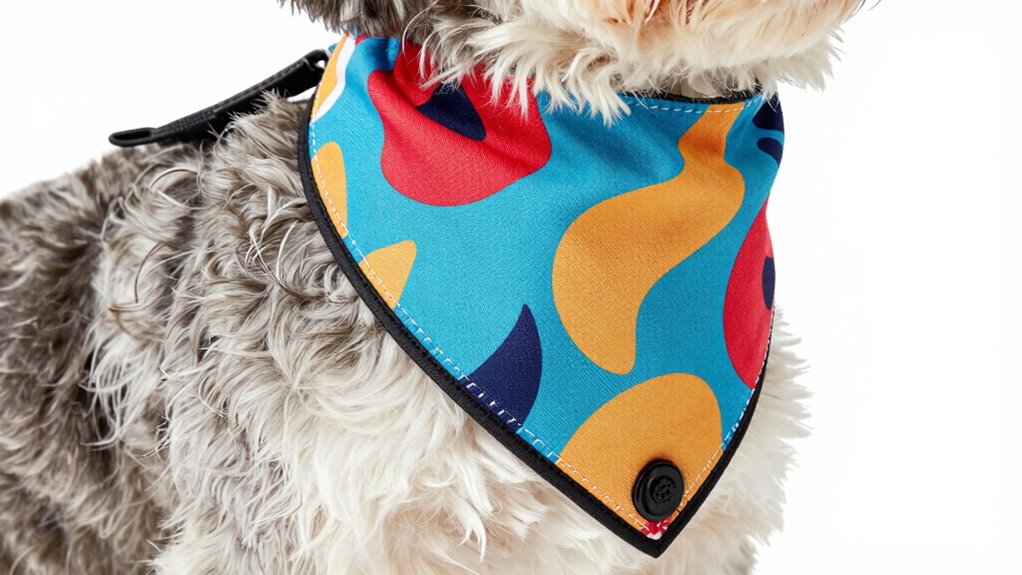
To make certain your pet feels comfortable, start by adjusting the band size properly so it’s snug but not tight. Opt for soft, flexible fabrics that won’t irritate your pet’s skin or restrict movement. Always test the fit before finalizing your sewing to ensure a perfect, comfortable fit. Selecting breathable materials can also help keep your pet comfortable during wear. Additionally, considering adjustable closures can make it easier to customize the fit as your pet moves or grows. Being aware of proper sizing ensures the band remains secure without causing discomfort or slipping off. Incorporating proper measurements during the sewing process helps prevent the band from being too loose or too tight, ensuring a secure fit. Paying attention to measurement techniques can further improve the accuracy of your fit and comfort for your pet.
Adjust Band Size Properly
Ensuring your pet’s bandana fits comfortably requires measuring their neck accurately before cutting or sewing. To get the perfect fit, consider these tips:
- Leave a little slack for collar attachment, so it doesn’t feel tight or restrict movement.
- Check that the band isn’t too loose, preventing it from slipping off or shifting during activity.
- Add space for decorative accents without making the band too bulky or uncomfortable.
- Be mindful of supernatural phenomena that may influence your pet’s comfort or behavior when choosing materials or placement. Additionally, selecting durable and safe fabrics can help ensure the band remains comfortable and secure during various activities. Recognizing that proper sizing is essential for both safety and aesthetics will help prevent the band from slipping or causing irritation. Incorporating creative storytelling into your design process can also inspire unique and appealing patterns or themes for your pet’s bandana. Use a soft measuring tape to determine the exact neck size. When adjusting, keep in mind that a snug but comfortable fit prevents ties from falling off. Proper sizing also guarantees decorative accents stay in place and don’t bother your pet. It’s also helpful to consider juice extraction techniques to choose the best fabrics that are easy to clean and maintain, ensuring your pet stays comfortable and healthy. Always test the fit before final sewing to guarantee comfort and security.
Choose Soft, Flexible Fabrics
Choosing the right fabric is essential for a pet bandana that’s both comfortable and durable. Soft, flexible fabrics like cotton or lightweight fleece ensure your pet stays comfortable without irritation. These materials move easily with your pet’s movements, preventing discomfort and chafing. When selecting fabric, consider fabric durability—your pet’s active lifestyle demands sturdy yet gentle options that withstand washing and wear. Additionally, think about your style preferences; patterned or solid fabrics can match your pet’s personality or your wardrobe. Avoid stiff or heavy fabrics that can restrict movement or cause discomfort. By choosing soft, flexible fabrics suited to your pet’s needs and your style preferences, you create a bandana that stays in place and keeps your furry friend happy and comfortable. Incorporating seasonal variations into your fabric choice can also enhance comfort and style throughout the year.
Test Fit Before Finalizing
Before you finalize your pet bandana, it’s essential to test the fit on your furry friend. A proper fit guarantees comfort and keeps the bandana from slipping or causing irritation. When trying it on, consider these key points:
- Check that the bandana isn’t too tight or loose, allowing your pet to move comfortably.
- Ensure the size and placement complement seasonal themes or color coordination with your pet’s accessories.
- Observe your pet’s reactions—if they seem uncomfortable or try to remove it, adjust the fit accordingly.
This test fit helps you confirm the bandana stays secure and looks adorable for any occasion, whether it’s a holiday or everyday style. A well-fitted bandana enhances your pet’s comfort and style effortlessly.
Troubleshooting Common Issues and How to Adjust Your Design
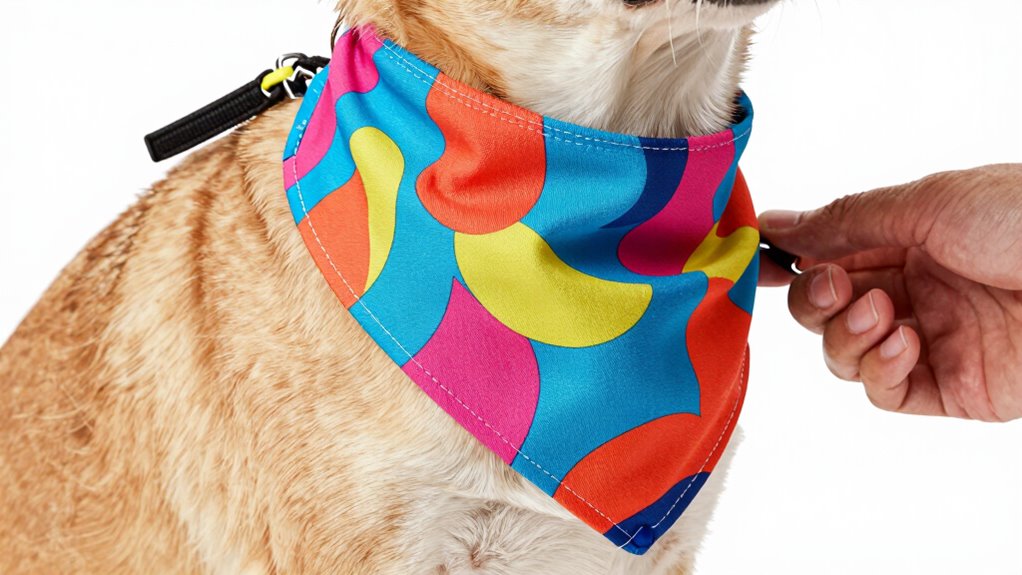
If your bandana isn’t fitting quite right, don’t worry—small adjustments can make a big difference. You might need to tighten or loosen the strap, reinforce certain stitching areas, or change the band’s width for a better fit. Let’s explore how to troubleshoot these common issues and adjust your design effectively.
Adjust Strap Tightness
Sometimes, your pet’s bandana might feel too loose or too tight, affecting comfort and safety. To fix this, you need to modify the strap tightness. Here are three tips:
- Check the fit around your pet’s neck to ensure it’s snug but not constricting, similar to a pet collar.
- If your bandana has decorative embellishments, make sure they don’t interfere with the strap adjustment, ensuring a smooth fit.
- Experiment with the strap length by adding or removing a few stitches or adjusting the buckle, so it stays secure without discomfort.
Properly adjusting the strap ensures your pet stays comfortable, and the bandana stays put without slipping or causing irritation. This simple step keeps your DIY project both cute and safe.
Reinforce Stitching Areas
Reinforcing stitching areas is essential for preventing your pet’s bandana from fraying or coming apart, especially with active pets or frequent washing. When using notions and patterns, focus on double-stitching or backstitching at stress points like corners and edges to strengthen your seams. Sewing machine tips include adjusting your stitch length for durability and ensuring your machine’s tension is correct for secure seams. Consider adding a zigzag or overlock stitch over the raw edges to prevent fraying. Take your time to sew slowly and steadily, paying attention to high-stress areas. Reinforcing these areas helps your bandana last longer, withstand tugging, and stay securely in place during active play. Proper reinforcement is key to a professional finish and long-lasting pet accessory.
Modify Band Width
Adjusting the band width is a common solution when your pet’s bandana doesn’t fit properly or looks off-balance. To customize the fit, consider the following steps:
- Reduce or increase the width by trimming or adding fabric along the edges, ensuring you match the fabric patterns and style options.
- Choose different fabric patterns that complement your pet’s personality or wardrobe, giving your bandana a fresh look.
- Adjust the overall size based on your pet’s breed and neck size for a comfortable, secure fit that stays put.
Additional Features and Variations to Make Your Bandana Stand Out
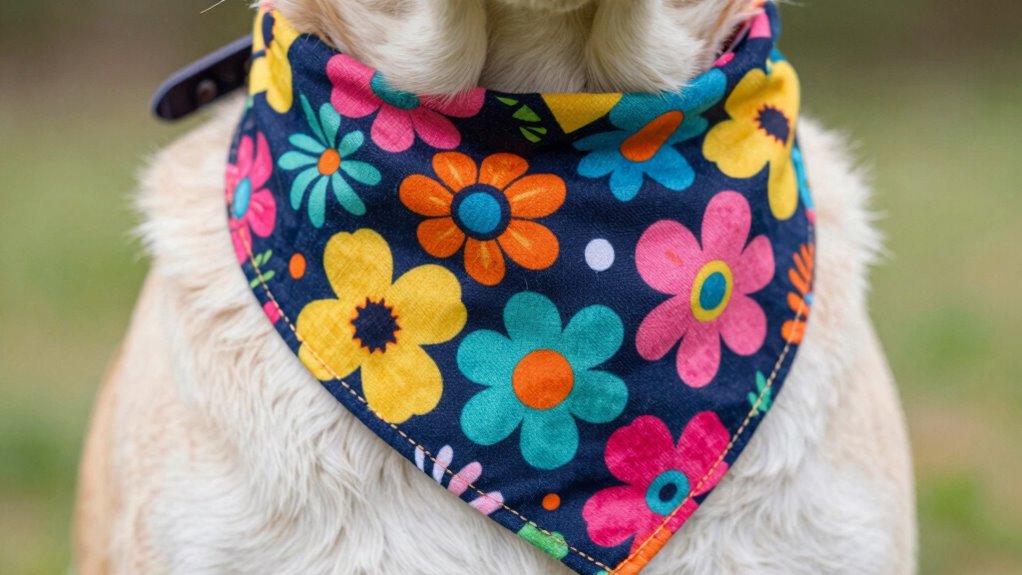
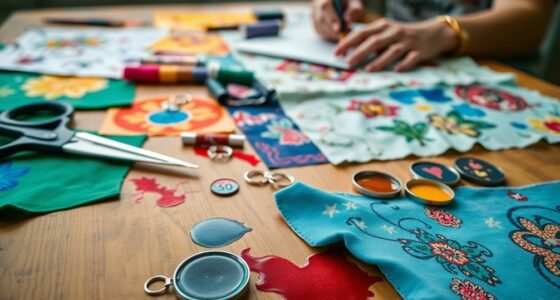
Adding unique features and variations can truly make your pet bandana stand out. One way is to explore different pattern options, such as fun prints, seasonal themes, or personalized designs that reflect your pet’s personality. You can also enhance the bandana with decorative embellishments like embroidery, fabric appliqués, or small charms. These details add a special touch and showcase your creativity. Consider using contrasting fabrics or adding fun trims like pom-poms or lace to elevate the look. Customizing with initials or adorable motifs can make it truly unique. By mixing pattern options and decorative embellishments, you create a one-of-a-kind accessory that not only looks great but also highlights your pet’s style.
Frequently Asked Questions
Can I Use Waterproof or Outdoor Fabrics for Added Durability?
Yes, you can definitely use waterproof fabrics or outdoor materials for added durability. These fabrics are designed to withstand the elements and resist wear, making your pet bandana last longer. Just guarantee the material is comfortable for your pet and easy to sew. Waterproof fabrics and outdoor materials provide extra protection, preventing dirt and moisture from soaking in, which keeps the bandana looking fresh and functional through adventures.
How Do I Customize the Size for Different Pet Breeds?
To customize the size for different pet breeds, start by measuring your pet’s neck and head dimensions carefully. Then, adjust the pattern size based on these measurements, adding a little extra for comfort. When you’re adjusting the pattern size, make sure to check the fit by comparing it with your pet’s measurements before cutting fabric. This way, you’ll create a perfect, comfortable bandana tailored to any breed.
Are There Safety Concerns With Decorative Elements Like Buttons or Rhinestones?
Sure, adding rhinestones or buttons sounds adorable, but be aware of pet safety and decorative concerns. These embellishments can pose choking hazards or cause injuries if they come loose. You might think they add charm, but tiny parts could be swallowed or hurt your pet’s skin. Always opt for secure, pet-safe decorations, and regularly check for loose pieces to keep your furry friend safe and stylish.
How Often Should I Wash or Replace the Bandana?
You should wash your pet’s bandana regularly—about once a week—to maintain pet hygiene and prevent odors. Check for signs of wear or fabric fading, and replace it when it shows significant damage or loss of color to guarantee comfort and safety. Proper washing helps preserve fabric longevity, keeping the bandana looking good and lasting longer. Always use gentle detergents to avoid irritating your pet’s skin.
Can This Sewing Method Be Adapted for Other Pet Accessories?
Think of sewing techniques as a toolbox for pet accessories; you can easily adapt them for collars, harnesses, or clothing. With the right customization options, these methods let you create functional, stylish pieces tailored to your pet’s needs. By experimenting with different stitches and fabrics, you can craft a variety of accessories that stay secure and comfortable, turning simple sewing into a versatile way to personalize your pet’s wardrobe.
Conclusion
Did you know that over 70% of pet owners struggle with bandanas that keep slipping or falling off? By sewing a no-tie, secure bandana, you can guarantee your pet stays stylish and comfortable without constant adjustments. With the right fabric and a few simple steps, you’ll create a bandana that stays put through playtime and snuggles. Your pet will look adorable and feel secure — a simple DIY upgrade everyone will love!