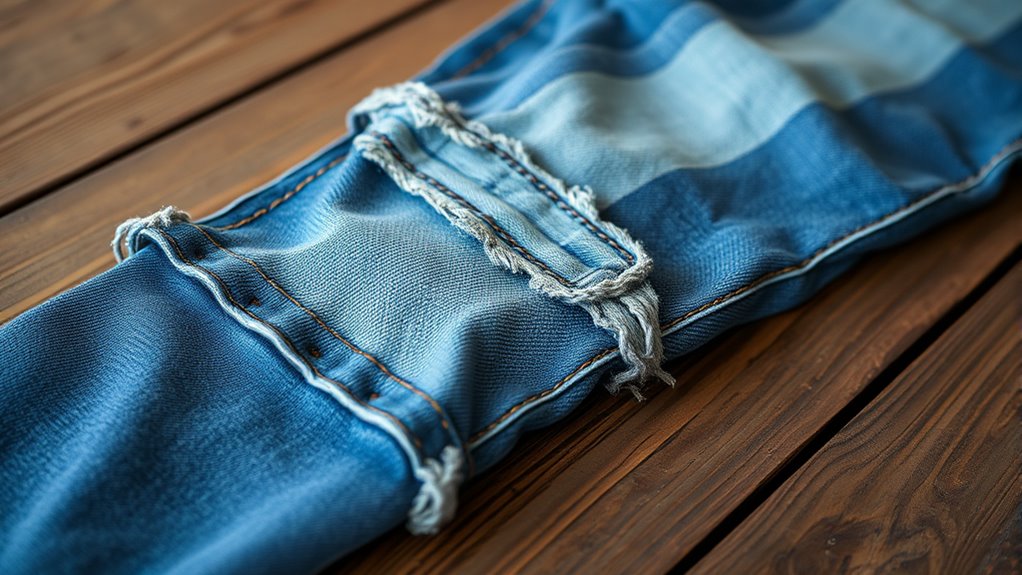

To patch your jeans, first turn them inside out and trim any frayed edges around the tear. Cut a denim patch slightly larger than the damaged area and secure it with pins. Sew around the edges with a needle and thread or use a zigzag stitch on your sewing machine for durability. For added strength, reinforce the stitching. If you want more detailed steps and tips, keep going for a complete denim mending guide.

Get business pricing on tools and workshop supplies
- Business-only prices and quantity discounts
- Tax-exempt purchasing
- Multiple users, one account, clear invoices
Key Takeaways
- Turn jeans inside out, examine damage, and trim frayed edges for a clean surface before patching.
- Cut a denim patch slightly larger than the tear and position it securely over the damage with pins.
- Sew around the patch edges using hand stitches or a zigzag stitch on a sewing machine for durability.
- Alternatively, apply fabric glue along patch edges and press firmly, ensuring proper adhesion before wearing.
- Turn jeans right-side out, inspect the repair, reinforce stitches if needed, and add decorative touches for a personalized finish.

If your favorite pair of jeans has developed a tear or stain, don’t rush to toss them out. Instead, consider patching them up—it’s a simple way to extend their life and embrace sustainable fashion. Repairing your jeans not only saves money but also reduces waste, and it’s a fulfilling way to practice DIY repair tips. Before you start, gather your materials: a denim patch, fabric scissors, needle and thread or a sewing machine, fabric glue (if preferred), and pins. Choosing a patch that matches or complements your jeans can make your repair less noticeable or even add a stylish touch.
Start by turning your jeans inside out. Examine the tear or stain carefully to determine the best placement for your patch. If it’s a tear, trim any frayed edges to create a clean, even surface. Cut your denim patch slightly larger than the damaged area, giving yourself enough margin for secure sewing. If you’re working with a stain, you might opt for a patch that covers the entire area or just a portion of it, depending on your style.
Next, position the patch over the damaged spot. Use pins to hold it in place, ensuring it doesn’t shift while you sew. For a more durable repair, sewing around the edges of the patch is ideal—this keeps it securely attached and prevents further fraying. You can do this by hand with a sturdy, tight stitch, or if you have a sewing machine, use a zigzag stitch to cover the edges thoroughly. Be sure to sew close to the edge of the patch to create a seamless look, or go for a decorative stitch if you want to add a personalized touch.
If sewing isn’t your preference, fabric glue can also serve as a quick fix. Apply a thin layer along the edges of the patch and press it firmly onto the damaged area. Let it set according to the glue’s instructions before wearing your jeans again. Keep in mind, sewing tends to be more durable, especially for areas prone to stretching or frequent movement. Additionally, choosing the right projector technology can help you better visualize your repair process in a well-lit workspace.
Once your patch is attached, turn your jeans right-side out and check the repair. If needed, reinforce the stitching for extra strength. This simple fix can turn a worn-out pair into a unique, repaired piece that aligns with sustainable fashion principles. By patching your jeans yourself, you’re practicing eco-friendly habits and honing your DIY repair skills. It’s a small but impactful way to care for your clothing, reduce waste, and add a personal touch to your wardrobe.
As an affiliate, we earn on qualifying purchases.
Frequently Asked Questions
Can All Types of Jeans Be Patched Effectively?
Yes, all types of jeans can be patched effectively, but fabric compatibility matters. For example, thicker denim patches work best on similar heavyweight jeans, ensuring patch longevity. Lightweight fabrics may need delicate patches to prevent damage, while stretch jeans require elastic patches. By choosing the right patch material and applying proper techniques, you can extend the life of any jeans, making them look good and last longer.
What Tools Are Essential for Denim Mending?
To mend your jeans beautifully, gather essential tools like a needle and strong thread for sewing techniques, along with fabric selection that matches your denim. A pair of sharp scissors helps trim frayed edges, while pins keep patches in place. A sewing machine can speed things up, but hand sewing offers precision. With these tools, you create a durable, stylish repair that blends seamlessly into your favorite jeans.
How Do I Choose the Right Fabric for Patches?
When choosing the right fabric for patches, consider your fabric color to match or complement your jeans. Opt for denim or sturdy cottons for durability. Think about the patch shape; a rounded shape usually blends seamlessly, while a square or rectangular patch offers more coverage. Select a fabric that feels similar to your jeans for a cohesive look, and verify it’s thick enough to withstand wear.
Is Sewing or Iron-On Patches More Durable?
If you’re after the best blend of patch durability and aesthetics, sewing patches tends to be the winner. You actively secure the fabric, making it more resistant to wear and tear, and you can customize the look for a seamless finish. Iron-on patches offer quick fixes but may not hold up as long, especially with frequent washing. So, for long-lasting style, sewing your patches is the way to go.
Can Patches Be Removed Easily if I Change My Mind?
Yes, patches can be removed easily if you change your mind. For patch removal, you might need to carefully peel or gently loosen the patch, especially if it’s iron-on or sewn on loosely. Keep in mind, removing patches might affect your style customization, and some fabric or adhesive residue could remain. If you want a clean look later, consider using removable patches or patching techniques designed for easy removal.
Conclusion
Now that you’ve learned how to patch your jeans, you can extend their life and save money. Plus, mending your denim adds a personal touch to your style. Did you know that Americans throw away about 80 pounds of textiles each year? By patching your jeans, you’re helping reduce waste and making your wardrobe more eco-friendly. So grab your needle and fabric—your jeans will thank you for the fresh new look!
Fall yard work Picks
leaf blowers
As an affiliate, we earn on qualifying purchases.