Adding a hanging loop to your DIY tea towel makes it more functional and easy to access daily. You can choose durable fabrics like cotton or linen, personalize it with embroidery or colors, and sew the loop securely near a corner. Proper placement guarantees it stays sturdy, and regular washing keeps it fresh. If you want tips on creating a long-lasting, stylish towel with a strong loop, keep exploring more ideas.

Get tools and workshop supplies delivered free — and shop member deals
- Fast, free delivery on millions of items
- Access to Prime Big Deal Days deals on October 6–7
- Prime Video, Amazon Music and more included
Key Takeaways
- Select durable, absorbent fabrics like cotton or linen and personalize with embroidery or fabric paint for a custom look.
- Measure and cut a 6-8 inch fabric strip to create a sturdy hanging loop, attaching securely with sewing or rivets.
- Position the loop near a corner or top edge, reinforcing the attachment with strong stitches for durability.
- Wash in gentle cycles, avoid bleach, and reinforce loose or frayed areas promptly to maintain the loop’s integrity.
- Add decorative elements or versatile hanging options to enhance style and functionality for daily kitchen use.
cotton kitchen tea towels with hanging loops
As an affiliate, we earn on qualifying purchases.
As an affiliate, we earn on qualifying purchases.
Why Adding a Hanging Loop Makes Your DIY Tea Towel More Functional

Adding a hanging loop to your DIY tea towel substantially boosts its usability. When selecting fabric, choose a sturdy, absorbent material that holds up well over time, ensuring the loop remains secure. Proper loop placement is key; position it near a corner or edge for easy hanging and retrieval. This small addition keeps your towel accessible and prevents it from slipping onto the counter or floor. A well-placed loop also helps your towel dry faster and stay within reach, making your kitchen more organized. Keep in mind that the fabric should be strong enough to support the loop’s weight without tearing. Additionally, considering fabric durability factors ensures your hanging loop remains intact through regular use. Selecting high-quality sewing techniques can further enhance the loop’s strength and longevity. Incorporating reinforced stitching can also significantly improve the overall durability of your DIY tea towel, especially when combined with knowledge of proper load calculations for added security.
Choosing the Right Fabric for Your Tea Towel and Loop
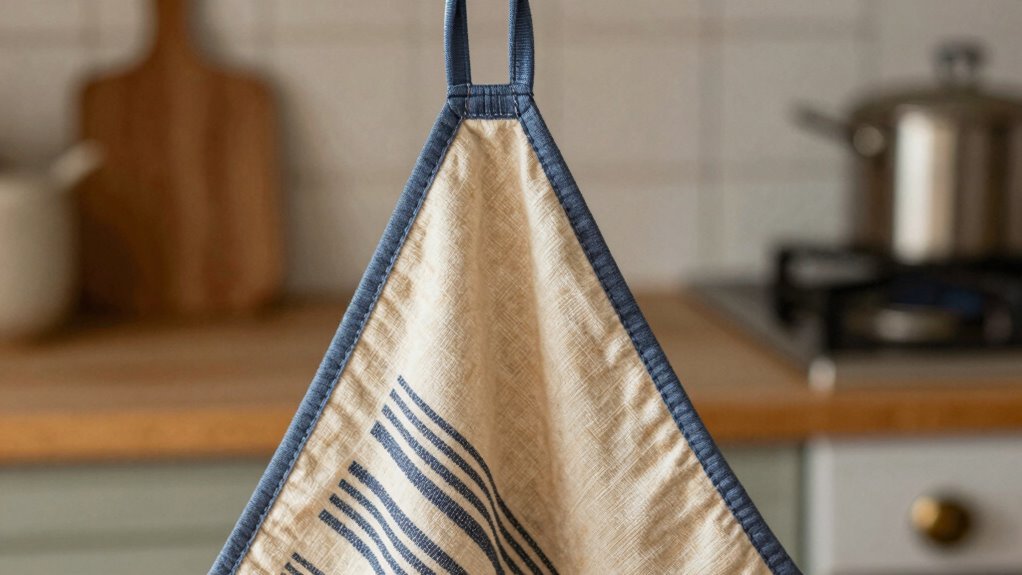
Choosing the right fabric is essential for making a durable and functional tea towel with a hanging loop. You want a fabric that withstands frequent use and washing. First, consider fabric patterns—opt for simple, solid colors or subtle prints that won’t clash with your kitchen decor. Second, think about durability; linen and cotton are excellent choices because they resist wear and tear. Additionally, selecting fabrics with proper weave quality can further enhance durability and absorbency. The weave type directly impacts the towel’s ability to absorb moisture and resist fraying over time. Proper fabric construction ensures the towel maintains its integrity after multiple washes. Finally, pay attention to loop shapes; a sturdy, reinforced loop made from the same fabric or a contrasting color adds visual interest and strength. Selecting fabric with the right patterns and sturdy loop shapes ensures your tea towel not only looks great but also performs reliably every day. Proper fabric choice makes all the difference in creating a kitchen essential you’ll love. Additionally, opting for natural fibers like cotton or linen supports eco-friendly practices and contributes to a sustainable kitchen environment. Using high-quality, durable fabrics can also extend the lifespan of your tea towel, making it a more economical choice in the long run.
Measuring and Marking the Placement for Your Loop

Start by determining the best spot on your tea towel for the loop—usually near one corner or along the top edge. Choose a spot that’s accessible and visually balanced. When measuring, focus on measurement accuracy to guarantee the loop will be positioned correctly. Use a ruler or measuring tape to mark a small dot or line where the loop will go, keeping consistent spacing from the edges. If your fabric selection is thicker or textured, double-check your measurements, as these may affect placement. Be precise with your marks to avoid misalignment later. Taking your time with accurate measurement and clear marking makes sewing easier and results in a professional-looking finish. Proper placement is key to a functional and attractive hanging loop on your tea towel. Additionally, understanding media literacy can help you assess the quality of online tutorials or patterns you might follow for sewing. Considering fabric types and their properties can also influence your choice of placement and technique. Developing creative storytelling skills can inspire unique designs and personal touches for your sewing projects. Being aware of fabric properties can help you select the most suitable techniques for attaching your loop, ensuring durability and ease of use. Recognizing the importance of product reviews can guide you in choosing the best materials and tools for your project.
How to Sew a Hanging Loop Onto Your Tea Towel
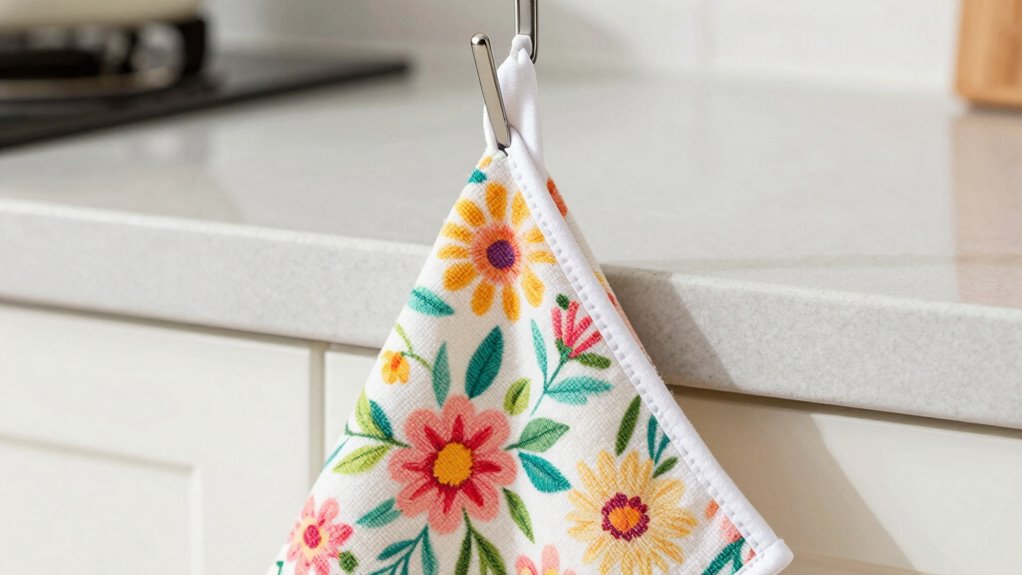
To sew a sturdy hanging loop, you need to choose the right fabric that matches your tea towel’s style and weight. Measure and cut your loop carefully to guarantee it fits well without sagging or pulling. Use strong sewing techniques to attach the loop securely, so it stays durable through regular use. Additionally, consider the ventilation considerations to prevent moisture buildup that could affect the longevity of your hanging loop and tea towel. Ensuring proper piercing care and hygiene during the sewing process can also help maintain the fabric’s condition and prevent any unnecessary damage or irritation. Selecting a breathable fabric for the loop can further enhance moisture control and increase the overall durability of your homemade upgrade. Incorporating air purifier maintenance tips can also help keep your kitchen environment fresh and free from airborne contaminants, supporting your overall kitchen hygiene. Proper washing and drying methods can also extend the life of your tea towel and its loop, maintaining hygiene and appearance over time.
Choosing the Right Fabric
Selecting the right fabric for your tea towel is essential to guarantee your hanging loop is sturdy and looks good. Choose a fabric that can withstand frequent washing and drying without losing shape or color. When considering fabric care, opt for cotton or linen, which are durable and easy to maintain. Here are some sewing tips to keep in mind:
- Pre-wash your fabric to prevent shrinking after sewing.
- Use a tightly woven fabric for added strength, especially around the loop area.
- Test your stitches on scrap fabric to ensure secure sewing and proper fabric handling.
Measuring and Cutting Loop
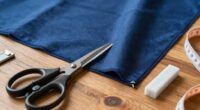
Before sewing the hanging loop onto your tea towel, you need to carefully measure and cut the fabric strip to the right length. Choose a fabric with a bit of sturdiness, like cotton or linen, to guarantee durability. Use a ruler or measuring tape to determine a strip about 6 to 8 inches long and a half-inch wide. Mark your measurements clearly with fabric chalk or a fabric marker. When cutting, keep your scissors sharp for clean edges. During sewing, use techniques like backstitching at the ends for reinforcement. This ensures the loop stays secure over time. Proper measurement and careful cutting set a strong foundation for sewing techniques that will give you a neat, functional hanging loop on your tea towel. Additionally, understanding fabric durability can help you select the best material to withstand daily use and washing. Being aware of sewing techniques can also improve the overall strength and appearance of your finished loop. Incorporating sturdy stitching methods will further enhance the longevity of your hanging loop. Recognizing the importance of proper measurement can prevent common mistakes and ensure your loop fits perfectly. Moreover, paying attention to fabric selection can make a significant difference in the overall functionality.
Sewing Techniques for Durability
Sewing the hanging loop securely onto your tea towel guarantees it stays in place through regular use. To guarantee durability, focus on strong stitching that withstands pulls and washes. First, choose a thread matching your fabric pattern or color coordination for a seamless look. Second, double-stitch along the edges of the loop to reinforce the attachment. Third, pivot your needle at each corner to create sharp, secure corners that won’t fray over time. Keep your stitches even and tight, avoiding loose areas that could tear. By paying attention to fabric patterns and coordinating thread, your hanging loop remains both functional and visually appealing. This careful sewing technique guarantees your tea towel will hang securely and last for many uses. Additionally, understanding attention to detail in your sewing process ensures a professional finish and enhances the overall durability of your homemade tea towel.
Creative Ways to Personalize Your Tea Towel With a Loop
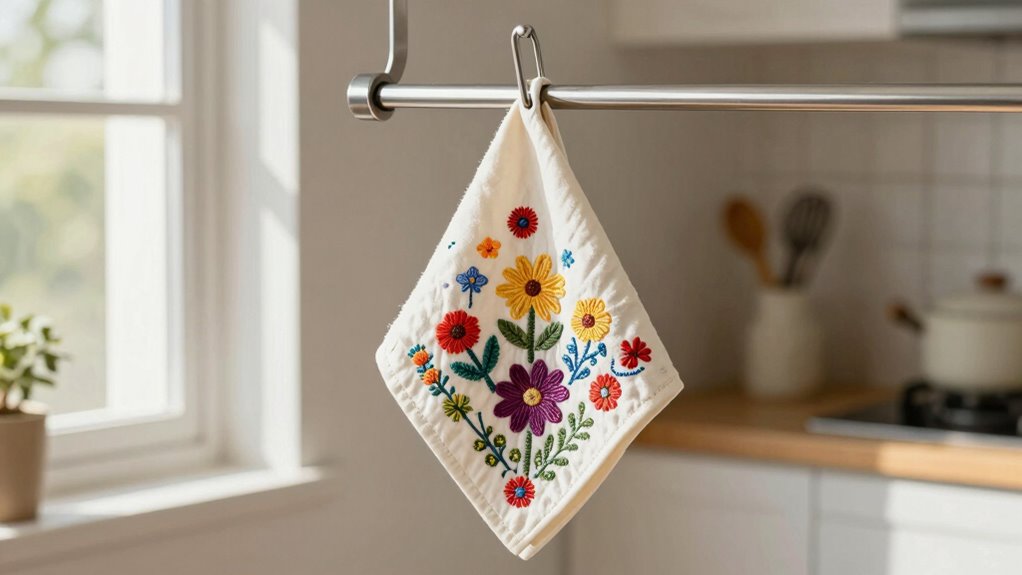
You can make your tea towel truly unique by personalizing it with a loop. Try embroidering a special message, adding decorative buttons or beads, or painting designs with fabric paint. These simple touches will turn a plain towel into a charming, one-of-a-kind piece.
Embroider a Personal Message
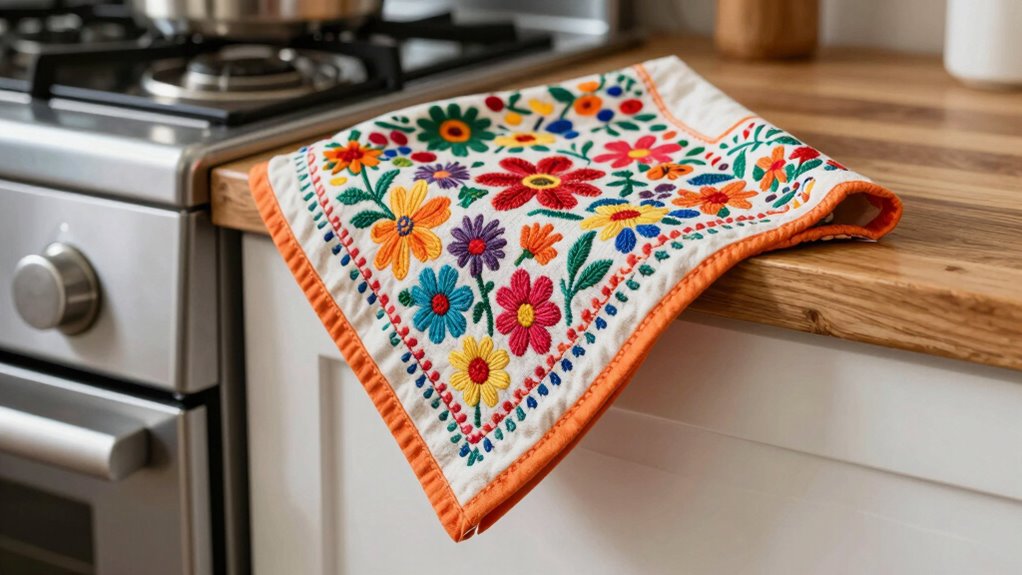
Adding a personal message to your tea towel makes it uniquely yours and adds a charming touch. Embroidered quotes are a simple way to do this. First, choose a meaningful phrase or quote that reflects your personality or style. Second, select embroidery thread and a font that complements your towel’s design. Third, carefully stitch your message, ensuring even spacing and clear lettering. Personal messages turn a functional piece into a heartfelt gift or keepsake. Embroidered quotes can be humorous, inspiring, or sentimental—whatever best fits your vibe. This personalization makes your tea towel stand out and adds a cozy, customized feel to your kitchen. Plus, it’s a quick project that elevates your everyday kitchen routine.
Add Decorative Buttons or Beads
Decorative buttons or beads can instantly elevate your tea towel by adding a charming, tactile detail. When choosing fabric selection, opt for sturdy, smooth fabrics that can support the embellishments without tearing or sagging. Decorative embellishments like buttons or beads bring a personalized touch, making your tea towel unique. Sew on small buttons along the hanging loop or scatter beads across the towel’s surface for visual interest. Use matching or contrasting thread to secure them firmly. Be mindful of the placement to avoid interfering with the towel’s function. These embellishments are simple to add and require minimal tools, yet they dramatically enhance the overall look. Incorporate your favorite colors or styles to reflect your personality, turning a plain tea towel into a functional piece of art.
Use Fabric Paint for Designs
Transform your plain tea towel into a personalized masterpiece by using fabric paint to create unique designs. Fabric paint makes design customization easy and fun. First, choose your colors and plan your design. Second, use stencils or freehand your artwork directly onto the towel for a custom look. Third, let the paint dry completely before washing or hanging to prevent smudging. This method allows you to add anything from simple patterns to intricate motifs, reflecting your style. Whether you’re creating a cheerful pattern or elegant script, fabric paint offers endless possibilities. Not only does this elevate your tea towel’s appearance, but it also makes it a one-of-a-kind piece that adds charm to your kitchen. Get creative and personalize your tea towel today!
Different Methods for Attaching the Loop: Sewing, Rivets, or Grommets
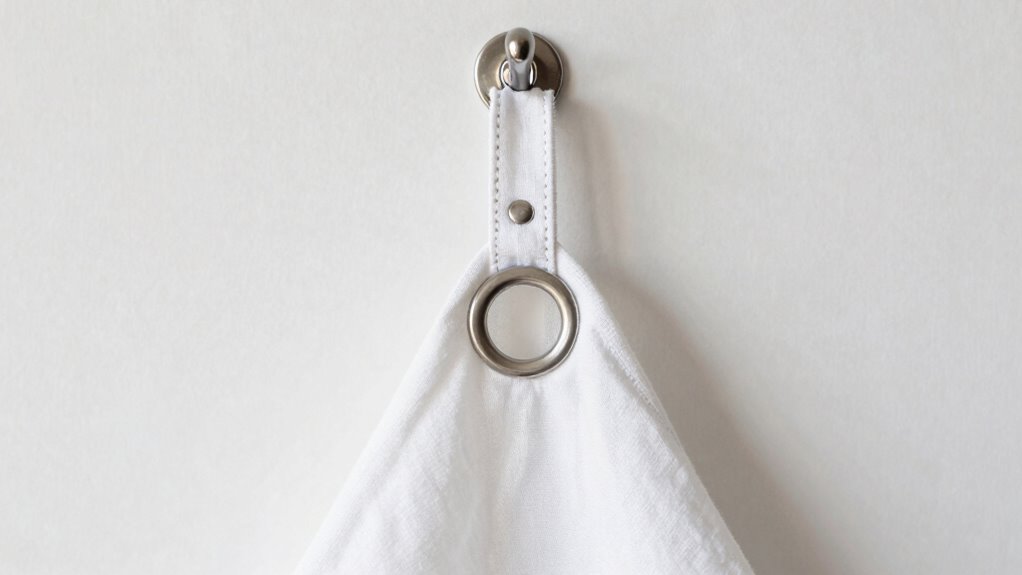
When attaching the loop to your DIY tea towel, you have several options to guarantee it’s secure and durable. Sewing the loop directly onto the fabric offers a clean, strong hold that supports regular fabric care. Rivets provide a quick, sturdy attachment, but make sure they’re made of rust-resistant material to maintain loop longevity. Grommets are another excellent choice—they reinforce the attachment point and resist wear over time, especially with frequent washing. Each method affects the overall durability of your tea towel’s hanging loop differently, so choose based on your skill level and the fabric’s thickness. Proper installation ensures the loop remains secure through multiple washes, maintaining both the towel’s appearance and function. Consider your needs and fabric care practices to pick the best attachment method.
Caring for and Washing Your DIY Tea Towel to Ensure Longevity

To keep your DIY tea towel looking its best and functioning well over time, proper care and washing are essential. Follow these care tips to ensure longevity:
- Wash in cold or warm water to prevent fading and fabric wear.
- Use a gentle cycle and mild detergent to preserve the fabric and hanging loop.
- For stain removal, treat stains promptly with a mixture of baking soda and water or a stain remover before washing.
Avoid bleach, as it can weaken fibers and damage the fabric. Always air dry or tumble dry on low heat to prevent shrinking. Regular washing and prompt stain removal keep your tea towel fresh and durable, ensuring it remains a handy kitchen tool for years to come. Proper care is key to maintaining its appearance and functionality.
Common Mistakes to Avoid When Making Your Tea Towel With a Loop

Making your tea towel with a loop can be straightforward, but avoiding common mistakes will guarantee a durable and functional finished product. One mistake is neglecting fabric dyeing techniques, which can cause uneven color or fading over time. Be sure to follow dye instructions carefully and test on scrap fabric first. Additionally, avoid improper attachment of the hanging loop—sewing it too loosely can cause tearing or detachment. Don’t forget about decorative trims; attaching them securely prevents fraying or unraveling, which weakens the towel’s structure. Also, rushing the finishing process may lead to loose stitches or uneven hems. Take your time to double-check the placement of the loop and trims, ensuring everything is securely sewn and reinforced to withstand daily use.
Troubleshooting: Fixing Loops That Tear or Won’t Stay in Place
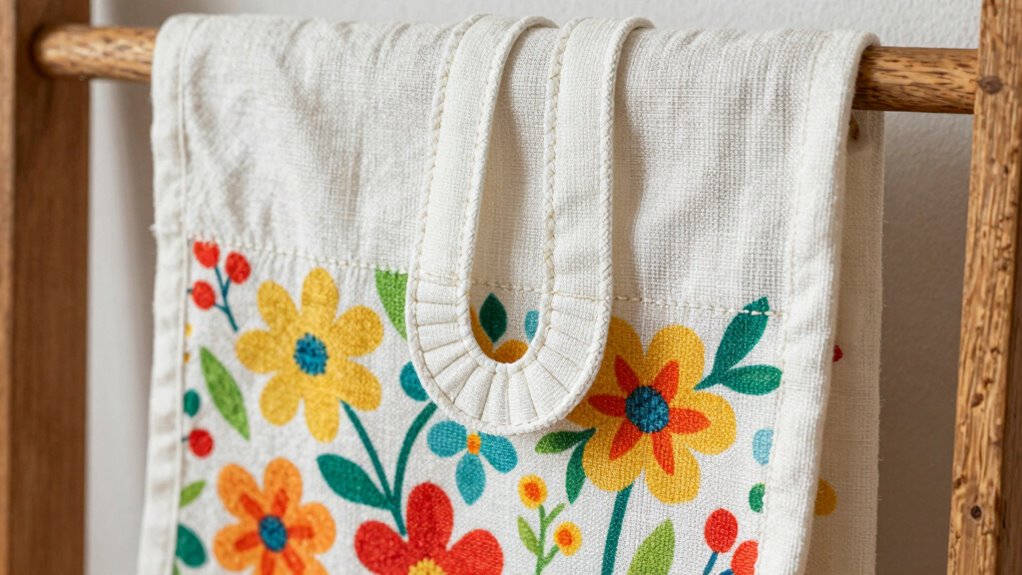
If your loops keep tearing or won’t stay in place, it’s time to check your attachment methods. Reinforcing loop attachments, choosing durable materials, and applying proper sewing techniques can make a big difference. Addressing these points helps you create a tea towel that lasts longer and holds up better.
Reinforce Loop Attachments
Loose or tearing loops can be frustrating, but reinforcing them guarantees your tea towel stays durable through multiple washes. Start with fabric selection; choose sturdy, tightly woven fabric for both the loop and towel to prevent tearing. For loop reinforcement, follow these steps:
- Sew the loop securely to the towel’s edge using strong stitches, like double or zigzag.
- Add a small patch of fabric behind the attachment point to distribute tension evenly.
- Use a durable thread designed for heavy use to prevent fraying or ripping over time.
Use Durable Materials
Using durable materials is essential to prevent your tea towel’s loops from tearing or slipping out of place. Selecting fabrics with high fabric strength ensures the loops stay intact over time. Proper loop placement also matters—position them where the fabric can support tension without stress points. To help you choose, consider this:
| Material Type | Best For |
|---|---|
| Heavy-duty cotton or linen | Resists tearing and holds shape well |
| Synthetic blends | Extra durability and wash resistance |
Focusing on strong fabric and correct loop placement minimizes issues like tearing or loops slipping off. Remember, sturdy materials combined with thoughtful positioning make your tea towel both functional and long-lasting.
Proper Sewing Techniques
When loops on your DIY tea towel start tearing or refuse to stay in place, it’s often due to sewing issues that can be corrected with proper techniques. First, check your machine embroidery settings, especially the thread tension. Too tight or loose tension can cause loops to unravel or tear. Second, confirm you’re using the right needle and thread for your fabric to prevent weak loops. Lastly, sew with consistent, even stitches—test on scrap fabric if needed. Adjust the tension dial gradually, and avoid pulling the fabric as you sew. Properly balanced thread tension and precise stitching are key to securing hanging loops that hold up daily use without tearing or coming loose. Master these techniques for a durable, professional finish.
Creative Uses for Your Hanging Tea Towel Beyond the Kitchen
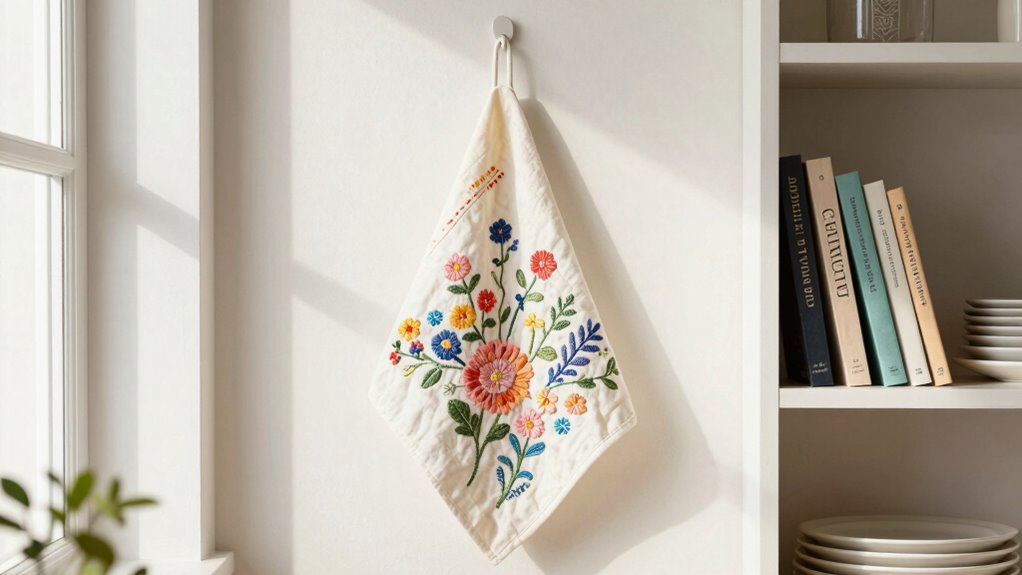
A hanging tea towel isn’t just for drying dishes; it can also serve as a versatile decor or functional accessory around your home. Use it for tea towel storage in your laundry room or bathroom, draping it over hooks or racks for a stylish touch. It’s a practical way to keep hand towels accessible and organized, reducing clutter and enhancing your space’s look. You can also hang your tea towel in your workspace or craft area to wipe up spills or hold small tools. Its hanging loop makes it easy to switch out or reposition, helping maintain a tidy environment. Beyond the kitchen, your tea towel becomes a multipurpose accessory that adds charm while boosting your home’s organization and functionality.
Frequently Asked Questions
Can I Add Multiple Loops to My DIY Tea Towel?
Yes, you can add multiple loops to your DIY tea towel for better storage solutions. Simply sew or attach extra loops along the top or sides, ensuring they’re securely fastened. This way, you make fabric care easier by hanging multiple towels or organizing your kitchen efficiently. Adding multiple loops not only enhances functionality but also keeps your kitchen tidy, making it a practical upgrade you’ll enjoy daily.
Which Fabrics Are Best for Durability and Appearance?
For durability and appearance, choose fabrics like cotton or linen, as they handle fabric maintenance well and retain color beautifully over time. Cotton is soft, absorbent, and easy to wash, making it ideal for kitchen use. Linen adds a sophisticated look and withstands frequent laundering. Both fabrics resist fading and shrinking, ensuring your tea towel stays vibrant and functional, even after multiple washes.
How Do I Prevent the Loop From Slipping off the Towel?
Think of preventing the loop from slipping off like tightening a knot so it stays put. To guarantee a loop secure attachment, sew the loop firmly into the towel’s corner using strong stitches, like a zigzag or backstitch. You can also reinforce the loop with a small strip of fabric or interfacing. Regularly check and tighten the stitches if needed, keeping your towel’s hanging loop reliable and slip-proof.
What Tools Are Necessary for Attaching the Loop Securely?
To attach the loop securely, you’ll need a sewing machine and some basic stitching techniques. Start by cutting your loop fabric and folding the edges under for a clean finish. Use a straight stitch or zigzag stitch to sew the loop onto the towel, making sure to reinforce the stitches at stress points. This guarantees the loop stays in place during daily use and prevents slipping off effortlessly.
How Can I Waterproof or Stain-Proof My Tea Towel With a Loop?
To waterproof or stain-proof your tea towel with a loop, start by applying fabric treatments designed for stain resistance. You can use a spray-on waterproofing or a wash-in stain-resistant solution, following the product instructions carefully. Make sure to evenly coat the towel for consistent protection. Let it dry completely before using. This will keep your towel looking fresh and clean longer, making it a practical addition to your kitchen.
Conclusion
Adding a hanging loop transforms your DIY tea towel into a practical kitchen essential that’s easy to grab and store. Did you know that a well-placed loop can increase your towel’s lifespan by preventing unnecessary wear? With just a little effort, you’ll enjoy a personalized, functional piece that makes daily chores smoother and adds charm to your space. So go ahead—craft your perfect hanging towel and experience the difference it makes every day!
Halloween Picks
halloween
As an affiliate, we earn on qualifying purchases.