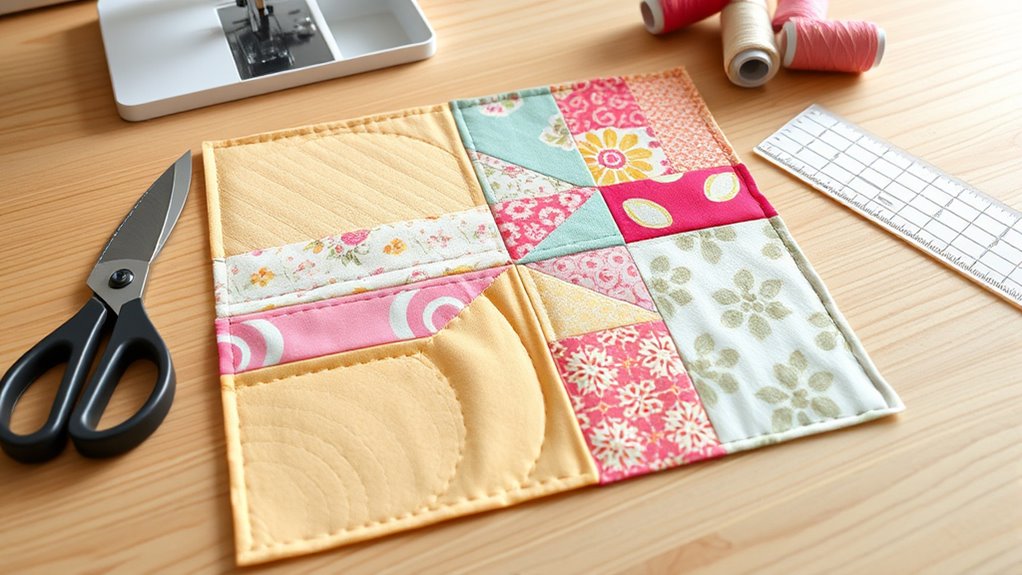
To sew a nine-patch quilt block, start by selecting three coordinating fabrics and cutting nine squares accurately with a rotary cutter and ruler. Arrange the squares in a 3×3 grid, mixing light and dark colors for contrast. Sew the squares into rows, then sew the rows together to complete the nine-patch. Keep your tools sharp and focus on precise piecing. If you stick with it, you’ll discover how to create beautiful, balanced quilt blocks step by step.
Key Takeaways
- Select coordinating cotton fabrics in light and dark colors for visual contrast.
- Cut nine accurate 3-inch squares using a rotary cutter and quilting ruler.
- Sew squares into three rows, pin for alignment, then join rows to complete the nine-patch.
- Use pins and sew slowly for precise seams and proper block alignment.
- Press seams carefully and celebrate each finished block to build confidence and skills.

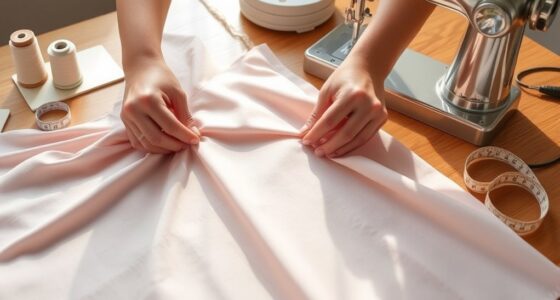
Are you new to quilting and wondering where to begin? Starting with a simple yet classic quilt block like the nine-patch is a great way to build your skills. To get started, your first step is understanding fabric selection. Choose fabrics that are easy to work with, such as 100% cotton, which is forgiving and widely available. Pick two or three colors or patterns that complement each other, but don’t overthink it—contrast helps your design stand out. Light and dark fabrics can create a striking nine-patch, so consider pairing a light fabric with a darker one for visual interest. When selecting fabrics, also pay attention to the weight and texture; consistent weight guarantees easier piecing and a smooth finished quilt top.
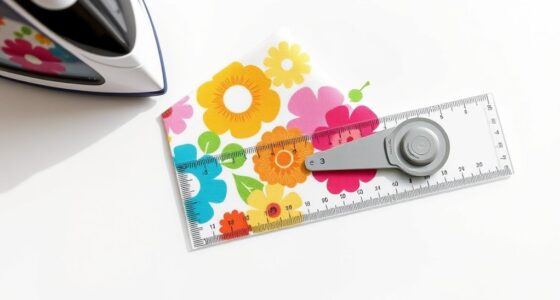
Next, gather your quilting tools. Essential tools include a rotary cutter, cutting mat, quilting ruler, sewing machine, pins, and scissors. A rotary cutter and ruler are indispensable for cutting your fabric pieces accurately, so invest in a sharp blade and a sturdy ruler. The cutting mat protects your surfaces and helps keep your cuts straight. For sewing, set up your machine with the right needle and thread—preferably a universal needle and polyester thread for durability. Pins will help hold fabric pieces in place as you sew, ensuring precision, while scissors are handy for trimming threads and small adjustments. Having these tools ready before you start will make the process smoother and more enjoyable.
Gather sharp rotary cutters, sturdy rulers, and well-organized tools for precise, enjoyable quilting.
Once your fabrics and tools are in place, you can move on to cutting your fabric into the correct sizes. For a basic nine-patch, you’ll need nine squares—three of each fabric color. Use your ruler and rotary cutter to cut these squares precisely, following your pattern measurements. Precision here is key because it affects how well your blocks will align later. After cutting, arrange the squares into a 3×3 grid, experimenting with different color placements until you find a layout you like. Pin each row before sewing to keep everything aligned, and sew the squares together row by row. Then, join the rows to complete your nine-patch block.
Throughout the process, remember that patience and accuracy are your best friends. Take your time with fabric selection, making sure your fabrics are compatible and fit your vision. Keep your quilting tools sharp and organized, and don’t rush the cutting and sewing steps. As you become more comfortable, you’ll find that your nine-patch blocks become more precise and easier to assemble. This foundational block will serve as a stepping stone to more complex patterns and projects, and with each stitch, your confidence will grow. Enjoy the process and celebrate each finished block as a step toward creating beautiful, handmade quilts.
Frequently Asked Questions
What Fabric Types Are Best for a Nine-Patch Quilt?
For a nine-patch quilt, you want fabrics that are durable and colorfast. Cotton fabrics are ideal because they’re strong, easy to work with, and hold their color well over time. Look for quilting cotton, as it’s widely available and perfect for beginners. Avoid delicate or stretchy fabrics, which can distort your blocks and fade quickly. Selecting the right fabric guarantees your quilt stays beautiful and lasts for years.
How Do I Choose Coordinating Colors for My Quilt?
To choose coordinating colors for your quilt, start with the color wheel to find harmonious combinations. Pick colors that complement each other or create a pleasing contrast, enhancing fabric contrast in your nine-patch block. Consider your overall theme or mood, and test fabric swatches together before sewing. This process guarantees your quilt’s colors work well together, making your finished project visually appealing and balanced.
Can I Make a Nine-Patch Block With Pre-Cut Fabrics?
Making a nine-patch block with pre-cut fabrics is totally doable and saves you loads of time! You can definitely use pre-cut squares, but focus on fabric selection to guarantee colors and patterns coordinate well. Use precise cutting techniques to keep edges even and seams neat. With pre-cuts, your quilt will come together faster, making it feel like you’ve opened a secret to quick, beautiful quilting.
What Tools Are Essential for Sewing a Nine-Patch Block?
You’ll need basic tools like fabric scissors, a rotary cutter, and a cutting mat for precise fabric selection. A sewing machine with straight and zigzag stitches helps you achieve clean sewing techniques. Don’t forget pins or clips to hold pieces together. Using quality tools guarantees your nine-patch block turns out accurately, and practicing good sewing techniques makes the process smoother. These essentials make your quilting experience enjoyable and successful.
How Do I Troubleshoot Uneven Seams or Puckering?
If your seams are uneven or puckering, start by ensuring fabric stabilization with starch or spray stabilizer before sewing. Use proper seam pressing techniques: press seams flat and open to reduce bulk, which helps prevent puckering. Adjust your sewing machine tension if needed, and sew at a steady pace. Taking these steps will give you smoother seams and a more polished nine-patch block.
Conclusion
Just like a nine-patch quilt comes together with patience and care, so do your skills grow with each stitch. Remember, every master was once a beginner—your journey is unfolding stitch by stitch. Keep practicing, and soon you’ll see your efforts weave into a beautiful pattern, much like a tapestry of your own making. Embrace the process, for even the smallest blocks build towards something truly extraordinary.