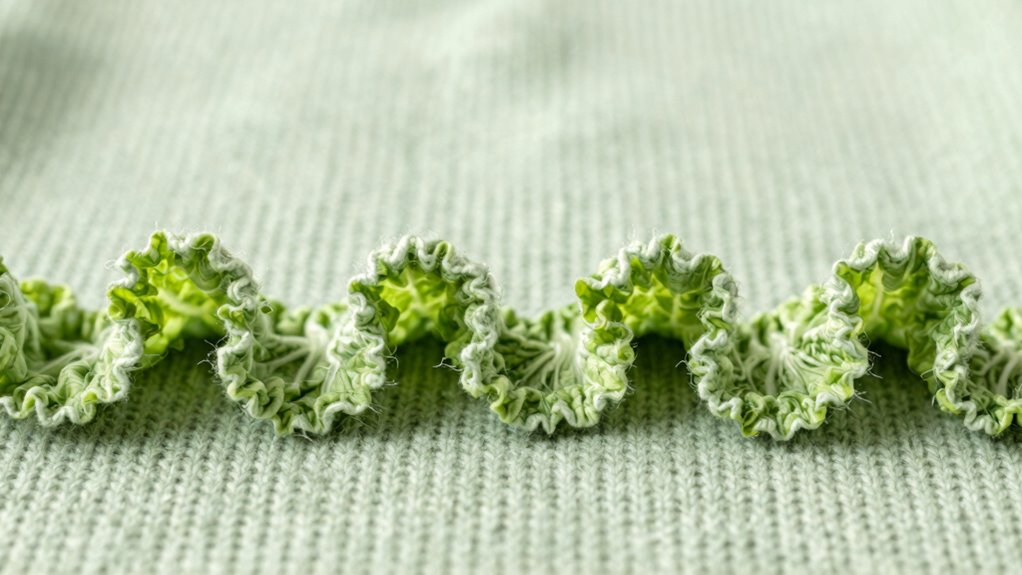

To fix lettuce edges and wavy hems on your knitwear, start by checking your tension and stitch settings—use a longer stitch length and a gentle zigzag or stretch stitch. Pin and stabilize your fabric before sewing to make certain of even feeding. Adjust your machine’s tension if needed, and sew slowly, keeping the fabric taut but not stretched. For a polished finish, explore more tips to perfect your knit hems and prevent future issues.

Get business pricing on tools and workshop supplies
- Business-only prices and quantity discounts
- Tax-exempt purchasing
- Multiple users, one account, clear invoices
Key Takeaways
- Use appropriate machine tension settings, preferably medium or slightly lower, to prevent fabric puckering and wavy hems.
- Select a suitable stitch type, like stretch or zigzag stitch, to accommodate knit fabric’s elasticity.
- Pin or clip hems carefully to ensure even fabric feeding and prevent ripples or frilly edges.
- Test tension, stitch length, and technique on scrap fabric before hemming the actual knitwear.
- Incorporate stabilizers or pressing techniques to set stitches and maintain a smooth, professional finish.
As an affiliate, we earn on qualifying purchases.
Why Do Knit Edges Turn Lettuce-Like and Wavy?
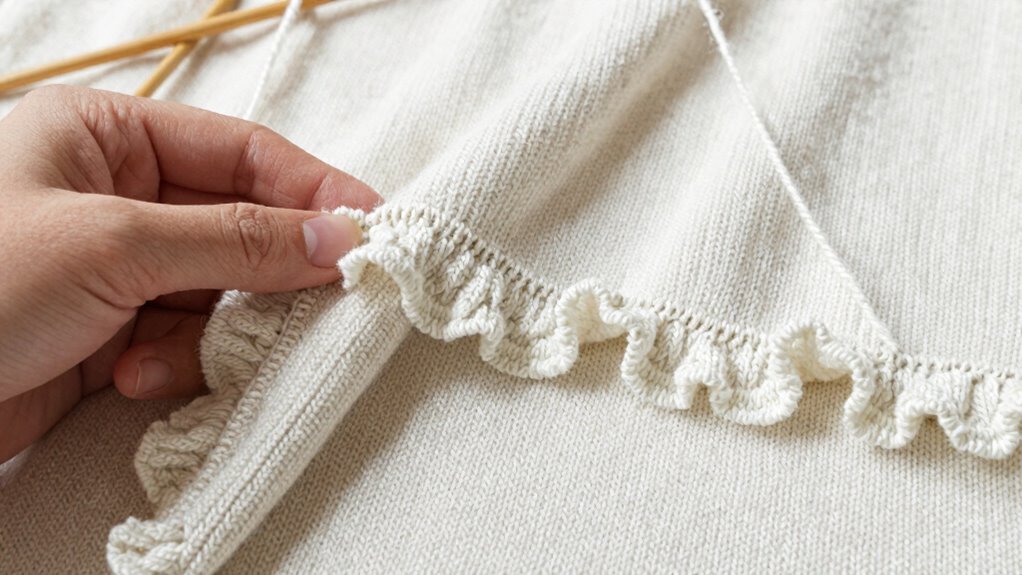
Knit edges often turn lettuce-like and wavy because of tension issues during knitting or finishing. When your fabric tension is uneven, it causes the stitches to pull and stretch irregularly, resulting in that wavy appearance. Using the wrong needle size can also contribute; too small a needle creates tight stitches, pulling the edges inward, while too large a needle makes loose stitches, causing the fabric to stretch and ripple. Maintaining consistent tension throughout your project is essential for smooth, even edges. Choosing the appropriate needle size for your yarn ensures stitches are uniform, preventing lettuce edges. Proper tension control during knitting and finishing helps you achieve a clean, professional-looking hem without wavy or lettuce-like edges. Additionally, understanding Free Floating techniques can help you avoid unnecessary tension issues that lead to these wavy edges. Paying attention to tension management strategies can further improve your results and maintain the desired edge appearance, especially since consistent tension is vital in achieving a polished finish. Being mindful of your knitting environment—such as avoiding drafts and maintaining a steady workspace—can also contribute to better tension control.
How to Diagnose Wavy Hems and Lettuce Edges in Your Knitwear?
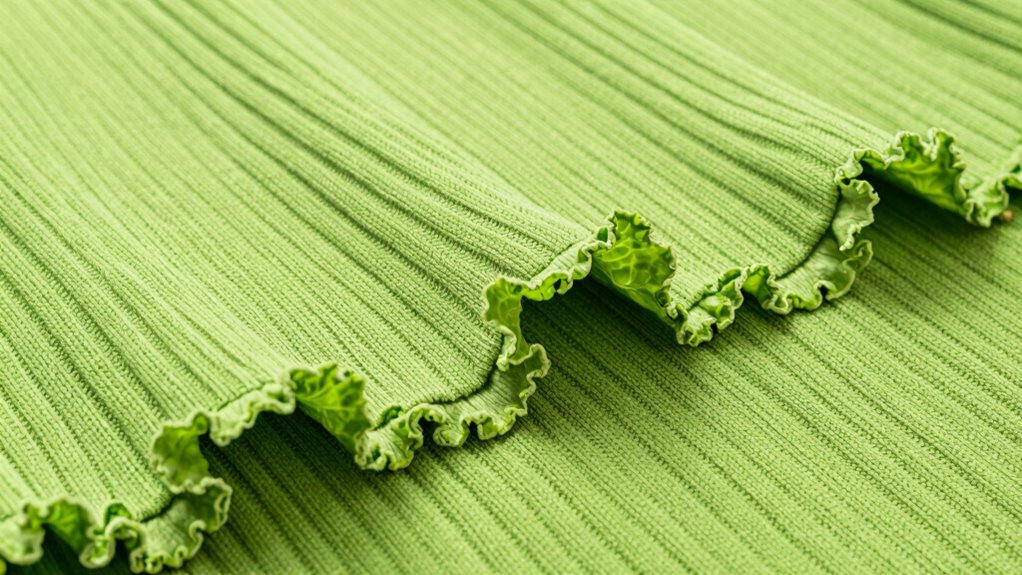
Identifying wavy hems and lettuce edges early can save you time and frustration. Check your knit fabric stretch; if the fabric pulls or ripples easily, it’s a sign the tension might be off. Examine your finished edges closely—wavy hems often appear uneven or rippled along the seam. Lettuce edges tend to look frilly or ruffled, especially when stretched or relaxed. Pay attention to your sewing machine tension settings, as improper tension can cause these issues. If the stitches look loose or puckered, it’s a sign that tension needs adjusting. Also, test small sections before sewing the entire hem. By carefully inspecting these signs, you’ll be better equipped to diagnose what’s causing the wavy or lettuce-like appearance in your knitwear. Proper tension control and consistent sewing techniques are key to achieving smooth, professional-looking edges. Additionally, understanding how knit fabric stretch affects the finished look can help you make better tension adjustments during sewing. It’s helpful to remember that the fabric’s elasticity can change how tension should be set for different knit materials.
Easy Steps to Fix Wavy Hems and Lettuce Edges
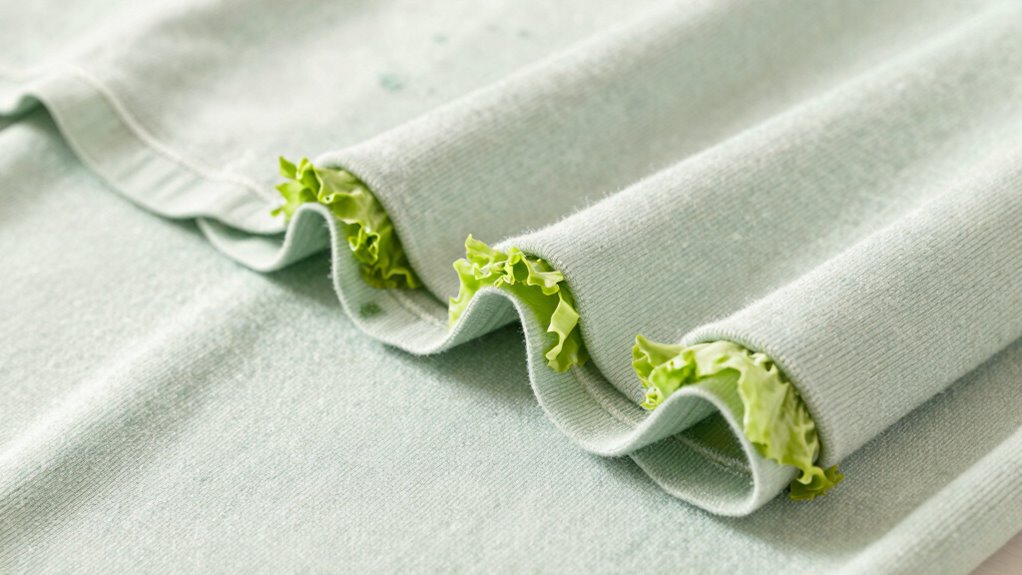
Fixing wavy hems and lettuce edges is easier than you might think with a few straightforward techniques. First, adjust your sewing machine settings—use a slightly longer stitch length and a gentle zigzag to smooth out the edges. Next, choose the right thread selection: a stretch or polyester thread works best to maintain flexibility and prevent further waviness. Using a specialized sewing technique can also help achieve a cleaner finish. Here are simple steps to follow: 1. Test your sewing machine’s stitch tension on scrap fabric to avoid puckering. 2. Sew slowly along the edge, keeping the fabric taut but not stretched. 3. Reinforce the hem with a second pass if needed, adjusting tension and stitch length as necessary. Being mindful of sewing machine settings and fabric tension can significantly improve your results. Additionally, understanding the power requirements of your sewing machine ensures it operates safely and efficiently, especially if you’re using an appliance with a different voltage. These tips help you correct wavy hems efficiently, giving your knitwear a professional finish.
Top Techniques to Prevent Wavy Hems When Hemming
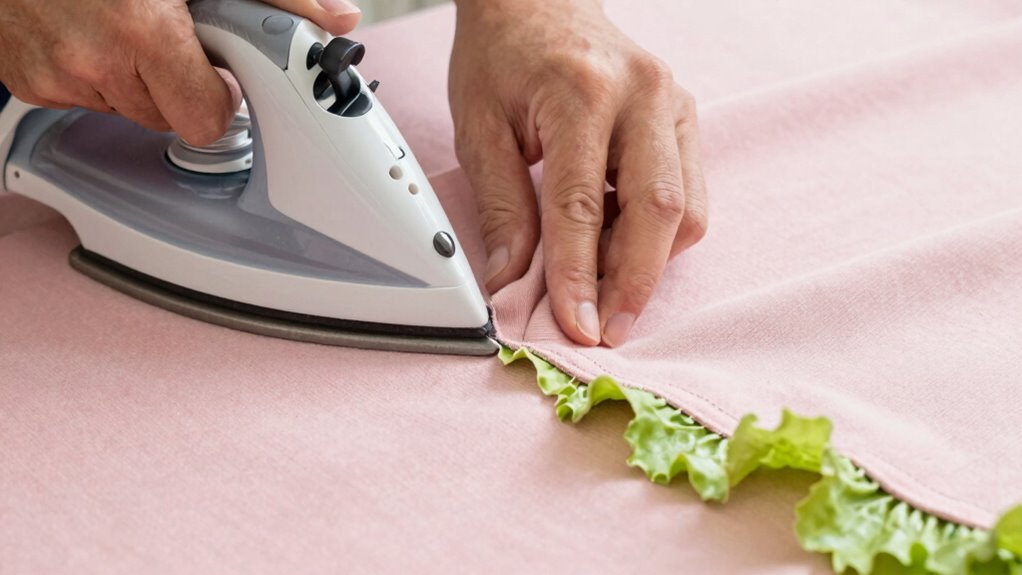
To prevent wavy hems when hemming, it is vital to start with proper fabric preparation and technique. First, adjust your sewing machine tension to a medium or slightly lower setting; too tight tension can cause puckering. Next, set an appropriate stitch length—usually around 2.5 to 3 mm—to ensure smooth fabric feeding. Use a straight stitch or a slight zigzag if needed, but avoid overly short stitches that can pull the fabric. Also, pin or clip the hem carefully to keep the fabric even as you sew. Sewing slowly helps maintain control and prevents the fabric from bunching. Maintaining consistent tension and stitch length ensures a clean, flat hem, reducing the chance of waves or ripples forming. Additionally, choosing the right hem finishing technique can further improve the appearance of your hem. Being aware of fabric types and how they respond to hemming can also help you select the best approach for a smooth finish. Properly preparing your fabric by pressing and stabilizing can also minimize waviness and ensure a professional-looking hem. Using a hem gauge or clip can assist in maintaining an even hemline throughout your sewing process.
Tips for Maintaining a Professional Finish on Your Knits
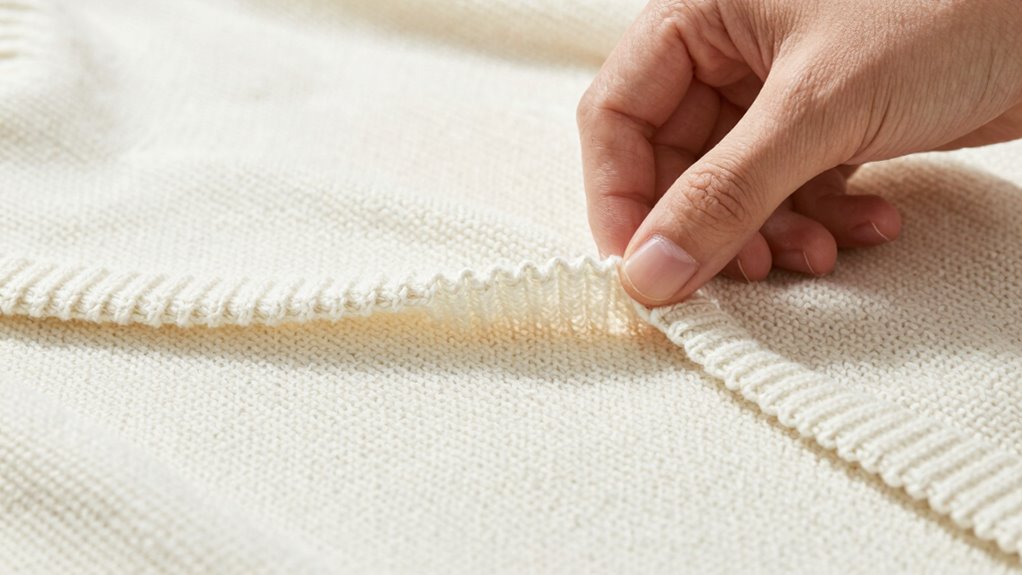
Achieving a professional finish on your knits requires attention to detail throughout the sewing process. Start by carefully selecting the right fabric choice, as some knits hold edges better than others. When sewing, optimize your sewing machine settings: use a stretch stitch or a zigzag to prevent puckering and maintain flexibility. To guarantee your hems look polished, consider these tips:
- Test your stitches on scrap fabric to find the perfect tension and stitch length.
- Use a stabilizer or interfacing if your fabric is delicate or prone to curling.
- Always press your hems gently with a pressing cloth to set the stitches and smooth out any waviness.
- Incorporating sewing machine techniques such as serging or overlocking can further enhance the durability and finish of your hems.
- Ensuring proper edge finishing methods can help maintain a clean and professional look over time.
- Understanding knit fabric properties can also help you choose the best techniques for a polished result.
- Familiarizing yourself with fabric stabilization methods can reduce stretching and distortion during sewing. Additionally, paying close attention to stitch tension adjustments can significantly improve your sewing outcome.
Frequently Asked Questions
Can Washing Machines Cause Lettuce Edges on Knitwear?
Yes, washing machines can cause lettuce edges on knitwear. The machine wash process involves fabric agitation, which can lead to the edges curling or becoming wavy. To prevent this, use a gentle cycle, cold water, and lay your knitwear flat to dry. Avoid wringing or twisting, as these actions can further distort the fabric and worsen the lettuce edges. Proper care keeps your knitwear looking smooth and neat.
Is It Better to Hand Wash or Machine Wash Knitted Garments?
You should hand wash knitted garments because delicate fabrics and fiber sensitivities often react better to gentle treatment. Machine washing can cause stretching, pilling, or wavy hems, especially if your knitwear is fragile. Hand washing with cold water and mild detergent helps maintain shape and texture. It’s a safer method to preserve your knitwear’s quality, making sure it stays looking fresh and fitting well over time.
What Types of Yarn Are Most Prone to Developing Wavy Hems?
Think of your yarn as a rubber band—some stretch more than others. Yarn with low fiber elasticity and fewer plies, like single-ply or loosely spun yarns, are most prone to developing wavy hems. These fibers lack the tension needed to hold a straight edge, so they naturally tend to ripple and curl over time. Choosing high-elasticity fibers and multi-ply yarns helps keep your knitwear neat and smooth.
How Does Knitting Tension Affect the Appearance of Edges?
Your knitting tension directly affects the edge appearance. If you knit too loosely, your edges may become wavy or uneven, while too tight tension can cause puckering or stiff edges. Maintaining consistent tension guarantees smooth, even edges that look professional. Adjust your tension as needed, especially when working on edges, to achieve a clean, polished finish and prevent wavy or lettuce-like effects in your knitwear.
Are There Specific Knitting Patterns That Reduce Edge Waviness?
Yes, choosing patterns with stable stitch patterns like stockinette or garter can reduce edge waviness. Opt for yarns with smooth, even fibers, as they help maintain consistent tension. Your pattern design also matters; simple, repetitive stitches tend to produce cleaner edges. By selecting the right yarn and sticking to patterns that promote even tension, you’ll achieve knitwear with less waviness and a more polished look.
Conclusion
Did you know that improper finishing can cause knit edges to turn lettuce-like or wavy? By following the right techniques, you can achieve professional-looking hems that last. Consistent tension and proper blocking are key—over 70% of knitwear issues stem from finishing mistakes. With these tips, you’ll confidently fix and prevent wavy edges, ensuring your handmade pieces look polished and beautiful every time. Happy knitting!
Fall yard work Picks
leaf blowers
As an affiliate, we earn on qualifying purchases.