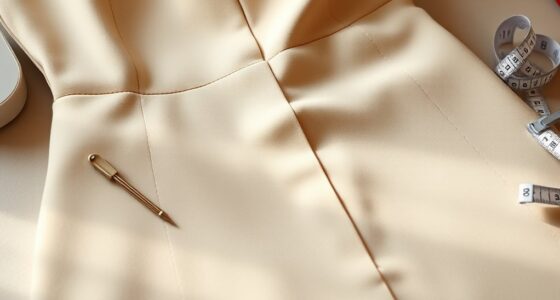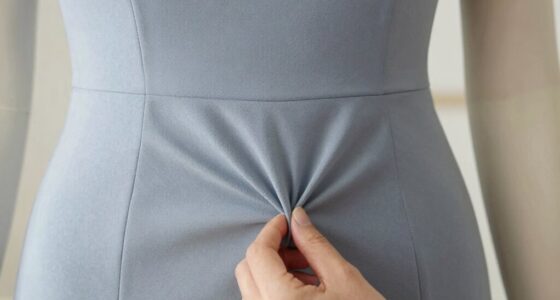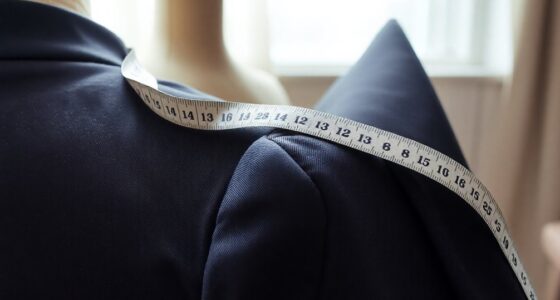
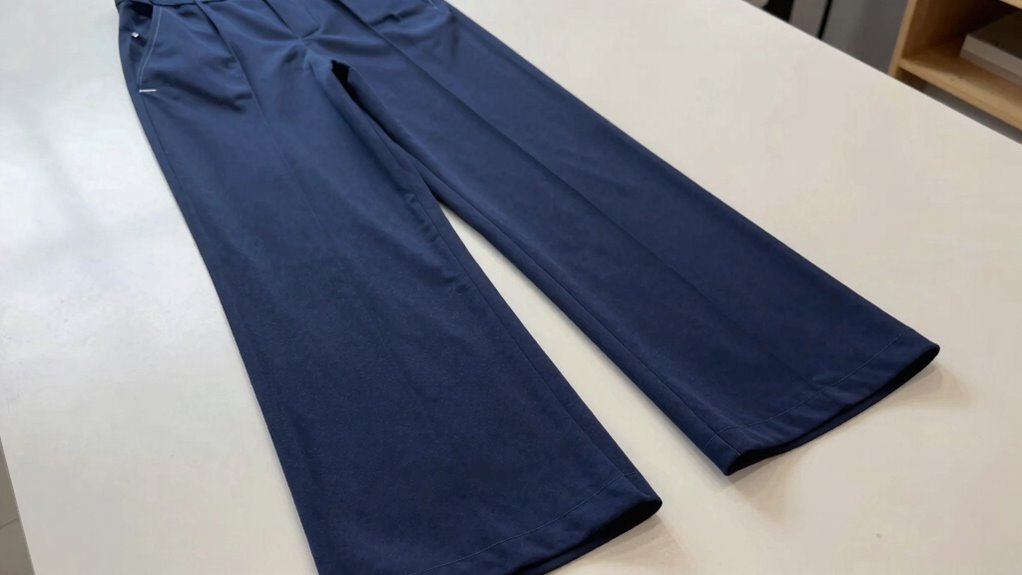
To taper wide-leg pants evenly, start by trying them on inside out and marking where you’d like the taper to begin and end with tailor’s chalk or fabric markers. Use a controlled sewing technique, sewing slowly and reinforcing seams for a clean finish. Press each seam flat to set the shape, and make small, careful adjustments if needed. Working patiently guarantees a professional look—keep going for more tips to perfect your tapering skills.

Get business pricing on tools and workshop supplies
- Business-only prices and quantity discounts
- Tax-exempt purchasing
- Multiple users, one account, clear invoices
Key Takeaways
- Try on the pants inside out and mark the desired tapering points accurately with fabric chalk or markers.
- Sew gradually, starting with a straight stitch, and reinforce seams for control and durability.
- Use pressing techniques to flatten seams and ensure smooth, even tapering lines.
- Gradually trim excess fabric, working slowly for precise, balanced results.
- Work patiently, checking fit frequently, and make small adjustments for a professional finish.
Ever wondered how to taper wide-leg pants evenly without compromising their style? Tapering can transform a baggy pair into a sleek, flattering silhouette, but doing it right takes some planning. The first step is understanding fabric selection, as the type of fabric you choose profoundly impacts your results. Lightweight fabrics like linen or rayon drape differently from heavier materials like denim or canvas. For a smooth, even taper, opt for fabrics that hold their shape without excessive stretch or stiffness. Stretch fabrics can be tricky to work with because they tend to shift during sewing, so if you’re working with elastics or knits, adjust your sewing techniques accordingly. Choosing the right fabric type is crucial for achieving a professional look. Additionally, knowing how the fabric behaves can help you anticipate potential challenges during the tapering process. Being familiar with fabric behavior can also help you select the appropriate sewing techniques and tools, making the process smoother overall.
Speaking of sewing techniques, precision is key. Before you start cutting, try on the pants inside out and mark where you want the taper to begin and end. Use tailor’s chalk or fabric markers to draw your lines, ensuring they follow the natural fall of the fabric. When sewing, start with a straight stitch, gradually narrowing the seam as you go. It helps to sew a test line on scrap fabric first, especially if you’re unfamiliar with your fabric’s behavior. To achieve an even taper, sew slowly and check your work frequently. If you’re working with a thinner or more delicate fabric, reinforce the seam with a zigzag stitch or serge the edges to prevent fraying. Working with the correct sewing techniques ensures a clean and professional finish.
For a smooth taper, mark, sew slowly, and reinforce delicate fabrics with zigzag stitches.
Another important sewing technique involves pressing. After sewing your new seam, press it flat with an iron set to the appropriate temperature for your fabric. Pressing helps set the seam and gives you a clear view of your progress. If you want a more professional look, consider grading the seam allowances to reduce bulk, especially in thicker fabrics. When finishing, try on the pants again to confirm the taper is even and comfortable. Make small adjustments if needed, trimming excess fabric carefully and resewing as necessary. Patience and careful adjustment are essential for achieving a balanced, even taper. Remember, taking your time and working methodically will give you the best results.
Finally, remember that patience and precision are your best allies. Use tailor’s chalk or washable fabric markers to keep your lines straight, and sew slowly to maintain control. With the right fabric selection and sewing techniques, you’ll be able to taper wide-leg pants evenly, transforming them into a stylish, tailored piece that fits perfectly. The key is to stay attentive, work gradually, and don’t rush the process—your perfect pair of tapered wide-leg pants is well within reach with a little care and skill.
As an affiliate, we earn on qualifying purchases.
Frequently Asked Questions
Can Tapering Damage the Fabric of Wide-Leg Pants?
Tapering wide-leg pants can potentially damage the fabric if you’re not careful, especially with delicate materials. The key is understanding fabric durability and using gentle tapering techniques. Avoid aggressive cuts or pulling on the fabric, as this can cause fraying or tears. Instead, use precise sewing methods and appropriate tools. Proper tapering preserves your pants’ integrity, ensuring they look great without risking damage to the fabric.
What Tools Are Best for Accurately Tapering Pants?
Think of your tools as the brush and palette for a tailor’s masterpiece. For accurate tapering, use a tailor’s ruler, seam gauge, and sharp scissors or rotary cutter. These tools help prevent fabric stretching and guarantee precise cuts. Reinforce seams with a sewing machine or hand stitches before tapering to maintain strength. With these, you can craft a sleek, even taper that transforms your wide-leg pants into a perfect fit.
How Do I Measure the Perfect Taper for My Style?
To measure the perfect taper, start by examining your fabric type—stiffer fabrics need more gradual tapering, while softer ones can handle sharper angles. Use a measuring tape to mark where you’d like the pants to narrow, then employ tapering techniques like sewing a gradual seam or using fabric chalk for guidance. Try on the pants frequently as you work, adjusting until you achieve your ideal fit and style.
Is It Better to Taper From the Inside or Outside?
Taper from the inside, obviously, unless you want your pants to look like a poorly stitched disaster. Inside tapering allows you to control fabric stretch and seam reinforcement without risking uneven or visible alterations. Outside tapering might be tempting for quick fixes, but it often ruins the fabric’s stretch and compromises seam durability. So, trust the inside—your pants will thank you with a clean, even finish.
Can I Taper Pants Without Sewing Experience?
Yes, you can taper pants without sewing experience by exploring DIY fashion and sewing alternatives. Use fabric glue or iron-on hemming tape to temporarily or semi-permanently alter your pants. These methods are user-friendly, require minimal tools, and are perfect for beginners. Just measure carefully, follow instructions, and take your time. With patience, you’ll achieve a tailored look without needing sewing skills, making it a fun and accessible DIY project.
Conclusion
Now you know the secret to shaping wide-leg wonders into sleek, tapered silhouettes. With careful cuts, clever creases, and consistent measurements, you can confidently craft a custom fit that flatters your figure. So, seize the scissors, stay steady, and savor the satisfying symmetry of a perfectly tapered pair. Transform your trousers with technique and touch-up tips, turning wide into wonderful. Wear your work with pride, knowing you’ve mastered the art of even, elegant tapering.
Fall yard work Picks
leaf blowers
As an affiliate, we earn on qualifying purchases.