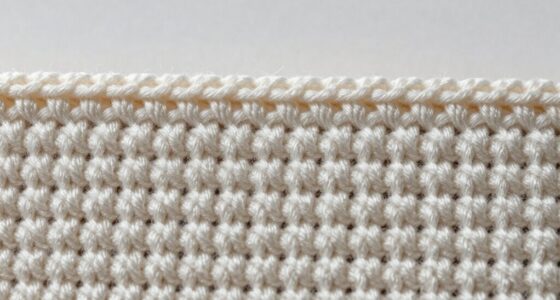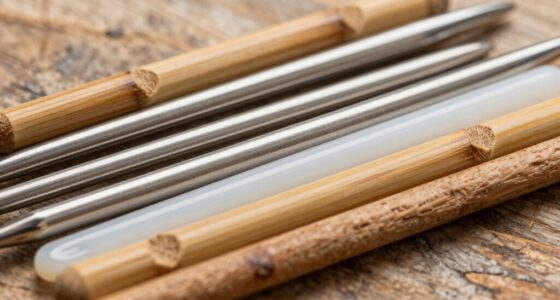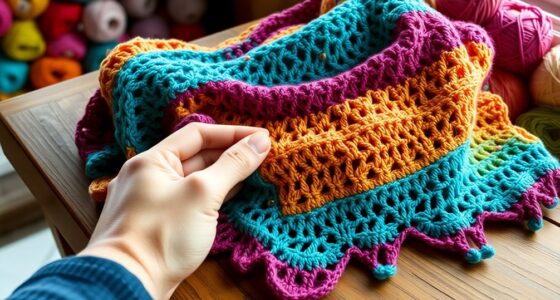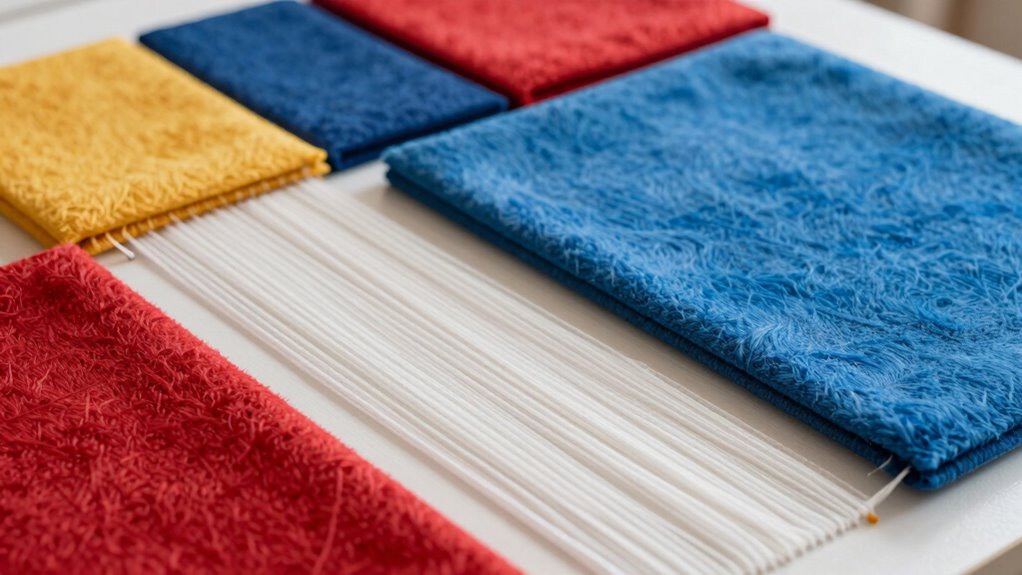

Using blocking boards and mats is key to making your yarn work look polished and professional. They help you shape your project accurately, keep edges neat, and prevent curling or shrinking. Proper blocking also enhances stitch definition and ensures consistent tension across the piece. This finishing step not only improves your project’s appearance but also boosts its durability over time. Keep exploring more to learn how to achieve stunning, well-shaped yarn creations every time.

Get business pricing on tools and workshop supplies
- Business-only prices and quantity discounts
- Tax-exempt purchasing
- Multiple users, one account, clear invoices
Key Takeaways
- Blocking boards help shape yarn projects for a polished, professional appearance.
- Proper finishing prevents curling and uneven edges, enhancing overall project neatness.
- Using blocking techniques preserves stitch detail and pattern definition.
- Consistent tension during blocking ensures uniformity and improved project symmetry.
- Long-term, blocking maintains project durability and prevents distortion over time.
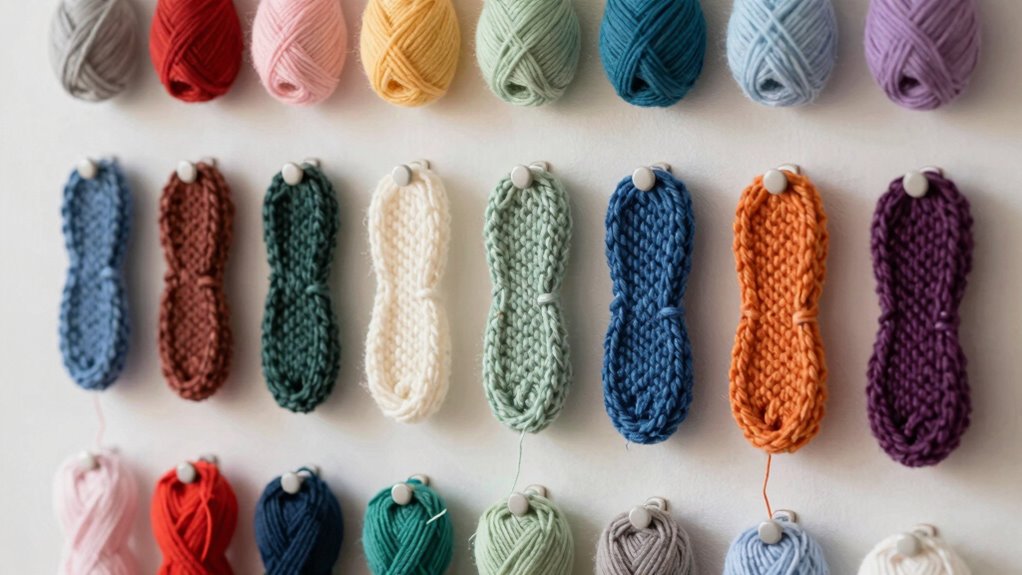
Have you ever wondered how athletes improve their blocking skills or prevent injuries during training? It’s all about the right equipment, like blocking boards and blocking mats. When you’re working on your yarn work or any craft that involves the need to block, these tools become essential. Blocking boards provide a sturdy, flat surface where you can shape your project perfectly, ensuring every stitch and edge looks neat and professional. They help you maintain consistent tension and shape, especially with items like shawls, scarves, or sweaters. By pinning your project onto a blocking board, you control the final appearance, making your work look polished and well-finished. Proper blocking is also crucial for preventing curling or shrinking, which can otherwise ruin the appearance of your project. Additionally, using the right blocking tools can help you achieve desired dimensions more accurately, ensuring your finished piece matches your pattern specifications. Correct blocking techniques also contribute to enhancing stitch definition, making intricate patterns stand out beautifully.
A well-executed blocking process also preserves the integrity of the stitches, ensuring your work remains durable over time.
As an affiliate, we earn on qualifying purchases.
Frequently Asked Questions
Can Blocking Damage Delicate or Sensitive Yarns?
Blocking can potentially damage delicate fibers if you’re not careful, especially with yarns that have sensitive or fragile textures. If your yarn has chemical treatments, it might react poorly to water or heat during blocking. To safeguard your delicate or chemically treated yarns, use gentle methods like steam blocking or avoid soaking altogether. Always test a small section first to ensure you won’t harm the fibers.
How Long Does Blocking Typically Take?
Blocking typically takes about 24 to 48 hours, depending on the yarn type and thickness. The blocking duration involves setting your project in place and allowing it to dry completely. Keep in mind that drying time varies with humidity and temperature; in humid conditions, it might take longer. To guarantee your work looks its best, be patient and avoid handling it until the blocking process is fully complete.
Is Blocking Necessary for All Types of Yarn Projects?
Blocking isn’t necessary for all yarn projects, but it’s often a smart move. Think of it like ironing a vintage corset—some fibers need it for ideal fiber elasticity and yarn stability. If your project involves lace, intricate patterns, or shapely pieces, blocking helps set the stitches and improve overall look. For sturdier, dense yarns, it might not be essential, but it can still elevate your finished piece considerably.
What Tools Are Essential for Effective Blocking?
You need essential tools like blocking mats or boards, T-pins, and a spray bottle to effectively use blocking techniques. These tools help shape your project and set the stitches evenly. T-pins secure your work in place, while blocking mats protect surfaces. A spray bottle keeps your yarn moist, making it easier to manipulate. With these essential tools, you’ll achieve professional-looking finishes and enhance your yarn work’s overall appearance.
Can Blocking Be Reversed or Undone if I Don’t Like the Result?
Think you can just hit undo on your yarn masterpiece? Sorry, blocking techniques are mostly permanent because they set the shape by relaxing yarn elasticity. If you don’t like the result, you might gently steam or re-wet your work and try reshaping it, but full reversal isn’t guaranteed. So, before you commit, consider the potential for a ‘yarn redo’—or prepare for a forever-finished piece!
Conclusion
By now, you understand how blocking boards and mats elevate your yarn projects, giving them a polished, professional finish. Remember, studies show that properly blocked items can increase perceived value by up to 40%. So, take the time to finish your work with these tools—you’ll notice the difference in texture, shape, and overall appearance. With just a little effort, you’ll turn simple yarn into stunning, display-worthy creations that truly stand out.
Fall Picks
fall essentials
As an affiliate, we earn on qualifying purchases.