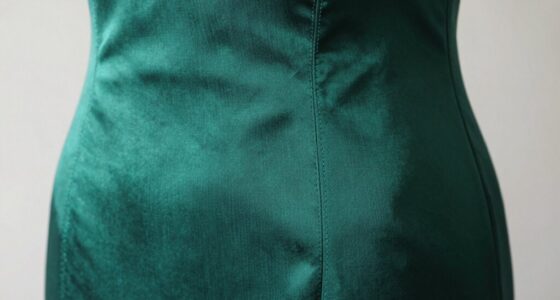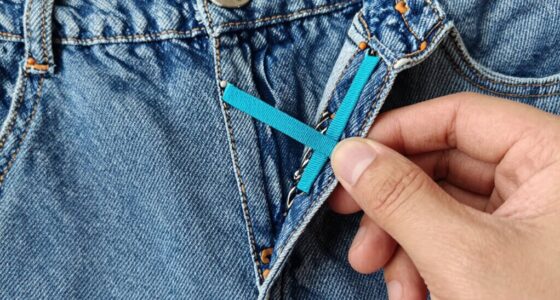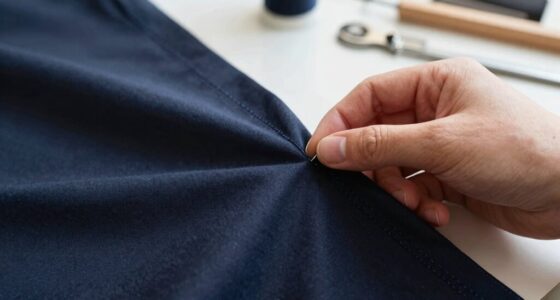
To reduce excess fabric at the lower back, start by turning your garment inside out and pinning the side seams for a snug fit. Try it on after pinning to check the fit, then sew along the new seam line to remove the extra fabric. Press the seams flat for a smooth finish. Focus on small, quick adjustments, and you’ll see a more tailored look — there’s more to perfecting your fit if you continue.

Get business pricing on tools and workshop supplies
- Business-only prices and quantity discounts
- Tax-exempt purchasing
- Multiple users, one account, clear invoices
Key Takeaways
- Turn the garment inside out, pin the side seams along the lower back for a snug fit, then sew and press the seams flat.
- Mark tapering lines with fabric chalk or pen to gradually reduce fabric width from waist to hips.
- Use seam adjustment techniques to take in side seams and remove excess fabric for a tailored fit.
- Try on frequently during adjustments to ensure the fit feels comfortable and the shape remains natural.
- Consult a professional tailor for precise alterations if unsure about fabric properties or achieving a perfect fit.
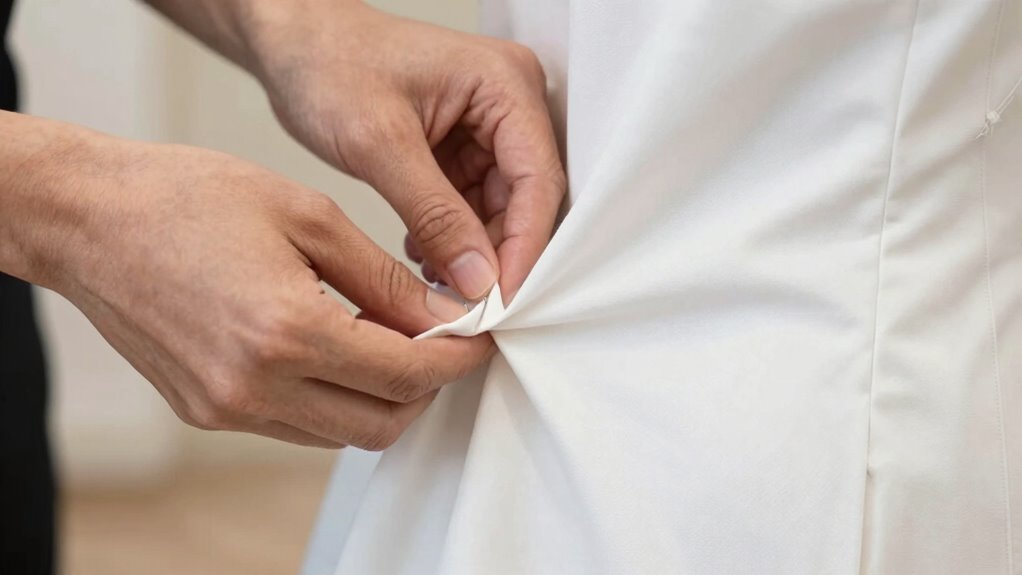
Have you ever noticed excess fabric gathering around your lower back, making your clothes feel uncomfortable or unflattering? This common issue results from extra material that doesn’t quite fit your body’s contours. Luckily, you can make simple adjustments to improve the fit and create a sleeker silhouette. One effective method involves seam adjustment, where you take in the side seams of your garment to remove the extra fabric. Carefully turn your garment inside out and pin the side seams to fit snugly along your lower back. Try it on after pinning to ensure the fit is comfortable and smooth. Once satisfied, sew along the new seam line, removing the excess fabric and eliminating the bunchiness. Seam adjustment is a straightforward way to tailor your clothing to your body, especially around problem areas like the lower back.
Another technique that works hand-in-hand with seam adjustment is fabric tapering. This involves gradually narrowing the fabric from the waist down to the hips or along the sides, creating a more fitted shape. To do this, you’ll need to assess where the excess fabric is most prominent and mark a tapering line that aligns with your natural curves. Use fabric chalk or a fabric pen to trace the line, then sew along it, gradually reducing the fabric width. This process not only helps in reducing bulk but also enhances the overall silhouette, making your clothing look more tailored and less bulky at the lower back. Fabric tapering gives you a custom-fit look without the need for complete reconstruction.
If you’re working with a ready-made garment, these adjustments can be made with basic sewing skills, but if you’re unsure, consider consulting a professional tailor. They can expertly perform seam adjustments and fabric tapering, ensuring the fit is perfect and that the alterations are durable. When making these changes, keep in mind that removing too much fabric at once can distort the garment’s overall shape, so proceed gradually and try on the piece frequently during the process. After completing your adjustments, press the seams flat to set them, and you’ll notice a significant reduction in excess fabric around your lower back. These small but effective tweaks can transform your favorite clothes into perfectly fitted pieces that feel comfortable and look flattering every time you wear them.
Additionally, understanding fabric properties can help you choose the right techniques for your specific garment and fabric type, ensuring your adjustments are both effective and durable.
Popular right now

Samsung 42-Inch Class OLED S90F 4K Smart TV (2025)

KitchenAid Artisan Series 5-Quart Tilt-Head Stand Mixer, Dried Rose (KSM150PS)

KitchenAid Artisan 5-Quart Tilt-Head Stand Mixer, Almond Cream
As an affiliate, we earn on qualifying purchases.
Frequently Asked Questions
Can Posture Affect Excess Fabric at the Lower Back?
Yes, your posture can affect excess fabric at the lower back. Poor posture causes your spine to slouch or hunch, making fabric bunch and look uneven. Posture correction helps align your back properly, reducing the excess fabric’s appearance. Consider fabric types; stretchier fabrics can conceal imperfections better, while stiffer ones might accentuate them. Improving your posture and choosing the right fabric types can make a noticeable difference.
Are Specific Fabrics More Prone to Excess Fabric Issues?
Certain fabric types, especially those with less material stretch, are more prone to excess fabric issues at the lower back. Natural fabrics like linen and some cottons tend to lack stretch, causing bunching or looseness. Conversely, fabrics with higher stretch, such as spandex blends or jersey, conform better to your body’s shape, reducing excess fabric. Choosing fabrics with appropriate stretch and fit helps you avoid this common problem.
How Often Should I Adjust My Clothing for a Better Fit?
You should adjust your clothing regularly throughout the day to maintain a better fit, especially as fashion trends and clothing styles evolve. Pay attention to how your clothes feel after each wear and make small adjustments as needed. When trying new fashion trends, guarantee your clothing stays comfortable by adjusting the fit, especially around the lower back, to avoid excess fabric. Frequent adjustments help keep your look polished and comfortable.
Does Weight Loss Impact Fabric Excess at the Lower Back?
Yes, weight fluctuations can impact fabric excess at the lower back. When you lose weight, your body shrinks, and fabric types like stretchy or tailored fabrics will fit more smoothly, reducing excess. Conversely, weight gain can cause fabric to bunch or sag. To maintain a better fit, opt for fabrics that adapt to your changing shape and consider tailoring clothes for a more precise, comfortable fit during weight fluctuations.
Can Custom Tailoring Permanently Fix This Problem?
Yes, custom tailoring can permanently fix excess fabric at your lower back. Skilled tailors use fabric stretching and tailored techniques to reshape your garment, ensuring a snug fit. They analyze the fabric’s behavior and adjust seams or add darts to reduce bulk. This personalized approach addresses your body’s unique contours, providing a lasting solution that looks natural and polished, unlike temporary fixes or ill-fitting off-the-rack options.
Conclusion
Now that you know how to reduce excess fabric at the lower back, you’re well on your way to a more flattering fit. Remember, small adjustments can make a big difference, so don’t be afraid to get hands-on and experiment. With patience and care, you can turn the tide and make your clothes work better for you. Keep at it—sometimes, a little effort can truly turn the corner and boost your confidence.