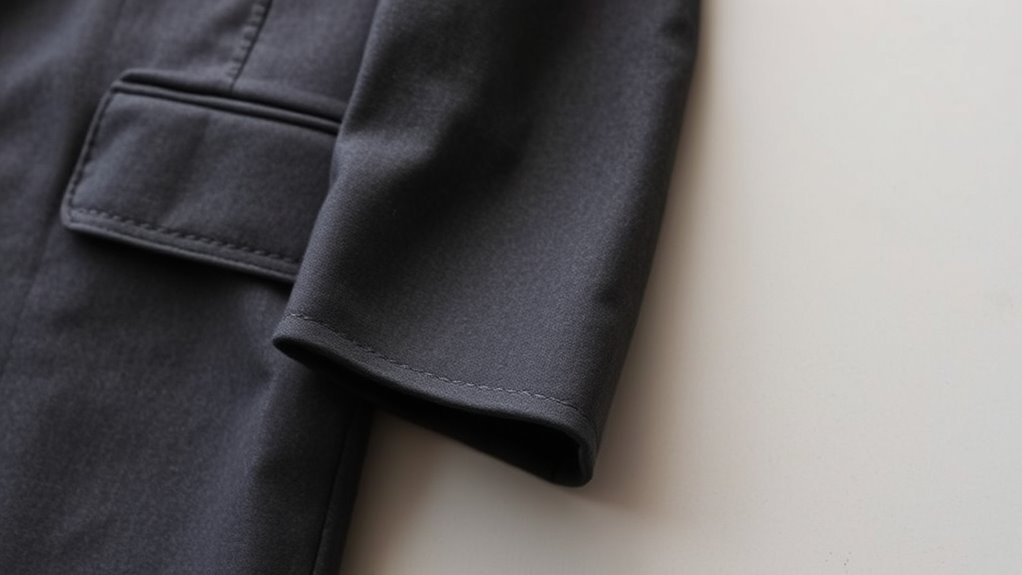

To shorten jacket sleeves, start by turning your jacket inside out and carefully measuring the new length, considering any cuff details or lining adjustments. Choose the proper fabric and stitch type based on your material, and use a clean, straight stitch or fold and sew for lighter fabrics. Pay close attention to lining and cuff preservation for a neat finish. For a sleek look, proper pressing and finishing are essential—continue on to learn more helpful tips to get professional results.
Key Takeaways
- Measure sleeve length accurately, considering cuff details and lining, to determine the ideal new hem position.
- Turn the jacket inside out and mark the desired sleeve length with tailor’s chalk for precise shortening.
- Choose appropriate hemming techniques based on fabric type, using machine stitches for wool/tweed or fold-and-stitch for lighter fabrics.
- Preserve or remove cuffs carefully, depending on design, to ensure a neat, professional finish.
- Press the new hem thoroughly after sewing to set stitches and achieve a crisp, polished appearance.
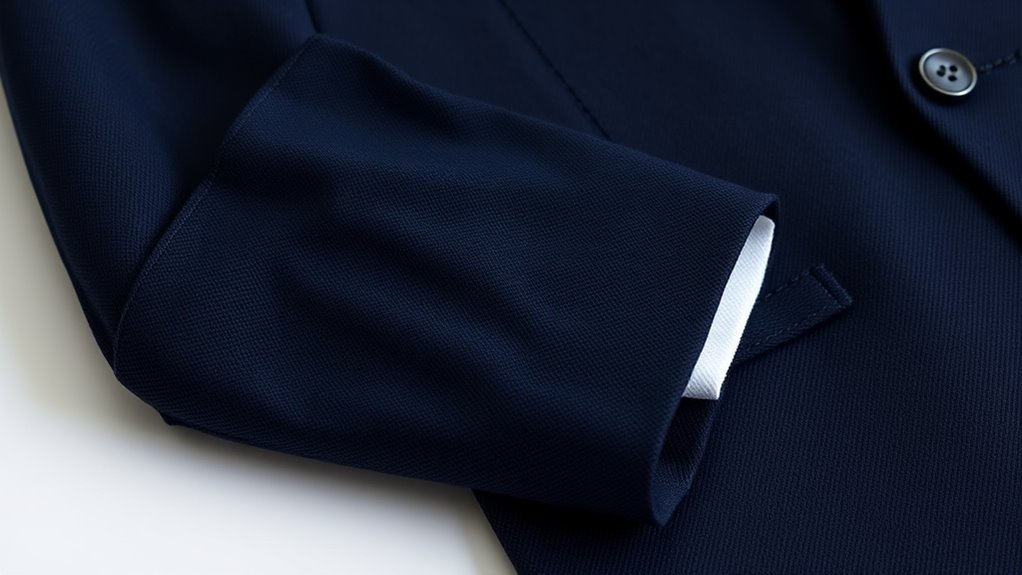
If your jacket sleeves are too long, shortening them is a straightforward way to improve fit and style. The process hinges on understanding your jacket’s fabric choice and the available sleeve length options. Fabric plays an essential role because different materials respond differently to alterations. For example, wool and tweed coats may require careful handling to avoid distortion, while lighter fabrics like cotton or blends are typically easier to work with. Before starting, examine the jacket to determine the fabric type, as this will influence the method and tools needed for a clean, professional-looking result.
When considering sleeve length options, think about your personal style and how you want your jacket to look. Do you prefer a traditional, slightly longer cuff that covers part of your wrist, or a more modern, tailored fit that hits right at the wrist bone? Knowing your preferred length helps guide your alteration. Measure carefully to decide exactly where you want the new sleeve hem to fall, and remember to account for any cuff details, buttons, or lining. This ensures the final look is balanced and proportionate.
Shortening sleeves involves more than just cutting and hemming; it requires precision. First, turn the jacket inside out and carefully mark the desired new sleeve length with tailor’s chalk or fabric-safe marker. If your jacket has a lining, be mindful of how much you need to remove from the lining and the outer fabric to keep everything aligned. When working with fabrics like wool, it’s often best to sew a new hem with a straight stitch or a slightly stretchy stitch to prevent puckering. For lighter fabrics, a simple hem fold and stitch may suffice. Using the right thread and needle suited to your fabric choice ensures the new hem stays secure and looks polished.
Additionally, understanding projector technology can help ensure your alteration results in a neat, professional finish, as different fabrics may require specific sewing techniques to prevent puckering or distortion. If your jacket has a cuff or decorative trim, decide whether to preserve or remove it during shortening. Sometimes, keeping the cuff intact provides a cleaner, more professional finish. When sewing, take care to match your stitch length to the fabric to avoid puckering or loose threads. Press the new hem carefully with an iron suited for your fabric, which helps set the stitches and gives your jacket a crisp, finished appearance.
Frequently Asked Questions
Can I Shorten Jacket Sleeves Without Professional Help?
Yes, you can shorten jacket sleeves yourself with some DIY tailoring skills. Start by measuring how much you want to trim, then carefully remove the cuffs and sew the new hem. Keep in mind, for style preservation, it’s best to follow tutorials and use proper tools. However, if you’re unsure, seeking professional help guarantees a clean, polished look without risking damage to your jacket.
How Do I Measure the Correct Sleeve Length?
To measure the correct sleeve length, start by wearing your jacket or blazer and let your arms relax naturally. Use a flexible measuring tape to measure from the shoulder seam down to your wrist bone, making sure the tape stays straight and snug but not tight. This sleeve measurement guarantees tailoring accuracy, so your sleeves fit perfectly without bunching or gaps. Double-check your measurement for best results before making any alterations.
Will Shortening Sleeves Affect the Jacket’s Overall Fit?
Shortening sleeves won’t ruin your jacket’s overall fit if a skilled tailor handles it. They’ll preserve the fabric’s integrity and ensure style consistency, so your jacket looks natural and well-fitted afterward. Proper alteration maintains the original proportions, preventing awkward bunching or gaps. Trust a professional to keep your jacket comfortable and stylish, even after shortening the sleeves. You’ll enjoy a perfect fit without compromising the jacket’s original design or quality.
What Tools Are Needed for Sleeve Alteration?
Imagine you’re tailoring your favorite blazer for a perfect fit. To do sleeve hemming, you need tools like sharp scissors for seam ripping, a seam ripper, pins, a measuring tape, and a sewing machine. Seam ripping is essential to remove the original hem safely. These tools make sure you can accurately shorten your sleeves without damaging the fabric, giving your jacket a fresh, tailored look that boosts your confidence.
How Do I Maintain the Jacket’s Original Style After Alteration?
To maintain your jacket’s original style after alteration, focus on fabric preservation and style consistency. Work with a skilled tailor who matches the fabric and seam details precisely. Avoid over-altering, which can distort the design. Confirm the new sleeve length aligns seamlessly with the overall look, and ask for finishing touches that preserve the jacket’s original stitching and lining. This way, your jacket stays stylish and true to its initial design.
Conclusion
Now that you know how to shorten your jacket sleeves, you’ll save money and get a perfect fit every time. With a little patience and the right tools, you can transform your blazer or coat into something that feels truly tailored to you. Imagine slipping into your altered jacket and feeling confident, knowing it fits just right. Isn’t it rewarding to customize your wardrobe and extend its life? Go ahead—your perfect fit is just a quick alteration away!