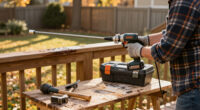
For woodworking, the best portable band saw depends on whether you need to cut stock at the workpiece or want a compact machine for a small shop. I’d choose the MAXXT 2-in-1 as the most flexible portable pick because its table base supports stationary work, while the DEWALT 20V MAX stands out for cordless cuts and the WEN BA3959 offers a more conventional benchtop format. The main tradeoff is between portability and woodworking control: handheld models move to the stock, while benchtop and floor models offer a table for guided cuts but take up more room. Cutting capacity, blade support, and setup also matter more than amperage alone. Read on for how all 15 options compare and which type fits your work.

Get business pricing on tools and workshop supplies
- Business-only prices and quantity discounts
- Tax-exempt purchasing
- Multiple users, one account, clear invoices
Complete the kit


Key Takeaways
- Portable means two different things here: handheld models such as the DEWALT, DOVAMAN, and PowerSmart options cut where the stock sits; benchtop and floor models provide a table for controlled shop work.
- The MAXXT’s table base gives it a distinct role among the handheld-style picks, but a conversion base still does not make it equivalent to a dedicated woodworking bandsaw.
- Five-inch cutting capacity favors stock breakdown and larger workpieces, while the 7.5- to 10-inch benchtop machines are better judged by throat depth, table support, and the cuts their blades can track accurately.
- The JET 14-inch and 18-inch SFX machines are the premium shop choices for capacity and heavier use; their footprint and setup make little sense for buyers whose first priority is portability.
- Several listings describe similar 10A variable-speed or removable-base formats, so buyers should compare included bases, power source, blade details, and service support instead of assuming similar names mean identical woodworking performance.
| Hoteche 7.5-Inch Band Saw, 3-Amp |  | Best for Bevel Cuts in a Small Shop | Power source: Corded electric | Voltage: 120 V | Motor current: 3 A | VIEW LATEST PRICE | See Our Full Breakdown |
| DOVAMAN Portable Band Saw, 10A Variable Speed, 5-Inch Cutting Capacity |  | Best for Mixed-Material Projects | Motor: 10 A pure copper | Maximum cutting capacity: 5 × 5 in | Speed settings: 6 | VIEW LATEST PRICE | See Our Full Breakdown |
| MAXXT 2-in-1 Portable Band Saw with Table Saw Base |  | Best for Bench-to-Handheld Flexibility | Power source: Corded electric | Motor: 10 A | Voltage: 120 V | VIEW LATEST PRICE | See Our Full Breakdown |
| WEN 9-Inch Benchtop Band Saw, 2.8-Amp (BA3959) |  | Best for Guided Benchtop Cuts | Motor: 2.8 A | Blade speed: Up to 2,500 ft/min | Cutting capacity: 3.5 in deep × 9 in wide | VIEW LATEST PRICE | See Our Full Breakdown |
| VEVOR Portable Band Saw with Removable Base |  | Best Portable Pick with a Swiveling Base | Voltage: 110 V | Motor: 10 A, 1100 W | Cutting speed: 137.8–472.4 ft/min | VIEW LATEST PRICE | See Our Full Breakdown |
| JET 10-Inch Woodworking Band Saw with Stand, 1/2 HP, 115V, 1-Phase (JWB-10) |  | Best Compact Floor-Standing Pick | Blade size: 10 inches | Motor power: 1/2 HP | Voltage: 115V | VIEW LATEST PRICE | See Our Full Breakdown |
| WOODSKIL 10-Inch Benchtop Bandsaw with Stand, 3.4A Dual-Speed |  | Best for Versatile Small-Shop Cuts | Motor: 3.4A | Blade speeds: 2360 and 3000 FPM | Cutting height: 5-1/8 inches | VIEW LATEST PRICE | See Our Full Breakdown |
| JET 14-Inch SFX Steel Frame Woodworking Band Saw, 1.75 HP |  | Best for Mid-Size Resawing | Motor power: 1.75 HP | Resaw capacity: 13 inches | Throat capacity: 13.5 inches | VIEW LATEST PRICE | See Our Full Breakdown |
| JET JWBS-18SFX 18-Inch Woodworking Band Saw, 1.75 HP |  | Best for Large-Stock Resawing | Motor power: 1.75 HP | Throat capacity: 18 inches | Resaw capacity: 16 inches | VIEW LATEST PRICE | See Our Full Breakdown |
| SKIL 2.8 Amp 9-Inch 2-Speed Benchtop Band Saw, BW9501-00 |  | Best Compact Benchtop Pick | Power source: Corded electric | Motor: 2.8 A induction motor | Voltage: 120 V | VIEW LATEST PRICE | See Our Full Breakdown |
| PowerSmart Portable Band Saw, 10A Variable Speed, 5-Inch Cutting Capacity |  | Best Portable Saw with an Adjustable Base | Power source: Corded electric, 120 V | Motor: 10 A, 1100 W | Cutting capacity: 5 in. wide and deep | VIEW LATEST PRICE | See Our Full Breakdown |
| DEWALT 20V MAX Portable Band Saw, 5-Inch Cutting Capacity (DCS374B) |  | Best Cordless Shop-System Pick | Model: DCS374B | Power: DEWALT 20V MAX battery platform | Motor: Brushless | VIEW LATEST PRICE | See Our Full Breakdown |
| WOODSKIL 9-Inch Benchtop Band Saw, 3-Amp, 2500 FPM |  | Best Compact Woodworking Setup | Motor: 1/2 HP; 120 V | Blade speed: 2500 FPM listed; source also has conflicting speed details | Cutting capacity: 9 in. width; 3.5 in. depth | VIEW LATEST PRICE | See Our Full Breakdown |
| WEN 10-Inch Band Saw with Stand, 3.5-Amp, Two-Speed (BA3962) |  | Best for Deeper Woodworking Cuts | Motor: 3.5 A | Cutting capacity: 6 in. deep × 9-3/4 in. wide | Blade: 72 in. long; compatible widths 1/8–1/2 in. | VIEW LATEST PRICE | See Our Full Breakdown |
| PowerSmart Portable Band Saw with Removable Base, 5-Inch Cutting Capacity |  | Best for Heavy Metal Stock | Motor: 10 A | Cutting capacity: 5 in. wide × 5 in. deep | Speed: 0–435 ft/min; 6 settings | VIEW LATEST PRICE | See Our Full Breakdown |
| portable band saws for woodworking | Motor |
|---|---|
| Hoteche 7.5-Inch Band Saw | — |
| DOVAMAN Portable Band Saw | 10 A pure copper |
| MAXXT 2-in-1 Portable Band Saw | 10 A |
| WEN 9-Inch Benchtop Band Saw | 2.8 A |
| VEVOR Portable Band Saw with R | 10 A, 1100 W |
| JET 10-Inch Woodworking Band S | — |
| WOODSKIL 10-Inch Benchtop Band | 3.4A |
| JET 14-Inch SFX Steel Frame Wo | — |
| JET JWBS-18SFX 18-Inch Woodwor | — |
| SKIL 2.8 Amp 9-Inch 2-Speed Be | 2.8 A induction motor |
| PowerSmart Portable Band Saw | 10 A, 1100 W |
| DEWALT 20V MAX Portable Band S | Brushless |
| WOODSKIL 9-Inch Benchtop Band | 1/2 HP; 120 V |
| WEN 10-Inch Band Saw with Stan | 3.5 A |
| PowerSmart Portable Band Saw w | 10 A |
More Details on Our Top Picks
Hoteche 7.5-Inch Band Saw, 3-Amp
The Hoteche suits woodworkers who want a compact benchtop saw for small stock and angled cuts. Its 12 × 12-inch table tilts to 45 degrees, giving it a bevel-cutting option that portable handheld models such as the VEVOR lack in this form. The 3.2-inch depth and 7.5-inch width set a clear boundary: it can handle modest workpieces, but it offers less width than the 9-inch WEN BA3959. A 3-amp motor and included 6 TPI blade make it a straightforward choice for basic woodworking, while the corded design keeps it tied to a bench and outlet. I’d choose it for occasional curved or beveled cuts on smaller pieces, but skip it if larger resaw capacity or a cordless setup matters.
Pros:- Tilting table supports bevel cuts up to 45 degrees
- Cuts stock up to 3.2 inches deep and 7.5 inches wide
- Includes a 56-inch, 6 TPI blade
- Compact benchtop format suits smaller workshops
Cons:- Narrower cutting width than the WEN BA3959’s 9-inch capacity
- Corded benchtop design limits portability during a job
- 3-amp motor and stated capacity are better suited to modest stock than demanding cuts
Best for: Woodworkers with a small shop who want a benchtop saw for modest stock and occasional bevel cuts
Not ideal for: Woodworkers cutting wide boards or needing a handheld saw for work away from a bench
- Power source:Corded electric
- Voltage:120 V
- Motor current:3 A
- No-load speed:14.7 m/s
- Maximum cutting depth:3.2 in
- Cutting width:7.5 in
- Table dimensions:12 × 12 in
- Table tilt:0°–45°
- Blade:56 in, 1/4 in wide, 6 TPI
Our verdict“Choose the Hoteche for small-shop woodworking that benefits from a tilting table, and look elsewhere for wider cuts or handheld portability.”
DOVAMAN Portable Band Saw, 10A Variable Speed, 5-Inch Cutting Capacity
For woodworking that shares bench space with plumbing, metalwork, or plastic stock, the DOVAMAN offers more flexibility than the wood-focused Hoteche. Its six speed settings from 0.7 to 2.4 m/s let the operator adjust the cut for different materials, and the 5 × 5-inch capacity accommodates stock beyond the Hoteche’s stated 3.2-inch depth. The built-in LED helps illuminate the cut line when positioning material. That broad material compatibility is useful for a mixed-material shop, though the supplied information doesn’t specify a table or stand for controlled woodworking cuts. I’d favor it over the MAXXT if straightforward handheld versatility matters more than a mounting base and listed angle-cutting features; woodworkers seeking a dedicated benchtop setup should compare it with the WEN BA3959.
Pros:- Variable speed offers six settings for adapting to different materials
- Stated 5 × 5-inch cutting capacity handles substantial stock
- Compatible with wood, steel, aluminum, metal, and PVC
- Built-in LED work light helps illuminate the cut area
Cons:- Product details do not specify a table or base for guided woodworking cuts
- No blade details are provided to help match the saw to wood species or cut style
Best for: DIY woodworkers who also cut steel, aluminum, PVC, or other stock and want one handheld saw for varied jobs
Not ideal for: Woodworkers who need a dedicated benchtop table, fence, or clearly specified woodworking setup
- Motor:10 A pure copper
- Maximum cutting capacity:5 × 5 in
- Speed settings:6
- Speed range:0.7–2.4 m/s
- Work light:Built-in LED
- Compatible materials:Steel, metal, aluminum, PVC, and wood
Our verdict“Pick the DOVAMAN for mixed-material projects where variable speed and a 5-inch capacity matter more than a dedicated woodworking table.”
MAXXT 2-in-1 Portable Band Saw with Table Saw Base
The MAXXT stands apart by pairing handheld use with a wheeled table saw base, giving a woodworker a way to move between freehand cuts and mounted work. Its variable speed spans 60–420 ft/min, and it can cut at angles up to 45 degrees. That combination is more adaptable than the DOVAMAN’s handheld format, while the VEVOR offers a removable base with a specified swivel range. There is a catch for woodworking: the included blades are described as metal-cutting blades, so the supplied setup is not clearly optimized for wood. The product data also lists an unusual 14,400 W power figure, which makes the power specification difficult to interpret. I’d shortlist it for occasional woodworking alongside metal cutting, but verify blade compatibility before treating it as a wood shop’s primary saw.
Pros:- Can be used handheld or mounted on its wheeled base
- Variable blade speed supports adjustment for different cuts
- Cuts at angles up to 45 degrees
- Includes LED lighting, a tool-free blade-change lever, and safety stop features
Cons:- Included blades are specified for metal cutting, leaving wood suitability unclear
- Listed 14,400 W power figure is unusually high and difficult to reconcile with the 10 A motor
- At 18.08 kg, carrying it between work areas may be cumbersome
Best for: Workshop owners who want one saw that can be carried by hand or mounted for repeatable cuts
Not ideal for: Woodworkers who want an out-of-box wood-cutting setup with clearly specified woodworking blades and power data
- Power source:Corded electric
- Motor:10 A
- Voltage:120 V
- Listed power:14,400 W
- Blade speed:60–420 ft/min
- Maximum cutting angle:45 degrees
- Capacity without base:Round tubes up to 120 mm; square tubes up to 120 × 120 mm
- Capacity with base:Round tubes up to 115 mm; square tubes up to 100 × 100 mm
- Weight:18.08 kg
Our verdict“Choose the MAXXT if you need both handheld and mounted operation, but confirm wood blade compatibility before buying it for woodworking.”
WEN 9-Inch Benchtop Band Saw, 2.8-Amp (BA3959)
The WEN BA3959 is the clearest fit here for woodworkers who value a guided benchtop setup. Its rip fence and miter gauge support straighter rip cuts and repeatable angled work, while the 3.5-inch depth and 9-inch width exceed the Hoteche’s stated cutting envelope. A beveling table adds angled cuts without requiring a handheld saw and separate base, and the dust port gives the shop a connection point for extraction. Compared with the VEVOR, the WEN is built around a fixed woodworking table rather than portability between materials. That’s useful for shaping and small stock, but a 9-inch width still limits larger pieces, and the 2.8-amp motor marks it as a compact shop machine rather than a heavy-duty resaw saw. I’d choose it for controlled bench work, not jobsite portability.
Pros:- Rip fence and miter gauge help guide repeatable cuts
- Cuts up to 3.5 inches deep and 9 inches wide
- Table bevels up to 45 degrees
- Includes a 2.5-inch dust port and a two-year warranty
Cons:- Fixed benchtop format is less portable than the VEVOR or DOVAMAN
- 9-inch cutting width limits larger workpieces
- 2.8-amp motor is suited to compact shop work rather than demanding resawing
Best for: Woodworkers who want a compact benchtop saw with a fence and miter gauge for repeatable small-shop cuts
Not ideal for: People who need a handheld saw, wider-than-9-inch capacity, or a machine for heavy resawing
- Motor:2.8 A
- Blade speed:Up to 2,500 ft/min
- Cutting capacity:3.5 in deep × 9 in wide
- Blade length:59.5 in
- Blade width range:1/8–3/8 in; included blade is 1/4 in
- Work table:12.25 × 11.875 in
- Table bevel:Up to 45 degrees
- Dust port:2.5 in
- Warranty:2 years
Our verdict“Choose the WEN BA3959 for guided, repeatable cuts on a small woodworking bench, and skip it if portability or larger capacity is the priority.”
VEVOR Portable Band Saw with Removable Base
The VEVOR gives woodworkers a portable format with the option to mount the saw when steadier support is useful. Its removable base swivels from 0 to 45 degrees, adding angle flexibility that the handheld DOVAMAN listing doesn’t specify. Without the base, it accepts rectangular stock up to 4.7 inches deep or round stock up to 5 inches; mounting it reduces those capacities. That drop is a real tradeoff for a more supported cut, and the 13 kg weight makes it less appealing for frequent carrying than a lighter handheld tool might be. Variable speed and compatibility with wood, metal, PVC, and composite cable make it versatile, though the product data doesn’t give a blade specification tailored to woodworking. I’d pick it over the WEN BA3959 for movable work, but choose the WEN for a guided fence-and-table setup.
Pros:- Removable base supports mounted use and swivels from 0° to 45°
- Without the base, cuts rectangular stock up to 4.7 inches deep and round stock up to 5 inches
- Variable speed and ergonomic handle support controlled handheld cutting
- Listed for wood, metal, PVC, and composite cable
Cons:- Cutting capacity drops when the base is attached
- 13 kg weight makes frequent carrying less convenient
- Blade details are not provided to establish its fit for woodworking cuts
Best for: Woodworkers who move between work areas and want the option to mount a portable saw for angled cuts
Not ideal for: Woodworkers who need maximum capacity while using a base, or who want a lighter saw to carry frequently
- Voltage:110 V
- Motor:10 A, 1100 W
- Cutting speed:137.8–472.4 ft/min
- Capacity without base:4.7 × 4.7 in rectangular; 5 in round
- Capacity with base:3.9 × 3.2 in rectangular; 3.93 in round
- Cutting angle:45°–90°
- Base swivel:0°–45°
- Blade length:44.92 in
- Weight:13 kg
Our verdict“Choose the VEVOR for portable work with optional angled mounting, and favor the WEN BA3959 for a fixed table, fence, and miter gauge.”
JET 10-Inch Woodworking Band Saw with Stand, 1/2 HP, 115V, 1-Phase (JWB-10)
The JET JWB-10 suits woodworkers who want a small-footprint saw with a floor stand that can move around the shop. Its 1/2 HP induction motor and ball-bearing blade guides support controlled cuts on modest stock, while the quick-release tension makes blade changes less fiddly. Compared with the WOODSKIL 10-Inch Benchtop Bandsaw, its appeal is the JET’s stated rigid stand and drive system rather than dual speeds or a listed bevel table. That tradeoff makes it a simpler fit for routine shaping and small projects, but the supplied details don’t state cutting capacity or speed options, so I wouldn’t choose it for thick resaw work. Buyers also have no customer performance feedback in the provided information to help judge real-world results.
Pros:- Compact format is easier to reposition between shop areas
- Rigid steel stand supports floor use
- Ball-bearing guides help steady the blade
- Quick-release tension speeds up blade changes
Cons:- Cutting height and throat capacity are not provided
- No dual-speed option is listed
- No customer performance feedback is provided
Best for: Home woodworkers who need a compact 10-inch saw on a floor stand and expect to cut smaller workpieces.
Not ideal for: Woodworkers planning thick resaw cuts or needing documented cutting capacity and multiple speed settings.
- Blade size:10 inches
- Motor power:1/2 HP
- Voltage:115V
- Phase:1-phase
- Stand:Rigid steel
- Drive system:Poly-V
- Blade guides:Upper and lower ball bearing
- Fence:Aluminum extruded
Our verdict“Choose the JET JWB-10 for a movable, floor-standing saw for modest woodworking; look to the WOODSKIL 10-Inch if dual speeds and bevel cuts matter more.”
WOODSKIL 10-Inch Benchtop Bandsaw with Stand, 3.4A Dual-Speed
Two blade speeds give this WOODSKIL a useful edge for woodworkers switching between hardwood, softwood, and plywood. The 5-1/8-inch cutting height and 10-inch throat suit smaller stock and curves, while the tilting table opens up bevel work. Compared with the JET JWB-10, WOODSKIL lists more setup flexibility, including two speeds, a miter gauge, and a rip fence. The cost of that broader feature set is a firm capacity ceiling: taller workpieces won’t fit, and this is still a wood-only saw. A 1-7/8-inch dust port provides a connection point, though the supplied data does not specify dust-collection performance. I’d favor it for a small shop doing varied, moderate-size cuts rather than regular thick resawing.
Pros:- Two blade speeds suit different wood types
- Stand, rip fence, and miter gauge are included
- Tilting table supports bevel cuts up to 45 degrees
- Quick tension system and tool-free doors simplify blade access
Cons:- 5-1/8-inch cutting height limits taller workpieces
- Designed for wood, restricting material range
- Dust port size is modest at 1-7/8 inches
Best for: Small-shop woodworkers cutting a mix of hardwood, softwood, and plywood who want bevel and guided crosscuts on modest stock.
Not ideal for: Builders who routinely resaw tall boards or need a saw that can handle materials beyond wood.
- Motor:3.4A
- Blade speeds:2360 and 3000 FPM
- Cutting height:5-1/8 inches
- Throat depth:10 inches
- Table tilt:0–45 degrees
- Dust port:1-7/8 inches
- Dimensions:37 × 18.31 × 14.76 inches
- Warranty:2 years
- Included accessories:Stand, rip fence, and miter gauge
Our verdict“Pick the WOODSKIL for varied small-shop cuts and useful included accessories, but choose a larger saw for tall resaw stock.”
JET 14-Inch SFX Steel Frame Woodworking Band Saw, 1.75 HP
The JET 14-Inch SFX steps up to 13 inches of resaw capacity and a 1.75 HP motor, making it a more suitable choice than either 10-inch saw here for turning thicker boards into thinner stock. Its ground cast-iron table gives larger pieces a substantial support surface and tilts right for bevel cuts. Against the JET JWBS-18SFX, this model takes less capacity: the 18-inch saw offers 16 inches of resaw height and a wider throat, but demands more room and dust collection. The 14-inch SFX is the more restrained fit for woodworkers whose stock stays within its capacity. One practical catch is that the blade is sold separately, so it is not ready for cutting straight out of the box.
Pros:- 13-inch resaw capacity accommodates thick woodworking stock
- Ground cast-iron table supports work and tilts right up to 45 degrees
- Adjustable ball-bearing guides support blade tracking
- Steel stand and resaw fence are included
Cons:- Blade is sold separately
- Larger and less portable than the 10-inch options
- Provides less resaw height and throat capacity than the JET JWBS-18SFX
Best for: Furniture makers and small-shop woodworkers who resaw boards up to 13 inches and want a substantial cast-iron work surface.
Not ideal for: Woodworkers handling stock taller than 13 inches or seeking a complete setup with blade included.
- Motor power:1.75 HP
- Resaw capacity:13 inches
- Throat capacity:13.5 inches
- Blade length:116 inches
- Blade width range:1/8–3/4 inch
- Table:360 sq. in. ground cast iron; tilts 0–45° right
- Dust ports:Dual 4-inch
- Warranty:5 years
Our verdict“Choose this JET for substantial resaw capacity in a mid-size format, and step up to the JWBS-18SFX if your boards exceed 13 inches.”
JET JWBS-18SFX 18-Inch Woodworking Band Saw, 1.75 HP
With an 18-inch throat and 16-inch resaw capacity, the JWBS-18SFX is the lineup’s choice for large boards and demanding stock preparation. Its cast-iron table tilts both right and left, and the foot brake offers a quick way to stop the blade after a cut. Compared with the JET 14-Inch SFX, it gives more room for wide and tall workpieces, but calls for a more capable shop setup: the recommended dust collector is 600 CFM or higher. The blade, miter gauge, and work light are also separate purchases, so the listed saw and stand do not make a complete cutting station. I’d reserve this floor-standing machine for woodworkers who can use its extra capacity often; for smaller projects, the WOODSKIL 10-Inch is a less demanding fit.
Pros:- 16-inch resaw capacity and 18-inch throat handle large stock
- Foot brake provides quick stopping control
- Cast-iron table tilts 45 degrees right and 5 degrees left
- Toolless guide adjustments and quick-release tension ease setup
Cons:- Blade, miter gauge, and work light are sold separately
- Recommended dust collector must be rated at 600 CFM or higher
- Large capacity comes with a substantial shop-space commitment
Best for: Dedicated woodworking-shop owners resawing wide or tall hardwood and manufactured boards who have room for a large floor-standing machine.
Not ideal for: Small-space woodworkers, occasional users, or anyone without dust collection rated at 600 CFM or higher.
- Motor power:1.75 HP
- Throat capacity:18 inches
- Resaw capacity:16 inches
- Table size:27-1/4 × 20 inches
- Table tilt:45° right, 5° left
- Blade length:150 inches
- Blade width range:1/8–1-1/4 inches
- Dust ports:Two 4-inch ports
- Recommended dust collector:600 CFM or higher
Our verdict“Buy the JWBS-18SFX when large-stock resawing justifies its shop footprint and dust-collection needs; the JET 14-Inch SFX fits smaller stock.”
SKIL 2.8 Amp 9-Inch 2-Speed Benchtop Band Saw, BW9501-00
The SKIL BW9501-00 is the most compact listed saw, with a 9-inch benchtop format and two speeds for shaping and resawing smaller wood pieces. Precision blade guides and a rack-and-pinion table adjustment support controlled cuts and quick angle changes; a miter gauge and dust port add useful shop basics. Compared with the JET JWB-10, the SKIL is smaller and lists two speeds, but it lacks a supplied floor stand and the available specifications do not state cutting capacity. That missing capacity information makes it hard to match the saw to a particular board size before buying. I’d pick it for a tight workspace and light project work, while anyone planning substantial resawing should look at the JET 14-Inch SFX.
Pros:- Compact benchtop dimensions suit small workspaces
- Two-speed drive system supports different cutting tasks
- Precision guides help maintain blade tracking
- Rack-and-pinion table adjustment and included miter gauge aid controlled cuts
Cons:- Cutting capacity is not stated in the provided specifications
- Benchtop format limits the size of supported work
- No floor stand is listed
Best for: Hobby woodworkers with limited bench space who mainly cut curves and smaller pieces and want a compact corded saw.
Not ideal for: Buyers who need known cutting capacity, a floor stand, or enough room for large resaw work.
- Power source:Corded electric
- Motor:2.8 A induction motor
- Voltage:120 V
- Wattage:336 W
- Blade length:9 inches
- Blade material:Alloy steel
- Speeds:2
- Dimensions:24.02 × 15.16 × 12.4 inches
- Dust port:Accepts standard 2.5-inch vacuum hoses
Our verdict“Choose the SKIL for light woodworking where a compact footprint matters, but pick the JET 14-Inch SFX for defined, larger resaw capacity.”
PowerSmart Portable Band Saw, 10A Variable Speed, 5-Inch Cutting Capacity
The removable 0°–45° base gives this corded PowerSmart a useful middle ground: it can be carried to stock like a handheld saw, then secured for repeatable angled cuts. Its 5-inch capacity suits substantial metal stock, while six speed settings and an LED help tailor cuts and see the work area. Compared with the DEWALT DCS374B, it includes a base and two blades, but the DEWALT is a more natural fit for buyers already invested in its cordless battery system. This PowerSmart is designed for metal cutting, so its capacity and accessories do not make it a dedicated woodworking saw; the included 14 TPI blades and modest speed range are better read as metal-cutting details. The cord also limits reach, and the listed weight conflicts between 15 and 30 pounds.
Pros:- Removable base supports cuts from 0° to 45°
- Six speed settings offer control across metal-cutting tasks
- Includes two blades and an LED work light
- Dual bearing blade guide and tool-less blade changing lever
Cons:- Corded power limits use away from an outlet
- Listed weight is inconsistent: 15 pounds in product information versus 30 pounds including the base
- Metal-oriented setup is less suited to woodworking than the WOODSKIL and WEN benchtop saws
Best for: Woodworkers who also cut metal stock at a fixed shop station and want an included angled base
Not ideal for: Woodworkers seeking a dedicated saw for curves, resawing, or cordless work away from an outlet
- Power source:Corded electric, 120 V
- Motor:10 A, 1100 W
- Cutting capacity:5 in. wide and deep
- Speed:0–435 ft/min; 6 settings
- Cutting angle:0°–45°
- Blade:44⅞ in.; two 14 TPI blades included
- Base:Removable alloy steel
- Weight:30 lb with base; product information also lists 15 lb
Our verdict“Choose this PowerSmart if your woodworking shop also needs a portable metal saw with a removable angled base.”
DEWALT 20V MAX Portable Band Saw, 5-Inch Cutting Capacity (DCS374B)
Battery-platform convenience is the main reason to choose the DEWALT DCS374B: its cordless format is easier to bring to lumber or metal stock than either corded PowerSmart model. The 5-inch cutting capacity, variable speed, tool-free tension release, and delayed LED work light make it practical for cutting larger material in dim or awkward spots. The integrated hang hook also gives it a simple place to rest between cuts. Compared with the PowerSmart 10A model, the DEWALT trades an included adjustable base and blades for cordless mobility and a brushless motor. That trade only works if you already have compatible batteries, because this is a bare tool. For woodworking, it is best treated as a portable stock-cutting tool; the provided data does not establish a table setup or woodworking accessories.
Pros:- Cordless design allows use away from an outlet
- Brushless motor is designed for performance and durability
- Tool-free blade tension release simplifies blade changes
- Integrated hang hook and delayed LED work light aid worksite handling
Cons:- Bare tool; battery and charger are not included
- No base, fence, or woodworking table is listed
- 5-inch capacity is smaller than the WEN BA3962’s stated 6-inch depth
Best for: Woodworkers with compatible DEWALT 20V MAX batteries who need to make portable stock cuts around a shop or jobsite
Not ideal for: Buyers without DEWALT batteries, or woodworkers who need a benchtop table, fence, or woodworking blade accessories
- Model:DCS374B
- Power:DEWALT 20V MAX battery platform
- Motor:Brushless
- Cutting capacity:5 in.
- Speed:Variable
- Work light:LED with 20-second delay
- Blade changes:Tool-free tension release
- Included:Bare tool; battery and charger not included
Our verdict“Pick the DEWALT if you already own its 20V MAX batteries and value cordless stock cutting over a woodworking table setup.”
WOODSKIL 9-Inch Benchtop Band Saw, 3-Amp, 2500 FPM
Woodworking-ready accessories give the WOODSKIL a clearer fit for this roundup than the portable metal-cutting saws: it comes with a rip fence, miter gauge, tilting table, and dust port. Its 9-inch throat and 3.5-inch cutting depth suit smaller projects and stock that does not need deep resaw capacity. Compared with the larger WEN BA3962, this saw occupies a more compact benchtop footprint and offers a useful starter setup, but the WEN reaches 6 inches deep and includes a stand. The WOODSKIL is benchtop rather than portable in the handheld sense, so it makes the most sense for a small shop with a dedicated work surface. The listing also gives conflicting speed details, which makes the stated 2500 FPM worth treating cautiously.
Pros:- Includes rip fence and miter gauge for guided woodworking cuts
- Table tilts from 0° to 45°
- Dust exhaust port supports shop cleanup
- Steel base is intended to reduce vibration
Cons:- Maximum cutting depth is 3.5 inches
- Benchtop format requires a suitable work surface
- Product listing has conflicting speed details
Best for: Beginning or space-conscious woodworkers who want a benchtop saw with a fence, miter gauge, and dust connection
Not ideal for: Woodworkers who need deep resaw cuts, a freestanding stand, or dependable speed specifications before buying
- Motor:1/2 HP; 120 V
- Blade speed:2500 FPM listed; source also has conflicting speed details
- Cutting capacity:9 in. width; 3.5 in. depth
- Blade:59.5 in. long; 1/8–3/8 in. wide
- Table:12-5/16 × 11-7/8 in.; tilts 0°–45°
- Accessories:Rip fence and miter gauge
- Dust port:2.5 in.
- Weight:40 lb
Our verdict“Choose the WOODSKIL for compact, guided woodworking cuts when its 3.5-inch depth is enough for your projects.”
WEN 10-Inch Band Saw with Stand, 3.5-Amp, Two-Speed (BA3962)
Six inches of cutting depth separates the WEN BA3962 from the compact WOODSKIL: it gives woodworkers more room for taller stock and resawing, while its 9-3/4-inch width handles broader workpieces. The included stand, fence, miter gauge, work light, and dust port make it a more complete stationary woodworking setup than the portable PowerSmart saws. Two blade speeds let the operator choose between the listed 1520 and 2620 FPM settings, though this is not the same on-the-fly flexibility as variable speed. The tradeoff is footprint and weight: with a stand, it belongs in a shop rather than being carried to the work. Its cast aluminum table bevels to 45°, and the two-year warranty adds a defined coverage period.
Pros:- 6-inch depth and 9-3/4-inch width offer more capacity than the WOODSKIL
- Includes stand, fence, miter gauge, work light, and dust port
- Two operating speeds suit different cutting tasks
- Two-year warranty
Cons:- Stand-mounted format is not portable for carrying to stock
- Two fixed speeds provide less adjustment than the variable-speed PowerSmart and DEWALT models
- Requires more dedicated shop space than a compact benchtop saw
Best for: Shop woodworkers who need a stand-mounted saw for taller stock, resawing, and repeatable guided cuts
Not ideal for: People needing handheld portability, a small benchtop footprint, or continuously variable blade speed
- Motor:3.5 A
- Cutting capacity:6 in. deep × 9-3/4 in. wide
- Blade:72 in. long; compatible widths 1/8–1/2 in.
- Speeds:1520 or 2620 FPM
- Table:14-1/8 × 12-1/2 in.; bevels up to 45°
- Included blade:3/8 in., 6 TPI
- Accessories:Stand, work light, 3-in-1 dust port, fence, and miter gauge
- Warranty:2 years
Our verdict“Choose the WEN BA3962 if deeper woodworking capacity and an included stand matter more than portability.”
PowerSmart Portable Band Saw with Removable Base, 5-Inch Cutting Capacity
Five-inch stock capacity and a removable base make this PowerSmart a useful choice for woodworkers who regularly cut metal parts or hardware alongside lumber. Its six speed settings cover a listed range of 0–435 ft/min, while the 0°–45° base supports angled cuts without holding the saw by hand. Compared with the DEWALT DCS374B, this model includes two blades and a base, but it is corded and weighs 30 pounds, so it gives up cordless access and easy carrying. Like the other PowerSmart in this group, it is metal-oriented rather than a dedicated woodworking bandsaw: there is no woodworking table, fence, or dust port listed. The included LED and tool-free blade changes make it more convenient at a stationary metal-cutting station.
Pros:- Cuts round and rectangular stock up to 5 inches wide and deep
- Removable alloy steel base adjusts from 0° to 45°
- Six speed settings offer material control
- Includes LED work light and tool-free blade changing lever
Cons:- 30-pound weight can make carrying and repositioning difficult
- Corded power limits reach away from an outlet
- Listed speed tops out at 435 ft/min
Best for: Woodworkers with a shop metalworking station who need to cut round or rectangular stock up to 5 inches
Not ideal for: Woodworkers seeking a light handheld saw, cordless cuts, or table-guided woodworking and resawing
- Motor:10 A
- Cutting capacity:5 in. wide × 5 in. deep
- Speed:0–435 ft/min; 6 settings
- Cutting angle:0°–45°
- Blade:Two 44⅞ in. blades; 0.025 in. thick; 14 TPI
- Base:Removable alloy steel
- Weight:30 lb
- Features:LED work light and tool-free blade changes
Our verdict“Choose this PowerSmart for a shop metal-cutting station where its capacity and adjustable base outweigh its weight and cord.”

How We Picked
I ranked these saws by how well their format serves actual woodworking tasks: cutting curves, resawing within the machine’s limits, breaking down stock, and making repeatable cuts. I weighed usable capacity, speed control, table or base support, power format, setup demands, and the likely fit for a home shop. Portability earns credit only when it solves a real access or storage problem; a handheld metal-cutting style saw does not automatically become a precision woodworking machine.
That logic puts the MAXXT first for its unusual combination of hand portability and a table base, with the DEWALT and compact benchtop options serving more specific needs. The WEN and SKIL 9-inch machines are sensible entry points when space and straightforward shop use matter more than large stock capacity. JET’s SFX models rank as premium woodworking machines, but lower for this portable-focused roundup because their larger frames and stands trade easy movement for capability. Where product details are not specified in the supplied names, I avoid assuming accessories or performance that the listing does not establish.
Factors to Consider When Choosing Portable Band Saws For Woodworking
Before choosing a saw, decide what “portable” means in your shop: carrying a tool to lumber, storing a small machine between sessions, or moving a full-size saw on a stand. That choice changes which specs matter and prevents paying for capacity you cannot use.
Choose the Work Position Before the Saw
A handheld saw follows the work, which helps when lumber is awkward, installed, or too large to guide across a small table. A benchtop saw keeps the work on the table, giving better support for curves and repeatable cuts on manageable stock. A floor model takes more space but provides a larger working platform for bigger pieces. Think through where the cut will happen, how the stock will be supported, and whether you can keep both hands clear of the blade path. A removable base can help with setup, but it does not guarantee the same alignment or stability as a dedicated stationary machine. Buyers often focus on the word portable and overlook the space needed to safely support long boards.
Match Capacity to the Stock You Actually Cut
Cutting capacity has two separate dimensions: the maximum thickness the saw can accept and the distance between blade and frame that limits how wide a piece can pass. A stated five-inch capacity on a handheld saw does not tell you how comfortably it handles broad panels or curved furniture parts. For resawing, frame capacity is only the starting point; blade tension, fence support, motor stability, and the ability to feed stock evenly also shape the result. If most projects use thin boards and small turning blanks, a large throat may sit unused. Measure your largest recurring workpiece and leave room for practical support at both ends. This prevents confusing a headline capacity figure with a guarantee of clean, controlled cuts.
Treat Speed Control as a Material and Blade Choice
Variable speed can help when a saw is expected to work across materials or cutting conditions, but speed control alone does not make a tool suitable for fine woodworking. Blade width, tooth pitch, and blade quality determine how tightly a curve can turn and how cleanly the saw tracks through stock. A narrower blade turns more readily, while a wider blade tends to hold straighter cuts; either choice involves a compromise. Check whether replacement blades are available in the dimensions and tooth patterns you need before buying. A common mistake is to compare motor amperage while ignoring blade compatibility and the intended cut. Match the blade to the job first, then use speed settings as a supporting adjustment.
Account for the Setup Around the Saw
The saw is only one part of a safe and useful cutting station. Handheld models need a secure way to clamp or support the work, while benchtop machines need a stable bench and enough clearance for long stock. Stands, fences, lighting, dust collection, and storage can change the real footprint and setup time. A small saw may save floor area yet require extra jigs to make repeatable cuts. Before ordering, check what the package includes rather than assuming a stand, fence, or base is part of the machine. Buyers who move between projects may value quick setup; a dedicated shop user may prefer a heavier machine that stays aligned in one place.
Know When a Premium Frame Is Worth the Space
Paying for a larger frame makes sense when you regularly work with wide stock, need more resaw height, or expect long shop sessions. Machines such as the JET SFX models offer a different kind of capability from compact portable saws, but their size and weight undermine the grab-and-go advantage. For occasional small curves, a 9-inch benchtop saw may be easier to store and sufficient for the work. Consider the full cost of ownership as time and maintenance too: blade changes, adjustments, workspace, and transport all affect how often you will use the machine. Avoid buying for a rare maximum-size project if a safer alternative is to have that stock milled or cut elsewhere. The right upgrade is the one that removes a recurring limit in your own workflow.
Frequently Asked Questions
Can a handheld portable band saw make accurate furniture cuts?
It can handle some furniture work, especially rough breakdown or cuts on stock that is awkward to move to a stationary saw. Accuracy depends on how securely the work is held, how steadily the saw is guided, and whether the blade suits the cut. For repeatable curves or parts that need close tolerances, a benchtop or floor bandsaw with a supported table is generally easier to control. A handheld model can still be useful for roughing close to a line before refining the edge with another tool. Plan on extra setup and finishing if the cut will be visible or dimension-critical.
Is a five-inch cutting capacity enough for woodworking?
It may be enough for breaking down many boards, cutting stock to length, or working with pieces that fit within the saw’s frame. That figure describes one limit, not the full size of workpiece the tool can handle conveniently. Width, length, support, and the stability of the cut matter too. For resawing wide boards or producing repeatable furniture components, a dedicated woodworking bandsaw with a suitable table and frame is a better fit. Check your common stock dimensions against both the capacity and the way you will hold the material.
Should I choose the MAXXT 2-in-1 or a dedicated benchtop bandsaw?
The MAXXT’s table base is appealing if you want one portable tool that can be used handheld and in a supported position. A dedicated benchtop saw is usually the more direct choice when most cuts happen in the shop and you want a permanent table setup. The conversion format may involve setup compromises, and its presence alone does not establish the same capacity or cut control as a purpose-built machine. Think about how often you will switch modes and whether you need a stable fence or table for your work. For a small shop where flexibility is the priority, the MAXXT is distinctive; for routine guided cutting, compare benchtop models first.
When is a larger JET SFX saw worth choosing over a compact model?
A JET SFX model makes sense when larger stock, resaw height, and sustained shop use are regular needs rather than occasional ambitions. Its larger frame and stand require dedicated floor space and are harder to move than a benchtop or handheld saw. Compact models suit small projects and restricted workshops, though their capacity can limit future work. Before stepping up, identify a recurring task that the smaller saw cannot do safely or effectively. If no such task comes to mind, the larger machine may add bulk without improving your typical workflow.
What should I check before buying a cordless portable band saw for wood?
Check that the blade type and speed range suit wood, and confirm the battery platform and included components match what you already own or plan to use. Look at how the work will be clamped and supported, since a cordless tool’s convenience does not stabilize the lumber for you. Consider run time under your expected workload and whether the saw’s capacity fits your stock. A cordless handheld saw is most useful when moving the tool to the cut saves meaningful setup time. For detailed curves or repeated sizing, a table-based woodworking machine may offer better control even if it is less mobile.
Conclusion
For the broadest mix of portability and supported cutting, I’d start with the MAXXT 2-in-1; it is the best overall fit here for buyers who want both handheld access and a table-base option. The Hoteche 7.5-inch and compact WEN BA3959 are value-minded choices for modest projects and limited shop space, while the WEN and SKIL 9-inch formats are approachable for beginners who want a conventional benchtop layout. For cordless cuts at the workpiece, choose the DEWALT 20V MAX; for a larger, dedicated shop machine, the JET 14-inch or 18-inch SFX is the premium direction. Pick the format around your most frequent cut, since that will matter more than carrying a bigger capacity you rarely use.
Fall yard work Picks
leaf blowers
As an affiliate, we earn on qualifying purchases.