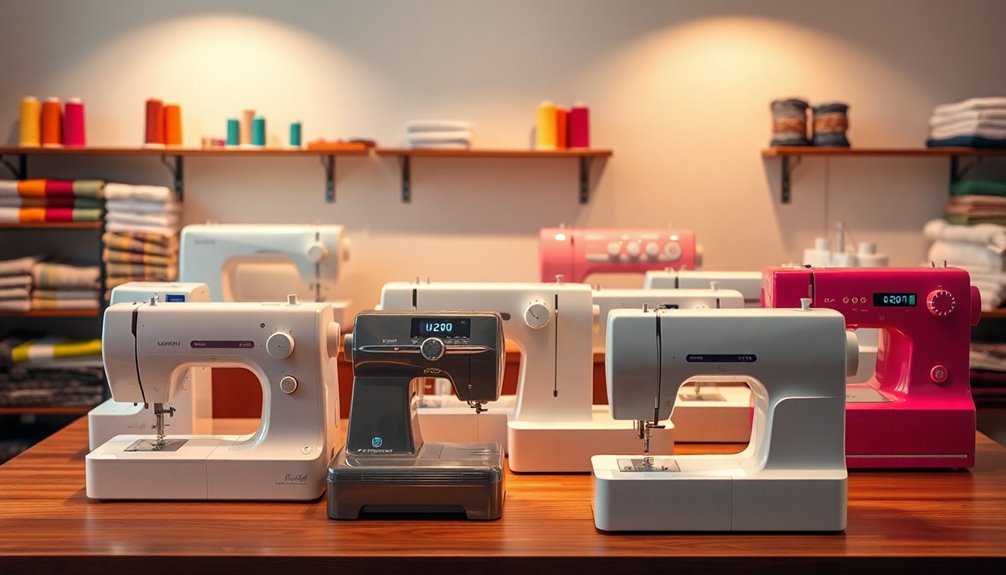
Finding the right sewing machine for DIY fashion design and alterations means balancing features, ease of use, and versatility. The Brother XM3700 stands out as the best overall pick thanks to its extensive stitch options and user-friendly interface. For those focused on quilting as well as fashion, the Janome MC6650 offers powerful capabilities, while the SINGER 4423 Heavy Duty provides durability for intensive projects. Each choice involves tradeoffs, such as price versus features or simplicity versus advanced functions. Keep reading for a detailed breakdown to help you find the perfect fit for your DIY wardrobe projects.

Get business pricing on tools and workshop supplies
- Business-only prices and quantity discounts
- Tax-exempt purchasing
- Multiple users, one account, clear invoices
Complete the kit

Key Takeaways
- The top-ranked machines balance ease of use with a wide range of stitches and features suitable for fashion alterations.
- Durability and build quality are key for frequent or heavy-duty DIY projects, with heavy-duty models like the SINGER 4423 excelling in this area.
- Portability varies; compact models are ideal for small spaces or on-the-go projects, but may lack advanced features of full-size machines.
- Budget options often offer enough functionality for basic fashion tweaks but may fall short on complex or quilting tasks.
- Advanced features like LCD screens and automatic threading improve usability but come at a higher price point.
| Brother XM3700 Sewing Machine with 37 Built-in Stitches |  | Best for Beginners and Light Use | Built-in Stitches: 37 | Included Accessories: 5 sewing feet, 3-piece needle set, twin needle, 4 bobbins, user manual | Power Supply: 120 volts (US only) | VIEW ON AMAZON | See Our Full Breakdown |
| Brother CS7000X Sewing and Quilting Machine LCD Display |  | Best for Versatility and Larger Projects | Stitches: 70 built-in stitches | Buttonholes: 7 auto-size buttonholes | Workspace: Large needle-to-arm space | VIEW ON AMAZON | See Our Full Breakdown |
| Janome MC6650 Sewing and Quilting Machine |  | Best for Speed and Large-Scale Projects | Stitch Speed: up to 1000 stitches per minute | Throat Space: 10 inches | Presser Feet: 12 included | VIEW ON AMAZON | See Our Full Breakdown |
| SINGER C5200 Computerized Sewing & Quilting Machine with Extension Table & Accessory Kit |  | Best for Extensive Stitch Options and Large Projects | Stitch Applications: 180 | Buttonholes: 6 one-step | Power Supply: 230 V | VIEW ON AMAZON | See Our Full Breakdown |
| Brother HC1850 Sewing and Quilting Machine, 185 Built-in Stitches, LCD Display, 8 Included Feet |  | Best for Versatile Home Sewing and Quilting | Built-in Stitches: 185 | Auto-Size Buttonholes: 8 styles | Display: LCD | VIEW ON AMAZON | See Our Full Breakdown |
| Brother SE700 Sewing and Embroidery Machine, Wireless LAN, 4×4 Inch Embroidery Field |  | Best for Creative Customization and Embroidery Enthusiasts | Embroidery Area: 4″ x 4″ | Touchscreen: 3.7-inch LCD color touchscreen | Built-in Designs: 135 embroidery designs | VIEW ON AMAZON | See Our Full Breakdown |
| Portable Mini Sewing Machine for Beginners, Kids & Adults |  | Best for Quick Repairs and Small DIY Projects | Stitch Options: 12 | Speed Control: 2-speed | Material: Metal frame | VIEW ON AMAZON | See Our Full Breakdown |
| SINGER 4423 Heavy Duty Sewing Machine with Accessories (Meltwater Blue) |  | Best for Heavy Fabrics and Durable Construction | Color: Meltwater Blue | Stitch Options: 97 | Stitch Speed: 1,100 stitches per minute | VIEW ON AMAZON | See Our Full Breakdown |
| Brother XM2701 Portable Sewing Machine with 27 Stitches |  | Best for Versatility and Beginner-Friendly Sewing | Stitches: 27 built-in stitches | Automatic Needle Threader: Yes | Drop-in Top Bobbin: Yes | VIEW ON AMAZON | See Our Full Breakdown |
| Portable 16-Stitch Sewing Machine for Beginners and DIY Projects |  | Best for Small Projects and Easy Operation | Stitch Types: 16 | Tension Settings: 1-9 | Needle Type: Single or Double | VIEW ON AMAZON | See Our Full Breakdown |
| Janome Cat Fancy Easy-to-Use Sewing Machine with Interior Metal Frame and Tutorial Videos |  | Best for Beginners and Light Projects | Weight: 13 lbs | Number of Stitches: 15 | Buttonhole: 4-step | VIEW ON AMAZON | See Our Full Breakdown |
| SINGER 4432 Heavy Duty Sewing Machine with Accessory Kit | 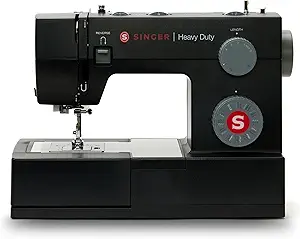 | Best for Sewing Through Thick Fabrics and Versatile Use | Motor Power: 60% stronger than standard | Stitch Speed: 1100 stitches per minute | Number of Stitches: 32 built-in stitches | VIEW ON AMAZON | See Our Full Breakdown |
| SINGER Heavy Duty 500 Sewing Machine with Carrying Case |  | Best for Vintage-Inspired Style and Heavy Fabric Handling | Model: HD500 | Stitches: 23 built-in stitches | Buttonhole: 1-step | VIEW ON AMAZON | See Our Full Breakdown |
| Brother XR9550 Computerized Sewing and Quilting Machine 165 Stitches |  | Best for Versatile Projects and Quilting | Stitches: 165 | Auto-size buttonholes: 8 styles | Included accessories: Hard cover, wide table, 8 sewing and quilting feet | VIEW ON AMAZON | See Our Full Breakdown |
| Brother CS5055 Computerized Sewing Machine with LCD Display |  | Best for Large Workspace and Reliable Performance | Stitches: 60 | Buttonholes: 7 auto-size | Needle Threader: Automatic | VIEW ON AMAZON | See Our Full Breakdown |
More Details on Our Top Picks
Brother XM3700 Sewing Machine with 37 Built-in Stitches
The Brother XM3700 stands out for its user-friendly design, making it an excellent choice for those new to sewing or DIY fashion alterations. Its automatic needle threader and lightweight build contribute to easy setup and portability, which is ideal for quick projects or occasional alterations. Compared to the Brother CS7000X, it has fewer stitches (37 vs. 70), limiting versatility for complex designs but simplifying operation for beginners. The main tradeoff here is its basic feature set, which may fall short for more advanced or frequent sewists. Its limited to US 120V supply, meaning it can’t be used internationally without voltage converters. Overall, this machine is perfect for hobbyists focusing on simple clothing repairs and small projects.
Pros:- Easy to use with automatic needle threading
- Lightweight and portable for quick projects
- Includes a variety of accessories for basic sewing tasks
Cons:- Limited to 37 stitches, less suitable for complex design work
- Restricted to US 120V power supply, limiting international use
Best for: Beginners or casual sewists looking for an easy, portable machine for DIY fashion and alterations.
Not ideal for: Experienced sewists or those needing a broad range of stitches and advanced features for complex projects.
- Built-in Stitches:37
- Included Accessories:5 sewing feet, 3-piece needle set, twin needle, 4 bobbins, user manual
- Power Supply:120 volts (US only)
Our verdict“This machine is best suited for beginners and small-scale projects, prioritizing ease of use over advanced features.”
Brother CS7000X Sewing and Quilting Machine LCD Display
The Brother CS7000X offers a significant step up in versatility with 70 built-in stitches and an extra-large workspace, making it highly capable for quilting and fashion alterations requiring more complex stitch patterns. Its automatic needle threader simplifies setup, especially when working with multiple fabrics or detailed finishes. Compared with the Janome MC6650, it has fewer high-speed options and less throat space, which might limit large quilting projects, but it’s more accessible for beginners. The machine’s complexity could be overwhelming for absolute novices, who might prefer the simpler Brother XM3700. It’s ideal for sewists who want a multi-purpose machine for both clothing alterations and quilting projects, but not for those seeking professional-grade speed or heavy-duty construction.
Pros:- Wide variety of stitches for diverse projects
- Large workspace ideal for quilting and large garments
- Durable metal frame construction
Cons:- May be complex for users unfamiliar with sewing machines
- Limited to US 120V power, restricting international use
Best for: Intermediate to advanced hobbyists and quilters seeking a versatile machine for fashion and quilting projects.
Not ideal for: Complete beginners or those who prefer a straightforward, minimal-feature machine for basic repairs.
- Stitches:70 built-in stitches
- Buttonholes:7 auto-size buttonholes
- Workspace:Large needle-to-arm space
- Frame:Metal
- Voltage:120V (US only)
Our verdict“This model suits sewists who want a feature-rich machine capable of handling both alterations and quilting, with some learning curve involved.”
Janome MC6650 Sewing and Quilting Machine
The Janome MC6650 is designed for those who need speed and space, making it a strong choice for dressmakers and quilters alike. Its impressive stitching speed of up to 1000 stitches per minute accelerates production, especially compared to the SINGER C5200. The 10-inch throat space provides ample room for large projects, reducing the need for constant repositioning. Its all-metal construction and extensive accessory kit offer durability and versatility for advanced sewing tasks. The main tradeoff involves its weight and complexity; it’s less portable and may be overwhelming for beginners without prior experience. This machine makes the most sense for experienced hobbyists or professionals working on large, detailed projects who need speed and space.
Pros:- High stitching speed for efficient work
- 10-inch throat space ideal for large projects
- Includes 12 presser feet and programmable features
Cons:- Heavy and less portable for casual use
- Potentially complex for complete beginners
Best for: Experienced sewists and quilters who require high speed, spacious work area, and a wide range of features.
Not ideal for: Beginners or casual sewists seeking a lightweight, simple machine for small alterations.
- Stitch Speed:up to 1000 stitches per minute
- Throat Space:10 inches
- Presser Feet:12 included
- Features:Built-in needle threader, stitch adjustment dials
- Construction:All-metal
Our verdict“This machine is best for advanced sewists and quilters needing speed, large workspace, and durability for intensive projects.”
SINGER C5200 Computerized Sewing & Quilting Machine with Extension Table & Accessory Kit
The SINGER C5200 offers an extensive array of 180 stitches and a user-friendly LCD display, making it a top choice for those who want versatility for both fashion alterations and quilting. Its full metal frame ensures stability during complex sewing, and the included extension table supports larger projects. Compared to the Brother HC1850, which has fewer stitches, the C5200 provides more customization options, but its 230V power requirement can be a hurdle for international users. Its comprehensive feature set might be overwhelming for absolute beginners, who could prefer simpler models like the Brother XM3700. This machine is ideal for serious hobbyists or semi-professionals who frequently work on a variety of projects and need a durable, feature-rich machine.
Pros:- Wide variety of stitches and customization options
- LCD display simplifies stitch selection
- Heavy-duty metal frame for durability
- Includes extension table for larger projects
Cons:- Requires 230 V power, limiting international compatibility
- Potentially complex for new users
Best for: Experienced hobbyists or semi-professional sewists needing a durable machine with extensive stitch options.
Not ideal for: Beginners or users seeking a lightweight, straightforward machine for basic repairs.
- Stitch Applications:180
- Buttonholes:6 one-step
- Power Supply:230 V
- Features:LCD display, touch stitch selection
- Frame:Full metal
Our verdict“This model is best for experienced sewists who need a reliable, versatile machine capable of handling diverse projects with extensive stitch choices.”
Brother HC1850 Sewing and Quilting Machine, 185 Built-in Stitches, LCD Display, 8 Included Feet
The Brother HC1850 combines a large stitch variety with user-friendly features, making it well-suited for those who want a versatile machine for fashion alterations and quilting. Its 185 built-in stitches and 8 included feet support a broad range of creative projects, while the LCD display simplifies stitch selection. Compared with the SINGER C5200, it offers fewer stitches but remains a capable all-rounder. Its primary limitation is its 120V US-only power, which restricts international use. For hobbyists who want a reliable machine with a good mix of features but don’t need the extensive options of high-end models, this makes a compelling choice. It’s less suited for users requiring professional-grade speed or heavy-duty construction.
Pros:- Large variety of stitches for diverse projects
- Easy-to-use LCD display for quick stitch selection
- Includes multiple accessories for quilting and sewing
Cons:- Limited to 120V, US-only power
- No wireless or advanced digital features
Best for: Home sewists and hobbyists seeking a versatile, easy-to-use machine for fashion edits and quilting.
Not ideal for: Advanced professionals or international users needing higher voltage compatibility or specialized features.
- Built-in Stitches:185
- Auto-Size Buttonholes:8 styles
- Display:LCD
Our verdict“This machine offers a good balance of versatility and ease of use for hobbyists focusing on DIY fashion and quilting projects within the US.”
Brother SE700 Sewing and Embroidery Machine, Wireless LAN, 4×4 Inch Embroidery Field
The Brother SE700 stands out for its extensive embroidery capabilities, with 135 built-in designs and a large 4×4 inch embroidery area. Its 3.7-inch touchscreen simplifies editing, while wireless connectivity allows seamless pattern transfer via mobile app or PC, making it ideal for those who want to personalize garments and accessories. Compared to the SINGER 4423, which excels in heavy-duty sewing but lacks embroidery features, the SE700 offers a broader range of creative options. However, its relatively small embroidery area and reliance on a wireless network can be limitations for more complex projects or those with limited connectivity. Designed primarily for hobbyists and small-scale craft projects, this machine emphasizes versatility over industrial strength. If your focus is on adding embroidered embellishments and customization, this model is a strong choice, but it may fall short for heavy fabric alterations or extensive sewing tasks.
Pros:- Wide range of built-in embroidery designs and fonts
- Wireless connectivity for easy pattern transfer and customization
- Large touchscreen for intuitive editing
- Automatic needle threader and drop-in bobbin for convenience
Cons:- Limited embroidery area of 4″ x 4″ restricts large designs
- Requires a stable Wi-Fi connection for full functionality
- Designed primarily for US 120V electrical system, limiting international use
Best for: DIY fashion designers and hobbyists interested in personalized embroidery and creative sewing projects
Not ideal for: Seamstresses who need a heavy-duty machine for thick fabrics or large-scale alterations, as embroidery is limited and connectivity-dependent
- Embroidery Area:4″ x 4″
- Touchscreen:3.7-inch LCD color touchscreen
- Built-in Designs:135 embroidery designs
- Built-in Fonts:10 embroidery fonts
- Sewing Stitches:103 stitches including 10 auto-size buttonholes
- Connectivity:Wireless LAN, USB port
Our verdict“Ideal for creative sewists seeking to incorporate embroidery and personalization into their projects, but less suited for heavy-duty fabric work.”
Portable Mini Sewing Machine for Beginners, Kids & Adults
This compact mini sewing machine excels in portability and ease of use, making it perfect for quick repairs, small alterations, and craft projects. Its lightweight metal frame ensures stability, while 12 stitch options and adjustable tension provide enough versatility for basic sewing tasks. Unlike larger models like the SINGER 4423, which handles heavier fabrics and more complex sewing, this machine is tailored for light fabrics and simple tasks. Its dual operation modes—foot pedal and button control—offer flexibility for beginners and casual users. However, its limited stitch selection and small size mean it’s not suitable for extensive or heavy-duty sewing, and it might struggle with thicker materials like denim. This pick is best for those who want a portable, straightforward machine for small projects or learning to sew, but it won’t replace a full-sized, feature-rich machine for professional alterations.
Pros:- Lightweight and compact for easy storage and transport
- Includes a full starter kit with necessary accessories
- Multiple stitch options and adjustable tension
- Dual operation modes for user convenience
Cons:- Limited to lightweight fabrics, may jam on thicker materials
- Basic functionality not suitable for complex sewing tasks
- No advanced features for professional or large projects
Best for: Beginners, kids, and casual DIYers who need a portable machine for light fabrics and small projects
Not ideal for: Seamstresses working with heavy fabrics or large-scale fashion alterations, due to its limited power and features
- Stitch Options:12
- Speed Control:2-speed
- Material:Metal frame
- Size:Compact
- Included Accessories:Presser feet, needles, bobbins, thread spools, foot pedal, power adapter
- Lighting:Built-in LED
Our verdict“Perfect for beginners and small-scale sewing, but not for heavy fabrics or professional alterations.”
SINGER 4423 Heavy Duty Sewing Machine with Accessories (Meltwater Blue)
The SINGER 4423 Heavy Duty is tailored for those who need a machine that can handle thick fabrics like denim, leather, or canvas. Its sturdy metal frame and powerful motor enable sewing speeds up to 1,100 stitches per minute, making it efficient for both creative projects and repairs. Compared to the Brother SE700, which emphasizes embroidery and customization, the 4423 is all about raw sewing power and durability. Its 97 stitch options provide versatility, but it’s less focused on embroidery or decorative stitches. The machine’s weight and size make it less portable, and its more complex controls could overwhelm beginners unfamiliar with sewing machines. This model suits users who frequently work with heavy or multiple layers of fabric, but it’s overkill for light projects or casual hobbyists.
Pros:- Durable metal frame ensures stability and longevity
- High sewing speed increases efficiency
- Handles heavy fabrics with ease
- Automatic needle threader and transparent bobbin cover for convenience
Cons:- Heavy and less portable for mobile sewing
- Complex controls may intimidate beginners
- Less suited for decorative embroidery or delicate sewing
Best for: Seamstresses and DIYers working with heavy fabrics, needing durability and high-speed sewing
Not ideal for: Beginners or those primarily interested in embroidery or light, intricate sewing projects
- Color:Meltwater Blue
- Stitch Options:97
- Stitch Speed:1,100 stitches per minute
- Heavy Duty:Yes
- Built-in Features:Automatic needle threader, transparent bobbin cover, manual tension control
- Max Fabric Thickness:Heavy fabrics like denim, leather, canvas
Our verdict“A dependable choice for heavy-duty sewing tasks, especially with thick fabrics, but less suitable for intricate or lightweight projects.”
Brother XM2701 Portable Sewing Machine with 27 Stitches
The Brother XM2701 offers a balanced mix of affordability and functionality, making it a solid pick for those new to sewing or doing occasional projects. Its 27 built-in stitches cover basic and decorative needs, and the automatic needle threader simplifies setup—an advantage over more manual models like the Portable Mini Sewing Machine. The included accessories and drop-in bobbin add to its user-friendly appeal. Compared with the SINGER 4432, which is geared toward heavy-duty sewing, the XM2701 is lighter and easier to operate, though it lacks the power and speed for thick fabrics. This machine is well-suited for small alterations, craft projects, and learning, but would be limited for advanced quilting or extensive alterations involving multiple layers or heavy materials.
Pros:- Wide variety of stitches for different projects
- Automatic needle threader and easy bobbin setup
- Includes multiple accessories for versatility
- Portable and lightweight for easy transport
Cons:- Limited to 120V US power supply only
- Basic features may not satisfy advanced or heavy fabric sewing
- Lacks quilting or heavy-duty capabilities
Best for: Beginner sewers and hobbyists seeking a versatile, portable machine for everyday projects
Not ideal for: Seamstresses working with heavy fabrics or requiring advanced quilting features, due to limited power and stitch options
- Stitches:27 built-in stitches
- Automatic Needle Threader:Yes
- Drop-in Top Bobbin:Yes
- Included Accessories:6 sewing feet, needle set, twin needle, 4 bobbins
- Power Supply:120 volts (US only)
Our verdict“Great for beginners and light projects, but not suitable for heavy fabrics or large-scale alterations.”
Portable 16-Stitch Sewing Machine for Beginners and DIY Projects
The Portable 16-Stitch Sewing Machine is designed for ease of use and simplicity, making it suitable for beginners and small DIY projects. Its 16 stitch patterns cover basic sewing and decorative needs, with adjustable tension and a straightforward mode switch. The inclusion of a foot pedal with two speed modes, automatic thread cutting, and bright LED lighting enhances usability for quick tasks. Compared to the SINGER 4423, which handles heavier fabrics and offers more stitches, this model emphasizes portability and simplicity over power. Its limited stitch variety and inability to handle thick or multiple layers restrict its use to lightweight fabrics and small projects. This machine makes sense for those new to sewing or wanting a compact tool for crafts and minor alterations, but it falls short for more demanding tasks.
Pros:- Compact and lightweight for portability
- 16 stitch options suitable for various small projects
- Automatic thread cutting and bright LED lighting
- Adjustable tension and two-speed foot pedal
Cons:- Limited to lightweight fabrics, may jam on heavier materials
- Double needle mode can tangle if used improperly
- Not designed for heavy-duty or large projects
Best for: Beginners and DIY enthusiasts needing a portable, easy-to-use machine for small projects and light fabrics
Not ideal for: Seamstresses working on heavy fabrics or complex, large-scale alterations, due to its limited power and features
- Stitch Types:16
- Tension Settings:1-9
- Needle Type:Single or Double
- Maximum Fabric Layers:6 layers lightweight denim
- Lighting:LED
- Foot Pedal:Yes, with two speed modes
Our verdict“Ideal for beginners and small DIY projects, but not for heavy fabrics or extensive sewing tasks.”
Janome Cat Fancy Easy-to-Use Sewing Machine with Interior Metal Frame and Tutorial Videos
This machine stands out for its user-friendly design, making it ideal for those just starting out in DIY fashion and alterations. Compared to the Brother CS5055, it offers fewer stitches and lacks advanced features like automatic embroidery, but its simple controls and intuitive interface make it accessible for home sewers focused on garments and light quilting. Its interior metal frame contributes to durability, yet the limited stitch options mean it may not satisfy more complex or heavy-duty projects. The included tutorial videos further support beginners, reducing the learning curve. However, its mechanical operation may feel limiting for those seeking digital customization or extensive stitch variety.
Pros:- Beginner-friendly with intuitive controls
- Versatile for garments, patchwork, and light quilting
- Compact and portable for easy storage and transport
- Sturdy interior metal frame enhances durability
Cons:- Limited to basic sewing and light quilting projects
- Lacks digital or computerized functions
- Mechanical operation may feel outdated for tech-savvy users
Best for: Beginner sewists and hobbyists focusing on garment alterations and patchwork who prioritize ease of use.
Not ideal for: Advanced quilters or fashion designers requiring a wide stitch selection and digital features for complex projects.
- Weight:13 lbs
- Number of Stitches:15
- Buttonhole:4-step
- Material:Interior metal frame
- Features:Free-arm design, snap-on presser feet, extra-high foot lift
Our verdict“This pick makes the most sense for newcomers seeking a reliable, straightforward machine for light sewing tasks.”
SINGER 4432 Heavy Duty Sewing Machine with Accessory Kit
This machine excels at tackling heavy fabrics like denim and canvas thanks to its 60% stronger motor, making it perfect for projects that require strength and durability. Unlike the Janome Cat Fancy, it offers a broader range of stitches—32 in total—and a high-speed operation of 1100 stitches per minute. Its included accessory kit provides multiple presser feet and tools, supporting a variety of sewing techniques. The tradeoff is that its weight and size make it less portable, and the abundance of features might be overwhelming for casual users. Still, for those needing a machine for both alterations and more demanding fabric work, this is a solid choice.
Pros:- Powerful motor easily sews through thick fabrics
- Includes a comprehensive set of accessories
- High stitch speed for efficiency
- Versatile with 32 stitch options
Cons:- Heavy and less portable for frequent moving
- Some may find the number of features complex for simple tasks
Best for: Home sewists who frequently work with heavy or multiple layers of fabric, including denim and canvas, and need a reliable, versatile machine.
Not ideal for: Sewers seeking a lightweight, compact machine primarily for light alterations and quick projects.
- Motor Power:60% stronger than standard
- Stitch Speed:1100 stitches per minute
- Number of Stitches:32 built-in stitches
- Accessories Included:Presser feet, bobbins, needles, seam ripper, quilting guide, dust cover
Our verdict“Ideal for those who need a durable, high-performance machine capable of handling heavy-duty sewing and multiple projects.”
SINGER Heavy Duty 500 Sewing Machine with Carrying Case
This machine combines a vintage aesthetic with solid metal construction and a powerful motor, making it suitable for users who appreciate durability and style. Compared to the Brother XR9550, it offers fewer stitches (23 vs. 165) and lacks advanced digital features. Its included hard case makes it portable and easy to store, which is a plus for those who want a machine that can be stored away when not in use. However, its weight and vintage design may feel outdated for modern sewing needs, and the limited stitch options restrict versatility for complex or decorative sewing projects. It’s a good match for those who value robustness over advanced tech features.
Pros:- Heavy-duty metal frame with durable construction
- Includes a stylish, protective carrying case
- Powerful motor handles different fabrics
- Automatic needle threader adds convenience
Cons:- Heavier and less portable than modern lightweight models
- Limited to basic stitches and functions
Best for: Sewists who prefer a durable, vintage-style machine capable of handling various fabrics, especially for basic alterations and craft projects.
Not ideal for: Those seeking a modern, feature-rich machine with embroidery or extensive stitch options for detailed fashion design.
- Model:HD500
- Stitches:23 built-in stitches
- Buttonhole:1-step
- Design:Vintage-inspired black with gold accents
- Included:Hard carrying case
- Features:Automatic needle threader, jam-resistant bobbin
Our verdict“Best suited for traditional sewists who value durability and vintage design over digital features or extensive stitch options.”
Brother XR9550 Computerized Sewing and Quilting Machine 165 Stitches
This model offers an extensive 165 stitches, making it a versatile option for fashion design, alterations, and quilting. Its LCD display simplifies selecting stitches and settings, unlike the more basic Janome Cat Fancy, which lacks digital controls. The automatic needle threader and wide table enhance ease of use, especially for larger projects. While its 120V power limit restricts use outside the US, its range of features makes it a strong contender for creative sewists who want a machine capable of detailed and varied work. The setup requires some initial assembly, which might be a hurdle for complete beginners.
Pros:- Large variety of 165 stitches for diverse projects
- Automatic needle threading reduces setup time
- Includes a wide table and multiple quilting and sewing feet
- LCD display for easy stitch selection
Cons:- Requires some setup, potentially intimidating for absolute beginners
- Limited to 120V US voltage only
Best for: Intermediate to advanced hobbyists and small-scale fashion designers seeking a machine with extensive stitch options for diverse projects.
Not ideal for: Sewers outside the US or those looking for a simple, straightforward machine without digital controls.
- Stitches:165
- Auto-size buttonholes:8 styles
- Included accessories:Hard cover, wide table, 8 sewing and quilting feet
- Display:LCD screen
- Power supply:120 volts (US only)
Our verdict“Best for sewists wanting a feature-rich machine capable of handling complex fashion and quilting projects with ease.”
Brother CS5055 Computerized Sewing Machine with LCD Display
This machine offers 60 stitches and a sizable workspace, making it suited for various fashion alterations and DIY projects. Its automatic needle threader and LCD display streamline setup, similar to the Brother XR9550 but with fewer stitches, which limits creative options for intricate designs. Its durable metal frame promises longevity, yet it lacks specialized features like quilting or embroidery capabilities found in the XR9550. For those primarily focused on basic alterations or simple fashion details, this model provides solid performance without overwhelming features. However, users outside the US must consider voltage compatibility to avoid issues.
Pros:- Large workspace accommodates bigger projects
- Automatic needle threader simplifies setup
- Durable metal frame ensures long-term use
- Reliable performance for everyday sewing
Cons:- Limited to 60 stitches, less creative variety
- No advanced features like embroidery or quilting
Best for: Home sewers who need a dependable machine for general alterations, patchwork, and basic fashion projects within the US.
Not ideal for: Fashion designers seeking advanced quilting, embroidery, or extensive stitch customization beyond 60 options.
- Stitches:60
- Buttonholes:7 auto-size
- Needle Threader:Automatic
- Bobbin:Drop-in top
- Accessories:7 sewing feet, user manual
Our verdict“This machine provides dependable performance for common alterations and DIY projects within its stitch range.”

How We Picked
The products in this roundup were evaluated based on performance, ease of use, build quality, versatility, and value for money. We prioritized models that excel in handling various fabrics and sewing techniques relevant to fashion design and alterations, such as zippers, hemming, and embellishments. Durability and reliability scored highly, especially for DIYers who plan to use their machine frequently. Price was also a consideration, ensuring options for different budgets. The ranking reflects a balance between feature set and user-friendliness, aiming to recommend machines that serve both beginners and more experienced sewists effectively.Factors to Consider When Choosing Sewing Machine For Diy Fashion Design And Alterations
Choosing the right sewing machine for DIY fashion design and alterations involves considering several key factors. Your decision should balance ease of use, feature set, and durability, depending on your project scope and skill level. Understanding what each feature offers and where compromises may be necessary will help you make an informed purchase that supports your creative ambitions.Sewing Machine Features and Stitch Options
For fashion design and alterations, a machine that offers a variety of stitches—such as stretch stitches, zigzags, and decorative options—can be very helpful. More stitches mean more versatility for different fabrics and techniques, but more options often come with increased complexity. Beginners should look for machines with a straightforward interface and essential stitches, while experienced users may prioritize models with advanced features like programmable stitches or embroidery capabilities.
Ease of Use and User Interface
Ease of use is crucial, especially if you’re learning or doing quick alterations. Features like automatic needle threading, simple stitch selection, and clear LCD displays can significantly reduce frustration. Be cautious of overly complicated controls if you’re new; a machine with a friendly interface allows you to focus more on your project than on figuring out the settings. For frequent use, intuitive controls and helpful tutorials can save time and improve results.
Build Quality and Durability
A machine’s construction impacts how well it handles frequent projects and tougher fabrics. Heavy-duty models with metal components tend to last longer and perform more reliably over time. While they might cost more upfront, their longevity can make them more economical in the long run. Conversely, lightweight plastic models may be suitable for occasional alterations or light fabrics but might need replacement sooner if used intensively.
Size, Portability, and Space Requirements
Consider where you’ll use the machine—if space is limited or you need to transport it often, a compact, lightweight model could be ideal. However, smaller machines sometimes lack the features or power of full-sized models. On the other hand, larger machines with more features generally require dedicated space but offer greater stability and functionality for serious DIY fashion projects. Balance your workspace constraints with your project needs when choosing size.
Price and Value
Price ranges widely, from basic models under $200 to professional-grade machines costing over $1,000. While it might be tempting to go for the cheapest option, investing a little more can provide better durability, more features, and easier usability—especially for frequent or complex projects. Consider what features are essential for your needs and look for a machine that offers the best value within your budget. Sometimes, paying more upfront reduces frustration and replacement costs later.
Frequently Asked Questions
Is a computerized sewing machine necessary for fashion alterations?
While a computerized machine offers convenience through features like automatic threading, stitch selection, and embroidery options, it isn’t strictly necessary for basic fashion alterations. Simpler mechanical machines can handle hemming, zippers, and basic seam repairs effectively. However, if you plan to do more complex designs or want faster, more precise stitching, a computerized model can be a valuable investment that saves time and enhances quality.
What should I prioritize if I mainly alter or customize clothing?
For clothing alterations, focus on a machine that handles different fabrics well and offers features like adjustable stitch length, a variety of stitches, and a sturdy build. Durability and ease of use are key, especially if you plan to work with heavyweight fabrics like denim. A model with a free arm is particularly helpful for sewing around cuffs, sleeves, or narrow areas, making your alterations more precise and efficient.
Are embroidery features important for fashion design and alterations?
Embroidery capabilities can add a creative touch to your fashion projects, but they are often an extra feature rather than a necessity. If your focus is primarily on alterations like hemming, zippers, and seam repairs, embroidery features may not justify a higher price. However, if you want to personalize garments with decorative stitches or embellishments, selecting a machine with embroidery functions makes sense and expands your design possibilities.
How much should I expect to spend on a good sewing machine for DIY fashion projects?
Budget options typically start around $150 to $300 and can handle basic alterations, hems, and minor projects. Mid-range machines, priced between $300 and $700, often include more stitches, stronger build quality, and additional features like automatic buttonholes. Premium models over $700 provide advanced functions such as embroidery, quilting, and extensive stitch options, suited for serious hobbyists or those with more complex design needs. Your choice depends on your frequency of use and project complexity.
What common mistakes should I avoid when choosing a sewing machine for DIY fashion?
A common mistake is focusing solely on features without considering your skill level or specific needs. For example, buying a machine with many advanced stitches if you’re a beginner can be overwhelming. Conversely, choosing a basic model for complex projects can limit your creativity. It’s also important to consider the warranty, availability of parts, and ease of maintenance. Ensuring the machine is compatible with the types of fabrics you plan to work on prevents frustration and saves money in the long run.
Conclusion
For those just starting out or focusing on simple repairs, a user-friendly, versatile machine like the Brother XM3700 offers excellent value. If you’re serious about combining fashion design with quilting, the Janome MC6650 provides professional-grade features. Budget-conscious DIYers should consider the SINGER 4423 Heavy Duty for durability without breaking the bank, while experienced hobbyists seeking creative options might prioritize machines with embroidery capabilities. Ultimately, your choice depends on your skill level, project scope, and budget—select the model that best aligns with your fashion DIY goals.
Fall yard work Picks
leaf blowers
As an affiliate, we earn on qualifying purchases.