To create a quilted coaster set from scraps, start by selecting small fabric pieces in various colors and textures. Cut them into 2-3 inch squares or rectangles and layer each with batting and backing fabric. Sew simple straight lines or grid patterns to quilt the layers together. Finish by trimming, attaching backing fabric, and securing the edges. If you want to explore more tips and techniques, keep going to craft beautiful, personalized coasters from your scraps.
Key Takeaways
- Select small fabric scraps in contrasting colors and patterns, using durable, tightly woven materials like cotton or linen.
- Cut fabric into 2-3 inch squares or rectangles, then layer with batting and backing fabric for quilting.
- Sew layers together with basic straight-line stitches, using consistent seam allowances for flat, neat edges.
- Quilt layers with parallel rows or grid patterns, then trim excess fabric and secure seams for a polished look.
- Finish with backing, add waterproof coating if desired, and ensure all edges are neatly secured for durable, functional coasters.
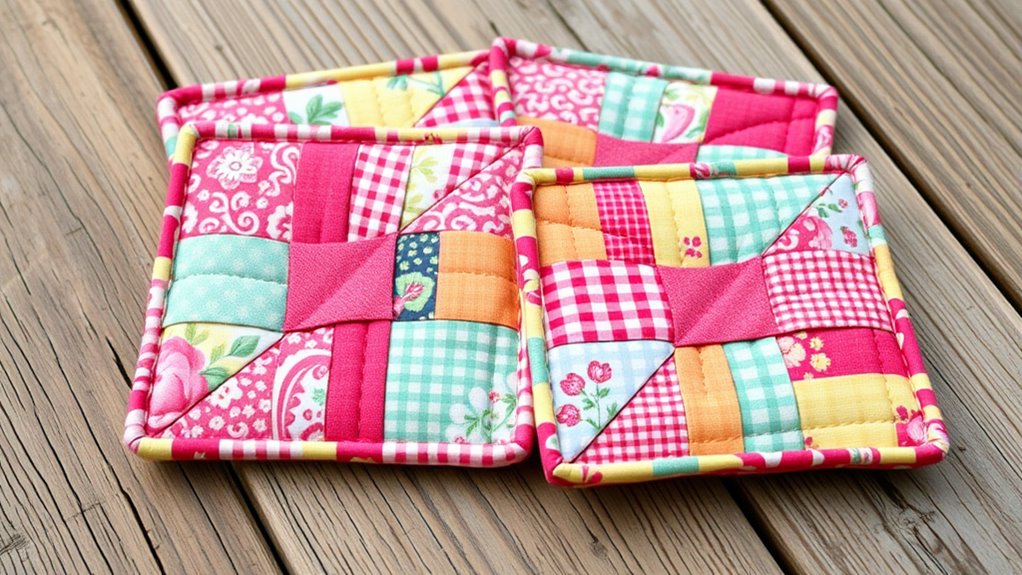
If you’re looking for a fun and eco-friendly project, creating a quilted coaster set from scraps is a perfect choice. Not only does this let you reuse fabric pieces you might otherwise toss aside, but it also results in charming, personalized coasters that add a cozy touch to your space. The key to a successful project lies in careful fabric selection and mastering simple quilting techniques that bring your design to life.
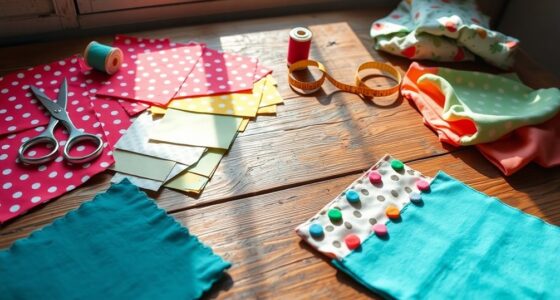
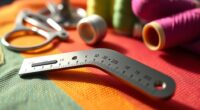
Start by gathering your fabric scraps. Look for small pieces in a variety of colors and patterns that complement each other. When selecting fabric, consider thin, tightly woven materials like cotton or linen, as these work best for coasters—they’re absorbent, durable, and easy to work with. Mixing different textures can add visual interest, but avoid overly thick or stretchy fabrics that might make quilting difficult. Keep in mind that contrasting colors and patterns will make your coaster set more lively and unique.
Gather small, colorful fabric scraps, preferably cotton or linen, for lively, durable coasters.
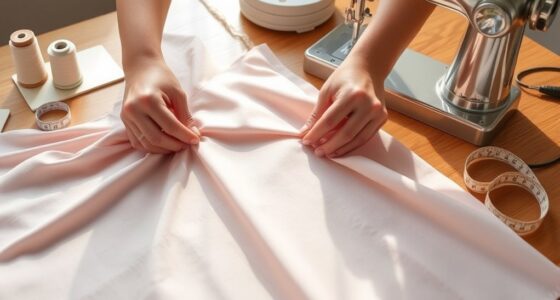
Once you have your scraps, it’s time to decide on your design. A simple patchwork layout works well for beginners. Cut your fabric into small squares or rectangles, typically around 2 to 3 inches, depending on your desired coaster size. When it comes to quilting techniques, start with a basic straight-line stitch. Layer your fabric pieces with a piece of batting (a thin layer of padding) and a backing fabric, then pin everything in place. Quilt the layers together by sewing straight lines across the coaster—either in parallel rows or a grid pattern. This method secures all layers and gives your coasters a neat, finished look.
As you quilt, pay attention to your seam allowances, keeping them consistent to ensure the edges stay flat. Press your seams open or to the side to reduce bulk. Once you’ve quilted all your coaster tops, trim any excess fabric, and attach a backing piece. You can either sew around the edges with a simple straight stitch or add a decorative binding for a polished finish. For added durability, consider adding a heat-resistant backing or a waterproof coating, especially if you plan to use your coasters regularly. Additionally, accurate seam allowances can significantly improve the overall quality of your finished coasters.
Creating a quilted coaster set from scraps is satisfying because it combines creative freedom with practical results. With thoughtful fabric selection and straightforward quilting techniques, you’ll craft a set of coasters that’s both charming and eco-friendly. Plus, every time you use them, you’ll enjoy the knowledge that you turned leftover fabric into something beautiful and useful.

WEBEEDY 4 Sets DIY Square Quilting Coaster Kits with Video Tutorial for Adult Beginner, Cotton Fabric Quilt Kit with 50 Styles Quilting Fabric, DIY Patchwork Sewing Craft Quilt Coaster Making Kit
- Complete Quilting Kit: Includes fabrics, needles, thread, and tools
- Video & Manual Instructions: Step-by-step guidance for beginners
- Fruit Square Design: Simple, charming patchwork for decor
As an affiliate, we earn on qualifying purchases.
As an affiliate, we earn on qualifying purchases.
Frequently Asked Questions
What Types of Fabric Are Best for Quilted Coasters?
When choosing fabric for quilted coasters, you want to focus on durability and decorative patterns. Look for tightly woven cotton or linen, as they resist wear and washing. These fabrics hold up well over time and showcase vibrant patterns. Avoid flimsy or stretchy materials. Your goal is to select fabrics that both last through daily use and add visual interest, ensuring your coasters stay beautiful and functional for years to come.
How Do I Prevent My Coasters From Slipping?
Imagine your coasters as dancers on a slippery stage. To keep them steady, you add a non-slip backing, like a sturdy dance floor, that prevents slipping. Using a coaster grip guarantees they stay put even when coffee cups are full or glasses are icy. This simple addition keeps your coasters in place, so your table remains protected and your setup stays organized without any unwanted sliding.
Can I Make Coasters With Waterproof Backing?
Yes, you can make coasters with waterproof backing. Using waterproof fabric for the coaster backing keeps your coasters protected from spills and moisture. Simply sew the waterproof fabric to your quilted top, ensuring it’s securely attached. This way, your coasters won’t warp or get damaged easily. Just choose a suitable waterproof fabric, like vinyl or oilcloth, and sew it neatly to create durable, moisture-resistant coasters that last longer.
How Do I Wash and Care for Quilted Coasters?
Think about your favorite mug and how often it touches your coaster—proper care keeps both looking great. To wash quilted coasters, gently hand wash with mild soap and cold water, then air dry. Avoid machine washing to preserve decorative stitching. Store your coasters in a dry, accessible spot, like coaster storage, to keep them in top shape. Regular care guarantees your quilted coasters stay vibrant and functional for years.
What Tools Are Essential for Quilting Scraps?
When quilting scraps, you’ll need essential tools like a rotary cutter for precise cuts and quilt batting to add thickness and durability. The rotary cutter helps you cut fabric scraps into accurate shapes quickly, while quilt batting provides the padding that gives your coaster set a professional finish. These tools make the process easier and guarantee your finished coasters are sturdy, well-made, and perfect for everyday use.
Conclusion
By making your own quilted coaster set from scraps, you not only reduce waste but also add a personal touch to your home. Imagine turning a handful of colorful fabric pieces into six unique coasters, each one a tiny work of art. Did you know that up to 85% of textile waste ends up in landfills? Crafting with scraps keeps these materials out of the trash, making your project both creative and eco-friendly.