Choosing the right sewing machine needle is key to getting professional-looking stitches and protecting your fabric. You’ll find different types like universal, ballpoint, heavy-duty, and microtex, each suited for specific fabrics. Sizes vary from lightweight 60/8 to heavy-duty 110/18, ensuring compatibility with your project. Proper selection and maintenance make sewing smoother and extend your needle’s life. Want to know more about matching needles to your fabrics and comfortable sewing tips? Continue exploring.

Get business pricing on tools and workshop supplies
- Business-only prices and quantity discounts
- Tax-exempt purchasing
- Multiple users, one account, clear invoices
Key Takeaways
- Different needle types are designed for specific fabrics, such as universal, ballpoint, heavy-duty, and microtex needles.
- Needle sizes range from 60/8 to 110/18, suited for lightweight to heavy fabrics.
- Choosing the correct needle type and size ensures optimal stitch quality and fabric protection.
- Regular needle maintenance and timely replacement prevent skipped stitches and machine damage.
- Matching the needle to your fabric and project enhances sewing accuracy and durability.
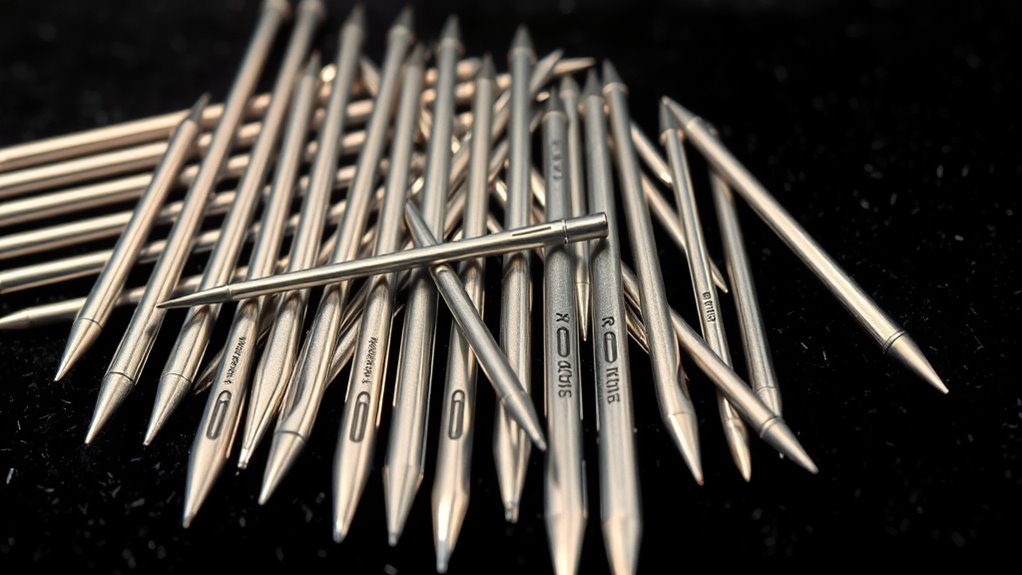
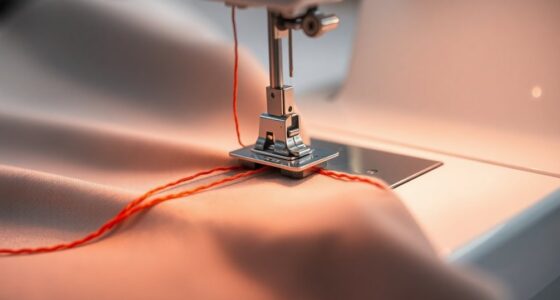
Sewing machine needles are vital tools that directly impact the quality and durability of your stitched projects. Choosing the right needle for your fabric and technique can make a significant difference in the outcome. When working with embroidery techniques, for example, selecting specialized embroidery needles ensures the thread glides smoothly through the fabric, preventing snags and skipped stitches. Proper needle maintenance is equally important; regularly replacing dull or bent needles helps maintain consistent stitch quality and reduces fabric damage. Keeping your needles clean and sharp ensures your machine runs efficiently and your projects look professional. Additionally, understanding the various types of sewing machine needles**** helps in selecting the appropriate needle for each task, ensuring optimal results.
Sewing machine needles are essential for professional, durable results and smooth operation.
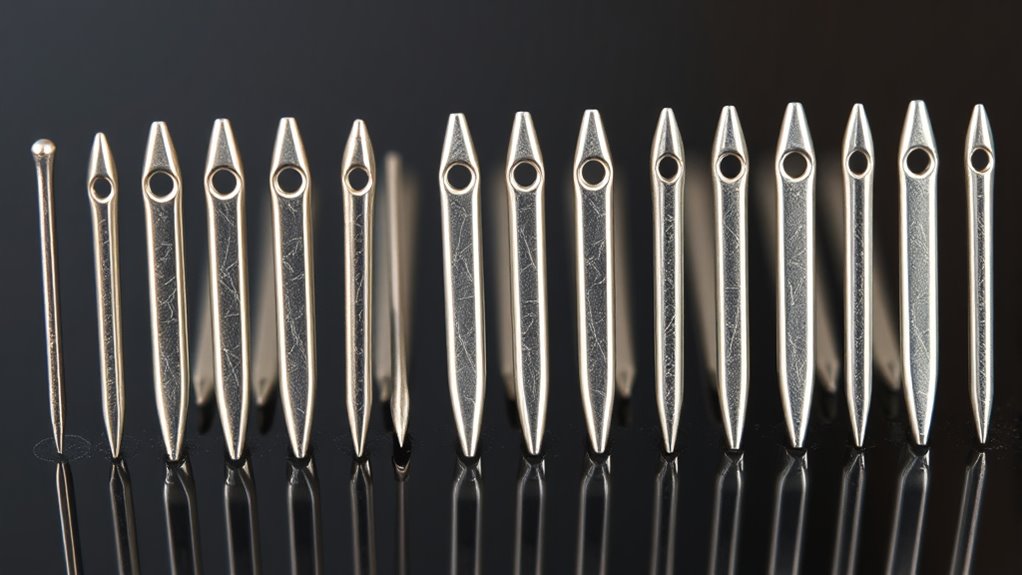
Understanding the various types of sewing machine needles is essential. For general sewing on woven fabrics, universal needles are versatile and a safe choice. When working with stretchy or knit fabrics, ballpoint needles are designed to glide between the fibers, preventing runs or snags. If you’re tackling heavy-duty projects like denim or leather, heavy-duty needles or denim needles provide the strength needed to pierce tough materials without breaking. For delicate fabrics such as silk or chiffon, microtex or sharp needles offer precision and a clean stitch. Each needle type is designed with specific features, like different point shapes and sizes, to optimize performance with particular fabrics.
Size selection also plays an important role. Needles are numbered, with smaller numbers (like 60/8 or 70/10) suited for lightweight fabrics, and larger numbers (like 100/16 or 110/18) for heavier textiles. Using the correct size guarantees your stitches are even and your fabric isn’t damaged. For example, a size 80/12 needle works well for medium-weight cotton or linen, while a size 90/14 is better for thicker fabrics. Matching the needle size to your fabric prevents skipped stitches, puckering, or broken threads, which can compromise your project’s durability.
Maintaining your needles is simple but vital. After every few projects, check for any signs of wear—bent tips, discoloration, or roughness—and replace them if needed. Always insert needles correctly and avoid forcing them, as improper placement can cause skipped stitches or damage to your machine. Regular needle maintenance also involves keeping your machine’s needle plate and hook area clean from lint and debris, which can affect needle performance. Investing in quality needles suited to your projects and caring for them properly ensures your sewing machine operates smoothly and your finished projects stand the test of time.
Popular right now

De'Longhi Linea Classic Espresso Machine with Adjustable Milk Frother

Breville Barista Pro Espresso Machine with Grinder, Brushed Stainless Steel

Breville Bambino Espresso Machine, Brushed Stainless Steel
As an affiliate, we earn on qualifying purchases.
Frequently Asked Questions
How Do I Identify the Correct Needle Type for My Fabric?
To identify the correct needle type for your fabric, start by checking the fabric compatibility on the needle packaging. Match the needle type—such as universal, ballpoint, or denim—to your fabric to guarantee smooth sewing. If you’re working with delicate or stretchy materials, choose needles designed for those fabrics. Always verify the packaging for recommendations, and select the appropriate size for your project to prevent damage and achieve the best results.
Can Sewing Machine Needles Be Used for Embroidery?
Can sewing machine needles be used for embroidery? Absolutely, but it’s like trying to fit a square peg in a round hole. Regular sewing needles aren’t designed for embroidery’s delicate, detailed work. For embroidery, use embroidery needle compatibility and decorative stitch needles, which are specifically crafted for intricate designs. These needles prevent damage and make certain your stitches are smooth and precise, making your embroidery projects look professional and polished.
How Often Should I Replace My Sewing Machine Needle?
You should replace your sewing machine needle after every 8-12 hours of sewing to maintain ideal needle maintenance. Regularly check for signs of wear, like burrs or bending, and replace promptly to prevent issues. Proper sewing machine calibration depends on using a sharp, undamaged needle. Changing needles regularly ensures smooth stitches, reduces fabric damage, and keeps your machine running efficiently. Remember, a fresh needle makes a noticeable difference in your sewing projects.
Are There Eco-Friendly or Biodegradable Sewing Needles?
Did you know eco-friendly and biodegradable sewing needles are becoming more available? You can find them made from biodegradable materials designed to break down naturally, reducing environmental impact. These needles are produced through eco-friendly manufacturing processes, so they’re better for the planet. If sustainability matters to you, look for brands that emphasize biodegradable materials and eco-conscious production methods. Switching to these needles helps you sew responsibly while still getting reliable performance.
What Are the Signs of a Worn or Damaged Needle?
You’ll notice a worn or damaged needle if it starts bending during sewing or causes skipped stitches. These signs indicate the needle’s dull or bent, which can damage your fabric or machine. Also, look for rough spots or burrs on the needle’s surface. Replacing the needle promptly guarantees smooth sewing, prevents fabric damage, and maintains stitch quality. Regularly inspecting your needle helps avoid costly repairs and keeps your project on track.
Conclusion
Think of your sewing machine needles as the silent guardians of your creativity, each one symbolizing a tool that bridges your ideas to reality. By choosing the right needle, you’re not just selecting a piece of metal—you’re forging a connection between your vision and the fabric that brings it to life. Embrace these tiny artisans, for they hold the power to turn your stitches into lasting masterpieces, weaving your passion into every seam you create.