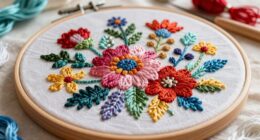
Embroidery machines differ from regular sewing machines because they automatically create detailed, multi-colored designs instead of simple seams. They use advanced mechanisms and specialized software called digitizing software to interpret artwork and guide complex stitching. Their hoops secure fabric tightly, ensuring precision, while multiple threads enable seamless color changes during operation. If you’re curious about how these features work together, you’ll discover more about their fascinating capabilities as you explore further.
Key Takeaways
- Embroidery machines automatically create detailed, multi-colored patterns, unlike regular sewing machines which focus on simple stitches.
- They use digitized design files to execute complex motifs with precise stitch sequences.
- Embroidery machines handle multiple thread colors and automate thread switching during operation.
- They require specialized hoops to secure fabric, ensuring accurate and professional results.
- Regular sewing machines are designed for basic stitching tasks, while embroidery machines incorporate advanced technology for intricate embroidery.
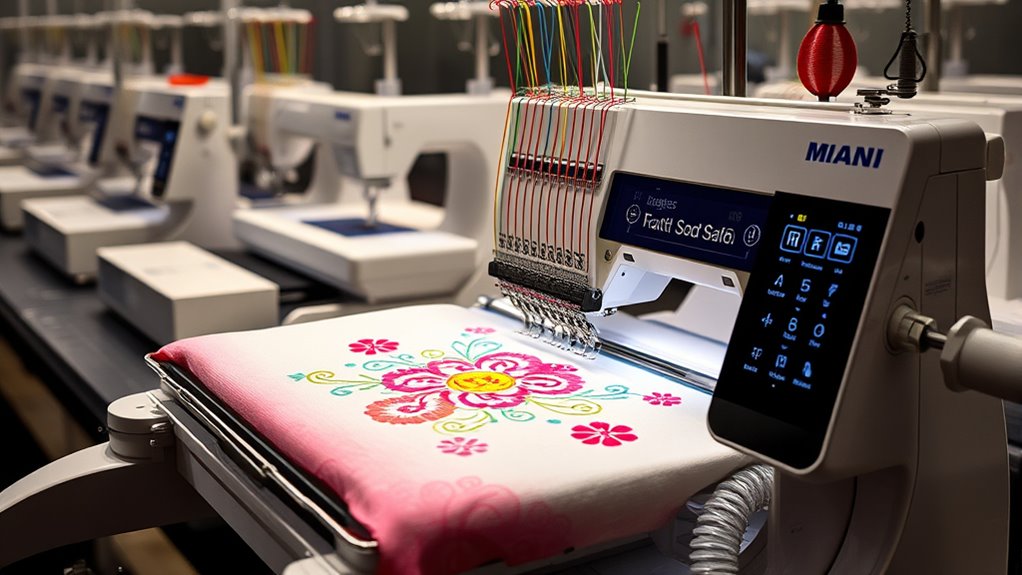
Have you ever wondered how intricate designs are stitched so precisely and quickly? The secret lies in how embroidery machines operate compared to regular sewing machines. While both use needles and threads, embroidery machines are specially designed to create detailed, multi-colored patterns automatically. One key aspect that sets them apart is their use of digitizing software. With this software, you can convert your artwork or logo into a digital file that guides the machine’s stitching process. This software allows you to customize designs, adjust stitch types, and control stitching sequences, guaranteeing your patterns come out just as you envision. Once the design is digitized, it’s transferred to the embroidery machine, which interprets the file and executes the stitching with incredible precision. Additionally, many modern embroidery machines incorporate on-device AI capabilities, which help optimize stitch quality and troubleshoot issues in real-time. Another essential component is the embroidery hoop. Unlike standard sewing hoops, embroidery hoops are tailored to secure fabric tightly in place during the stitching process. They come in various sizes and shapes, but their primary function is to hold the fabric taut so that every stitch is accurate and even. Properly positioning the fabric in an embroidery hoop is vital because any slack or shifting can distort intricate designs. Using the right hoop for your project ensures the pattern stays aligned and produces professional-looking results. When combined with digitizing software, embroidery hoops enable the machine to stitch complex designs reliably and efficiently. Embroidery machines also differ from regular sewing machines in their ability to handle multiple thread colors automatically. You load different threads into the machine’s color paths, and it switches between them seamlessly during stitching. This automation saves you a lot of time compared to manually changing threads and allows for multi-colored, detailed motifs to be created in a single run. Furthermore, embroidery machines often feature specialized motors and mechanisms that facilitate the rapid and precise movement of the needle along the design path, surpassing the capabilities of traditional sewing machines in creating complex images and motifs. In essence, embroidery machines are highly sophisticated tools that blend technology, precision, and automation. The combination of digitizing software, which transforms your design ideas into stitch instructions, and embroidery hoops, which maintain fabric stability, makes it possible to produce professional-quality embroidery effortlessly. Whether you’re creating personalized apparel, decorative items, or promotional products, understanding these differences helps you appreciate the advanced engineering behind embroidery machines. They’re not just a step up from sewing machines—they’re a dedicated craft machine built to turn digital designs into beautifully stitched artwork with speed and accuracy.

Digitizing Made Easy: Create Custom Embroidery Designs Like a Pro
As an affiliate, we earn on qualifying purchases.
As an affiliate, we earn on qualifying purchases.
Frequently Asked Questions
Can Embroidery Machines Sew Regular Stitches?
Yes, embroidery machines can sew regular stitches, but their primary focus is on embroidery design. You might find that some models offer basic sewing functions, but they’re mainly optimized for machine compatibility with embroidery patterns. If you want versatile sewing and embroidery, choose a machine that handles both well. Keep in mind that dedicated embroidery machines excel in embroidery design, while sewing machines are better for general stitches.
Do Embroidery Machines Require Special Needles?
Yes, embroidery machines require special needles. Unlike regular sewing needles, embroidery needles have a slimmer eye to accommodate thicker threads and prevent breakage. You need to check needle compatibility for each project, guaranteeing you use the right size and type. Proper machine maintenance, including changing needles regularly, helps keep stitches precise and prevents damage. Using the correct needles ensures smooth operation and beautiful embroidery results every time.
Are Embroidery Machines Compatible With All Fabrics?
Embroidery machines are generally versatile with fabric compatibility, but you should check your specific model’s guidelines. They work well on lightweight fabrics like cotton and silk, as well as heavier materials like denim, depending on the design and settings. Keep in mind that machine versatility varies; some models handle a broad range of fabrics, while others are refined for certain types. Always test on scrap fabric to guarantee ideal results.
How Much Space Do Embroidery Machines Typically Need?
Embroidery machines generally need a dedicated workspace of about 3 to 4 square feet, depending on the model. Their size varies from compact units to larger, professional-grade machines. You should consider your available space for the embroidery machine size and make certain there is enough room for maneuvering fabric and accessories. A clear, stable surface helps you operate comfortably and maintain the machine’s performance, making your embroidery projects smoother and more enjoyable.
Can Embroidery Machines Be Used for Quilting Projects?
Yes, you can use embroidery machines for quilting projects, especially for adding decorative quilted patterns. You’ll love how they handle fabric layering, allowing you to create intricate designs with precision. Just make certain your machine has a large enough hoop and quilting features. Embroidery machines excel at adding detailed, personalized touches to your quilts, making your project stand out. With the right setup, quilting becomes faster and more creative.
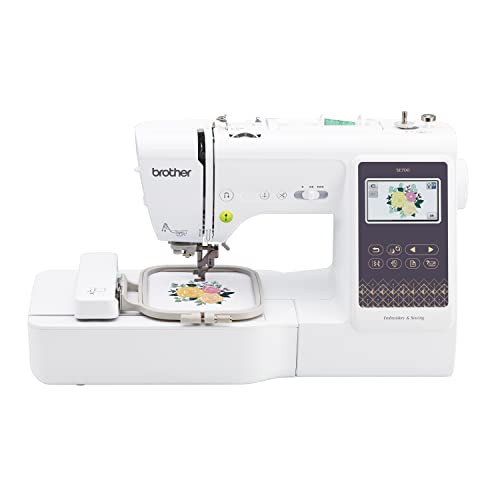
Brother SE700 Sewing and Embroidery Machine, Wireless LAN Connected, 135 Built-in Designs, 103 Built-in Stitches, Computerized, 4" x 4" Hoop Area, 3.7" Touchscreen Display, 8 Included Feet, White
SEWING and EMBROIDERY IN ONE: The SE700 is the ideal machine to start your sewing and embroidery journey…
As an affiliate, we earn on qualifying purchases.
As an affiliate, we earn on qualifying purchases.
Conclusion
Think of embroidery machines as skilled artists with a steady hand, painting intricate designs onto fabric like a master painter adding delicate details to a canvas. Unlike regular sewing machines, they bring elaborate patterns to life with precision and ease. With each stitch, they transform simple cloth into a tapestry of artistry. Embrace the magic, and you’ll see your sewing projects blossom into beautiful works of art, just like a garden blooming in vibrant colors.

Caydo 6 Pieces Embroidery Hoops 3 Inch to 10 Inch Cross Stitch Hoop Small Embroidery Hoop with 16 Pieces Needles for Embroidery, Punch Needle, Craft Sewing and Ornaments
Embroidery Hoop Set: 3.6 inch/9.2 cm, 4.8 inch/12.3 cm, 6.3 inch/16 cm, 7.9 inch/20 cm, 9.5 inch/24.2 cm,…
As an affiliate, we earn on qualifying purchases.
As an affiliate, we earn on qualifying purchases.

Smartstitch S-1001 Upgraded Embroidery Machine with 10 Needles, 1200SPM Max Speed, 7" Touch Screen, 9.5"x14.2" Embroidery Area, New Gen of Commercial Embroidery Machine for Flat, Hat, T-shirt and more
Upgraded new generation of machine: S-1001 Commercial Embroidery Machine in compact size and light weight with great features:…
As an affiliate, we earn on qualifying purchases.
As an affiliate, we earn on qualifying purchases.