
To avoid future frustrations, choose heat transfer paper or high-quality stabilizers for long-lasting embroidery designs. These methods offer durability, colorfastness, and resistance to washing and environmental factors. They are easier to apply and less likely to smudge or fade over time. If you want the best results, understanding the pros and cons of each technique is essential. Keep scrolling to discover which transfer method truly stands the test of time.
Key Takeaways
- Heat transfer and embroidery stabilizers offer high durability and long-lasting results, making them top choices.
- Water-soluble transfers are less resistant, prone to fading, and less suitable for long-term projects.
- Consider fabric type and design complexity to select the most compatible, easy-to-maintain transfer method.
- Proper application, heat, and pressure are crucial to prevent issues like smudging, incomplete transfer, or residue buildup.
- High-quality, colorfast transfer techniques ensure durability and minimal environmental impact over time.

JIUHSHN Water Soluble Embroidery Stabilizer, 12 Sheets 8.5" x 11" Printable Self-Adhesive Stick and Stitch Transfer Paper, Wash-Away Embroidery Paper for Hand & Machine Embroidery
- Package Includes: 12 sheets of stabilizer in 8.5" x 11" size
- Printable and Traceable: Print, copy, or draw directly onto sheets
- Self-Adhesive Design: Peel and stick for easy transfer
As an affiliate, we earn on qualifying purchases.
As an affiliate, we earn on qualifying purchases.
What Are the Most Common Embroidery Transfer Methods?

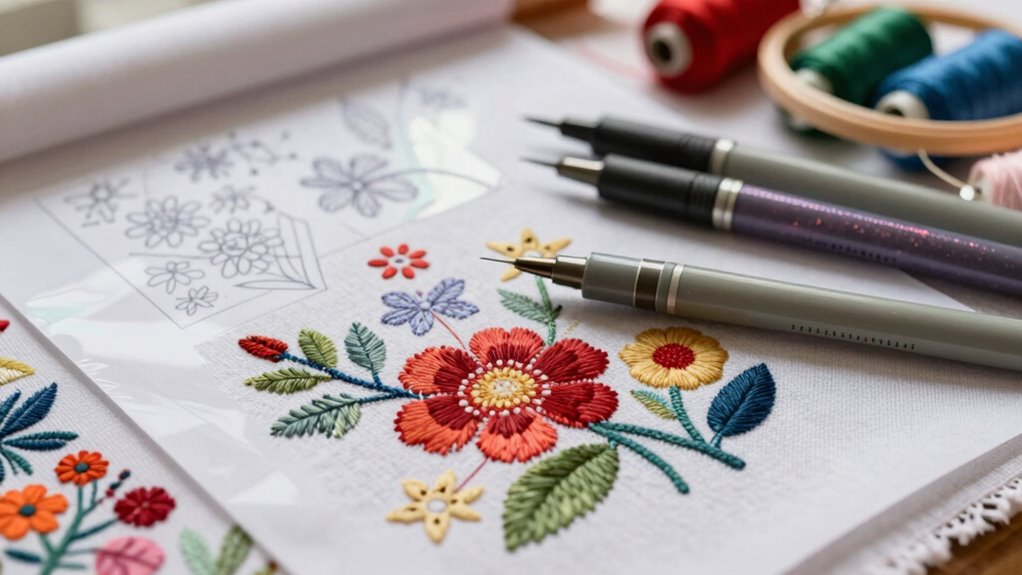
Have you ever wondered how to transfer your designs onto fabric accurately? The most common embroidery transfer methods have a rich history rooted in embroidery history and cultural significance. Tracing paper and carbon transfer papers are traditional options, dating back centuries when artisans relied on simple tools. Water-soluble stabilizers and fabric markers are also widely used, especially in contemporary projects. These methods reflect a blend of cultural traditions and technological progress, making embroidery accessible across different communities. Choosing the right transfer method depends on your project’s requirements and fabric type, but understanding these basics helps you create precise, beautiful embroidery that honors its cultural and historical roots. Understanding various transfer techniques can help you select the most suitable method for your specific project needs. Additionally, exploring modern transfer options can provide alternatives that improve efficiency and ease of use. Moreover, advancements in transfer technology continue to expand the possibilities for precise and easy embroidery designs.
How Do Transfer Techniques Differ in Ease, Durability, and Cost?
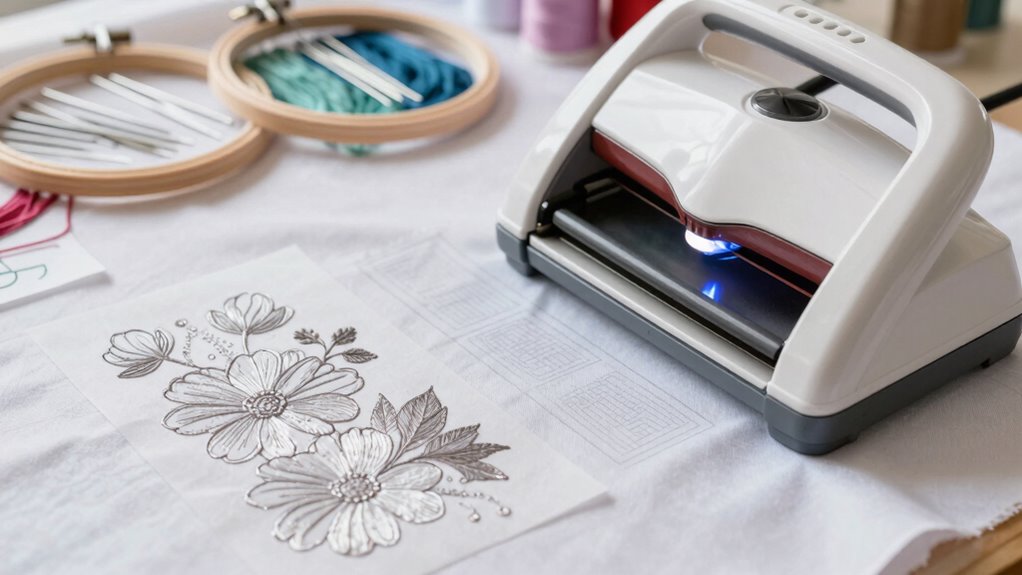
When comparing embroidery transfer techniques, it’s important to take into account their ease of use, how well they hold up over time, and what they cost. Some methods, like using fabric dye or transfer paper, are simple but may lack durability. Others, such as machine embroidery, require more skill and equipment but last longer. Cost varies widely: transfer paper is affordable, while professional machine embroidery can be pricey. Durability depends on the technique; fabric dye may fade with washing, whereas heat transfers or machine embroidery tend to withstand repeated cleaning. Additionally, understanding the color accuracy of the transfer method can significantly impact the final appearance of the embroidery. When choosing a technique, considering the energy-efficient aspects of each process can also contribute to more sustainable practices. Moreover, some methods offer improved fabric compatibility, making them more suitable for different textile types. Selecting the appropriate technique relies on evaluating both visual quality and the specific needs of the project to achieve optimal results. Being aware of the cost-effectiveness of each method can help in making a more informed decision. Here’s a quick comparison:
| Technique | Ease of Use | Durability | Cost |
|---|---|---|---|
| Transfer Paper | Easy | Moderate | Low |
| Fabric Dye | Moderate | Low (fades) | Low |
| Heat Transfer | Easy | Moderate | Moderate |
| Machine Embroidery | Complex | High | High |
| Hand Embroidery | Moderate | High | Moderate |
Comparing Embroidery Transfer Methods Step-by-Step
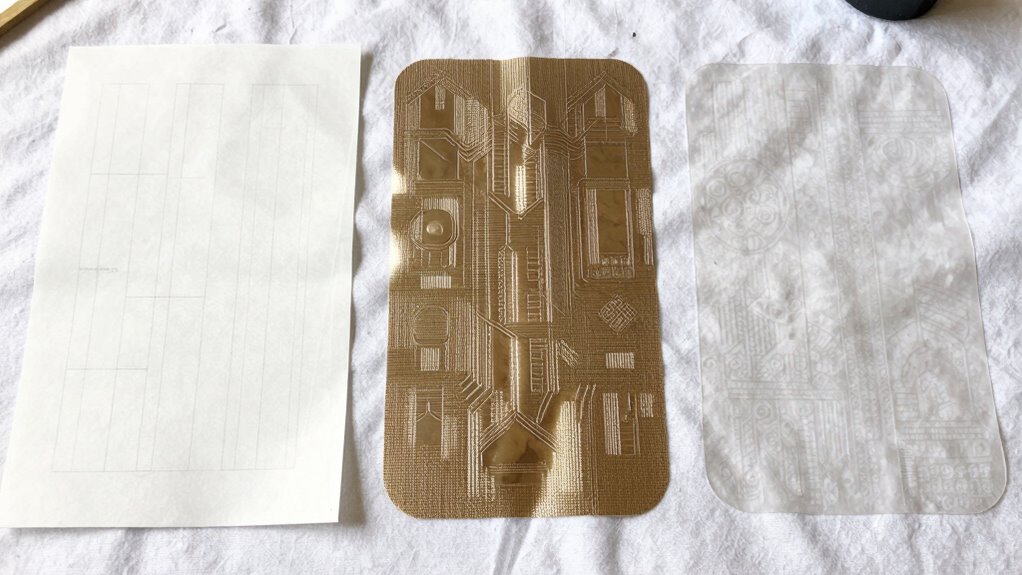
To compare embroidery transfer methods step-by-step, start by identifying the type of design you want to transfer and the materials you’ll be working with. Understanding embroidery history helps you appreciate techniques with cultural significance, guiding your choice. For example, traditional methods like tracing or using transfer paper suit detailed, delicate designs, while modern options like heat transfer might work better for larger, bold patterns. Consider the fabric’s texture and the durability you need—some methods last centuries, reflecting embroidery’s rich past. Carefully evaluate each technique’s process, from preparation to finishing. Additionally, considering transfer durability can help ensure your design withstands time and washing, aligning your choice with your project’s longevity needs. By doing so, you guarantee your transfer method aligns with your project’s goals, preserves the cultural significance of embroidery, and produces results that honor its long-standing history.
Which Transfer Technique Gives the Best, Long-Lasting Results?
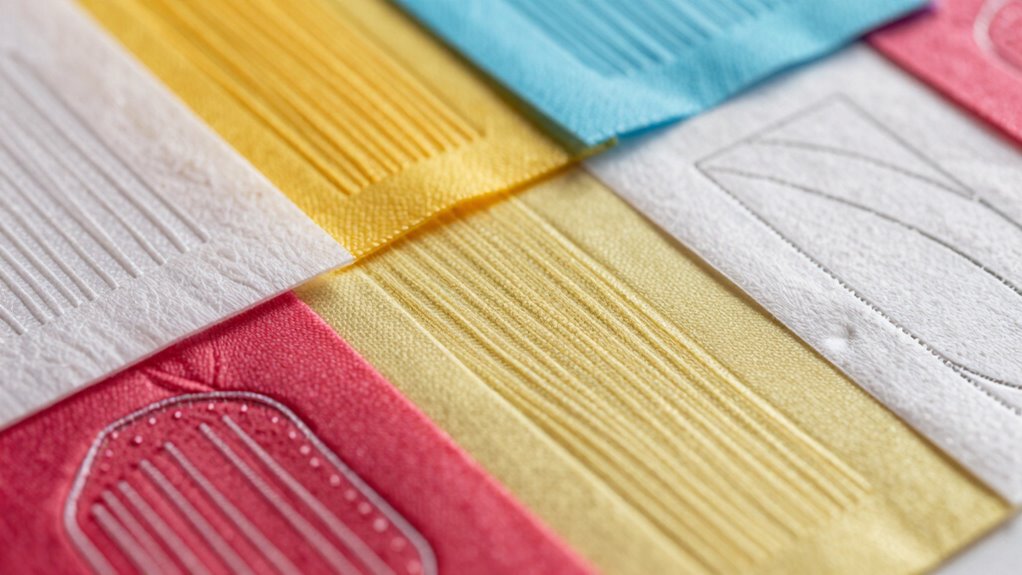
When choosing a transfer technique, you need to think about how well it holds up over time. The durability of the materials and colorfastness are key factors in ensuring your embroidery remains vibrant and intact. Additionally, think about how easy it is to maintain and rework the design if needed. Incorporating connected equipment and innovative tools can also enhance the longevity and quality of your embroidery projects. Considering natural materials that are environmentally friendly can further improve the sustainability of your work. Selecting techniques that utilize high-quality dyes can also ensure your designs stay bright and resistant to fading over time. Recognizing the importance of material compatibility helps prevent issues like cracking or peeling that could compromise your embroidery’s lifespan, especially when combined with advanced transfer methods that enhance adhesion and durability.
Durability of Transfer Materials
Ever wondered which embroidery transfer method stands the test of time? When it comes to transfer longevity, some materials resist wear and washing better than others. Heat transfer methods, like thermal paper, typically offer high durability because the ink bonds firmly with fabric fibers, ensuring long-lasting results. Similarly, embroidery paper transfers tend to be quite resistant, especially if sealed properly. On the other hand, water-soluble transfers may not be as resistant to repeated washes, fading faster over time. The key is choosing a transfer material with strong material resistance, suited to your project’s needs. If you want a transfer that endures frequent washing and wears, prioritize options known for their durability, even if they require a bit more effort during application.
Colorfastness Over Time
Choosing the right embroidery transfer technique is essential if you want your design to stay vibrant and colorfast over time. For lasting color retention and fading resistance, some methods outperform others. Transfer techniques like heat transfer paper and professional-grade embroidery stabilizers generally offer superior colorfastness, resisting fading even after multiple washes. To visualize the differences, consider this comparison:
| Technique | Color Retention | Fading Resistance |
|---|---|---|
| Heat Transfer Paper | High | Good |
| Embroidery Stabilizers | Very High | Excellent |
| Inkjet Transfer | Moderate | Fair |
| Hand Painting | Variable | Poor to Fair |
Choosing a method with high color retention ensures your design remains vibrant, minimizing fading over time. Additionally, understanding the colorfastness of each transfer method helps in selecting the most durable option for long-term results.
Ease of Long-Term Maintenance
Selecting an embroidery transfer method that withstands regular washing and wear saves you time and effort in maintenance. Some techniques require frequent touch-ups or special care, making them less practical long-term. When considering ease of maintenance, focus on how well the method preserves thread integrity and overall appearance. Additionally, understanding cloud service reliance can help you choose transfer techniques less affected by external disruptions, ensuring consistent results over time. Choosing methods with minimal external dependency can further enhance durability and reduce the need for repeated interventions. Incorporating long-term durability considerations, such as resistance to washing and environmental factors, can also improve the longevity of your embroidery work. Opting for transfer methods with proven resistance to environmental factors can provide extra peace of mind and reduce maintenance efforts.
Troubleshooting Common Transfer Problems and How to Avoid Them
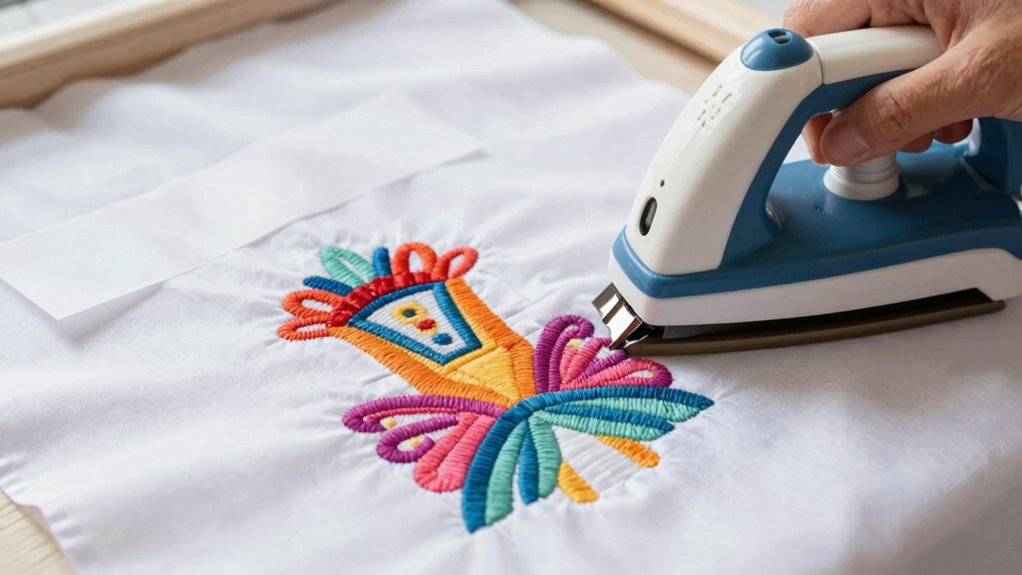
Transfer problems can be be frustrating, but many common issues have straightforward solutions if you know what to look for. To avoid mishaps, focus on proper transfer techniques, maintaining embroidery safety, and thorough transfer cleanup after each project. Common issues like incomplete transfers, smudging, or transfer fading often stem from improper handling or material incompatibility. Use the table below to understand key causes and fixes:
| Issue | Cause | Solution |
|---|---|---|
| Incomplete transfer | Insufficient heat or pressure | Apply consistent heat and pressure |
| Smudging | Excess transfer solution | Use minimal transfer solution |
| Fading | Poor transfer material | Choose high-quality transfer |
| Residue buildup | Transfer cleanup neglect | Clean surface properly |
Addressing these points keeps embroidery safe and ensures clean transfer results. Additionally, selecting the right transfer material can significantly reduce problems and improve overall results.
Tips for Choosing the Right Transfer Method for Your Project
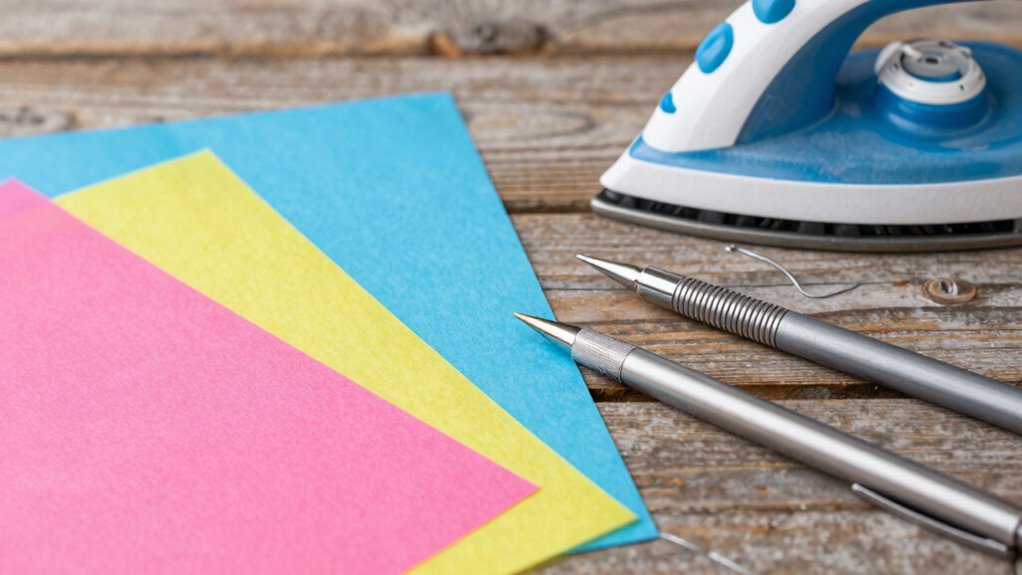
Choosing the right transfer method depends on your fabric and design complexity. Consider how easy the method is to use and whether it matches your project’s details. By focusing on these points, you’ll select the most effective transfer for your needs. Additionally, understanding the application process can help ensure your design adheres properly and lasts through washing. For example, knowing the net worth of personalities like Kate From Breaking Amish can influence your choice of materials for durability.
Fabric Compatibility Tips
Since different fabrics respond uniquely to transfer methods, it’s vital to take into account their specific characteristics before starting your project. First, consider the fabric’s dyeing properties—natural fibers like cotton and silk absorb transfers better than synthetic ones. Second, think about thread selection; some transfer methods may cause thread discoloration or damage, so choose heat-resistant or compatible threads. Third, assess the fabric’s texture and weight, as delicate or stretchy fabrics may not handle certain transfers well and could distort during application. For best results, test your chosen method on a scrap piece that matches your fabric to see how it reacts. Incorporating fabric compatibility principles, such as choosing natural and sustainable materials, can also enhance the overall healthfulness of your project. Matching the transfer technique with your fabric’s dyeing properties and thread choice ensures a clean, durable finish without surprises later.
Design Complexity Considerations
When evaluating your fabric and transfer options, considering the complexity of your embroidery design is vital to a professional finish. Intricate embroidery design intricacies require precise transfer methods that can handle fine details without smudging or distortion. Simpler designs may work well with basic transfers like heat or water-soluble options, while complex patterns benefit from more durable methods like embroidery paper or specialty transfer films. Additionally, fabric texture considerations play an essential role; textured or uneven surfaces can challenge transfer accuracy, especially with delicate designs. For highly detailed or multi-layered projects, choose a method that guarantees stability and clarity. Matching the transfer technique to your design’s intricacy and fabric texture considerations helps prevent frustrations and guarantees a clean, polished embroidery result. Consulting transfer method stability guides can further enhance your project outcomes.
Ease of Use Factors
Are you looking for a transfer method that’s quick and easy to use? When comparing transfer paper options, ease of use is key. To help you decide, consider these factors:
- Application simplicity: Does the transfer paper require special tools or heat presses, or can you use a regular iron?
- Setup time: How long does it take to prepare and transfer the design? Some methods need minimal prep, while others are more involved.
- Ease comparison: Is the transfer process straightforward, with clear instructions, or does it demand extra steps and adjustments?
Choosing a transfer paper with an easy application process saves time and frustration. Focus on methods that match your skill level and project needs for a smooth, hassle-free experience.
Why Heat Transfer Paper Is the Best for Hassle-Free Embroidery Transfers
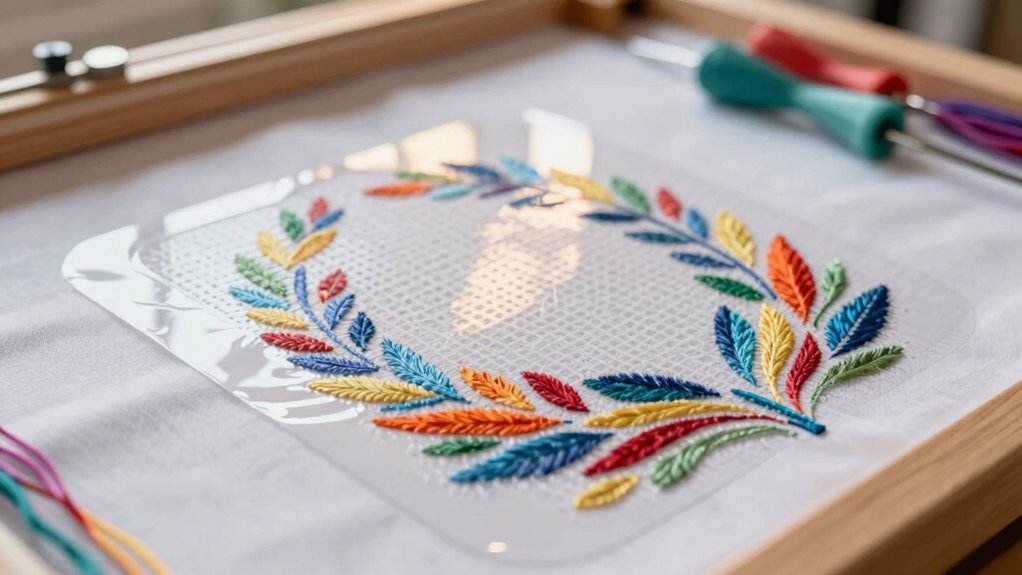
Heat transfer paper stands out as the easiest and most reliable choice for embroidery transfers because it simplifies the entire process. With this method, you achieve excellent embroidery aesthetics without complicated steps, ensuring your design looks clean and professional. Transfer speed is a key advantage, allowing you to complete projects quickly and efficiently. Unlike other methods that require extensive setup or specialized skills, heat transfer paper offers straightforward instructions and consistent results. It’s perfect for both beginners and experienced crafters looking for hassle-free options. Plus, the transfer stays vibrant after washing, reducing the risk of fading or peeling. Overall, heat transfer paper provides a seamless experience, making embroidery transfers more accessible, faster, and visually appealing.
Frequently Asked Questions
Can Transfer Methods Be Used on All Fabric Types?
Not all transfer methods work on every fabric type because of fabric compatibility and transfer limitations. You need to contemplate the material’s texture, thickness, and heat sensitivity before choosing a transfer method. For example, some transfers work well on cotton but may not adhere properly to polyester or delicate fabrics. Always check the transfer’s instructions and test on a small area first to avoid damage or poor results.
Are There Environmentally Friendly Embroidery Transfer Options Available?
Did you know that over 80% of consumers prefer eco-friendly products? You’ll find environmentally friendly embroidery transfer options, like biodegradable inks and plant-based adhesives, becoming more popular. These solutions reduce environmental impact and are safe for you and the planet. By choosing such methods, you support sustainability while achieving beautiful embroidery results. It’s a smart, eco-conscious choice that aligns with your values and helps protect our environment.
How Do Transfer Methods Vary for Different Embroidery Designs?
You’ll find that transfer methods vary based on your embroidery design’s complexity, size, and fabric compatibility. Digital techniques like heat transfer or printable stabilizers work well for detailed or multi-color designs, offering precision and ease. For delicate fabrics, choose transfer methods that are gentle, like water-soluble options. Matching the transfer method to your design and fabric guarantees a smooth process, vibrant results, and long-lasting embroidery without damage or hassle.
What Safety Precautions Should I Take During Heat Transfer Processes?
You should wear safety gear like heat-resistant gloves and protective eyewear to prevent burns and injuries. Make sure you’re in a well-ventilated area, practicing good ventilation to avoid inhaling fumes from heat transfer papers or adhesives. Keep a fire extinguisher nearby, and never leave the heat source unattended. These precautions help guarantee your safety during heat transfer processes, making the craft safer and more enjoyable.
Can Transfer Methods Be Applied to Both Hand and Machine Embroidery?
Yes, transfer methods work for both hand and machine embroidery, but you need to contemplate the transfer technique and fabric compatibility. Some methods, like heat transfers, are versatile, but others may require specific settings for machine embroidery. Always test on a small fabric piece first, ensuring the transfer adheres well without damaging the material. This way, you can confidently choose the right transfer method for your project.
Conclusion
Choosing the right embroidery transfer method is like finding the perfect key to open your project’s potential. Whether you prefer the durability of heat transfer paper or the simplicity of iron-on transfers, selecting what suits your needs guarantees your design stays vibrant and true. Don’t let transfer troubles cast a shadow over your craft—arm yourself with the right technique, and your embroidery will shine brighter than a star in the night sky.