To save tiny fabric scraps and create eco-friendly quilts, try the quilt-as-you-go method. It allows you to sew small pieces directly onto a backing, reducing waste and simplifying assembly. Focus on selecting fabrics with complementary colors and patterns to design a cohesive, personalized quilt. Plus, organizing scraps and planning your layout early can make the process smoother. Keep exploring for more tips on making the most of your tiny fabric bits!
Key Takeaways
- Sew tiny fabric scraps directly onto a quilt backing to efficiently utilize small pieces and reduce waste.
- Organize scraps by size and color to create cohesive, visually appealing quilt designs through the quilt-as-you-go method.
- Use precise sewing techniques and consistent seams to ensure durability and a polished finish on your upcycled quilt.
- Lay out your scraps beforehand to plan the design, maximizing fabric usage and achieving a balanced, vibrant quilt.
- Keep your workspace tidy and organize fabric storage to streamline assembly and prevent loss of tiny scraps.

Hanging Travel Organizer Bag Quilt-As-You-Go Kit with Zippity-Do-Done Zipper
- Simple sew-by-number design: Easy to assemble with guided steps
- Versatile fabric cutting options: Use GO! Dies or quilting rulers
- Durable non-stretch stabilizer: Provides extra strength and stability
As an affiliate, we earn on qualifying purchases.
As an affiliate, we earn on qualifying purchases.
Why Save Tiny Fabric Scraps for Your Quilts and the Planet

Saving tiny fabric scraps benefits both your quilting projects and the environment. By practicing fabric recycling, you reduce waste and make the most of each piece, no matter how small. These scraps can be transformed into beautiful quilt details or used as padding, minimizing the need to buy new materials. This approach also lessens the environmental impact of textile waste, which often ends up in landfills, contributing to pollution. When you save and repurpose these tiny pieces, you’re actively participating in sustainable quilting. Not only does this save money, but it also promotes eco-friendly habits. Additionally, understanding the importance of contrast ratio can help you choose fabrics with better visual harmony and color depth for your projects. Using recycled fabric scraps in your quilting not only enhances creativity but also supports sustainable practices. Recognizing the significance of dream symbolism can inspire more meaningful design choices and storytelling in your quilts. Over time, your small efforts add up, creating a positive difference for the planet while enriching your quilting projects with unique, upcycled details. Incorporating upcycling techniques can inspire further innovative ideas for your fabric reuse, aligning with the principles of haute couture craftsmanship that emphasize artistry and sustainability.
What Is Quilt-As-You-Go and Why Use It?
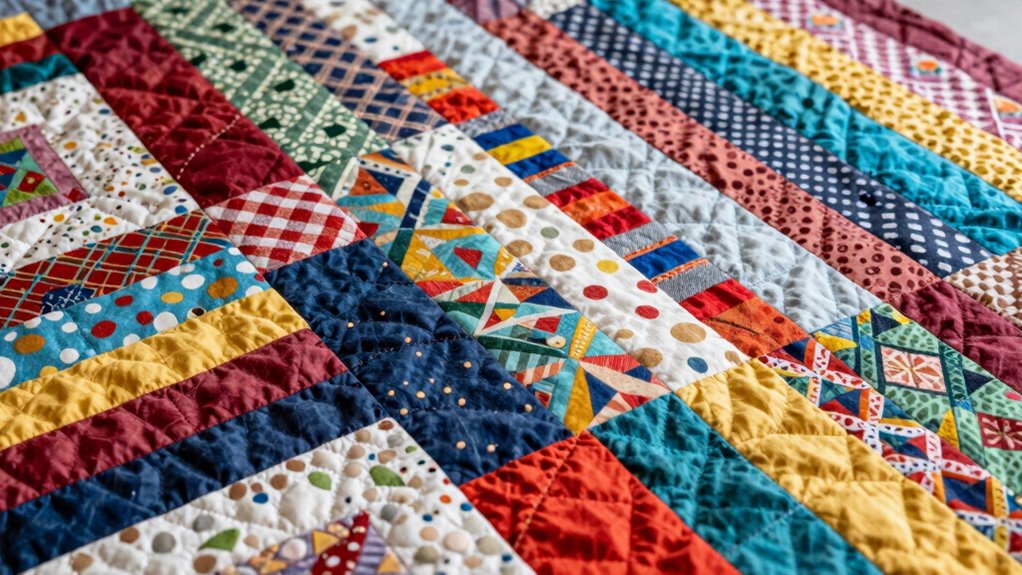
Quilt-as-you-go helps you use fabric scraps more efficiently by sewing pieces directly onto the quilt’s backing. It simplifies the crafting process, making it easier to assemble small scraps into a finished quilt. This method saves time and fabric, so you get more from your tiny scraps while creating a beautiful, functional piece. Additionally, understanding safer riding habits can inspire you to approach your crafting projects with patience and mindfulness, ensuring a safer environment for all your creative pursuits. Developing proper cutting techniques can further enhance your efficiency and precision when working with small fabric pieces, especially when considering ergonomic designs that reduce strain during repetitive tasks. Incorporating proper storage solutions can help keep your tiny scraps organized, making your quilting process even more efficient.
Efficient Fabric Utilization
If you want to make the most of your fabric scraps, quilt-as-you-go offers an efficient solution. This technique maximizes fabric recycling by using small pieces that might otherwise go to waste. It allows you to create a sturdy, beautiful quilt without needing large fabric cuts, making it ideal for tiny scraps. By sewing pieces directly onto a backing as you go, you minimize material waste and streamline the process. The sustainability benefits are clear—less fabric ends up in the trash, and you’re making full use of every piece. Plus, this method encourages creative reuse, turning tiny scraps into a functional, eye-catching quilt. Understanding the types of fabrics best suited for quilting can help you achieve better durability and aesthetic appeal. Exploring energy-efficient techniques in your crafting can also contribute to a more sustainable lifestyle. Utilizing fabric care techniques can further extend the life of your upcycled quilt, ensuring it remains beautiful for years to come. Moreover, selecting natural fibers can enhance the eco-friendliness of your project. Incorporating recycled materials into your quilting projects can further amplify your commitment to sustainability. Overall, quilt-as-you-go helps you optimize fabric utilization while supporting eco-friendly crafting.
Easy Crafting Process
The process of quilt-as-you-go simplifies quilting by allowing you to assemble your project directly onto the backing fabric as you work. This method streamlines the craft, making it easier for you to incorporate fabric recycling and reduce waste. Instead of layering and sewing multiple pieces separately, you attach each fabric scrap directly onto the backing, saving time and effort. This approach aligns with sustainability practices, helping you repurpose tiny fabric scraps that might otherwise be discarded. The technique is straightforward, requiring minimal tools and fuss, making it perfect for beginners or quick projects. By using quilt-as-you-go, you not only create unique, eco-friendly quilts but also make the crafting process more enjoyable and efficient.
How to Make a Scrap Quilt With Quilt-As-You-Go
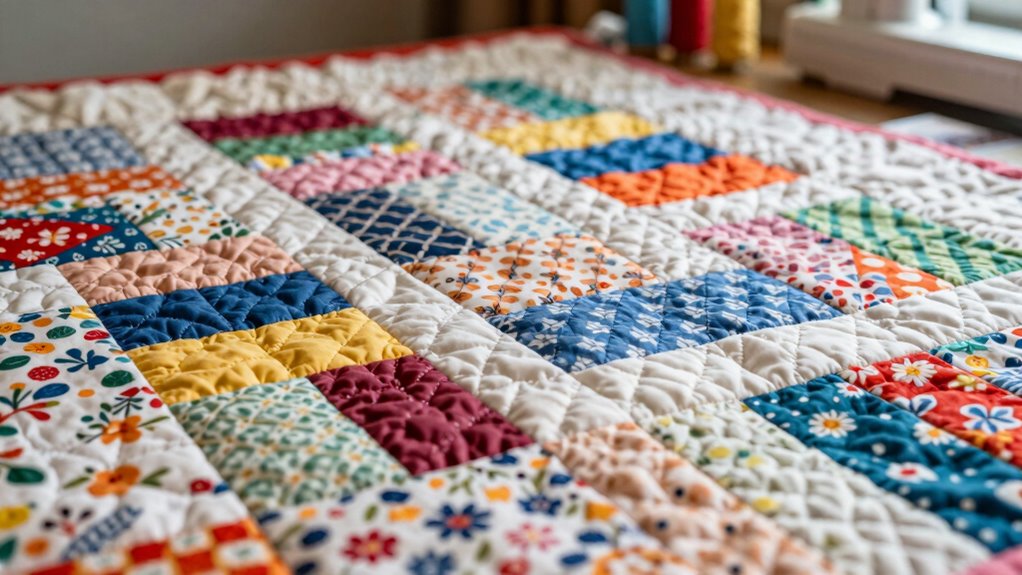
Start by gathering your fabric scraps and sorting them into sizes and colors. Then, assemble your quilt blocks one by one, sewing each piece securely in place. Once all blocks are finished, sew them together and add any final touches to complete your quilt. Remember to secure your stitches properly to ensure your quilt lasts through many washes and uses. Using low-maintenance plants can make your quilting space more inviting and inspiring.
Gather Fabric Scraps
Gathering fabric scraps is the first step in creating a quilt-as-you-go project, and it’s an opportunity to get creative with your leftovers. Start by rummaging through your fabric collection, selecting small pieces in various colors and textures. Keep your scrap storage organized—use bins or clear containers to easily access different fabrics. As you gather, think about how different scraps can complement each other or create interesting contrasts. Sorting by color or pattern can streamline your process later. Remember, the goal is to repurpose tiny fabric pieces, so don’t discard even the smallest scraps. Here’s a quick overview:
| Step | Action |
|---|---|
| 1 | Collect fabric scraps |
| 2 | Organize by color/pattern |
| 3 | Store in accessible bins |
| 4 | Assess for quilting use |
| 5 | Prepare for assembly |
Assemble Quilt Blocks
Once you have your fabric scraps organized, begin assembling your quilt blocks by stitching together small pieces into cohesive units. Use your fabric storage to select complementary scraps and plan your block layouts. Employ basic sewing techniques, like straight-line stitching, to join pieces securely. Press seams flat as you go to ensure precise alignment. Focus on maintaining consistent seam allowances to keep blocks even. When piecing, stay mindful of color and pattern placement to create visual interest. Quilt-as-you-go allows you to assemble each block separately, making the process manageable. As you sew, keep your workspace organized, which helps prevent confusing scraps or uneven seams. This method simplifies sewing techniques and keeps your fabric storage neat, making your scrap quilt both fun to create and easy to complete. Incorporating stitching techniques can further improve your accuracy and finish quality. Additionally, understanding fabric stability helps in selecting scraps that will sew together smoothly and hold their shape over time. Paying attention to fabric weight ensures that the pieces will behave similarly during sewing, resulting in a more durable finished quilt. Recognizing fabric tension adjustments can also enhance seam consistency and overall quilt durability. Being aware of fabric stretch can help prevent warping or distortion as you sew your quilt.
Sew and Finish
To effectively sew and finish your scrap quilt using the quilt-as-you-go method, begin by assembling each quilt block separately on your workspace. Use proper fabric storage to keep your tiny scraps organized and accessible, which streamlines your sewing process. Employ precise sewing techniques, such as consistent seam allowances and secure stitching, to ensure each block aligns correctly. Once all blocks are completed, join them together by sewing the finished edges, either directly or with a backing layer. Finish your quilt with a simple binding or quilting stitches, depending on your preference. This method minimizes fabric waste and simplifies finishing, making your project efficient. Keep your workspace tidy and your fabric storage well-organized to maintain momentum and achieve a polished, durable quilt. Additionally, maintaining sewing accuracy during assembly helps ensure all your pieces fit together seamlessly. Regularly checking your measurements and seams contributes to a professional-looking finish, and incorporating creative storytelling into your quilting projects can also inspire unique designs and personal touches that make your quilt truly special. Using the quilt-as-you-go technique can also speed up your process, especially for larger projects. Incorporating knowledge of body jewelry measurements and materials can help you customize your supplies for future craft projects, ensuring you select the right tools for your needs.
Choosing Fabrics and Planning Your Scrap Quilt Design
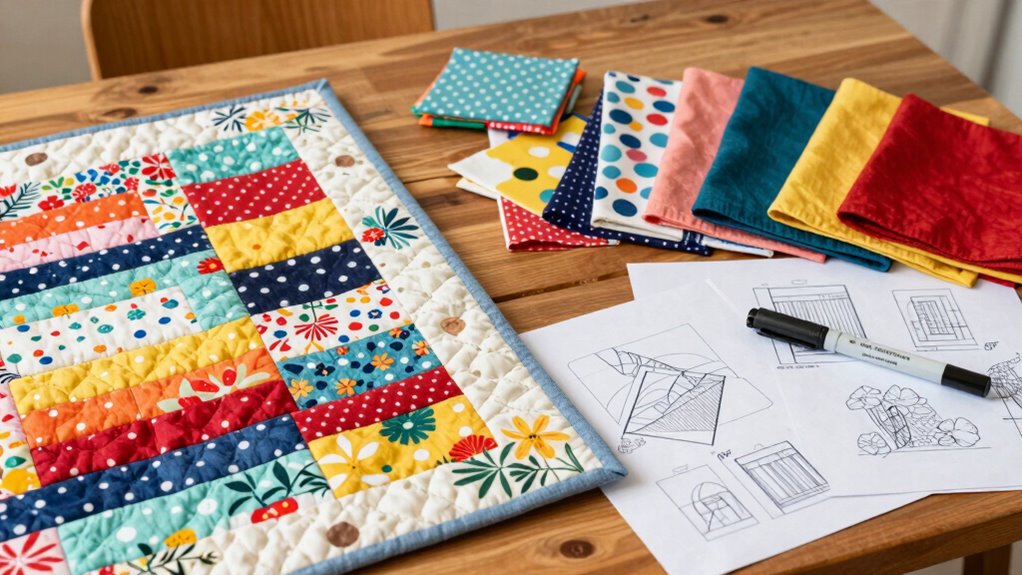
Choosing the right fabrics and planning your scrap quilt design are essential steps that set the foundation for a successful project. Start by selecting fabrics with cohesive fabric color coordination to create harmony across your quilt, even when mixing different patterns. Consider balancing bold prints with solid or muted fabrics to prevent visual overload. When planning your design, think about how patterns will interact; mixing various scales and styles can add interest but should be deliberate. Lay out your fabric scraps beforehand to visualize the overall look and ensure your chosen colors and patterns complement each other. This planning phase helps you avoid mismatched fabrics and guarantees your finished quilt is both vibrant and cohesive, turning tiny scraps into a stunning, unified masterpiece.
Common Mistakes to Avoid When Using Quilt-As-You-Go

When you start using quilt-as-you-go techniques, it’s easy to make mistakes that can compromise the project’s durability and appearance. One common error is neglecting proper seam alignment, which can lead to uneven quilting and weaken the finished piece. Be mindful of fabric waste; cutting pieces precisely helps maximize your tiny scraps and supports sustainable quilting. Avoid rushing through assembly, as hasty stitching can cause uneven seams or puckering. Also, don’t forget to secure your stitches well—loose seams can unravel over time. Keep your workspace organized to prevent accidental damage or misplacing small fabric pieces. By paying attention to seam quality and fabric use, you ensure your upcycled scrap quilt remains sturdy and beautiful, promoting eco-friendly practices and reducing waste effectively.
Creative Ideas to Personalize Your Upcycled Scrap Quilt
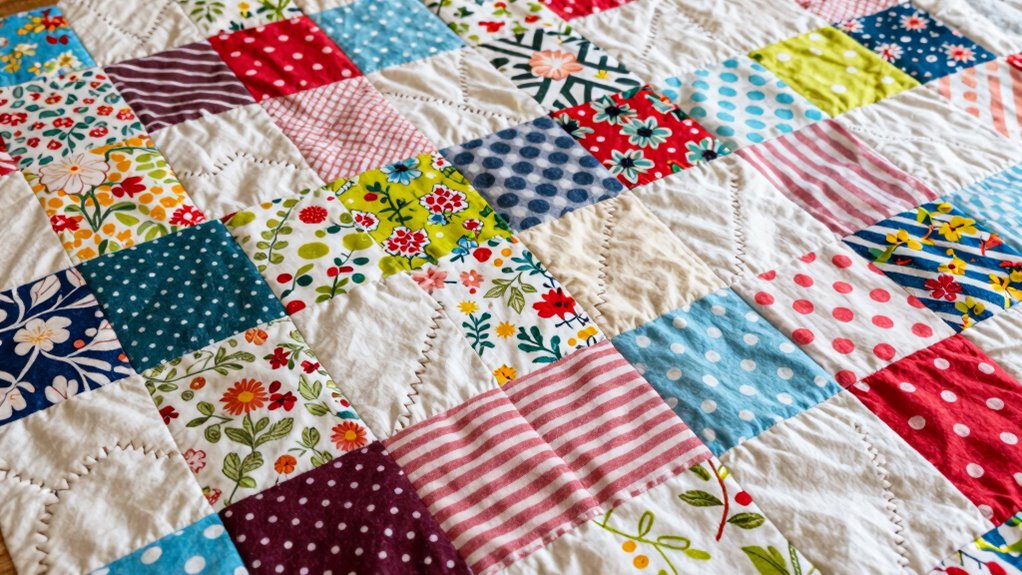
Once you’ve mastered proper seam alignment and fabric management, adding personal touches can truly make your upcycled scrap quilt stand out. Consider fabric dyeing to customize colors and create unique shades that reflect your style. You can also incorporate vintage fabrics or remnants inspired by quilting history to add depth and storytelling to your design. Embroider personal motifs or labels onto your quilt to give it a meaningful touch. Mix in textured fabrics or experiment with applique techniques for added dimension. These ideas transform a simple scrap quilt into a one-of-a-kind piece that tells your story. Personalization not only celebrates your creativity but also honors quilting traditions while making your upcycled quilt truly unique.
Frequently Asked Questions
Can Quilt-As-You-Go Be Used With Non-Fabric Materials?
Yes, quilt-as-you-go can be adapted for non-fabric materials, but it requires alternative quilting techniques. You might use sturdy materials like leather, vinyl, or even plastic for the quilt top, ensuring they’re flexible enough to sew. Keep in mind, sewing non-fabric materials may need strong adhesives or special needles. Experimenting with these alternative techniques allows you to create unique, mixed-media projects that stand out.
What Tools Are Essential for Quilt-As-You-Go Projects?
Think of your toolkit as your sewing superhero squad. You’ll need fabric scissors for precise cuts, sewing pins to hold pieces steady, and a quilting ruler plus rotary cutter for clean, straight lines. Your sewing machine and batting form the backbone, while thread, marking tools, and a pressing iron bring everything together. Don’t forget quilting needles to weave it all seamlessly—these essentials turn your quilting dreams into reality.
How Do I Wash and Care for Upcycled Scrap Quilts?
To care for your upcycled scrap quilts, machine wash them on a gentle cycle with mild detergent, avoiding fabric dyeing products that could cause color bleeding. Air dry or tumble dry on low heat to preserve fabric integrity. Store your quilt in a cool, dry place, rolled or flat, to prevent creases and fading. Regularly check for signs of wear to keep your quilt looking beautiful for years.
Is Quilt-As-You-Go Suitable for Large or Complex Designs?
Quilt-as-you-go works well for large projects and complex patterns because it allows you to build your quilt in manageable sections. You can focus on intricate designs without feeling overwhelmed, as each piece is sewn individually then joined together. This method offers flexibility, making it easier to handle detailed patterns and large quilts. Plus, it helps you stay organized, ensuring your complex design comes together smoothly and beautifully.
How Long Does a Typical Quilt-As-You-Go Project Take?
You’ll find that a quilt-as-you-go project typically takes a cozy amount of time, usually a few afternoons or weekends, depending on your quilt’s size and complexity. The quilt timeline can be flexible, making it perfect for busy schedules. Your project duration might vary, but it’s rewarding to see each section come together quickly. With steady effort, you’ll enjoy a charming finished quilt sooner than you think.
Conclusion
By embracing the quilt-as-you-go method, you turn tiny fabric scraps into stunning, eco-friendly quilts, saving both your precious leftovers and the planet. With a little planning and creativity, you’ll craft unique masterpieces that reflect your style—no need to be a quilting wizard! So, grab those scraps, channel your inner Marie Kondo, and start stitching. Before you know it, you’ll have a beautiful upcycled quilt that even the Queen of Hearts would tip her hat to!