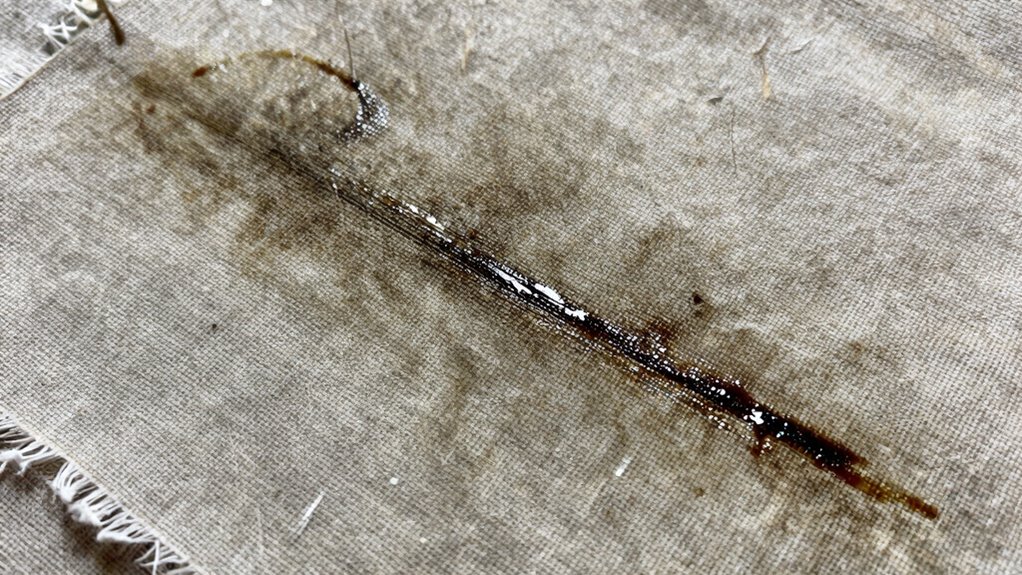

Oil stains might seem permanent, but you can effectively remove them by acting quickly and following the right steps. Blot the stain to absorb excess oil, then sprinkle an absorbent like baking soda or cornstarch to lift it. Apply dish soap or a stain remover, let it sit, and wash promptly. Avoid rubbing or using hot water immediately. For more tips on saving your fabrics, keep exploring these simple, proven techniques.
Key Takeaways
- Act quickly by blotting excess oil to prevent deep penetration into fabric fibers.
- Use absorbent powders like baking soda or cornstarch to lift fresh oil stains effectively.
- Apply a suitable stain remover or dish soap and gently scrub to break down old or stubborn stains.
- Soak fabrics in hot water with laundry boosters or enzyme cleaners for thorough cleaning.
- Test treatments on hidden fabric areas and avoid vigorous rubbing to prevent damage and permanent staining.
As an affiliate, we earn on qualifying purchases.
Why Are Oil Stains so Hard to Remove From Clothes?

Oil stains are notoriously difficult to remove from clothes because oil and water don’t mix, making it hard for traditional detergents to break down and lift the stain. This challenge stems from the underlying stain chemistry, where oil creates a film that binds tightly to fabric fibers. When you apply water alone, chemical reactions in the stain don’t favor separation; instead, the oil tends to repel water, worsening the stain. To effectively remove oil, you need to alter these reactions by introducing solvents or detergents that can break the oil’s molecular bonds. Understanding this stain chemistry helps you choose the right approach, like using surfactants or degreasers, which actively react with the oil, making it easier to lift and wash away. Additionally, choosing the appropriate brewing method can prevent oil-based stains from setting in fabric fibers.
How to Prepare Your Clothes Before Oil Stain Removal
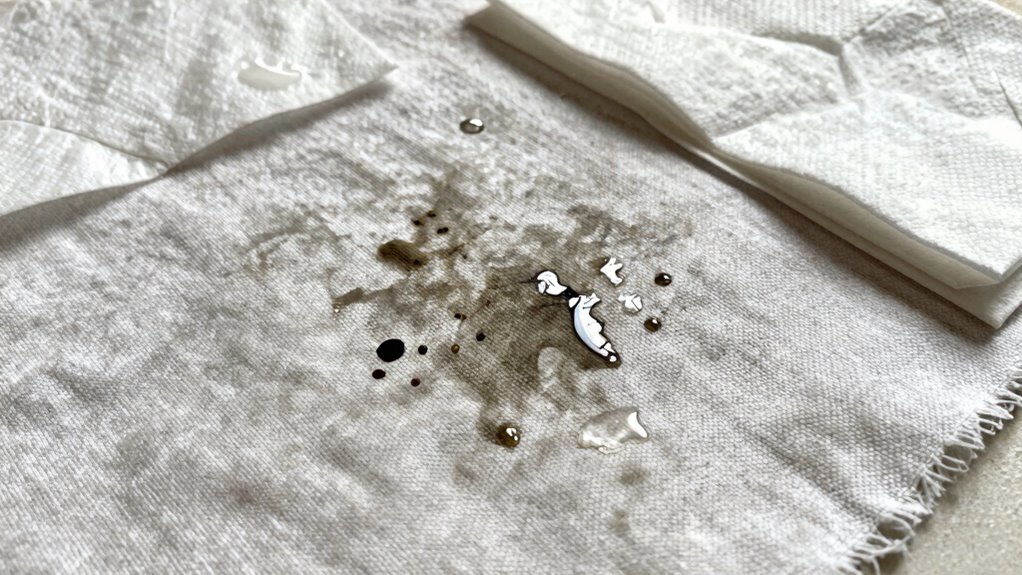
Before you attempt to remove an oil stain, it’s important to prepare your clothes properly to guarantee the best results. Start with pre wash preparation by gently blotting excess oil with a clean cloth or paper towel—avoid rubbing, which can spread the stain. Using stain prevention techniques like turning the fabric inside out or applying a small amount of dish soap directly to the stain can help contain it. To visualize, consider this table:
| Step | Action | Purpose |
|---|---|---|
| Blot excess oil | Use a paper towel or cloth to absorb oil | Prevents spreading |
| Apply stain treatment | Use dish soap or stain remover | Loosens the oil for removal |
| Protect fabric | Turn inside out or cover with plastic | Stops stain from setting |
Proper prep guarantees easier stain removal and preserves your clothes. Additionally, ensuring the removal area has good air circulation can help the cleaning process by preventing moisture buildup. Incorporating techniques such as pre-treatment can further enhance stain removal efficiency. Moreover, understanding the role of fabric type can influence the choice of cleaning agents, ensuring that delicate materials are not damaged during the process. Furthermore, selecting appropriate cleaning agents tailored to fabric compatibility can optimize stain removal and protect your garments. Recognizing the importance of professional consultation can be beneficial for stubborn or delicate fabric stains.
Step-by-Step: How to Remove Fresh Oil Stains
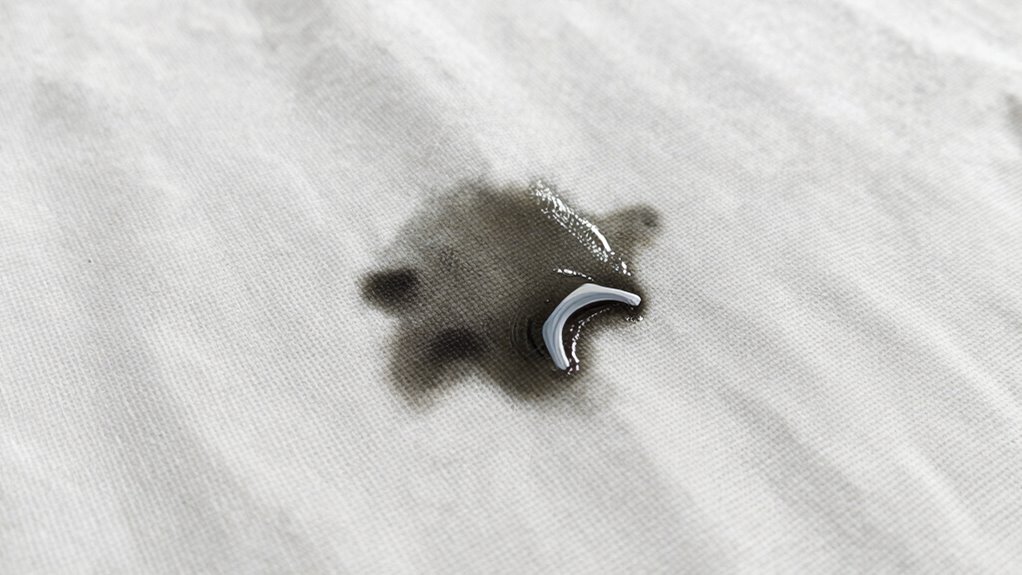
When you notice a fresh oil stain, act quickly to prevent it from setting. Gently blot the area to soak up excess oil without spreading it further. Then, apply an absorbent powder right away to help lift the stain before it becomes more difficult to remove. Incorporating effective storytelling techniques can also help you craft a compelling narrative around your fabric care routine, making the process more engaging.
Blot Immediately and Gently
As soon as you notice a fresh oil stain, it is crucial to act quickly and gently. Blotting helps prevent the stain from setting further. Here’s what you should do:
- Use a clean, absorbent cloth or paper towel to gently press on the stain without rubbing.
- Avoid spreading the oil by working from the outside inward.
- Keep nearby stain removers or fabric softeners ready for immediate application after blotting.
- Proper stain removal techniques can make the difference between a persistent mark and a clean fabric. Using appropriate cleaning methods can help you achieve better results without damaging your fabric.
- This quick action minimizes oil absorption into fibers. Don’t press too hard, as it may damage delicate fabrics. Blotting also prepares the fabric for stain removers, which work best on fresh stains. Remember, patience and gentle handling are key to preventing permanent damage and making subsequent stain removal easier.
Apply Absorbent Powder Quickly
Once you’ve blotted the excess oil, applying an absorbent powder immediately can make a significant difference in removing the stain. Use absorbent powders like baking soda, cornstarch, or talcum to quickly soak up the oil. Sprinkle a generous layer directly onto the stain, covering it thoroughly. Let it sit for at least 15 minutes to maximize stain prevention, as it will draw out the oil from the fabric fibers. Avoid delaying, since fresh oil stains are easier to lift when they haven’t set. After the waiting period, gently brush off the powder and check if the stain has lightened. This step is essential to prevent the oil from settling deeper into the fabric, increasing the chances of successful stain removal later.
What Are the Best Ways to Treat Old or Set-In Oil Stains?
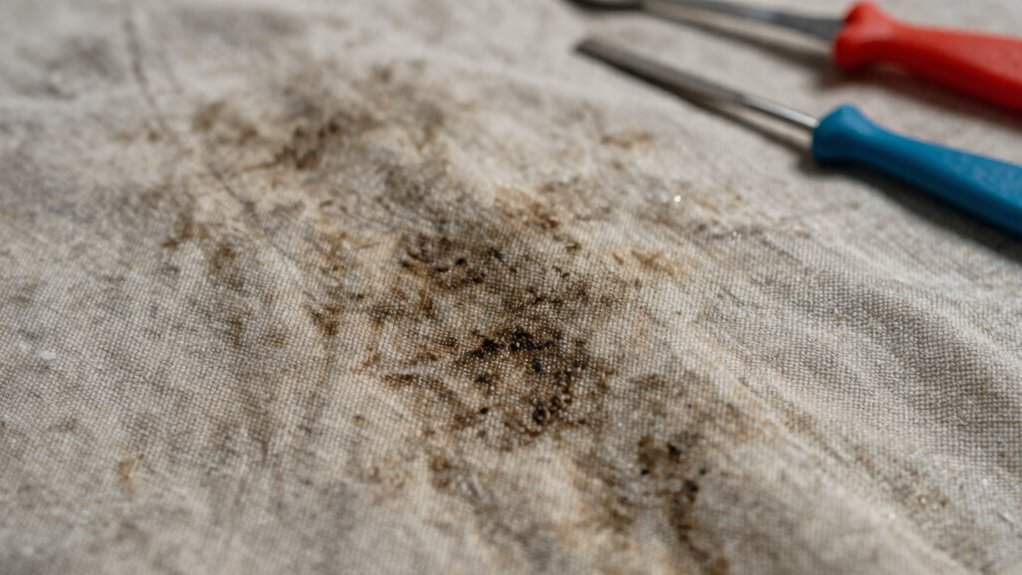
Old or set-in oil stains can be stubborn, but with the right approach, you can still remove them effectively. To improve your stain removal and fabric care, consider these methods:
- Apply a commercial stain remover or heavy-duty detergent directly on the stain, letting it sit for at least 30 minutes.
- Use a mixture of baking soda and dish soap to break down the oil, gently scrubbing the stain.
- Try soaking the fabric in hot water with a bit of laundry booster or enzyme cleaner overnight.
These steps help loosen old oil residues, making removal easier. Keep in mind, patience is key. Always test treatments on a small, hidden area first to avoid damage. With persistence, even stubborn stains can fade away.
How Can I Prevent Oil Stains From Happening Again?
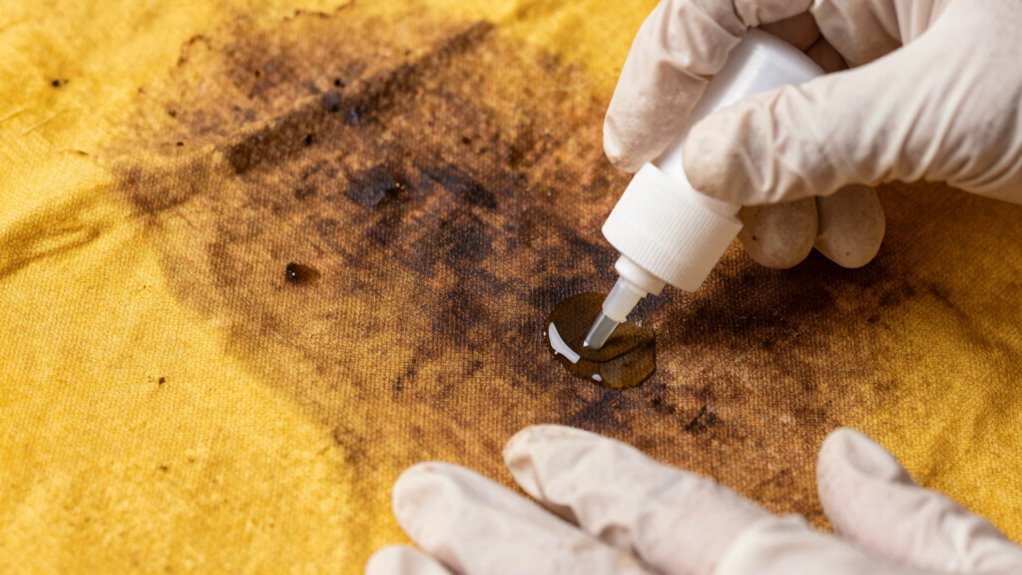
To keep oil stains from returning, start by using protective barriers like aprons or clothing covers when working with greasy substances. Always clean up spills immediately before they set in and become harder to remove. Taking these simple steps can save you time and effort in the long run. Additionally, being mindful of free floating substances can help prevent contamination of fabrics. Understanding cloud services and their potential vulnerabilities underscores the importance of prompt cleanup and protection when handling oily or greasy materials. Being aware of zodiac traits can also help in managing personal habits that might lead to accidental stains. Incorporating knowledge about water-based cleaning methods can further enhance your stain removal techniques. Recognizing the importance of exfoliation can aid in maintaining healthier skin, which may help reduce the occurrence of skin-related stains or discolorations.
Use Protective Barriers
Preventing oil stains before they happen is much easier when you use protective barriers on your fabrics. These barriers act as a shield, making stain prevention more effective. To maximize protection, consider these options:
- Apply a fabric sealant or water repellent spray to create a barrier against oil.
- Use aprons or coveralls when cooking or working with greasy substances.
- Place cloth or silicone mats under oil-prone items like cooking tools or car parts.
Clean Spills Immediately
When a spill occurs, acting quickly is key to preventing lasting oil stains. Prompt cleanup minimizes stain prevention issues and makes laundry tips easier. Blot the spill with a clean cloth or paper towel immediately—don’t rub, as that pushes oil deeper. Use a stain remover or a bit of dish soap on the spot before it sets. The faster you respond, the less chance the oil has to bond with fibers. Proper home maintenance practices, such as quick spill response, can help preserve your fabrics and furniture. Being aware of AI ethics and how technology impacts our daily lives can also influence better decision-making in stain prevention and cleaning routines. Here’s a quick guide:
| Step | Action |
|---|---|
| 1 | Blot the spill |
| 2 | Apply stain remover or soap |
| 3 | Wash promptly |
Quick action keeps your fabric looking fresh and reduces the need for harsh stain removal later.
Common Mistakes to Avoid When Removing Oil Stains
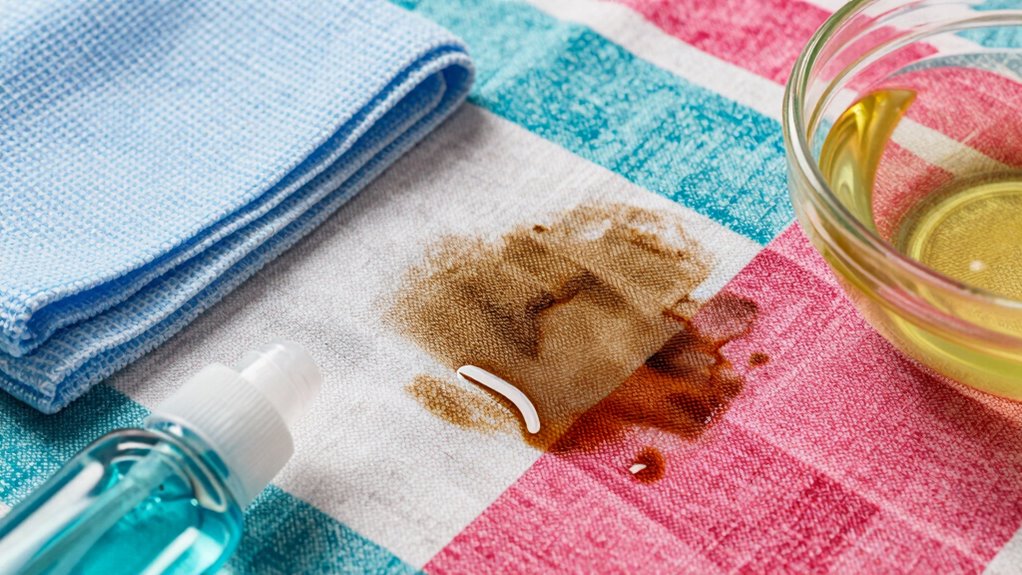
Many people make the mistake of rubbing oil stains vigorously, which can push the oil deeper into the fabric fibers and make the stain harder to remove. Instead, focus on gentle blotting to prevent spreading. Proper stain removal techniques involve patience and care to protect your fabrics. Common mistakes to avoid include:
Avoid rubbing oil stains; gentle blotting prevents deepening the stain.
- Using hot water immediately, which can set the stain, hindering stain prevention efforts.
- Applying too much detergent at once, wasting laundry tips that recommend a small amount for better results.
- Delaying treatment; waiting too long can cause the oil to bond more tightly, making removal difficult. Additionally, understanding fabric care can help you select the appropriate cleaning method to avoid damage.
Which Products Are Best for Oil Stain Removal, and When Should You See a Professional?
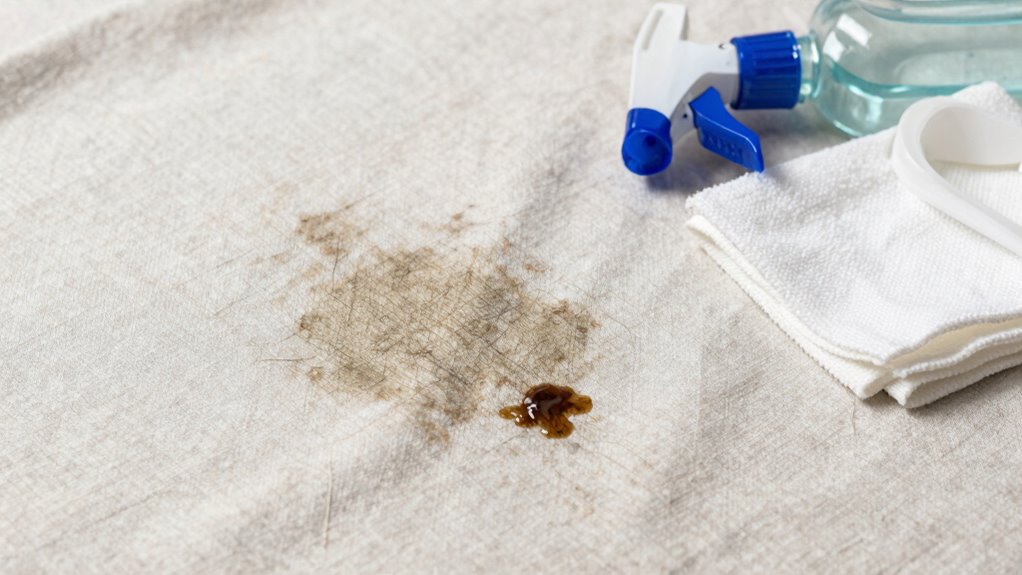
Choosing the right products for oil stain removal can make a significant difference in your results. For most stains, a variety of types of stain removers work well, including commercial degreasers, enzyme-based cleaners, and natural cleaning solutions like baking soda or dish soap. Select products based on fabric type and stain severity. Natural cleaning solutions are eco-friendly and effective for fresh or light stains, but for stubborn or old stains, specialized commercial products might be necessary. Knowing when to see a professional is essential—if stains persist after multiple treatments or if you’re dealing with delicate fabrics, consult a professional cleaner. They have specialized equipment and expertise to prevent damage and restore your fabric’s appearance effectively. Incorporating holistic SEO principles such as understanding user intent and proper keyword selection can also help you find the most effective stain removal methods for your specific needs. Additionally, understanding the importance of proper stain treatment techniques can prevent permanent fabric damage and improve your chances of successful stain removal. It’s also helpful to be aware of fabric-specific care guidelines to avoid unintentional damage during cleaning. Being familiar with the best products for different fabric types can further increase your chances of successful stain removal without harming your clothing.
Frequently Asked Questions
Can Homemade Remedies Effectively Remove All Types of Oil Stains?
Homemade solutions can often effectively remove many types of oil stains, but they might not work for all. You should act quickly to prevent stains from setting, using remedies like baking soda or dish soap. However, for stubborn or old stains, professional treatments might be necessary. Always prioritize stain prevention by treating spills immediately, and test homemade remedies on a small area first to avoid fabric damage.
How Long Can Oil Stains Sit Before They Become Impossible to Remove?
Did you know that oil stains can set in within just 48 hours? The longer they sit, the harder it becomes to remove, as the oil bonds more deeply with fabric fibers. Your oil stain lifespan is vital; if it sits beyond the stain setting time, chances of complete removal drop markedly. So, act quickly—treat stains immediately to prevent permanent damage and make your fabric look like new again.
Are There Specific Fabrics That Are More Resistant to Oil Stain Removal?
Some fabrics are more resistant to oil stain removal because of their porosity and stain resistance properties. For instance, tightly woven synthetic fibers like polyester and nylon tend to repel oil better than natural fibers like cotton or linen, which are more porous. You’ll find that less porous, stain-resistant fabrics give you a better chance at quick, effective cleaning, making it easier to keep your clothes looking fresh.
What Are the Environmental Impacts of Different Oil Stain Removal Products?
When choosing oil stain removal products, consider their environmental impacts. Biodegradable solvents break down naturally, reducing pollution, while products with high chemical toxicity can harm waterways and aquatic life. You can minimize your ecological footprint by opting for eco-friendly, biodegradable options and avoiding harsh chemicals. This approach helps protect the environment, keeps your home safer, and still effectively removes stubborn oil stains.
How Can I Restore the Fabric’s Original Texture After Stain Removal?
Did you know that improper stain removal can reduce fabric softness by up to 30%? To restore your fabric’s original texture, gently recondition it with a fabric softener or a natural alternative like vinegar and water. Avoid harsh scrubbing, as it damages fibers. Instead, softly brush the fabric after cleaning, and let it air dry. This helps maintain or restore its softness and texture, leaving your fabric feeling fresh and comfortable.
Conclusion
Don’t let oil stains feel like an impossible mountain to climb. With the right steps, you can tackle even stubborn marks like a pro. Think of stain removal as pruning a stubborn tree — patience and the right tools make all the difference. Keep these tips in mind, act quickly, and you’ll restore your clothes to their former glory. Oil stains don’t have to be forever; you just need a little know-how and a dash of confidence.