

Pre-testing your interface helps you catch usability issues early, saving time and money before development becomes costly. Avoid common mistakes like inconsistent design, confusing terminology, and neglecting user feedback. Use tools like automated testing and manual reviews to identify problems. Collect user insights through surveys and testing, then improve iteratively. Ensuring your interface is user-friendly now prevents project shrinkage later—if you want actionable steps to optimize your interface, keep exploring.
Key Takeaways
- Conduct early usability testing to identify interface issues before development progresses.
- Use automated and manual validation tools to ensure design consistency and accessibility standards.
- Gather user feedback through surveys and testing to uncover pain points and improve interface effectiveness.
- Prioritize small, incremental interface refinements based on real user data to prevent project shrinkage.
- Regularly evaluate performance metrics and incorporate feedback to maintain alignment with project goals.

Handbook of Usability Testing: How to Plan, Design, and Conduct Effective Tests, 2nd Edition: How to Plan, Design, and Conduct Effective Tests
As an affiliate, we earn on qualifying purchases.
As an affiliate, we earn on qualifying purchases.
Why Pre-Testing Your Interface Will Save You Time and Money

Pre-testing your interface can considerably reduce the time and money spent on your project. When you focus on user-centered design, you ensure the interface meets real user needs early on. Usability testing during this phase helps identify issues before development advances, saving costs on extensive revisions later. By catching problems early, you avoid costly redesigns and delays, making the entire process more efficient. Pre-testing also enhances user satisfaction, which can lead to better adoption and less support required post-launch. You gain valuable insights into how users interact with your interface, allowing you to refine it for maximum effectiveness. Incorporating color accuracy into your testing process can further optimize visual presentation and user experience. Additionally, integrating energy-efficient cloud solutions into your testing process can further optimize resource use and sustainability. Ultimately, investing in pre-testing streamlines your project, reduces waste, and accelerates delivery, ensuring you create a product that truly resonates with your audience.
Common Mistakes That Hurt Your Interface’s Effectiveness

Even with thorough pre-testing, overlooking common pitfalls can still undermine your interface’s effectiveness. One major mistake is neglecting design consistency, which confuses users and hampers navigation. When visual elements and interactions vary unexpectedly, users struggle to build mental models, leading to frustration. Another error is ignoring user empathy; failing to consider users’ needs and behaviors results in an interface that feels disconnected and unhelpful. You might create features that look good but don’t serve real user priorities. Additionally, overcomplicating the interface or using unfamiliar terminology can create barriers. Keep things simple, intuitive, and aligned with user expectations. Incorporating smart home automation principles can help streamline interactions and improve overall usability. Understanding how different brewing methods influence user experience can also guide better interface design choices. Recognizing the importance of environmental considerations in design can promote sustainability and user satisfaction. Ensuring your content is optimized for search intent and aligns with user needs is also crucial for effective engagement. Avoid these mistakes, and you’ll enhance usability, foster user trust, and ensure your interface truly supports your project’s goals.
A Step-by-Step Guide to Pre-Testing Your Interface

Preparing your interface for launch requires a structured approach to pre-testing that uncovers issues before users encounter them. Start with reviewing design consistency to ensure visual elements, fonts, and colors align across pages. Next, verify accessibility standards by testing keyboard navigation, screen reader support, and color contrast. Conduct user testing with real scenarios to identify friction points. Use this table for clarity:
| Step | Focus Area | Key Actions |
|---|---|---|
| Initial Review | Design consistency | Check uniformity in layout and style |
| Accessibility Check | Accessibility standards | Test for inclusivity and ease of use |
| User Testing | Overall usability | Gather feedback and refine |
Additionally, understanding filtration systems can help ensure your interface maintains optimal performance and clarity under various conditions. Following these steps guarantees your interface is polished, consistent, and accessible before launch.
Best Tools and Techniques for Reliable Interface Testing

To guarantee your interface testing is thorough and reliable, you should consider the right mix of tools and techniques. Automated testing tools can save time and improve accuracy, while manual validation helps catch issues automation might miss. Combining both approaches makes your testing process more robust and dependable.
Automated Testing Tools
Automated testing tools have become essential for ensuring your interface functions reliably across different devices and scenarios. They help you quickly identify issues related to accessibility testing, ensuring your site is usable by all users, including those with disabilities. These tools also verify cross-browser compatibility, so your interface performs consistently whether on Chrome, Firefox, Safari, or Edge. With automation, you can run extensive tests regularly without manual effort, catching bugs early and reducing errors. Popular tools like Selenium, Cypress, and TestComplete offer robust features for simulating user interactions and checking visual consistency. Incorporating automated testing best practices into your workflow ensures you maximize these tools’ effectiveness. By integrating these tools into your workflow, you gain confidence that your interface remains reliable, accessible, and compatible—saving time and preventing costly post-launch fixes. Additionally, leveraging testing automation can streamline your development process by providing consistent results and reducing human error. Furthermore, understanding industry trends helps you stay updated on new features and improvements that can enhance your testing strategy. Staying informed about emerging testing tools also allows you to adopt innovative solutions that can improve your testing efficiency. Being aware of issues like ear wax odor or other subtle indicators can sometimes prevent overlooking critical problems during testing phases.
Manual Validation Techniques
Have you considered how manual validation techniques can supplement automated testing to guarantee your interface’s reliability? Techniques like heuristic evaluation involve experts systematically examining your interface against usability principles to identify issues early. A cognitive walkthrough guides you through typical user tasks, revealing potential confusion points. These methods help uncover issues automation might miss, especially those related to user experience and intuition. By actively engaging with your interface, you can catch subtle flaws and improve overall usability. Heuristic evaluation provides quick, expert insights, while cognitive walkthroughs simulate real user interactions, making them invaluable for pre-testing. Incorporating manual validation ensures you cover aspects that automated tests might overlook, especially those involving user perception and behavior. Additionally, focusing on user-centered design principles can further enhance the effectiveness of your testing process. Utilizing natural user interactions as part of your validation strategies can help identify issues related to how users naturally engage with your interface. Combining these manual validation techniques ensures your interface isn’t just functional but truly user-friendly, reducing the risk of costly post-launch fixes. Understanding usability principles can significantly improve your validation process and outcomes. Effective interface validation is essential for delivering a seamless user experience.
How to Collect and Use User Feedback Before Launch

Wondering how to guarantee your project resonates with users before launch? The key is collecting and using user feedback effectively. Start by establishing feedback loops—regular check-ins where users share their thoughts. Use surveys, interviews, and usability tests to gather genuine user insights. Keep your questions focused on specific features and overall experience. Analyze this feedback promptly to identify pain points and areas for improvement. Incorporate these insights into your development process, making iterative adjustments. Engaging users early helps uncover issues you might overlook and builds trust. Remember, the goal isn’t just to gather feedback but to actively utilize it to shape your project. Empowering seniors with personalized in-home care can provide valuable insights into user needs and preferences, ensuring your interface aligns with their expectations. Additionally, understanding the regulatory environment related to user data can help you design feedback mechanisms that are compliant and trustworthy. Being aware of astrological compatibility may offer unique perspectives on user personality traits, informing more tailored engagement strategies. Taking into account user-centered design principles can further enhance your approach to collecting meaningful feedback, leading to better user satisfaction and success. Incorporating knowledge about Floating on Water can inspire innovative ways to gather feedback through immersive, engaging experiences. This proactive approach ensures your interface aligns with user needs, boosting your chances for a successful launch.
Iterate and Improve Your Interface Based on Test Results

Once you’ve gathered test results, the next step is to systematically analyze the data to identify patterns and key issues. Focus on how users interact with your interface design and where they encounter friction. Look for recurring complaints or confusion points that hinder the user experience. Use this insight to prioritize improvements that will have the most impact. Keep your updates focused and iterative, refining your interface design step by step. Remember, small adjustments can considerably enhance usability and engagement. Avoid making sweeping changes without evidence; instead, base your improvements on real user feedback. This process of iteration helps you create a more intuitive, efficient interface that truly meets user needs and enhances their overall experience. Detecting passive voice can further clarify your writing and improve your communication.
How to Measure Success and Ensure Your Interface Is Ready
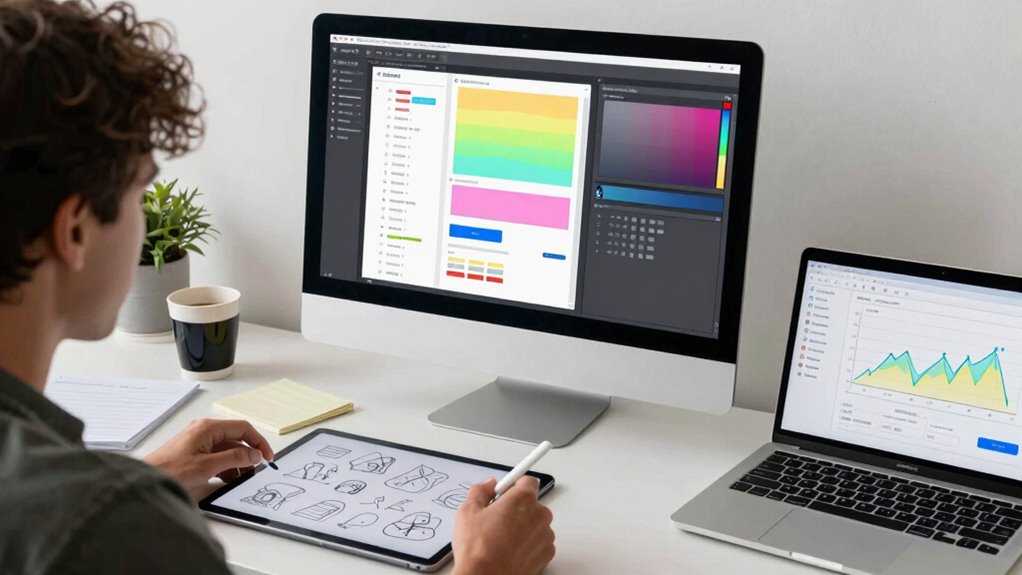
To effectively determine if your interface is ready, you need clear, measurable criteria that align with your project goals. Focus on usability metrics like task completion rates, error frequency, and user satisfaction scores. These metrics serve as success benchmarks, providing tangible evidence of your interface’s performance. Set specific targets for each metric based on your desired user experience and industry standards. Regularly evaluate these benchmarks through testing sessions, ensuring your interface meets or exceeds expectations. If your usability metrics fall short, identify areas for improvement before launch. This approach helps you avoid surprises later and confirms your interface’s readiness. Additionally, incorporating user feedback can provide valuable insights beyond quantitative data. It is also important to ensure that your interface complies with relevant privacy and cookie policies to build user trust and meet legal requirements. Ultimately, measuring success with concrete benchmarks ensures your interface is user-friendly, effective, and ready for real-world use.
Frequently Asked Questions
How Early Should I Start Pre-Testing My Interface?
You should start pre-testing your interface as early as possible, ideally during the initial design phase. This helps guarantee interface consistency and catches issues early. Regular testing frequency throughout development keeps your project on track, allowing you to identify and fix problems quickly. Starting early and maintaining consistent testing helps you create a seamless user experience and prevents costly revisions later in the project.
What Are the Signs My Interface Needs Pre-Testing?
You’ll notice usability issues like confusing navigation or unresponsive buttons, signaling it’s time for pre-testing. Design inconsistencies, such as mismatched fonts or color schemes, also point to the need for early feedback. When these signs appear, pre-test your interface to identify problems before they escalate. Catching these issues early guarantees smooth user experiences and saves time during later development stages.
Can Pre-Testing Replace User Acceptance Testing?
Pre-testing can’t substitute user acceptance testing because it focuses on catching issues like design consistency and accessibility standards early. While pre-testing helps identify usability problems and guarantee your interface aligns with project goals, UAT involves real users verifying if the product meets their needs. You need both to ensure your interface is polished, accessible, and truly user-friendly before launch.
How Do I Select the Right Users for Testing?
You should select users who reflect your target audience’s demographics and skill levels to guarantee genuine user engagement. Focus on those familiar with similar products or workflows, as their feedback offers valuable usability metrics. Include a diverse mix to identify different pain points and usability issues. By pre-testing with the right users, you’ll gather actionable insights, improve interface design, and ultimately create a more user-friendly experience.
What Are Common Pitfalls When Interpreting Test Results?
Think of test result interpretation like steering through a foggy road—you might miss vital signs. Common pitfalls include ignoring context, overgeneralizing data, or jumping to conclusions too quickly. You must stay objective and consider all variables, avoiding biases that distort insights. Misreading results can derail your project, so double-check your analysis, ask for feedback, and always verify that your conclusions align with the actual data to steer clear of costly errors.
Conclusion
Pre-testing your interface can boost efficiency and save costs—studies show it reduces development time by up to 30%. By catching issues early, you guarantee a smoother user experience and fewer costly revisions later. Remember, investing time in pre-testing now can lead to a more successful launch and happier users. So don’t wait—start testing your interface today and watch your project grow stronger and more effective with each iteration.