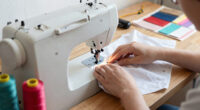
To see if your sewing machine can handle upholstery weight fabric, check its specifications for heavy-duty or industrial labels, which indicate stronger motors and durable parts. Test its ability to feed multiple layers of dense fabric smoothly without skipping stitches, and guarantee it can handle thick materials without strain. Use heavier needles and adjust tension settings as needed. Proper maintenance and technique are key. Follow along to discover more tips for selecting the right machine for heavy-duty upholstery projects.
Listen free for 30 days with Audible
Thousands of audiobooks and originals — cancel anytime.
As an affiliate, we earn on qualifying purchases.
Key Takeaways
- Check the machine’s specifications for heavy-duty or industrial capabilities, including motor strength and durability.
- Verify the maximum fabric thickness the machine can feed without skipping stitches or jamming.
- Use appropriate heavy-duty needles (size 16 or 18) and adjust tension settings for dense fabrics.
- Ensure the machine can handle multiple layers of thick upholstery fabric smoothly.
- Confirm proper maintenance and techniques to maintain performance with heavy-weight materials.
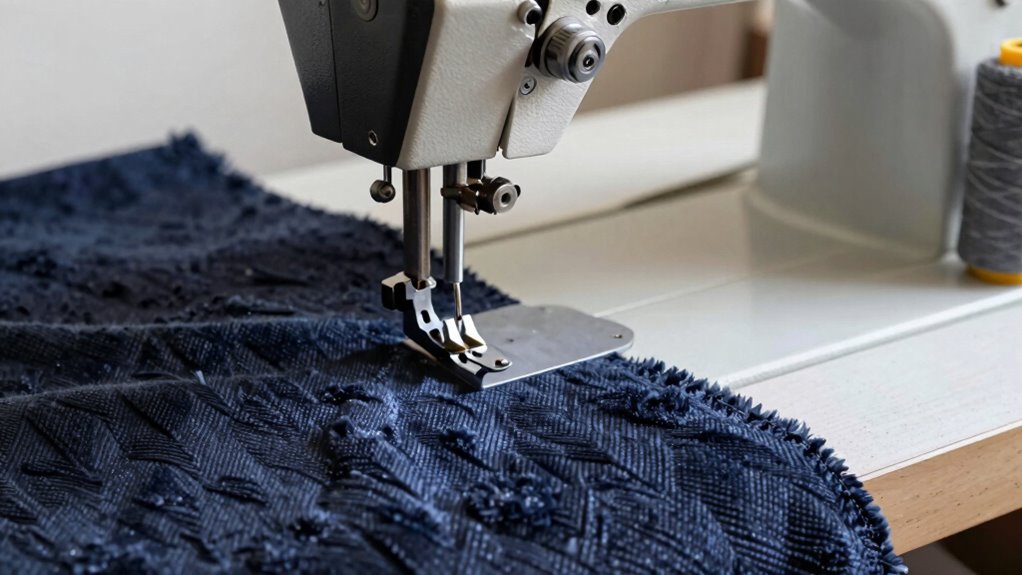
If you’re considering using your sewing machine for upholstery fabric, it’s important to determine whether it can handle the thick, tough material. Upholstery fabric tends to be much heavier and denser than typical sewing projects, which means fabric thickness becomes a critical factor. You need to assess whether your machine can accommodate the bulk without strain, preventing potential damage or skipped stitches. Generally, machines with higher durability are better suited to handle thicker fabrics, but it’s essential to verify this before starting your project.
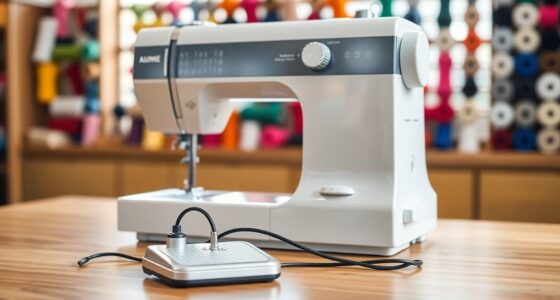
Start by examining your machine’s specifications. Look for terms like “heavy-duty” or “industrial” in the manual or product details. These models are built with stronger motors and more resilient components, making them more capable of managing the stress caused by dense fabrics. If your machine is a standard model, check whether it has a robust presser foot and a powerful motor that can handle multiple layers of upholstery fabric. If it’s not explicitly designed for heavy fabrics, you might need to reinforce its capabilities with additional tools or consider upgrading.
Check if your machine is labeled heavy-duty or industrial for better upholstery fabric handling.
Another key aspect is the maximum fabric thickness your machine can handle. Many machines specify a maximum thickness they can sew through, often listed in the user manual. If your upholstery fabric exceeds this limit, you risk damaging the machine or producing uneven stitches. To test this, fold or layer your fabric and see if the machine feeds it smoothly without skipping stitches or struggling. If it does, your machine might be suitable; if not, it’s better to avoid forcing it beyond its limits.
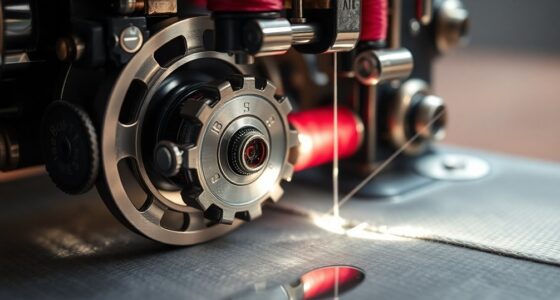
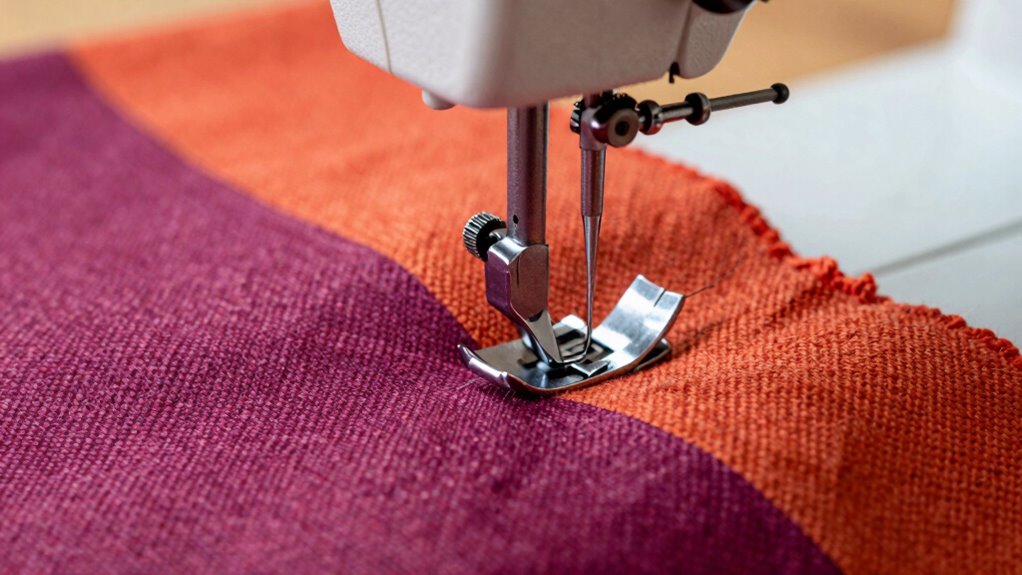
Pay attention to the machine’s needle and tension settings. Upholstery fabrics often require heavier needles, such as size 16 or 18, to pierce through the dense material easily. Using the correct needle not only improves stitch quality but also reduces wear on your machine. Adjust the tension and stitch length accordingly, opting for longer stitches that can better handle the fabric’s thickness. If your machine responds well to these adjustments without jittering or skipping, it’s a good sign of its durability and suitability. Being aware of machine capabilities for thick fabrics can help you choose the right approach and avoid unnecessary damage. Additionally, choosing the appropriate sewing techniques for heavy-duty projects can make a significant difference in your results.
Furthermore, understanding your machine’s capabilities for thick fabrics can help you make an informed decision and prevent unnecessary damage or frustration. It’s also helpful to familiarize yourself with appropriate sewing techniques for heavy-duty projects, which can significantly improve your results. Regular inspection and maintenance—such as cleaning and lubricating your machine—are crucial to ensure it remains in optimal condition to handle challenging materials like upholstery fabric. Finally, consider your experience level. Even if your machine is technically capable, working with heavy upholstery fabric demands patience and proper technique. Make sure your machine is well-maintained, with a clean and lubricated mechanism, to guarantee maximum performance. If your sewing machine can handle the fabric thickness comfortably and maintains its stitch quality under these conditions, you can confidently proceed with upholstery projects, knowing your machine is up to the task.
heavy-duty upholstery sewing machine
As an affiliate, we earn on qualifying purchases.
As an affiliate, we earn on qualifying purchases.
Frequently Asked Questions
Can I Use My Standard Sewing Machine for Heavy Upholstery Fabric?
You can use your standard sewing machine for heavy upholstery fabric if it can handle the fabric tension and has the right needle types. Use a heavy-duty needle, like a denim or upholstery needle, to prevent damage. Adjust the fabric tension settings to guarantee smooth stitching, and consider using a stronger, thicker thread. If your machine struggles with these adjustments, it might be better to invest in a heavy-duty or upholstery machine.
What Accessories Are Necessary for Upholstery Weight Fabric?
You’ll need a heavy-duty needle size 16 or 18 and adjustable fabric tension to handle upholstery weight fabric. Ironically, the right accessories seem simple but are vital—without them, your project’s doomed. Invest in sturdy, sharp needles to prevent skipped stitches, and tweak the tension for even seams. These essentials make all the difference, ensuring your machine can tackle the toughest fabrics without a hitch.
How Do I Test a Machine’s Capacity Before Starting?
You test a machine’s capacity by examining its ability to handle fabric thickness and sewing machine durability. Start by sewing a small sample of the upholstery weight fabric, paying attention to how smoothly the machine stitches and if it struggles or jams. Check the machine’s manual for weight limits, and verify your machine’s needle and tension settings are appropriate. This trial run helps you determine if your machine can handle the heavy fabric safely.
Are There Specific Brands Recommended for Upholstery Sewing?
Think of a trusted brand as a sturdy anchor in a storm — it stands firm with quality and reliability. For upholstery sewing, brands like Singer, Juki, and Consew are highly recommended for their fabric strength and durability. These brands offer machines designed to handle heavy upholstery weight fabric, ensuring your project stays strong and secure. Choosing reputable brands gives you confidence, much like an anchor that keeps your craft steady amidst challenges.
How Often Should I Service a Machine Used for Thick Fabrics?
You should service your machine every 10-15 hours of sewing thick fabrics to guarantee ideal machine maintenance. Regular cleaning and oiling help prevent strain and maintain fabric compatibility, especially with heavier upholstery weight fabrics. Check your machine’s manual for specific maintenance intervals, and keep an eye on how it handles thick materials—if you notice slow stitching or jams, it’s time for a service. Proper maintenance keeps your machine running smoothly and extends its lifespan.
Conclusion
Think of your sewing machine as a sturdy vehicle—if it’s built for rough terrain, it handles heavy loads with ease. When you’re considering upholstery fabric, check your machine’s specifications or test its power with a scrap. I once tried sewing a thick cushion cover on my old machine—it struggled like a car trying to climb a mountain. Knowing your machine’s limits guarantees your projects sail smoothly, no unexpected stalls or tears.
Fall Picks
fall essentials
As an affiliate, we earn on qualifying purchases.