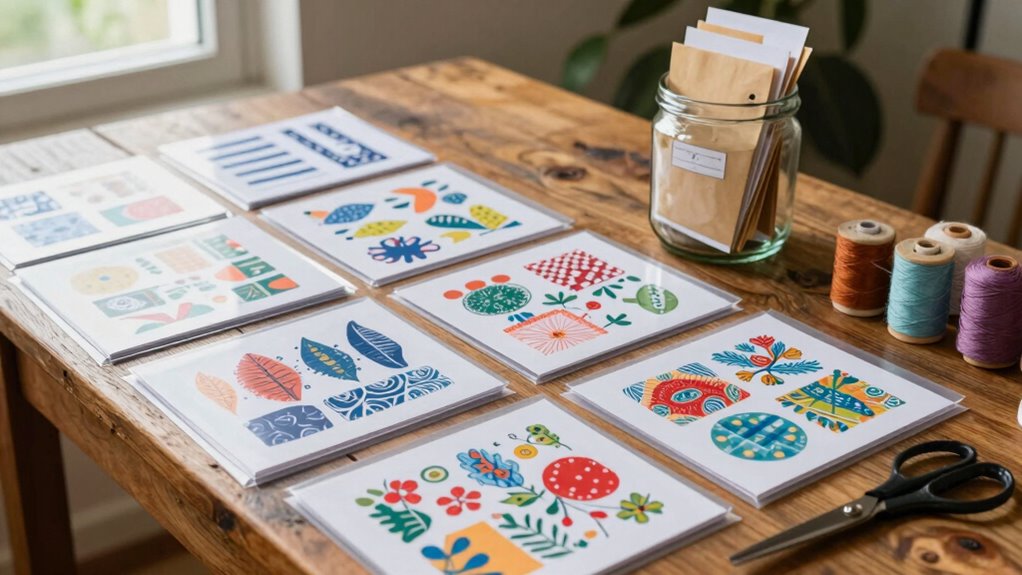

To store printed patterns so they stay usable longer, keep them flat and avoid unnecessary folding or creasing. Use acid-free folders, envelopes, or store them flat in a dedicated file or drawer away from sunlight, moisture, and extreme temperatures. Place tissue paper between stacked patterns to prevent smudging and fraying. Regularly check for damage and handle patterns carefully to maintain their shape and clarity. Continuing will give you more tips for best practices.

Get business pricing on tools and workshop supplies
- Business-only prices and quantity discounts
- Tax-exempt purchasing
- Multiple users, one account, clear invoices
Key Takeaways
- Store patterns flat in acid-free folders or in flat files to prevent creases and tears.
- Keep patterns in a cool, dry, and dark environment to prevent fading and deterioration.
- Use tissue paper or acid-free interleaving paper between stacked patterns to avoid smudging and transfer.
- Handle patterns carefully, avoiding excessive folding, bending, or unnecessary contact.
- Regularly inspect stored patterns for signs of damage and address issues promptly.
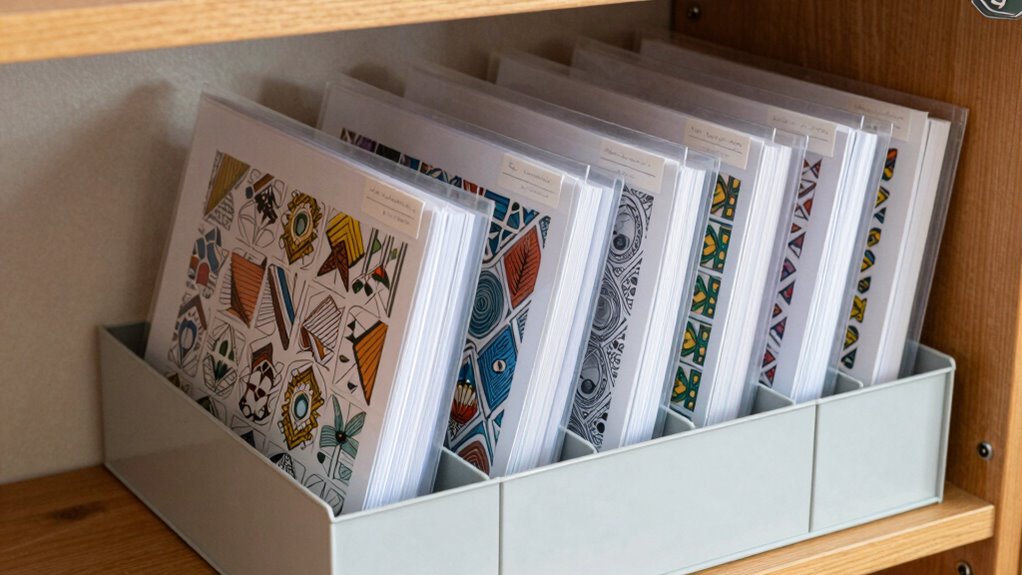
Have you ever struggled to keep your printed patterns organized and in good condition? If so, you’re not alone. Proper storage is essential to guarantee your patterns stay usable over time, and it begins with understanding how to care for the fabric and preserve the pattern itself. When it comes to fabric care, you want to avoid exposing your patterns to excessive moisture, direct sunlight, or extreme temperatures. These factors can cause paper to weaken, colors to fade, or patterns to become illegible. Instead, store your printed patterns in a cool, dry place, away from sunlight. Using acid-free folders or envelopes helps protect the paper from environmental damage while keeping everything neat and accessible. Additionally, understanding environmental hazards and how they impact paper durability can help you make better storage choices. Protecting your patterns from moisture exposure is particularly important, as it can lead to mold or warping over time. Ensuring proper storage conditions can significantly extend the lifespan of your patterns. Pattern preservation requires a careful approach to prevent tears, creases, or smudging. Once you’ve stored your patterns properly, make sure they remain flat and free of unnecessary folds. Rolling them loosely around a cardboard tube or storing them in a flat file prevents creases that could distort the pattern lines over time. If your patterns are already folded, smooth them out gently and avoid pressing or ironing directly on the paper, which could cause damage. Proper handling techniques can also help prevent unnecessary wear and tear on your patterns. When stacking multiple patterns, place a sheet of tissue paper or acid-free paper between each one to prevent ink smudging or transfer. This extra layer also guards against tearing or fraying along the edges. Regularly inspecting your stored patterns can help you catch early signs of deterioration and address them before they worsen. Remember that Proper storage techniques are key to maintaining the clarity and usability of your patterns over the long term.
acid-free document folders for patterns
As an affiliate, we earn on qualifying purchases.
As an affiliate, we earn on qualifying purchases.
Frequently Asked Questions
How Do I Prevent Printed Patterns From Fading Over Time?
To prevent printed patterns from fading and ink smudging, you should store them in a cool, dark place away from direct sunlight and humidity. Use acid-free sleeves or folders to protect the paper, and avoid handling with dirty or moist hands. Consider applying a clear fixative spray to lock in the ink, which helps reduce color fading over time and keeps your patterns crisp and clean longer.
Can I Store Printed Patterns in a Humid Environment?
You shouldn’t store printed patterns in a humid environment because excess humidity can cause warping, mold, and fading. To protect your patterns, use storage containers that offer humidity control, such as airtight plastic bins with silica gel packs or dehumidifiers. These methods help maintain a stable environment, preventing moisture damage. Keep your patterns in a cool, dry place, away from direct sunlight, to make certain they stay usable and in good condition longer.
What Materials Are Best for Long-Term Pattern Storage?
Think of your printed patterns as treasures that deserve the finest armor. For material preservation, use archival-quality materials like acid-free paper and sleeves, which act as a shield against deterioration. Store patterns flat in a cool, dark place to prevent fading and warping. These archival qualities guarantee your patterns stay vibrant and intact, ready for your next creative adventure, making them timeless keepsakes rather than fleeting memories.
How Often Should I Check Stored Patterns for Damage?
You should check your stored patterns at least once every three to six months. During these inspections, look for signs of damage like tears, fading, or moisture. Keep digital backups updated regularly and store your printed patterns in sturdy storage containers to prevent damage. This routine helps you catch issues early, ensuring your patterns stay in good condition and ready for your next project.
Is It Safe to Laminate Printed Patterns for Extra Protection?
Lamination is like giving your patterns a sturdy shield, but it’s not without trade-offs. It’s safe and boosts lamination durability, preventing tears and spills. However, it can reduce pattern flexibility, making them stiffer—like trying to bend a metal sheet versus a cloth. If you need long-term protection and don’t mind a little rigidity, lamination works well; just remember, it’s a balance between durability and flexibility.
Conclusion
Storing printed patterns properly can extend their lifespan considerably. Did you know that correctly stored paper can last up to 10 times longer than poorly kept ones? By keeping patterns flat in a cool, dry place and avoiding direct sunlight, you guarantee they stay crisp and usable for future projects. Taking these simple steps means you’ll save money and time, always having your favorite patterns ready when inspiration strikes. Proper storage truly makes a difference!
Fall yard work Picks
leaf blowers
As an affiliate, we earn on qualifying purchases.