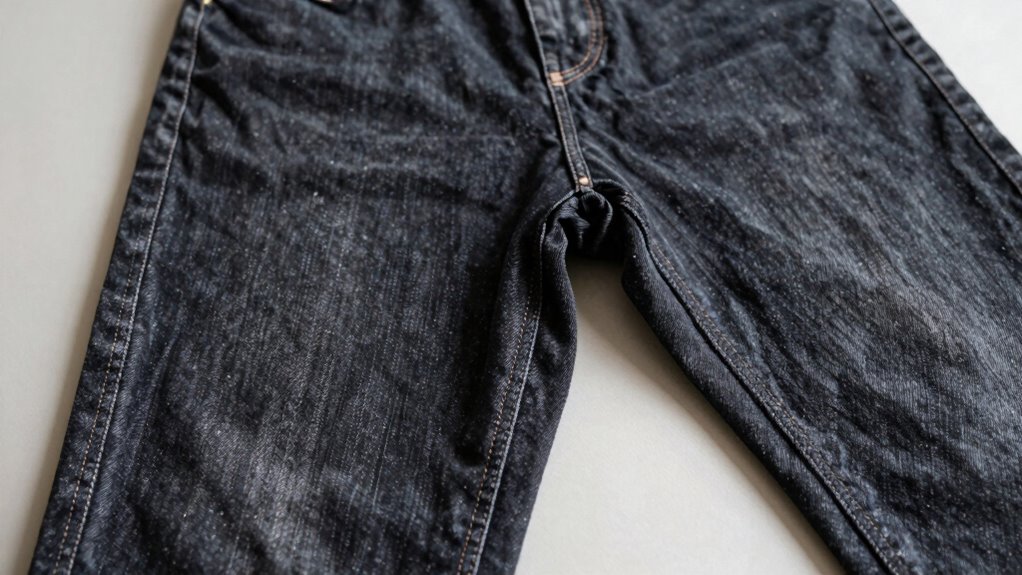

To fix twisted side seams, start by turning your pants inside out and carefully unpick the seam where it twists. Lay the pants flat and compare both sides for symmetry, then mark a new seam line with fabric chalk, aligning it properly. Sew along the new line with a stretch stitch or walking foot, keeping the fabric smooth. Press the seam flat and turn the pants right side out to check your work; you’ll find more tips to perfect the fix as you continue.
Key Takeaways
- Turn pants inside out and carefully unpick the twisted seam if necessary.
- Lay pants flat and compare both sides for symmetry, marking corrections with fabric chalk.
- Sew a new, straight seam along the marked line, keeping fabric flat and aligned.
- Press the seam flat with an iron to set the correction and reduce residual twist.
- Turn pants right side out and try on to ensure the twist is corrected and seams are smooth.
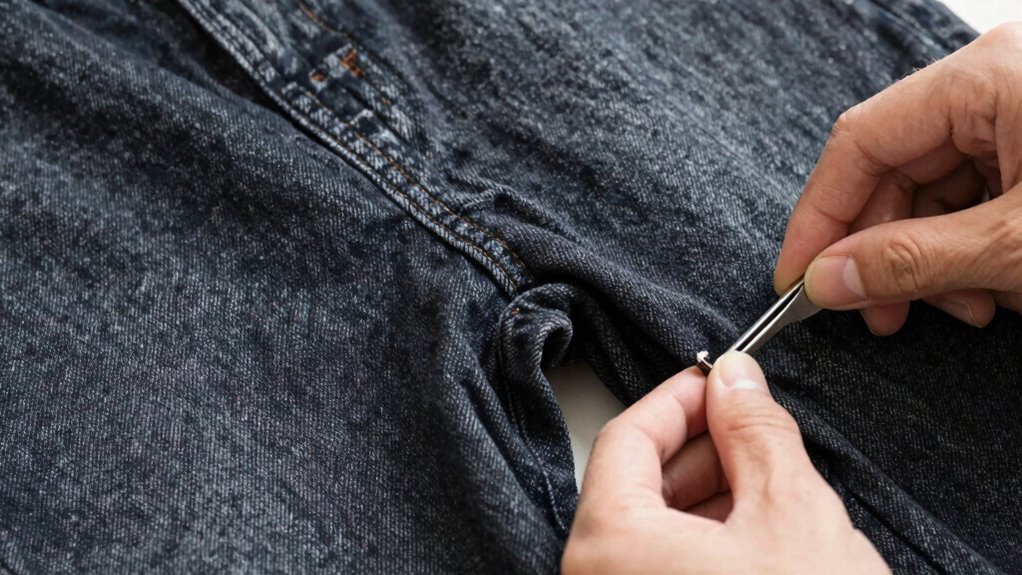
Have you ever noticed your pants twisting at the side seam, making them uncomfortable or unflattering? It’s a common issue, and the good news is that fixing it doesn’t have to be complicated. The key is understanding what causes the twist and knowing how to correct it with simple sewing techniques. Whether your pants are made from stretch denim, twill, or linen, the fix remains similar, but knowing your fabric types can help you select the right sewing tools and methods. For example, stretch fabrics like spandex blends require gentle handling to prevent further distortion, while stiffer fabrics like canvas or denim may need reinforced seams.
To start, you’ll want to gather a few basic sewing tools: a seam ripper, pins, a measuring tape, fabric chalk or a washable marker, and a sewing machine with a straight stitch option. These tools will help you make precise adjustments without damaging your pants. First, turn your pants inside out and examine the side seam that twists. Often, the problem stems from uneven or poorly aligned seams during construction or after washing. You’ll want to carefully unpick a small section of the seam if necessary, especially if the twist is severe or persistent.
Next, lay the pants flat on a clean surface. Use the measuring tape to check the seam allowances and compare both sides for symmetry. If one side is longer or has shifted, you’ll need to resew that seam. Mark the new seam line with fabric chalk, making sure it aligns properly with the original seam allowances. When sewing, keep your fabric flat and smooth, and take your time to ensure the seam sits evenly. Using the appropriate sewing tools, like a walking foot for thicker fabrics or stretch stitches for knit fabrics, helps prevent further twisting. Additionally, paying attention to the fabric stretch can ensure your seams hold well without causing additional distortions.
Once you’ve resewn the seam, press it flat with an iron set to the correct temperature for your fabric type. This step helps set the seam and reduces any residual twist. Turn the pants right side out and try them on. The twist should be notably reduced or eliminated altogether. If not, repeat the process, double-checking your measurements and seam alignment.
Fixing pants that twist at the side seam is all about patience and precision. Understanding your fabric types and using the right sewing tools makes the process easier and more effective. Proper fabric handling can prevent future twisting and ensure your pants stay aligned. With a little effort, you’ll have perfectly aligned pants that fit comfortably and look great.
As an affiliate, we earn on qualifying purchases.
Frequently Asked Questions
Can Twisting Occur in All Fabric Types?
Yes, twisting can occur in all fabric types, but it’s more common in fabrics with less elasticity or poor seam reinforcement. Stretchy fabrics with good elasticity tend to resist twisting better, while stiffer or loosely sewn fabrics are more prone. To prevent this, make certain your pants have strong seam reinforcement and choose fabrics appropriate for your activity. Proper fit and fabric choice considerably reduce twisting issues over time.
How Often Should I Check for Twisting?
You should check for twisting after every few wears or washes, especially if you’re using fabric care or sewing techniques that might cause uneven tension. Regular inspections help catch twists early, preventing permanent distortion. Pay close attention to the side seams during laundry or dressing, and adjust your sewing techniques if you notice a tendency for twisting. This proactive approach keeps your pants looking neat and maintains their shape longer.
Does Washing Affect the Twist in the Side Seam?
Washing can influence the twist in your side seam, especially if the detergent effects or washing machine settings aren’t ideal. Using harsh detergents or high spin speeds can cause the fabric to twist more. To minimize this, choose gentle detergents, opt for delicate or low spin cycles, and turn your pants inside out before washing. These steps help maintain the fabric’s shape and reduce twisting over time.
Are There Specific Sewing Tools Recommended?
Yes, certain sewing tools make fixing twisted side seams easier. You should use sewing pins to hold fabric in place securely, preventing further twisting during sewing. A seam ripper is essential for carefully removing any existing stitches that might be causing the twist or for undoing mistakes. These tools help you work precisely, ensuring your pants’ side seams stay straight and aligned, giving you a clean, professional finish.
Can Professional Repairs Prevent Future Twisting?
Yes, professional repairs can help prevent future twisting by making tailored adjustments and fabric reinforcement. When you get your pants repaired, a tailor can realign the side seams and reinforce weak areas, ensuring the fabric stays flat and resists twisting. These precise tailoring adjustments and added reinforcement strengthen the fabric, reducing the chance of future twisting, so your pants maintain their shape and fit longer.
Conclusion
Now that you’ve got this clever trick up your sleeve, fixing twisted side seams becomes as easy as untangling a knot in your shoelace. Think of your pants as a puzzle waiting to be solved, with each stitch bringing harmony back to your wardrobe. With just a little patience and these simple steps, you’ll have your pants flowing smoothly again—like a river finding its course. Happy sewing!