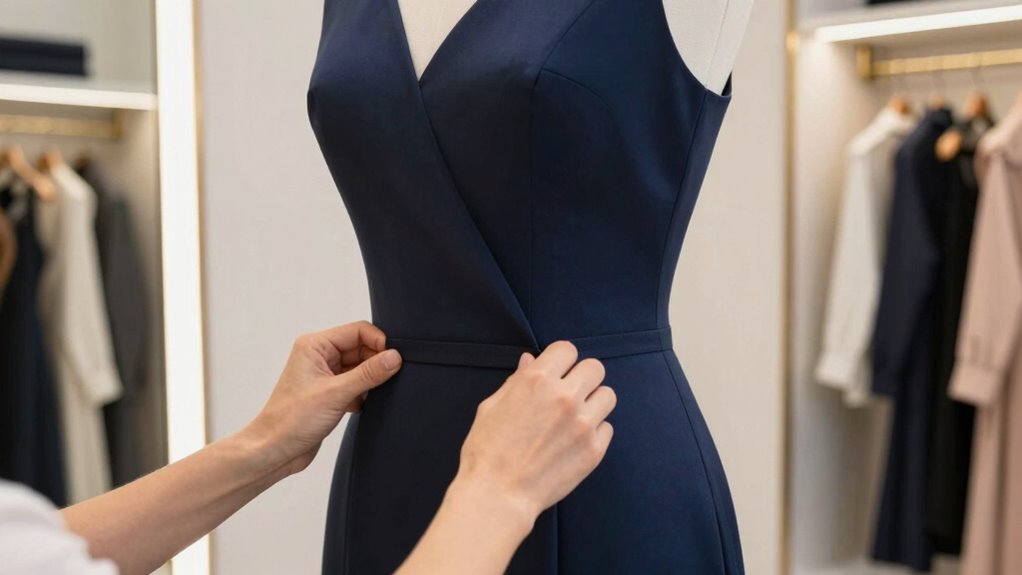

To improve the fit of store-bought dresses, try small tailoring tweaks like taking in side seams or adding darts at the bust or back to contour the fabric to your body. Using basic sewing tools, you can adjust the hem or loosen fabric areas for comfort. Fabric choice matters too—stretchy knits or stiffer silks require different techniques. These simple adjustments can make a big difference, and there’s more to discover if you keep exploring ways to personalize your wardrobe.

Get business pricing on tools and workshop supplies
- Business-only prices and quantity discounts
- Tax-exempt purchasing
- Multiple users, one account, clear invoices
Key Takeaways
- Take in side seams or add darts to contour the dress to your body shape.
- Use fabric belts or sashes for quick, adjustable waist cinching.
- Hem the dress to improve length and proportion for a better fit.
- Perform small seam adjustments with precise stitches to improve overall silhouette.
- Consult a professional tailor for subtle, accurate alterations to enhance fit.
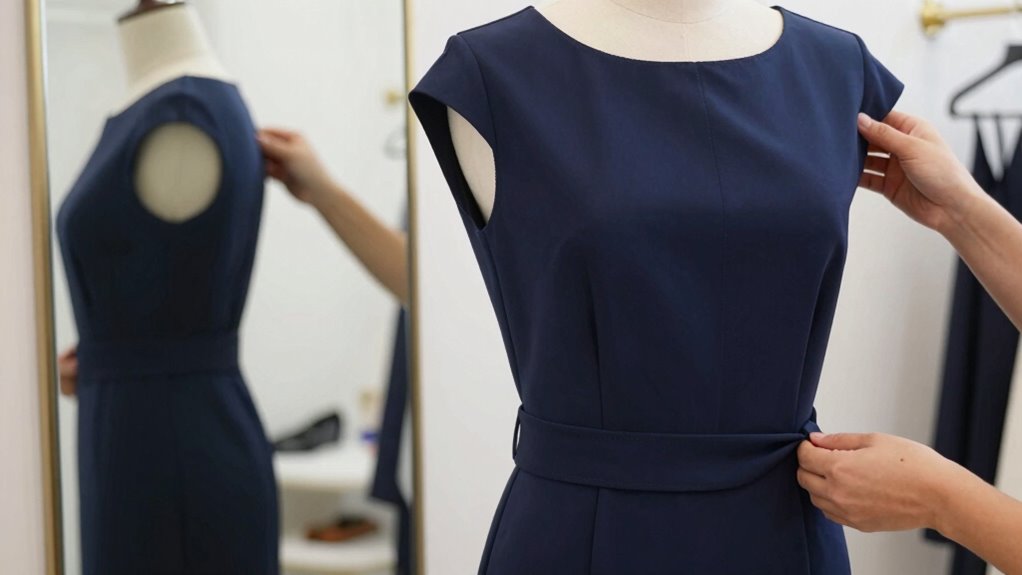
Buying a store-bought dress is convenient, but it often doesn’t fit perfectly right out of the box. You might find the waist too loose, the shoulders too tight, or the length just a little off. Instead of settling for a less-than-perfect fit, you can make simple adjustments that dramatically enhance how the dress looks and feels. One effective approach is to explore vintage tailoring techniques, which have been used for decades to achieve a customized fit. Vintage tailoring emphasizes precise, small modifications that improve the dress’s structure without requiring extensive sewing skills. For instance, taking in the side seams slightly can create a more tailored silhouette, and adding darts at the bust or back can help contour the fabric to your body shape. These adjustments are straightforward and can often be done with basic sewing tools, making them accessible even for beginners. Additionally, understanding biodiversity and sustainable practices in fashion can inspire you to choose eco-friendly fabrics and minimize waste when making alterations. Fabric adjustments are another key way to improve the fit. Over time, fabrics can stretch, shrink, or lose their shape, especially if the dress is made from delicate or stretchy materials. You can tighten or loosen fit issues by carefully tailoring the fabric. For example, if the dress is too loose around the waist, you can take in the fabric at the seams or add a fabric belt for a cinched look. Conversely, if the dress feels tight across the shoulders or bust, letting out some of the seams (if the fabric allows) can provide extra comfort. Sometimes, a simple hem adjustment can also help if the length is off, making the dress more flattering and proportionate on your body. When tackling fabric adjustments, always consider the type of material you’re working with. Stretchy knits require different techniques than stiff silks or cottons. Understanding fabric properties can help you choose the best method for alteration and avoid damaging the material. It’s also helpful to research vintage tailoring techniques, as they often involve small, precise sutures that can substantially impact the overall fit. Additionally, familiarizing yourself with alteration techniques can give you confidence to make these changes without professional help. If you’re unsure about making these changes yourself, a professional tailor can do the work for you, especially since vintage tailoring techniques often involve small, precise sutures that can substantially impact the overall fit. Remember, even small tweaks can make a big difference—making your dress look custom-made and ensuring you feel confident when wearing it. These simple methods are cost-effective and quick, yet they can transform an ill-fitting store-bought dress into a wardrobe favorite that feels uniquely yours.
Popular right now

De'Longhi Linea Classic Espresso Machine with Adjustable Milk Frother

KitchenAid Artisan Series 5-Quart Tilt-Head Stand Mixer, Dried Rose (KSM150PS)

KitchenAid Artisan 5-Quart Tilt-Head Stand Mixer, Almond Cream
As an affiliate, we earn on qualifying purchases.
Frequently Asked Questions
Can I Alter a Dress Without Sewing Experience?
Yes, you can alter a dress without sewing experience by using temporary fixes like fabric tape or safety pins, especially for minor adjustments. For more precise changes, visit alteration services that handle various fabric types. They can professionally tailor your dress to fit better, even if you’re new to sewing. Always communicate your needs clearly, and choose services experienced with your dress’s fabric to guarantee a smooth, comfortable fit.
How Do I Determine the Right Dress Size for My Body?
Isn’t finding the perfect fit like finding a needle in a haystack? To determine your right dress size, start with accurate body measurement tips—measure your bust, waist, and hips using a flexible tape. Then, compare your measurements to dress size guidelines from brands or stores. Remember, sizes vary, so always check the specific brand’s chart to choose the best fit.
What Tools Are Essential for Quick Dress Adjustments?
You’ll want a few essential tools for quick dress adjustments. Dress pins are perfect for temporarily pinning fabric, helping you see how changes will look before sewing. A tailoring chalk or fabric marker allows you to mark areas for stretching or taking in. For fabric stretching, use your hands carefully to gently reshape the material, especially around seams. These tools make quick, effective adjustments that improve your dress fit effortlessly.
How Can I Make a Dress More Comfortable to Wear?
Think of your dress as a song, and comfort as the melody you want to hear. To achieve this, choose dresses with soft, breathable dress fabric choices, like cotton or jersey. Style adjustments, such as removing restrictive linings or adding elastic waistbands, can make a significant difference. These tweaks help the dress move with you, turning a stylish piece into a truly comfortable and confident expression of your personality.
Are There Temporary Fixes for Dress Fit Issues?
Yes, you can try temporary fixes for dress fit issues. Use fabric reinforcement, like sewing in discreet stitches or fabric tape, to tighten loose areas. Belt adjustments are also quick solutions—add a belt to cinch the waist or loop one through existing loops to improve fit instantly. These methods are simple, non-permanent, and can make your dress more comfortable and better fitting for your body shape.
Conclusion
With a few simple tweaks, your store-bought dress can transform from ordinary to perfectly suited for you. Think of it as gently guiding a puzzle piece into its rightful place, creating a seamless and flattering fit. Embrace these easy changes like a refreshing gust filling a room, turning a good dress into a stunning reflection of your unique style. After all, your wardrobe deserves that perfect touch of personal charm.