Using a color-accurate monitor is essential for fabric and thread work because it helps you see true-to-life colors, ensuring your projects match your vision precisely. It reduces guesswork, so you can pick fabrics and threads confidently, knowing they’ll look as expected. Regular calibration keeps colors consistent over time, while optimized workspace lighting enhances your perception. If you keep exploring, you’ll discover how maintaining color fidelity can elevate your craftsmanship to a professional level.
Key Takeaways
- Ensures fabric and thread colors match precisely to achieve professional, consistent results.
- Reduces guesswork by providing true-to-life color representation for accurate material selection.
- Regular calibration maintains color fidelity over time, preventing discrepancies in project colors.
- High-fidelity monitors minimize color discrepancies caused by ambient lighting or hardware drift.
- Optimized workspace lighting enhances color perception, supporting accurate fabric and thread matching.
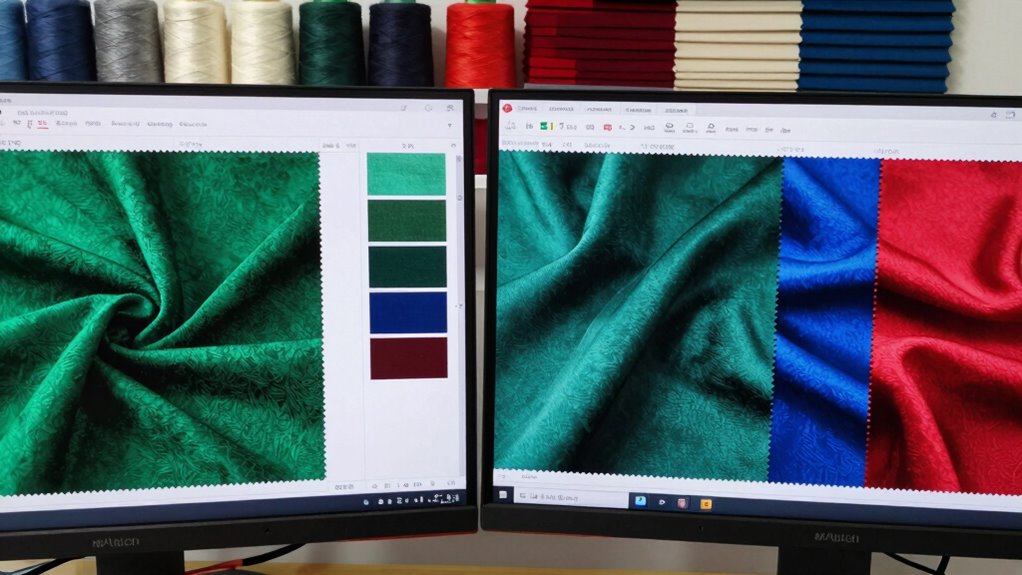
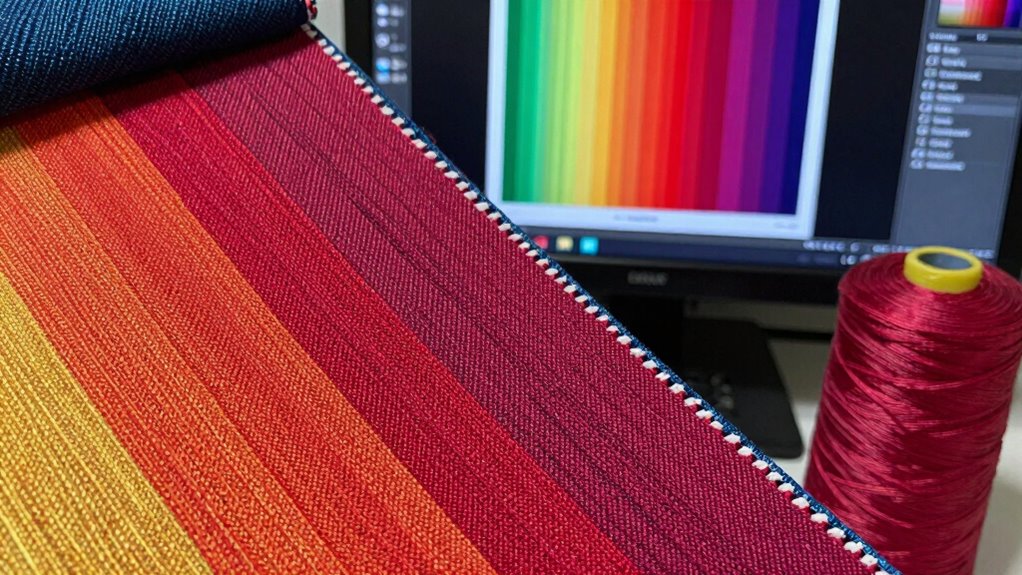
When working with fabric and thread, color accuracy is essential to guarantee your projects turn out just as you envision. Using a monitor with precise color representation ensures that what you see on the screen matches the actual colors of your materials. In your craft, even slight color discrepancies can lead to mismatched fabrics, unwanted shades, or unsatisfactory results. That’s why investing in a color-accurate monitor is vital for your workflow. These monitors leverage advanced display technology designed specifically to reproduce colors with high fidelity, providing a reliable visual reference for your projects. Whether you’re matching thread colors or selecting fabrics, accurate display technology minimizes guesswork and helps you make confident choices.
Accurate color display ensures your fabric and thread choices match perfectly every time.
To achieve and maintain such precision, calibration techniques are indispensable. Regularly calibrating your monitor ensures consistent color accuracy over time, correcting any deviations caused by aging hardware or changes in ambient lighting. Calibration involves adjusting your display’s settings—such as brightness, contrast, and color balance—so they align with industry standards. Many professional monitors come with built-in calibration tools or support external calibration devices, making this process straightforward and accessible. When you calibrate your monitor properly, you ensure that the colors you see are true to life, which is indispensable in fabric and thread work where subtle differences can make a big difference. Incorporating monitor calibration into your routine guarantees ongoing color fidelity and consistency. Maintaining awareness of color consistency practices further enhances your confidence in color matching. Additionally, understanding the impact of ambient lighting can help you optimize your workspace for more accurate color perception.
color-accurate monitor for fabric work
As an affiliate, we earn on qualifying purchases.
As an affiliate, we earn on qualifying purchases.
Frequently Asked Questions
How Do I Calibrate My Monitor for Accurate Color Display?
To calibrate your monitor for accurate color display, start by accessing your monitor’s settings menu. Use built-in calibration tools or third-party software for precise color calibration. Adjust the monitor settings, such as brightness, contrast, and color temperature, until the colors appear natural and consistent. Regularly recalibrate to maintain accuracy, especially when working on fabric and thread projects, ensuring your colors stay true to life.
What Is the Ideal Monitor Resolution for Fabric Work?
The ideal monitor resolution for fabric work is at least 1920×1080 pixels, but higher resolutions like 2560×1440 or 4K provide better detail for color accuracy. This helps maintain color consistency and allows you to see subtle fabric and thread nuances. Remember, proper display calibration enhances this even further, ensuring your monitor accurately reflects colors, so your fabric and thread work remains true to life.
Do Color-Accurate Monitors Affect Workflow Speed?
Yes, color-accurate monitors can affect your workflow speed. When your monitor provides consistent color perception and color consistency, you spend less time adjusting or reworking fabric and thread details. Accurate colors help you make precise decisions quickly, reducing errors and saving time. Over time, this efficiency boosts your productivity, allowing you to focus more on creative aspects rather than correcting color mismatches or guessing what’s true to life.
Are There Budget-Friendly Options for Professional Fabric Color Work?
Yes, there are affordable options for professional fabric color work that still prioritize color accuracy. You can find budget-friendly monitors with decent color calibration features, like the ASUS ProArt series or Dell UltraSharp models, which deliver reliable color accuracy without breaking the bank. Investing in these monitors helps guarantee your fabric and thread work looks true to life, improving your overall results and client satisfaction without overspending.
How Often Should I Recalibrate My Monitor for Consistent Accuracy?
You should recalibrate your monitor at least once a month to maintain consistent color accuracy. Regular color calibration helps guarantee your monitor stays true to color, which is essential for fabric and thread work. It also extends monitor longevity by preventing color drift and screen issues. If you notice color inconsistencies or after significant hardware changes, recalibrate sooner. Consistent calibration keeps your work precise and reliable over time.
Conclusion
In the world of fabric and thread work, a color-accurate monitor is your trusty compass, guiding you through a sea of vibrant hues with precision. It guarantees your creations match your vision, like a lighthouse illuminating the true shades of your design. Without it, you’re sailing blindly, risking mismatched colors and lost details. Investing in the right monitor keeps your creative ship on course, turning every stitch and hue into a masterpiece worth proud of.