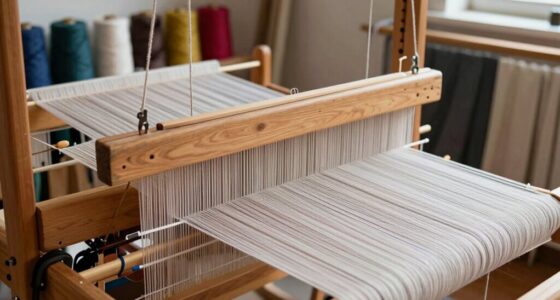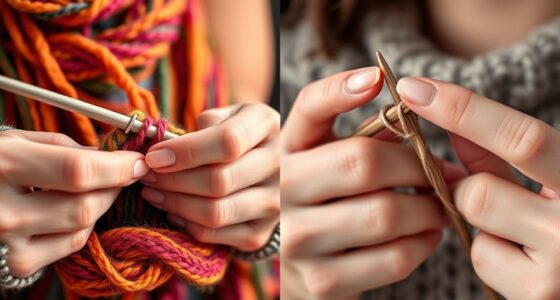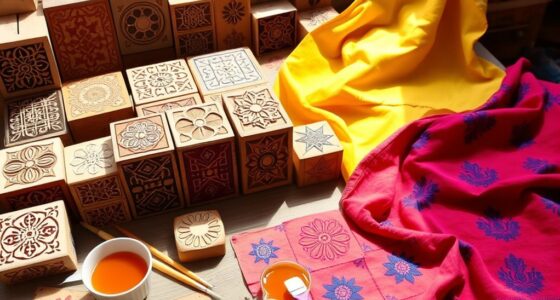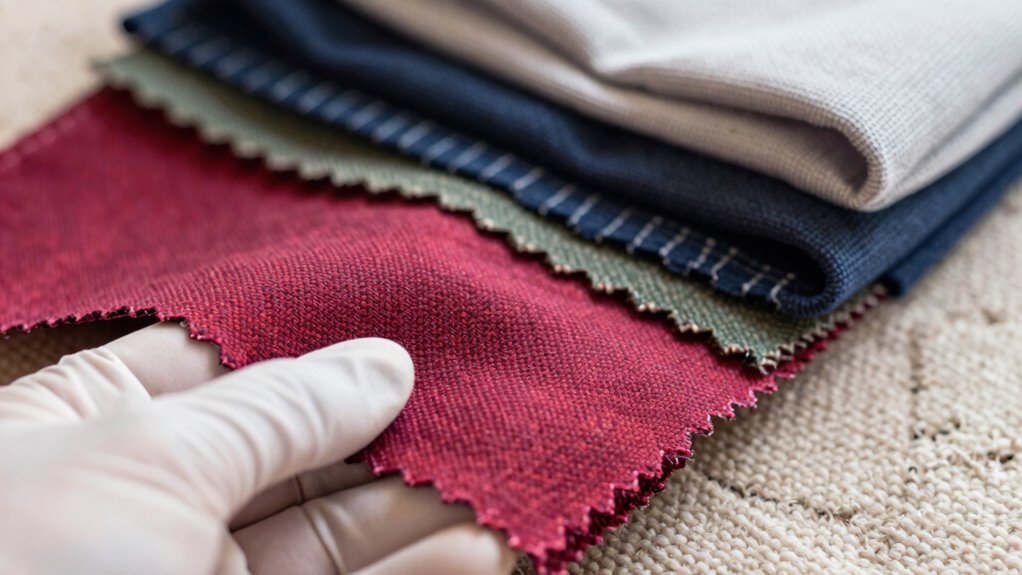

Swatching matters more in garments because their fit, appearance, and color need to stay consistent after washing. Small gauge differences and uneven dye absorption can cause sizing issues and patchy colors, which are more noticeable on clothing worn close to your skin. In contrast, blankets are larger, and minor variations often go unnoticed. If you want to guarantee your garment looks and fits perfectly after every wash, keep exploring how swatching can make a difference.

Get business pricing on tools and workshop supplies
- Business-only prices and quantity discounts
- Tax-exempt purchasing
- Multiple users, one account, clear invoices
Key Takeaways
- Garments require precise fit and appearance, making swatching essential to predict fabric behavior and prevent sizing issues.
- Fabric shrinkage affects garment fit and durability more noticeably than in blankets, necessitating swatching to anticipate changes.
- Uneven dye absorption can cause patchiness in garments, while larger blankets hide minor color inconsistencies, reducing the need for extensive testing.
- Small gauge differences in garments significantly impact fit, making swatching critical to ensure proper sizing and construction.
- Swatching helps identify fabric and dye responses, reducing costly mistakes and ensuring garments meet design expectations.
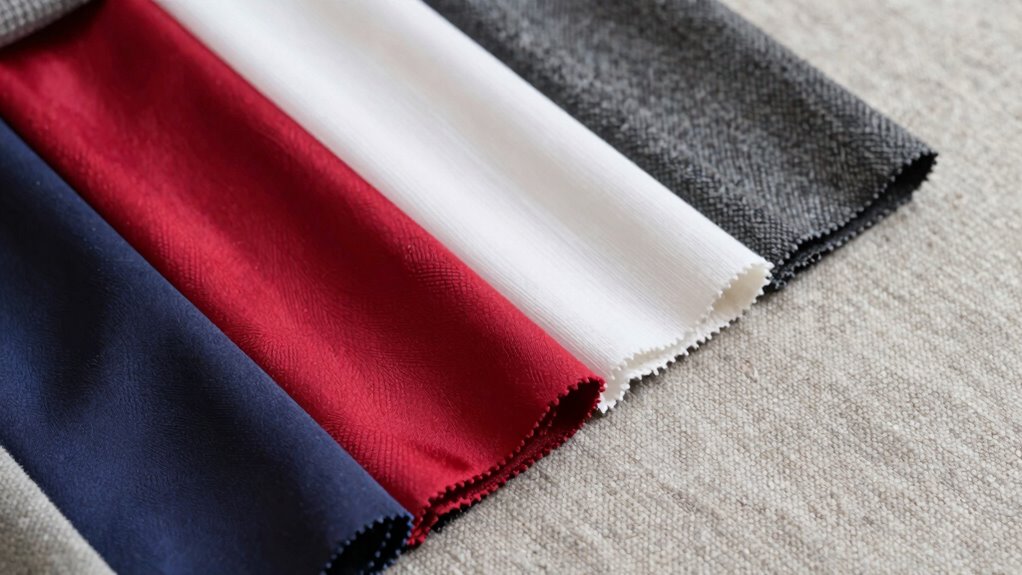
Have you ever wondered why swatching varies so much between garments and blankets? The answer lies in how each item responds to factors like fabric shrinkage and dye consistency. When you’re knitting or crocheting garments, you need to be precise because even a small difference in gauge can alter the fit dramatically. Swatching helps you predict how the fabric will behave once worn, especially since fabrics tend to shrink unevenly during washing. If you skip this step, you risk ending up with a sweater that’s too tight or too loose after its first wash. With blankets, however, the stakes are a bit different. They’re usually larger, and their fit isn’t as vital, so small variations caused by fabric shrinkage are less noticeable. Still, understanding how the yarn responds to washing helps guarantee the finished product looks as intended. Additionally, knowing how fabric behavior changes with washing can help prevent surprises after the project is finished. Properly assessing the fiber properties of your yarn during swatching can further improve your project outcomes by revealing how different fibers react to washing and handling. Recognizing the fiber-reactive nature of certain yarns can help you select the best options for your project’s longevity. Awareness of fiber shrinkage can also guide your choice of yarn to avoid unexpected size changes. Dye consistency plays a pivotal role in swatching, particularly in garments. When you’re creating clothing, you want the color to be uniform across the entire piece. Swatching helps you see how the dye settles into the yarn, revealing any variations or unevenness. If the dye isn’t consistent, the final garment can appear patchy or uneven, which can be especially disappointing after spending so much time on it. For blankets, dye consistency remains important, but slight differences often go unnoticed because larger areas can hide subtle imperfections. Still, if you want a seamless look, swatching allows you to see how the dye reacts in smaller samples before committing to the whole project. Garments demand a higher level of precision because they are worn against the skin and subjected to frequent washing. The fabric’s response to washing—shrinkage, dye fade, or distortion—can drastically affect the overall appearance and comfort. Swatching acts as a test run; it helps you adjust your gauge, choose the right yarn, and anticipate how your project will turn out. Blankets, on the other hand, are more forgiving. While you still want to test for shrinkage and dye consistency, the impact of small differences isn’t as severe. That said, doing a swatch for a blanket still ensures that you’re happy with the yarn’s behavior and color before you start a large, time-consuming project. Furthermore, understanding dye absorption can assist in predicting how colors will develop over time, ensuring your finished project maintains its intended appearance.
fabric swatch samples for garments
As an affiliate, we earn on qualifying purchases.
As an affiliate, we earn on qualifying purchases.
Frequently Asked Questions
How Does Fabric Stretch Affect Swatch Accuracy in Garments?
Fabric stretch can substantially impact swatch accuracy in garments. When fabric has high elasticity, it may stretch beyond its original size during testing, affecting measurements. You need to take into account stretch recovery, which is how well the fabric returns to its original shape after stretching. If the fabric doesn’t recover properly, the swatch won’t accurately reflect the final garment’s fit, leading to sizing issues and fit inconsistencies.
Can Swatching Prevent Color Bleeding in Clothing Production?
Cutting to the chase, swatching can indeed prevent color bleeding in clothing production. You should perform colorfastness testing and dye penetration analysis on swatches before full-scale production. This way, you catch potential issues early, saving you from headaches later. Remember, a stitch in time saves nine; thorough swatching guarantees dyes stay put, maintaining fabric integrity and customer satisfaction. It’s your best bet to dodge costly mistakes down the line.
What Are the Risks of Skipping Swatching in Garment Manufacturing?
Skipping swatching in garment manufacturing risks compromising fabric durability and dye compatibility. Without it, you might face unexpected color bleeding or fading, which damages your product’s quality and appearance. You could also end up with fabrics that aren’t durable enough for wear and washing, leading to returns or reputational damage. Overall, neglecting swatches increases the chance of costly mistakes that could have been easily prevented with proper testing.
How Do Different Garment Styles Influence Swatch Selection?
Different garment styles influence swatch selection because each style demands specific fiber properties for ideal garment durability. For example, a fitted dress requires stretch and resilience, so you choose swatches with elastic fibers. Conversely, a cozy sweater benefits from soft, insulating fibers. By matching fiber properties to garment design, you guarantee the fabric’s performance aligns with the intended style, reducing risks of wear and tear, and ensuring the garment’s longevity.
Is Swatching Necessary for All Types of Clothing Fabrics?
You should swatch all clothing fabrics because it’s worth its weight in gold. Swatching helps you assess fabric durability and how it reacts to seasonal variations, preventing surprises later. While some fabrics like denim or wool may require extra attention, even delicate or stretchy materials benefit from testing first. Skipping this step can lead to mismatched expectations, costly mistakes, and garments that don’t hold up, so don’t cut corners on swatching.
Conclusion
When you swatch for garments, you’re not just testing yarns—you’re ensuring your fit, drape, and comfort are just right. It’s a step that reveals the truth about how your project will turn out, saving you time and frustration later. While blankets can be forgiving, garments demand precision. Remember, a small swatch isn’t just a test; it’s your secret weapon for creating something truly perfect. Trust the process, and your efforts will shine through.
Halloween Picks
halloween
As an affiliate, we earn on qualifying purchases.