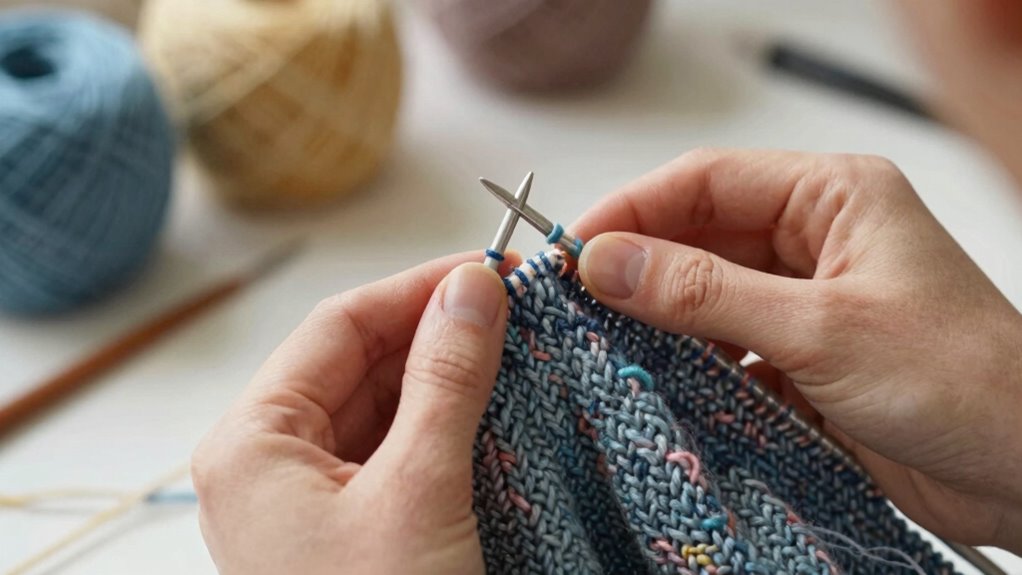

To fix uneven tension during long knitting sessions, focus on using high-quality, uniform yarn that slides smoothly through your fingers. Choose the right needle size and material to match your yarn, and keep your posture relaxed to maintain consistent hand movements. Develop a steady rhythm and regularly check your yarn and needles for irregularities. Paying attention to these details helps improve tension control, and you’ll discover more tips to keep your knitting even and professional-looking.
Key Takeaways
- Check and adjust your yarn tension regularly to prevent tight or loose stitches during long sessions.
- Use appropriately sized, smooth needles that match your yarn weight for consistent stitch control.
- Maintain proper knitting posture and hand positioning to support steady tension.
- Opt for high-quality, uniform fibers to reduce fiber inconsistencies affecting tension.
- Take frequent breaks to relax your hands and re-establish even tension.
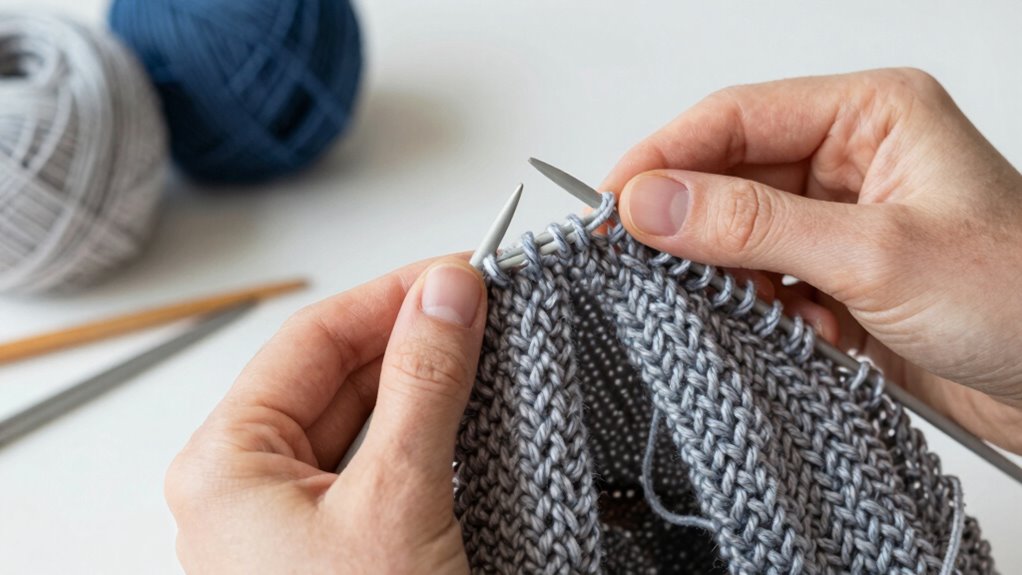
Long knitting sessions can sometimes lead to uneven tension, making your project look inconsistent and harder to work with. One of the main factors influencing tension is the yarn quality. If your yarn is poorly spun, prone to splitting, or has inconsistent thickness, it’s going to be a challenge to maintain steady tension. You might notice that some stitches are tighter, while others are looser, which can throw off the overall look of your piece. To prevent this, always choose high-quality yarn from reputable brands. Look for smooth, uniform fibers, and avoid yarns that feel rough or have thick-and-thin sections. When you use good-quality yarn, you’ll find it easier to keep your tension even because the fibers slide smoothly through your fingers and across your needles. Additionally, the fiber consistency of the yarn plays a crucial role in maintaining even tension throughout your project. Equally important is your needles selection. The size, material, and shape of your needles can considerably impact your tension. If your needles are too small or too large for your yarn, you might find yourself struggling to hold stitches consistently. For example, using needles that are too stiff or too flexible can cause uneven tension because they don’t support your natural knitting rhythm. Choose needles that feel comfortable in your hand and fit the yarn weight. Metal needles tend to glide more smoothly, helping you keep even tension, while wooden or bamboo needles offer a bit more grip, which can be helpful if you tend to have loose tension. Also, consider the needle tip shape; sharper tips allow for precise stitch work, reducing the chance of accidentally dropping stitches or creating loose loops. When you start a long knitting session, it’s wise to check your yarn and needles first. Make sure the yarn is free of tangles, splits, or irregularities, and that your needles are clean and free from burrs. Maintaining consistent tension is essential to avoid uneven results, so developing a mindful knitting rhythm can greatly improve your project’s appearance. Developing a proper knitting posture and hand positioning can also help sustain steady tension throughout long sessions. Paying attention to yarn quality and needle selection over time will help you develop a steadier knitting rhythm, making your projects look more professional and polished. Being aware of knitting techniques and practicing steadily can also significantly reduce tension issues during long sessions.

Superwash Merino Wool Yarn for Knitting & Crocheting – Premium Hand Dyed Yarns, 100gr, 240 Yards Dk Weight – Luxurious, Soft & Durable Blue Variegated Yarn
- Hand-Dyed Artistry: Vibrant, consistent, and visually stunning hues
- Premium Merino Wool: Soft, warm, and skin-friendly for comfort
- DK Weight Versatility: Ideal for various projects with excellent stitch definition
As an affiliate, we earn on qualifying purchases.
As an affiliate, we earn on qualifying purchases.
Frequently Asked Questions
Can Switching Yarn Types Cause Tension Issues?
Switching yarn types can definitely cause tension issues, especially if the new yarn has a different ply or texture variation. You might notice your stitches becoming tighter or looser because each yarn type behaves differently in your hands. To prevent this, match yarns as closely as possible in ply and texture, and adjust your tension gradually when changing yarns. This helps maintain an even, consistent tension throughout your project.
How Does Hand Fatigue Affect Tension Control?
Think of your hands as a delicate puppet master controlling tension. When hand fatigue sets in, your grip weakens or tightens unexpectedly, causing uneven tension. To keep the puppet steady, practice fatigue management—take regular breaks, stretch your hands, and adjust your hand grip to stay relaxed. This way, you maintain consistent tension, preventing your knitting from becoming a tangled web of uneven stitches.
Is Tension Inconsistent Only With Certain Knitting Styles?
Tension inconsistency can happen with various knitting styles, especially when you try stitch variations that require different stitch sizes or techniques. These differences can challenge your tension consistency, leading to uneven results. To keep tension even, focus on maintaining a steady grip and consistent movement across all styles. Practicing uniform tension while switching stitches helps you achieve smoother, more professional-looking projects, regardless of the knitting style you choose.
Can Knitting Needles Impact Tension Stability?
Yes, knitting needles can impact tension stability. When you use needles with good ergonomics, they help you maintain gauge consistency because they fit comfortably in your hands, reducing fatigue and uneven tension. Conversely, poorly designed needles can cause you to grip too tightly or unevenly, leading to inconsistent tension. Choosing the right needles that suit your grip and project can markedly improve your overall tension control during long knitting sessions.
How Often Should I Check and Adjust Tension During Knitting?
Think of your tension as a delicate dance; you should check every few inches to keep the rhythm steady. Adjustments depend on your yarn ply and knitting position, which influence tension consistency. If you notice a slip or tightness, pause and fine-tune. Regular checks prevent uneven stitches from sneaking in, ensuring your project remains smooth and even. Staying attentive keeps your knitting flowing like a well-rehearsed performance.
Conclusion
To keep your knitting enjoyable and consistent, it’s worth exploring the idea that maintaining proper tension is largely about mindfulness and practice. While some believe tension issues stem from faulty technique, many find that simply taking regular breaks and consciously relaxing their grip makes a big difference. Trust your instincts, experiment with different methods, and remember that patience helps your skills improve over time. With persistence, uneven tension becomes a thing of the past, letting you enjoy every stitch.