
To keep finished sweaters, coats, and woolens looking their best, choose the right lint removal tools. Light fabrics benefit from quick-acting lint rollers, while textured woolens respond well to lint combs or sweater shavers. For delicate fibers, gentle brushes or fabric shavers with replaceable blades work best. Proper technique and tool care are key to preventing damage and prolonging the life of your garments. Continue exploring to discover expert tips for ideal lint removal and care.

Get business pricing on tools and workshop supplies
- Business-only prices and quantity discounts
- Tax-exempt purchasing
- Multiple users, one account, clear invoices
Key Takeaways
- Use fabric shavers or sweater shavers for effective removal of lint and pilling on woolen garments.
- Choose lint brushes for gentle cleaning of finished sweaters and coats to prevent fabric damage.
- Peel away sheets are quick solutions for light lint on delicate woolen fabrics.
- Regularly clean and replace blades on fabric shavers to maintain optimal lint removal performance.
- Proper technique and tool selection preserve fabric integrity and extend garment lifespan.
Lint can quickly accumulate on your clothes, making them look worn and untidy. When you’re dealing with finished sweaters, coats, and woolens, keeping them looking fresh requires more than just tossing them in the wash. Proper fabric care involves using the right lint removal tools, which help maintain their appearance and prolong their lifespan. Choosing the appropriate tool isn’t just about removing lint; it’s also about guaranteeing your garments stay in good condition through proper tool maintenance.
Proper lint removal and tool care keep your woolens looking fresh and lasting longer.
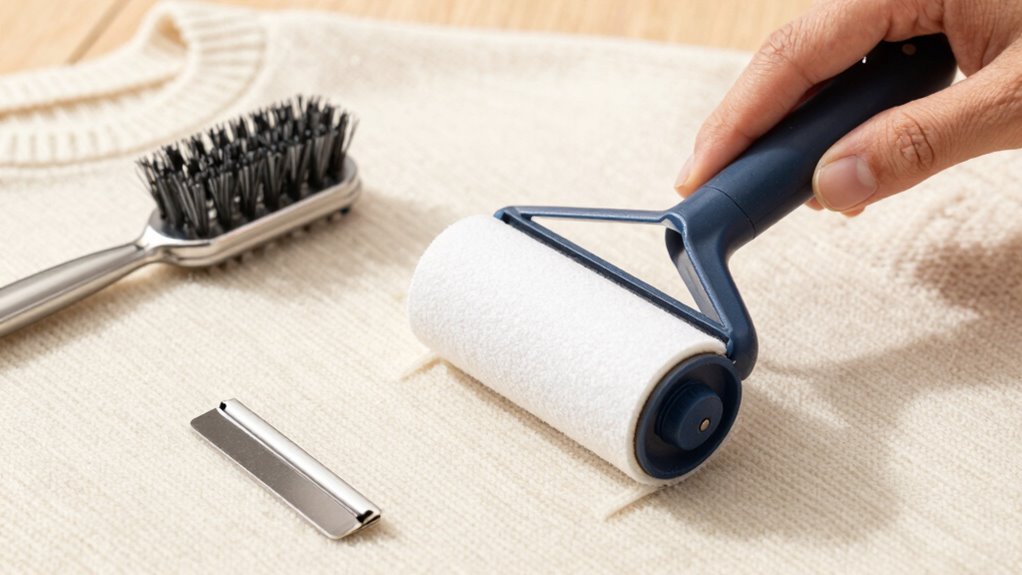
You’ll find that lint rollers are among the easiest and most convenient options. They work well for quick touch-ups, especially on lighter fabrics. Simply peel away the sheet after use to discard the collected lint. However, for more stubborn or embedded lint, a high-quality lint brush or a fabric shaver may be more effective. These tools are designed to gently lift lint without damaging the fabric, helping you preserve the integrity of your woolens and sweaters. Keep in mind that regular tool maintenance is essential—clean your lint brushes and replace blades on fabric shavers when they become dull. This guarantees they work efficiently and don’t cause unnecessary wear on your garments.
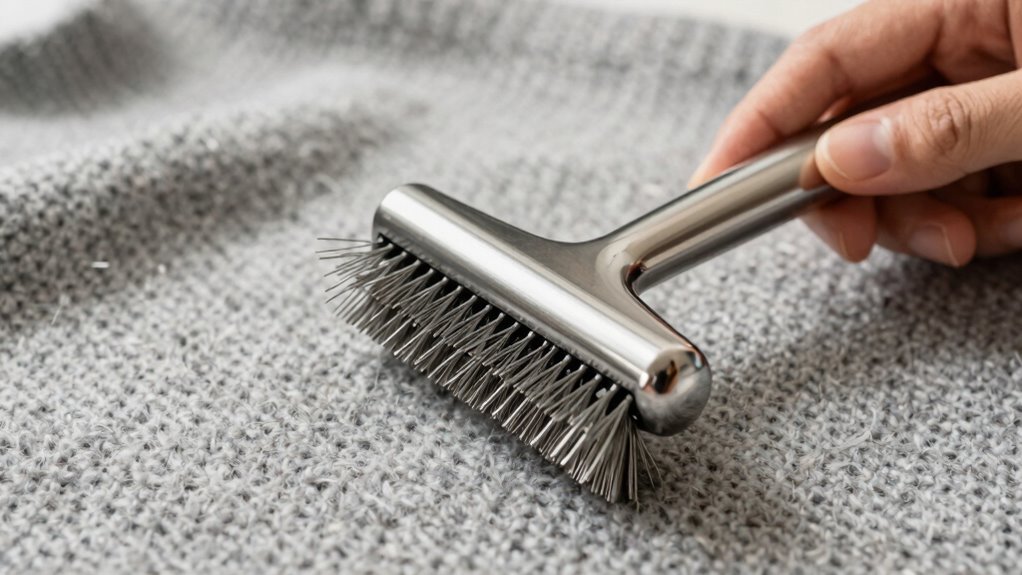
For thicker coats and heavily textured woolens, a lint comb or a specialized sweater shaver can be invaluable. These tools are crafted to handle dense fabrics and remove lint thoroughly without harming the fibers. When using any lint removal device, pay attention to proper technique: gentle strokes and even pressure help prevent pilling and fabric damage. Additionally, understanding the importance of fabric types can aid in selecting the most suitable tools, ensuring that delicate fibers are protected. Proper tool maintenance and storage are also crucial for keeping your lint removal tools in optimal condition, preventing damage to your garments. Regularly inspecting your tools for signs of wear and cleaning them after each use can significantly extend their lifespan.
Understanding your fabric’s specific needs is also crucial for effective lint removal. Choosing the right tool based on fabric type ensures that you do not damage delicate fibers or leave lint behind. By investing in quality tools and caring for them properly, you guarantee they remain effective for years to come. Remember, the goal isn’t just to remove lint but to do so in a way that respects your clothing’s fabric integrity. With consistent tool maintenance and proper technique, your finished sweaters, coats, and woolens will stay cozy, attractive, and well cared for, making every wear feel like new.
Popular right now

Breville Barista Pro Espresso Machine with Grinder, Brushed Stainless Steel

Breville Bambino Espresso Machine, Brushed Stainless Steel

Ninja CREAMi 7-in-1 Ice Cream Maker, NC301
As an affiliate, we earn on qualifying purchases.
Frequently Asked Questions
How Often Should I Clean My Lint Removal Tool?
You should clean your lint removal tool after every few uses to maintain its effectiveness and guarantee lint tool longevity. Following cleaning frequency guidelines helps prevent buildup that can reduce performance. Regular cleaning, such as after each use or weekly, keeps the tool working smoothly and extends its lifespan. Keep an eye on the tool’s condition, and clean it promptly to enjoy consistently clean and lint-free garments.
Can Lint Removal Tools Damage Delicate Fabrics?
Imagine gently petting a delicate fabric, like a butterfly landing softly on your hand. A lint removal tool, if used carefully, won’t damage fabric delicate items. However, if you press too hard or use a tool with poor durability, it could scratch or pull fibers. To protect your clothes, choose a gentle, well-made tool, and always use light, even strokes. This preserves both your fabric and the tool’s lifespan.
Are Electric Lint Removers Better Than Manual Ones?
Electric lint removers are generally more efficient and faster than manual ones, making them ideal for larger or heavily linted garments. However, safety considerations matter; electric devices can sometimes damage delicate fabrics if not used carefully. Manual lint removers offer more control, reducing the risk of damage. If you prioritize speed and convenience, electric tools work well, but for delicate fabrics, manual options might be safer and gentler.
How Do I Store Lint Removal Tools Properly?
You should store lint removal tools in a cool, dry place to prevent rust or damage. Use a dedicated storage option like a drawer, small box, or hanging pouch to keep them organized and protected. Proper storage extends the tool’s longevity, ensuring it stays effective over time. Avoid humid areas or stacking heavy objects on top, which could deform or break the tool, decreasing its lifespan.
Can Lint Removal Tools Remove Pet Hair Effectively?
Yes, lint removal tools can effectively remove pet hair from your clothes and furniture. They work well for pet hair removal because they gently lift hair without damaging fabric, ensuring fabric safety. Use a lint roller or a brush with sticky or rubber surfaces to pick up pet hair easily. Regularly cleaning your tools will keep them effective, making pet hair removal quick and safe for your fabrics.
Conclusion
Think of lint removal tools as your trusted brush, gently clearing away the dust and worries from your cherished garments. They symbolize renewal, giving your sweaters and coats a fresh start, just like dawn dispels the night. With each swipe, you’re not just cleaning fabric—you’re reviving memories and moments woven into every fiber. Embrace these tools as your allies in preserving the beauty and longevity of your wardrobe, keeping your wardrobe’s story shining bright.