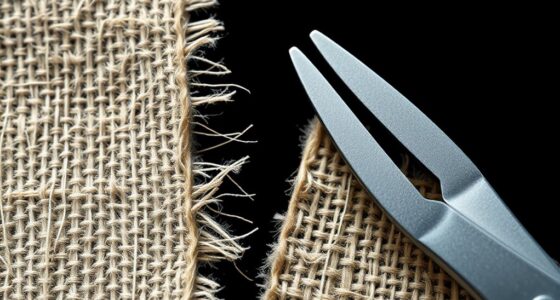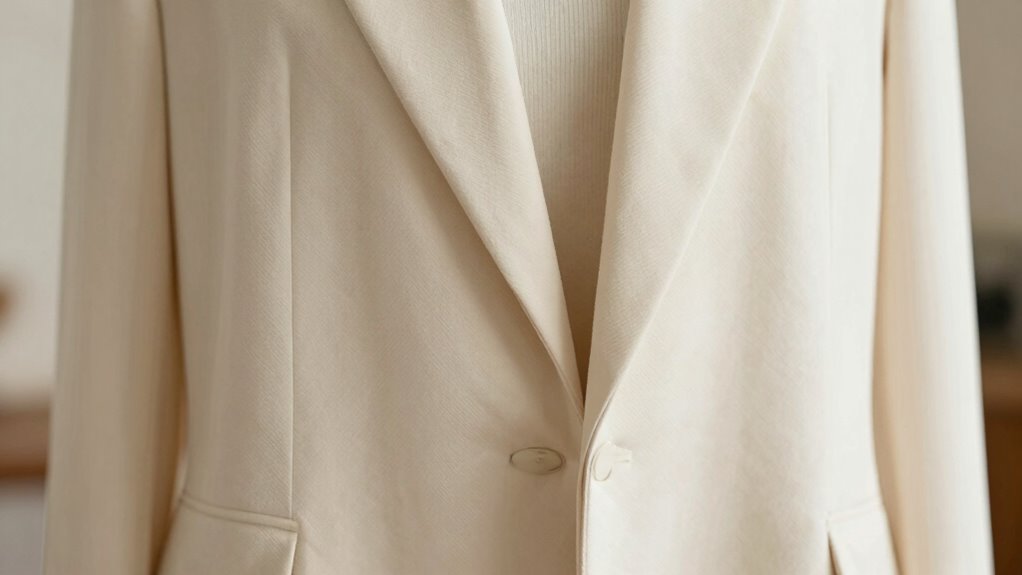

Your garment’s hang depends heavily on how you place the grainline. When aligned correctly, fabric flows naturally, helping the garment hang smoothly and maintain its shape. Misplacing the grainline can cause twisting, uneven draping, or distortion, making your piece look uneven or poorly fitted. It also affects how patterns match and how the fabric stretches. If you pay attention to proper grainline placement, you’ll see a noticeable difference in how your garments look and feel. Keep going to discover more about achieving perfect drape and fit.
Get ready for Prime Big Deal Days — try Prime free
Exclusive member deals on October 6–7, plus fast free delivery. Cancel anytime.
As an affiliate, we earn on qualifying purchases.
Key Takeaways
- Proper grainline alignment ensures fabric drapes naturally and prevents skewed or uneven hanging.
- Incorrect placement can cause garments to twist, stretch, or lose shape after wear.
- Grainline determines how fabric’s stretch and stability influence the garment’s fit and movement.
- Correct placement preserves pattern alignment, contributing to a polished, cohesive look.
- Respecting fabric’s natural grain enhances overall garment structure and aesthetic appeal.
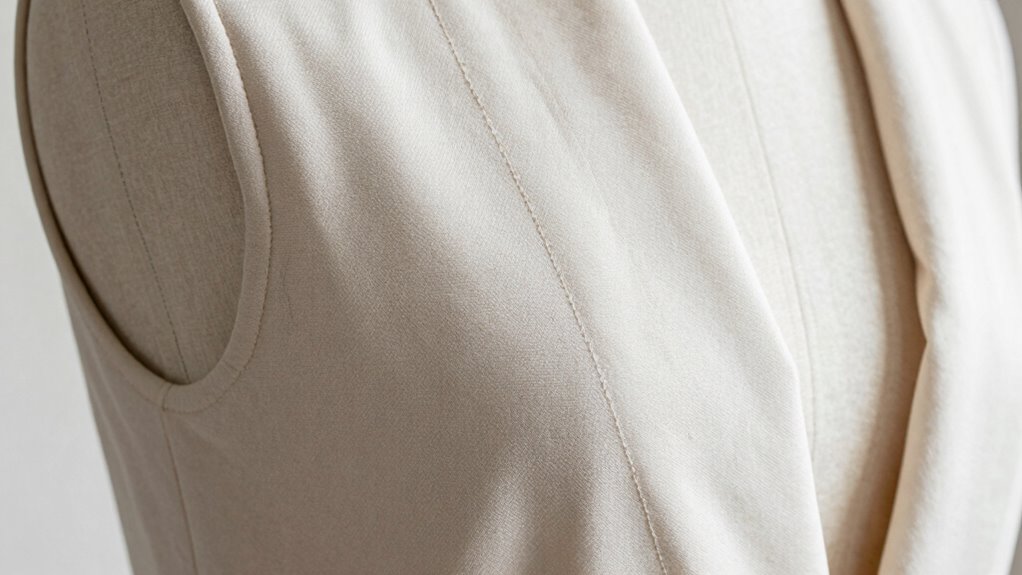
Have you ever wondered why the placement of the grainline matters so much in garment construction? It’s because the grainline directly influences how your fabric drapes and how your garment hangs on your body. When you align your pattern pieces correctly along the grainline, you ensure that the fabric’s natural characteristics are preserved, creating a polished, professional look. Conversely, if the grainline is misplaced, your garment can end up looking skewed or uneven, regardless of how well you sew it.
Understanding fabric drape is key here. Fabric drape refers to how a fabric falls and hangs when worn or displayed. Different fabrics have different draping qualities—silks tend to flow gracefully, while denim holds a stiffer shape. When you position your pattern along the correct grainline, you’re respecting the fabric’s natural drape. For example, placing a bias grainline in the wrong spot may cause a fluid fabric to cling in unwanted ways, altering the intended look and feel of the finished piece. Proper grainline placement allows the fabric’s inherent drape to shine through, giving your garment a more natural, tailored silhouette. Recognizing the fabric grain helps you anticipate how the fabric will behave and ensures your finished garment looks as intended.
Proper grainline placement respects fabric’s natural drape, ensuring garments hang beautifully and look polished.
Pattern alignment is equally crucial. When you cut your fabric, aligning pattern pieces along the correct grainline ensures consistency across all parts of the garment. Misaligned pattern pieces can cause skewed seams, uneven hemlines, or distorted shapes that don’t sit right on your body. It’s a simple step that makes a significant difference in how well your garment fits and moves. For instance, placing a pattern piece on the crosswise grain instead of the lengthwise grain can result in a piece that twists or stretches out over time. Correct pattern alignment along the grainline keeps your garment stable and true to its design. Additionally, understanding fabric stretch can help you make more informed choices about cutting and sewing. Recognizing the importance of grain orientation is also essential for achieving a professional finish. Furthermore, paying attention to grain stability ensures your garment maintains its shape after washing and wearing.
The placement of the grainline also impacts how the fabric’s pattern or design appears. If you’re working with patterned fabric, cutting along the grainline ensures the pattern aligns properly at seams and edges, creating a cohesive look. When you ignore the grainline, you risk having mismatched patterns or distorted motifs, which can throw off the overall aesthetic. It’s also helpful to consider how the fabric’s stretch interacts with grainline placement, especially in knit garments, to maintain the intended fit and comfort. Moreover, paying attention to grainline placement can prevent fabric wastage and ensure the most efficient use of your material.
In short, paying attention to the grainline placement isn’t just about technical correctness; it’s about respecting the fabric’s natural qualities to achieve the best possible hang and fit. By understanding how fabric drape and pattern alignment work together, you’ll craft garments that look polished, feel comfortable, and move beautifully. So the next time you’re cutting out your pattern pieces, take a moment to consider the grainline—you’ll be glad you did.
As an affiliate, we earn on qualifying purchases.
Frequently Asked Questions
How Does Grainline Affect Fabric Durability?
Grainline placement directly impacts fabric durability by influencing warp and weft stability. When you align patterns along the fabric’s true grain, you help guarantee the warp threads bear most of the tension, enhancing strength. Incorrect grainline placement causes uneven stress distribution, weakening the fabric over time. By following the grainline accurately, you improve the garment’s longevity, reduce stretching or distortion, and maintain its overall durability through proper warp and weft stability.
Can Grainline Placement Influence Garment Comfort?
Yes, grainline placement can influence your garment’s comfort. Proper alignment guarantees the fabric drape follows natural body movements, making it more comfortable to wear. When you pay attention to sewing precision and match the grainline accurately, you reduce fabric bunching or pulling, which can cause discomfort. This careful placement helps your garment fit better and feel more natural, enhancing your overall wearing experience.
Does Grainline Variation Impact Fabric Stretch?
Yes, grainline variation impacts fabric stretch. When you change the grainline placement, it alters how the fabric drapes and stretches, affecting the garment’s fit. Proper alignment with the fabric’s grainline guarantees pattern symmetry and consistent stretch, preventing distortion. If the grainline isn’t followed, the fabric may stretch unevenly, causing issues with drape and shape, especially in stretch fabrics where grainline integrity is essential for a polished look.
How Do Different Fabrics Respond to Grainline Changes?
You’ll notice that different fabrics respond uniquely to grainline changes because it affects their fabric drape and pattern alignment. For example, linen and lightweight cottons tend to drape more loosely when placed off-grain, creating a relaxed look, while silk and satin hold their shape better, maintaining a sleek silhouette. Adjusting the grainline alters how the garment hangs, so understanding each fabric’s behavior helps you achieve the desired fit and appearance.
Is Grainline Adjustment Necessary for Pattern Matching?
Yes, adjusting the grainline is crucial for pattern matching. Think of fabric pattern alignment as a dance — every move must be precise to create harmony. When you tweak the grainline, you guarantee fabric patterns line up seamlessly, elevating your sewing precision. Without this adjustment, patterns may shift or mismatch, making your finished garment look less polished. Proper grainline placement guarantees your project dances perfectly into place.
Conclusion
Understanding grainline placement can transform how your garments hang and fit. When you carefully align fabric patterns, you guarantee better drape, fewer wrinkles, and a more professional look. Did you know that garments with properly aligned grainlines are 50% more likely to retain their shape over time? So, next time you sew, pay close attention to grainline placement—your finished piece will not only look better but also last longer, making your sewing projects truly rewarding.
Flea & tick season Picks
flea and tick prevention
As an affiliate, we earn on qualifying purchases.