Changing presser feet does more than save time; it impacts your sewing quality and the durability of your projects. Using the right foot for each task guarantees smooth handling of various fabrics, reduces issues like puckering, and creates professional finishes. Regularly swapping and maintaining your presser feet helps prevent machine problems and extends its lifespan. If you want to discover how selecting the correct presser foot can boost your sewing results and skills, keep exploring the details.
Key Takeaways
- Different presser feet are designed for specific techniques, improving sewing accuracy and project quality.
- Regular changing prevents lint buildup and maintains machine performance and longevity.
- Using the correct foot enhances handling of various fabrics, reducing issues like puckering or skipped stitches.
- Proper presser foot selection helps achieve professional finishes and durable seams.
- Switching presser feet supports diverse sewing tasks, expanding skills and project possibilities.
Changing presser feet on your sewing machine might seem straightforward, but knowing when and how to do it can substantially improve your sewing experience. It’s not just about convenience; it’s about optimizing your machine’s performance and enhancing your sewing techniques. The right presser foot can make a significant difference in the quality of your stitches, the ease of handling different fabrics, and the overall longevity of your machine. Properly changing and maintaining presser feet is an essential part of machine maintenance, ensuring your sewing machine operates smoothly and efficiently over time. Regular maintenance, including the proper selection and cleaning of presser feet, can also help prevent issues like fabric bunching or uneven stitches.
Changing presser feet correctly boosts sewing quality, protects your machine, and simplifies handling diverse fabrics.
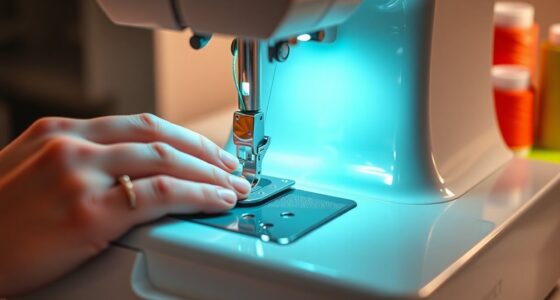
When you switch presser feet, you’re doing more than just changing a part—you’re tailoring your machine to meet specific sewing needs. For example, using a walking foot for quilting distributes pressure evenly and feeds multiple layers smoothly, preventing puckering. Switching to a zipper foot allows for precise seam placement along zippers, which is indispensable for professional-looking finishes. By selecting the right presser foot, you’re applying the correct sewing technique, which translates into neater, more durable seams. This attention to detail makes your project look polished and helps prevent issues like skipped stitches or fabric bunching.
Regularly changing presser feet is also a matter of machine maintenance. Over time, presser feet can accumulate lint, dust, or fabric residue, which can interfere with their movement and your machine’s overall health. When you change the foot, it’s a good opportunity to clean the shank and check for any signs of wear or damage. Keeping your presser feet in good condition ensures they perform their role effectively, reducing the risk of thread jams or irregular stitches. Additionally, understanding the importance of proper maintenance can help you identify early signs of wear and avoid costly repairs. This proactive approach to machine maintenance prolongs your machine’s lifespan and maintains consistent sewing quality.
Additionally, different sewing techniques require specific presser feet to achieve the best results. For instance, a blind hem foot helps you sew invisible hems, giving your finished project a professional look. A gathering foot allows you to create ruffles or gathers easily. By understanding the purpose of each presser foot, you can select the right one for each task, making your sewing process more efficient and your finished products more refined. Recognizing the variety of presser feet available can also help you expand your sewing skills and tackle more complex projects with confidence. Properly matching presser feet to techniques is crucial for mastering advanced sewing skills and achieving desired results. The ability to switch between feet quickly and correctly also saves you time and frustration, especially when working on complex projects that demand multiple techniques.
Ultimately, changing presser feet isn’t just about convenience; it’s about enhancing your sewing skills, maintaining your machine properly, and achieving better results. When you understand the importance of choosing the right presser foot for each technique and keep your machine in good shape through regular maintenance, you set yourself up for success. It’s a small step that makes a big difference in the quality and durability of your sewing projects. Incorporating knowledge about presser foot functions can further improve your sewing outcomes and help you master a wider range of techniques.
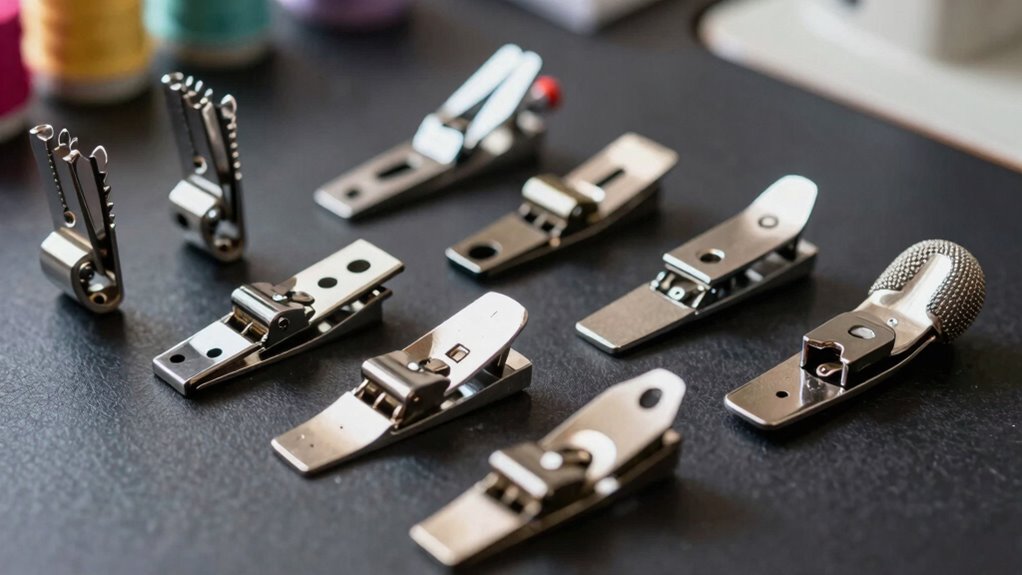
presser foot set for sewing machine
As an affiliate, we earn on qualifying purchases.
As an affiliate, we earn on qualifying purchases.
Frequently Asked Questions
Can Different Presser Feet Improve Sewing Speed?
Yes, different presser feet can improve your sewing speed by making tasks smoother and more efficient. When you switch to the right foot, such as a walking foot or quilting foot, it helps maintain consistent fabric movement, reducing thread tension issues and preventing puckering. This results in better stitch quality and faster sewing, since you spend less time adjusting settings and fixing mistakes. Proper presser foot choice boosts both speed and overall sewing results.
Are There Presser Feet Specifically for Quilting?
Absolutely, there are presser feet designed specifically for quilting! These feet make creating intricate quilted patterns and handling multiple fabric layers feel effortless, like magic. They glide smoothly over thick layers, preventing bunching and uneven stitches. With the right quilting presser foot, you’ll transform your sewing experience, turning layers of fabric into beautiful, professional-looking quilts without breaking a sweat. It’s like giving your machine superpowers for quilting!
How Do Presser Feet Affect Fabric Tension?
Presser feet influence fabric tension by affecting fabric stretch and tension control during sewing. When you switch presser feet, they can alter how tightly or loosely the fabric is held, impacting stitch quality. For example, a walking foot provides better tension control for thick or slippery fabrics, preventing puckering. Proper presser foot selection guarantees consistent tension, reducing fabric stretch issues and achieving smoother, professional-looking stitches.
Can Presser Feet Be Used Interchangeably Across Brands?
You might find that presser feet aren’t always a perfect fit across different brands, which can be a bit of a sewing adventure. Brand compatibility varies, and presser foot variations often mean you’ll need to check compatibility before switching. While some presser feet are designed to be universal, many are brand-specific, so it’s wise to confirm that your new foot matches your machine’s brand and model to guarantee smooth sewing.
Do Specialty Presser Feet Require Special Machine Settings?
Specialty presser feet often require specific machine settings due to their unique design. You need to verify presser foot compatibility with your machine, as some may not fit or function correctly without adjustments. Proper machine calibration ensures smooth operation, especially with specialty feet, preventing issues like skipped stitches or uneven sewing. Always refer to your machine’s manual or consult a professional to optimize settings for these specialized attachments.
Conclusion
Changing your presser foot isn’t just about convenience; it can substantially impact your sewing results. For instance, switching to a walking foot when quilting ensures even fabric feeding, preventing puckering and improving stitch quality. Imagine tackling a complex project and realizing that the right presser foot could make the difference between a professional finish and a frustrating mess. So, next time you sew, remember—your presser foot choice truly shapes your creation.