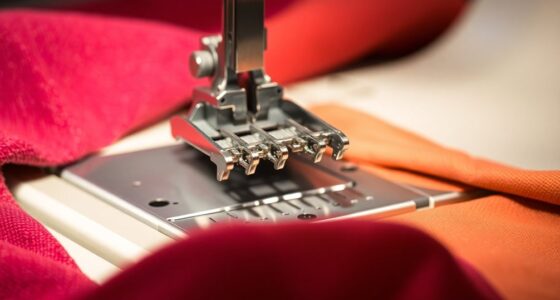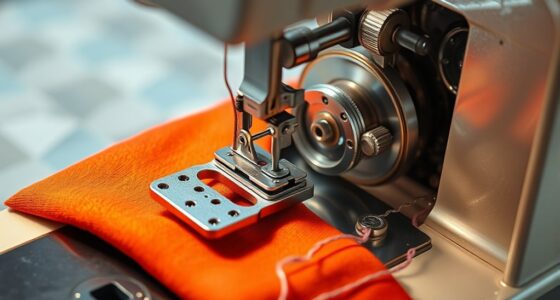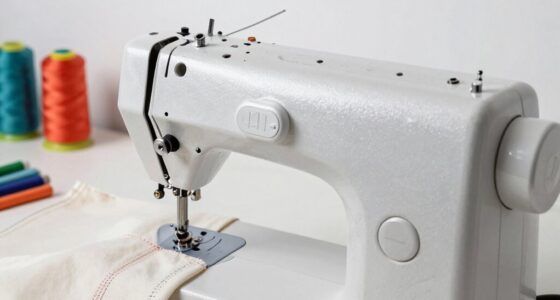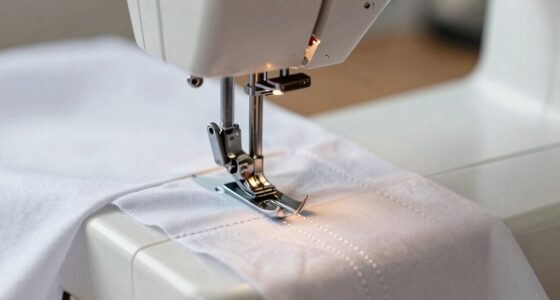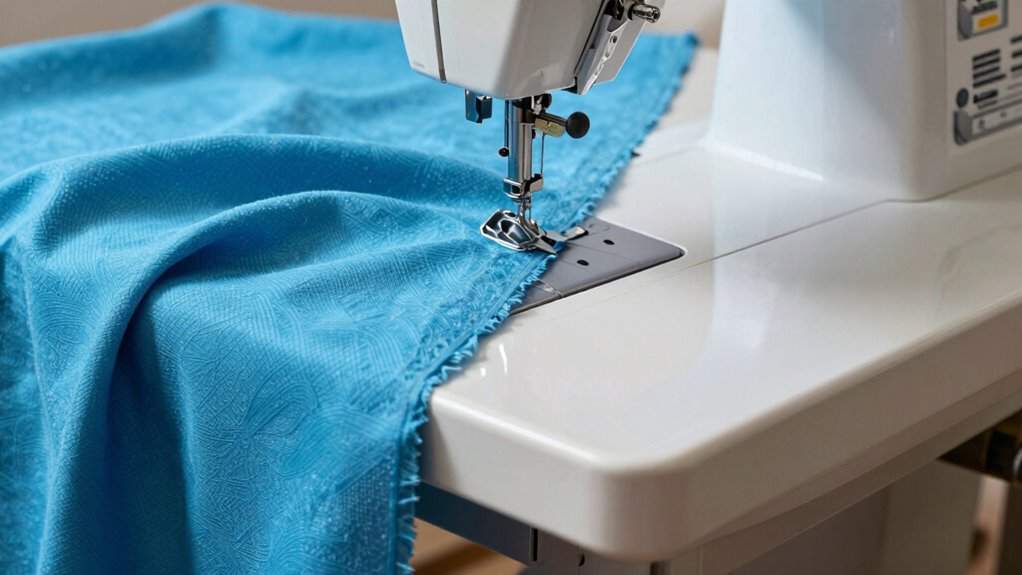

To use an extension table for better fabric support, first attach it securely to your sewing machine. Place your fabric on the table and guarantee it’s flat and smooth. Use the extra surface to support large projects or multiple layers, reducing puckering and shifting. Keep your fabric steady as you sew to achieve even stitches and professional results. If you want to discover more tips on maximizing your extension table’s benefits, keep exploring the next steps.

Get business pricing on tools and workshop supplies
- Business-only prices and quantity discounts
- Tax-exempt purchasing
- Multiple users, one account, clear invoices
Key Takeaways
- Attach the extension table securely to your sewing machine, ensuring it is level with the main surface.
- Place large fabric pieces on the extension table to provide extra support and stability.
- Use the extended surface to feed fabric smoothly, reducing puckering and shifting during sewing.
- Adjust your sewing machine’s tension if necessary to accommodate the larger fabric area.
- Support free-motion quilting or complex projects by maintaining consistent fabric contact with the extension table.
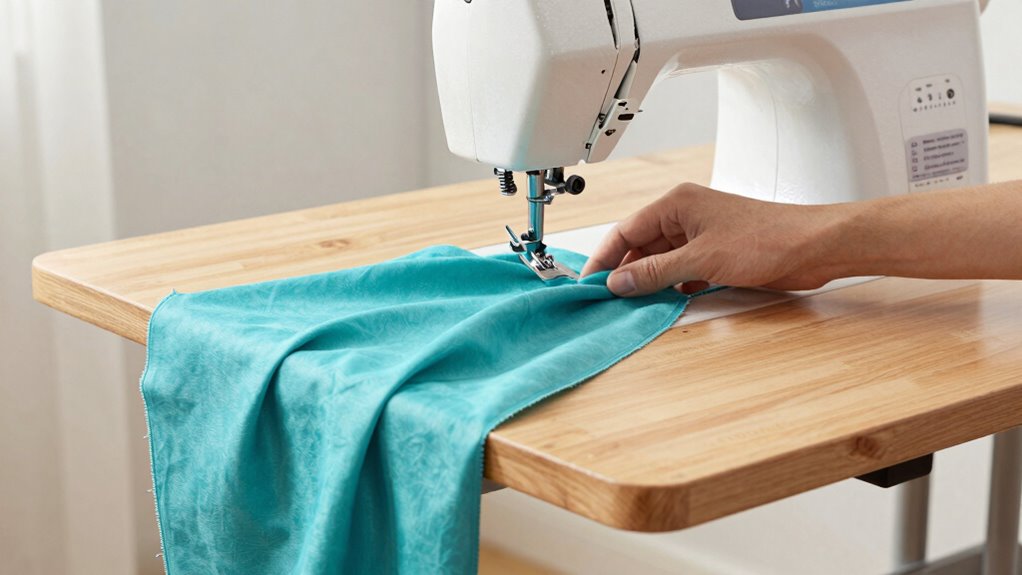
When working with large pieces of fabric, an extension table can make all the difference by providing extra support and stability. It creates a smooth, level surface that allows you to feed fabric effortlessly through your sewing machine, reducing puckering and uneven stitches. This stability is especially essential when you’re tackling quilting projects or sewing long seams, where fabric can bunch or shift if not properly supported. With an extension table, you can focus more on your sewing technique rather than battling fabric movement, leading to cleaner, more professional results.
One of the key benefits of using an extension table is how it helps maintain consistent thread tension. When fabric is supported evenly, your machine can better regulate tension, preventing issues like loose or tight stitches. Proper thread tension is indispensable in quilting, where balanced stitches ensure the durability and appearance of your finished piece. Without proper support, fabric can sag or shift, causing tension problems that lead to skipped stitches or puckering. An extension table minimizes these problems by keeping fabric flat and steady, making it easier to achieve even tension throughout your quilting or sewing process. Additionally, an extension table can help prevent fabric bunching, which often leads to uneven stitches or skipped sections. Using the right sewing accessories, like extension tables, can significantly improve your sewing experience and results.
An extension table helps keep fabric flat, ensuring consistent thread tension and professional sewing results.
In addition, an extension table enhances your ability to implement advanced quilting techniques. Techniques such as free-motion quilting demand a stable surface, as any wobble or unevenness can distort your stitches and ruin your design. With the extra support, you can move your quilt smoothly under the needle, maintaining consistent stitch length and pattern. The extended surface also gives you more room to maneuver larger quilts, giving you better control and reducing fatigue during long sessions. This stability is especially helpful when working on intricate quilting patterns or when sewing multiple layers, as it prevents fabric from bunching or shifting unexpectedly. Additionally, the extra surface area provided by the extension table can help prevent fabric from tipping or pulling, further aiding in precise quilting. Proper support can also improve your overall sewing accuracy, making your projects look more professional and polished.
extension table for sewing machine
As an affiliate, we earn on qualifying purchases.
As an affiliate, we earn on qualifying purchases.
Frequently Asked Questions
Can Extension Tables Be Used With All Sewing Machine Models?
Extension tables can’t be used with all sewing machine models because of varying extension compatibility. You need to check your machine’s fabric weight capacity and whether it supports an extension table. Some models are specifically designed for larger projects and can accommodate extension tables easily, while others might not. Always verify your machine’s specifications to confirm a proper fit, especially if you’re working with heavier fabric weights or large fabric pieces.
How Do I Attach the Extension Table Securely?
To attach your extension table securely, first make sure your sewing machine is unplugged. Align the extension table’s attachment points with your machine’s base, then use the provided attachment methods—such as screws or clips—to lock it in place. Check the extension table stability by gently testing for any movement. Proper attachment methods guarantee the table stays steady during sewing, offering better fabric support and a safer, more comfortable sewing experience.
What Types of Fabric Are Best Suited for Extension Table Support?
Imagine your fabric as a gentle river needing a sturdy bridge. The best fabrics for extension table support are lightweight cottons, linens, and silks—these are compatible with most extension table features, providing smooth, even support. Heavier fabrics like denim or upholstery may strain the table. Choosing fabric compatibility guarantees your extension table stays stable, letting you sew with confidence and achieve professional results effortlessly.
Are Extension Tables Adjustable for Different Fabric Thicknesses?
Yes, extension tables are adjustable for different fabric thicknesses. You can modify the extension compatibility by adjusting the height or adding shims, ensuring better support for various fabric thicknesses. This flexibility helps you handle lightweight to heavy fabrics without strain. Always check your extension table’s adjustment options beforehand, so you can customize the setup for ideal fabric support, making your sewing projects smoother and more precise.
How Do I Clean and Maintain the Extension Table?
You’ll want to keep that extension table spotless, so don’t ignore cleaning tips. Wipe it down regularly with a soft, damp cloth to remove dust and lint, and avoid harsh cleaners that could damage the surface. Maintenance routines also include checking for loose screws or parts and lubricating moving mechanisms if needed. Since your table’s a workhorse, giving it a little care guarantees it stays smooth, functional, and ready for your next project.
Conclusion
Using an extension table really transforms your sewing experience, making it easier to handle large or bulky fabrics. Imagine you’re working on a big quilt, and the extra support keeps the fabric smooth and steady, preventing puckering. A fellow quilter once struggled with uneven seams until she added an extension table—her projects became flawless. With a little setup, you’ll find sewing large pieces more manageable and enjoyable, turning complex projects into achievable successes.
Fall Picks
fall essentials
As an affiliate, we earn on qualifying purchases.