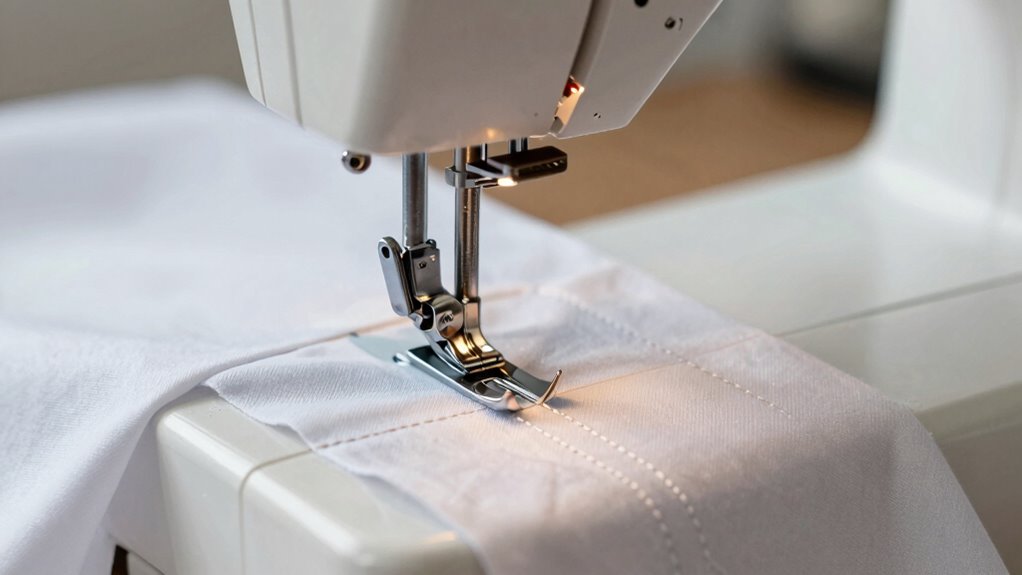
Needle position control is a key feature that helps you achieve precise topstitching and professional results. It lets you adjust the needle’s placement for perfect seams, intricate details, and smooth finishes on various fabrics. This control reduces puckering, skipped stitches, and fabric distortion, giving you consistent and durable stitches. When you utilize this feature, you’ll enjoy better tension regulation and creative flexibility—plus, there’s more to discover if you keep exploring how it enhances your sewing projects.

Get business pricing on tools and workshop supplies
- Business-only prices and quantity discounts
- Tax-exempt purchasing
- Multiple users, one account, clear invoices
Key Takeaways
- Precise needle positioning ensures accurate topstitch placement for professional and consistent results.
- It allows intricate details to be sewn confidently across various fabric types.
- Enhanced control minimizes fabric puckering and skipped stitches, improving overall stitch quality.
- Automated needle adjustments adapt to fabric thickness, maintaining topstitch accuracy.
- Consistent needle positioning supports complex projects with multiple layers and decorative stitching.
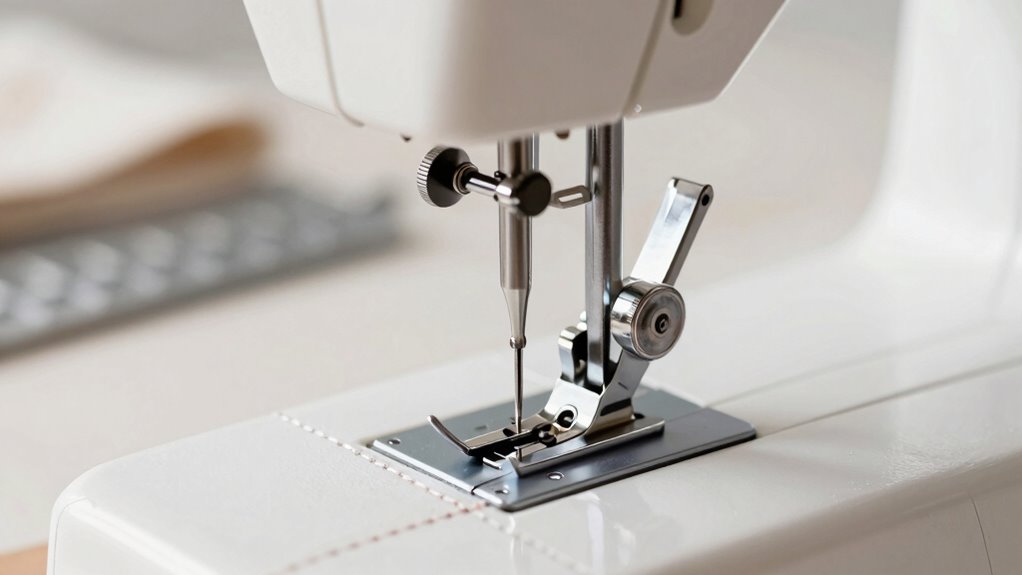
Have you ever wondered how precise needle placement is achieved in medical procedures or manufacturing processes? It’s a question that highlights the importance of needle position control, a crucial feature that guarantees topstitching accuracy and consistent results. Whether you’re sewing delicate fabrics or performing complex medical tasks, controlling the needle’s position allows you to execute intricate details with confidence. This feature is especially vital when working with different fabric types, as each material reacts uniquely to sewing and stitching. Thin silk requires gentle handling, while heavy denim demands stronger control. Needle position control adapts seamlessly to these variations, helping you maintain precision regardless of the fabric’s weight or texture. Proper needle position control also helps to reduce fabric distortion and improves overall stitch quality, making your sewing projects look more professional. One of the key factors in achieving perfect topstitching is managing thread tension. When the needle’s position is precisely controlled, it allows for better regulation of thread tension, preventing puckering, skipped stitches, or uneven seams. Proper thread tension works hand-in-hand with needle positioning to create smooth, professional-looking stitches. For example, if you’re working with stretchy knit fabrics, you need to guarantee the needle stays in the correct position to accommodate the fabric’s elasticity without causing distortion. Conversely, when sewing heavyweight canvas or upholstery fabrics, accurate needle placement helps distribute tension evenly, reducing the risk of skipped stitches or fabric damage. The versatility of needle position control becomes even more apparent when handling different fabric types. It enables you to switch seamlessly between delicate and heavy materials, maintaining consistent stitch quality. This precision reduces the need for constant adjustments, saving you time and frustration. Advanced sewing machines equipped with automatic needle positioning features often include sensors that detect fabric thickness and type, adjusting the needle’s path accordingly. This ensures that each stitch is exactly where it should be, whether you’re topstitching decorative elements or sewing seams that require meticulous alignment. Additionally, precision in needle placement is essential for achieving the highest quality finishes, especially in detailed embroidery or decorative stitching. Proper needle alignment also minimizes the risk of needle breakage, which can be costly and disruptive. Furthermore, precise needle placement enhances the durability and appearance of your stitches. It helps prevent thread bunching, uneven tension, and fabric puckering—all common issues that compromise the finished look. When you control the needle’s position accurately, you also gain better control over stitch length and pattern, which is essential for achieving professional results. This control becomes particularly important in complex sewing projects or when working with multiple layers, where small deviations can lead to noticeable flaws. In short, needle position control is a feature that elevates your sewing precision, making it easier to work with a variety of fabric types and thread tensions. It empowers you to produce high-quality, consistent stitches with less effort and greater confidence. Mastering this feature can also be complemented by understanding fabric behavior, which helps in selecting the appropriate needle settings for different materials. Whether you’re a hobbyist or a professional, mastering this feature can greatly improve your sewing outcomes and open new creative possibilities.
Popular right now

De'Longhi Linea Classic Espresso Machine with Adjustable Milk Frother

Breville Barista Pro Espresso Machine with Grinder, Brushed Stainless Steel

Breville Bambino Espresso Machine, Brushed Stainless Steel
As an affiliate, we earn on qualifying purchases.
Frequently Asked Questions
Can Needle Position Control Be Adjusted During Sewing?
Yes, you can adjust needle position control during sewing. This feature allows you to change the needle’s position for better precision, especially when working with different fabrics. Make sure to tweak your thread tension accordingly to prevent puckering or loose stitches. Also, consider fabric compatibility, as some materials may require specific needle positions for ideal results. Always test on scrap fabric before sewing your main project.
Does Needle Position Control Work With All Types of Stitches?
Coincidentally, needle position control works with many stitch types, but not all. It helps you adjust needle alignment to suit different fabric types, ensuring precise topstitching and seam placements. For example, straight stitches benefit greatly, while decorative or zigzag stitches may not support this feature fully. Always check your machine’s manual to verify compatibility, as some specialty stitches might not respond to needle position adjustments.
How Does Needle Position Control Affect Sewing Speed?
Needle position control can influence your sewing speed, especially when adjusting for different fabric types and thread tension. As you shift the needle position, you might need to slow down to maintain stitch quality, particularly with delicate or thick fabrics. Properly balancing thread tension and selecting compatible fabric helps you sew smoothly at your desired speed. This control allows you to fine-tune stitches, ensuring consistent results without sacrificing efficiency.
Is Needle Position Control Compatible With Embroidery Machines?
Think of needle position control as your sewing machine’s compass—guiding your stitches with precision. Yes, it’s compatible with embroidery machines, but you’ll need to fine-tune thread tension and consider fabric compatibility to keep everything flowing smoothly. When you adjust needle positions, your embroidery gains sharper details and cleaner lines. Just make certain your machine’s settings are aligned, so your creative journey stays smooth and your stitches stay true.
What Maintenance Is Required for Needle Position Control Mechanisms?
You need to regularly check needle calibration to guarantee the needle position control mechanism functions accurately. Keep the mechanism well-lubricated according to your machine’s lubrication requirements, typically using light sewing machine oil. Regular maintenance involves cleaning dust and lint, inspecting for wear, and recalibrating the needle position as needed. This routine helps maintain topstitching accuracy and prolongs the lifespan of your machine’s needle control features.
Conclusion
By mastering needle position control, you gain precise topstitching every time, elevating your sewing projects. Imagine customizing your fabric hem for a professional finish or matching stitches perfectly on intricate quilting designs—it’s all possible with this feature. For instance, a hobbyist improved their quilting accuracy considerably, saving time and reducing mistakes. Once you understand how to leverage needle position control, you’ll find your sewing smoother, more accurate, and way more satisfying.