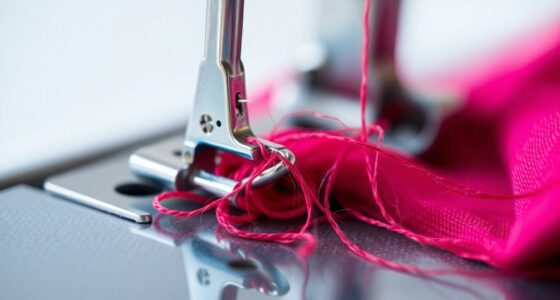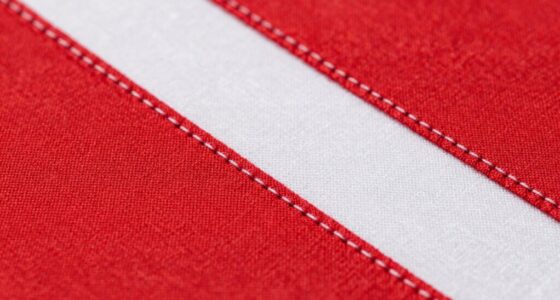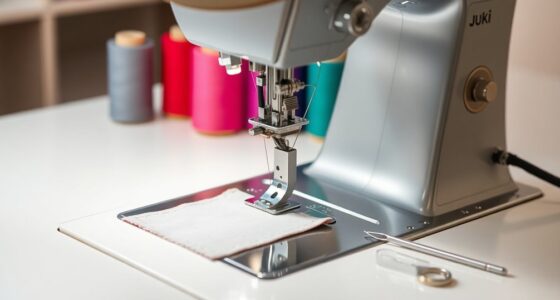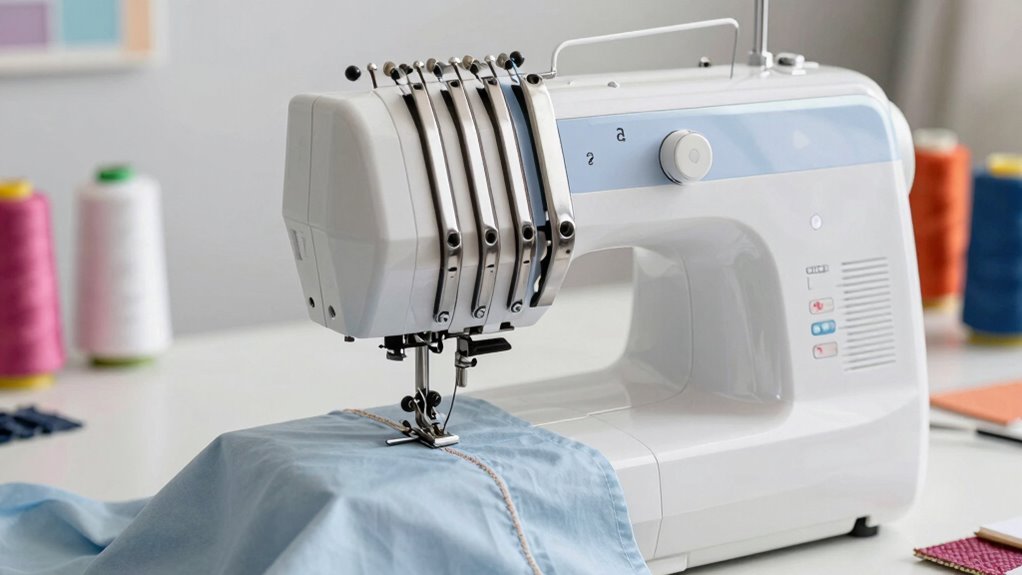

Many believe sergers are complicated and require expert skills, but that’s a myth. Mistakes often come from misadjusted tension or fabric mismatches, not machine faults. You can handle a variety of fabrics with proper tension, needle, and thread choices. Most issues are fixable through simple adjustments rather than replacing equipment. If you’re willing to learn the basics and how to troubleshoot, you’ll be surprised how professional your finishes can look. Keep going to discover more tips.

Get tools and workshop supplies delivered free — and shop member deals
- Fast, free delivery on millions of items
- Access to Prime Big Deal Days deals on October 6–7
- Prime Video, Amazon Music and more included
Key Takeaways
- Many believe sergers are too complex, but focusing on tension and fabric compatibility simplifies achieving professional results.
- Incorrect tension settings are often mistaken for machine faults, hindering progress; proper adjustments improve stitch quality.
- Myths about needing multiple machines for different fabrics discourage using a single versatile serger effectively.
- Beginners often think perfect stitches require mastery overnight; gradual learning and fine-tuning lead to professional finishes.
- Routine maintenance and understanding fabric specifics maximize serger performance, dispelling myths about limited capabilities.
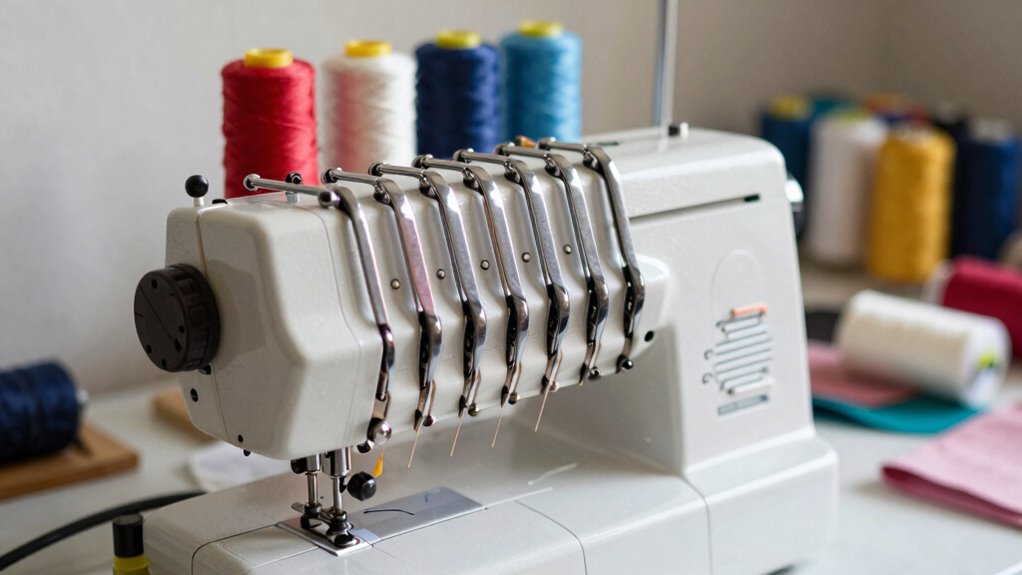
Serger machines are often surrounded by misconceptions that can prevent crafters from fully exploring their potential. One common myth is that sergers are overly complicated and difficult to master. While it’s true that they have more settings than a standard sewing machine, you don’t need to become an expert overnight. Instead, focus on understanding key aspects like thread tension and fabric compatibility. Properly adjusting thread tension is essential for achieving professional finishes. Many beginners believe that if their stitches aren’t perfect immediately, the machine is faulty. The truth is, tension settings often need fine-tuning based on the fabric you’re working with. Thicker fabrics require different tension adjustments than lightweight ones. If your stitches are puckering or uneven, tweaking the tension dial can often fix the issue, rather than assuming the machine is unusable. Additionally, learning specific thread tension adjustment techniques can help you troubleshoot common sewing issues more effectively.
Adjusting thread tension is key to perfect stitches and professional finishes on your serger.
Another myth is that sergers only work with certain types of fabric. In reality, they can handle a wide range of textiles, from delicate silk to heavy denim. The key lies in selecting the right needle, thread, and tension settings for each fabric. For example, lightweight fabrics benefit from finer threads and lighter tension, while heavier fabrics need sturdier threads and more tension. Fabric compatibility isn’t a one-size-fits-all situation; it’s about matching your materials to your machine’s capabilities. Many new users think they need multiple specialized machines for different fabrics, but with proper adjustments, a single serger can do the job just fine. Additionally, understanding fabric versatility can help you maximize your machine’s potential across various projects. Learning about proper maintenance can also extend your machine’s lifespan and ensure consistent performance. Incorporating routine cleaning into your maintenance routine can prevent common issues and keep your machine running smoothly. Moreover, exploring different stitch techniques can further expand your creative possibilities with a serger. Recognizing that your machine can adapt to various sewing tasks can open up many new project ideas and techniques.
serger thread tension adjustment tools
As an affiliate, we earn on qualifying purchases.
As an affiliate, we earn on qualifying purchases.
Frequently Asked Questions
Can a Serger Replace a Traditional Sewing Machine Entirely?
A serger can’t fully replace a traditional sewing machine because they serve different purposes. While sergers excel in finishing seams and providing professional-looking edges, they often lack the thread compatibility and machine versatility needed for detailed sewing tasks. You’ll still need a sewing machine for precise stitching, zippers, and buttonholes. So, using both machines together gives you the best results, ensuring your projects look polished and professional.
Do Sergers Require Special Thread Types for Best Results?
You might be surprised to learn that sergers don’t require special thread types for the best results. Just guarantee thread compatibility with your machine, and you’ll enjoy fabric versatility across various projects. Standard polyester or polyester-blend threads work well, providing durability and stretch. Coincidentally, using the right thread type can make your serging smoother, giving you professional finishes without extra hassle. So, focus on matching thread to your fabric and serger’s needs.
Is a Serger Only Suitable for Certain Fabrics?
A serger is versatile and suitable for many fabrics, from lightweight chiffons to heavy denim. You just need to take into account fabric versatility and thread compatibility to achieve professional finishes. Use appropriate needles and threads for each fabric type, adjusting tension as needed. With the right setup, your serger can handle various materials effectively, giving you clean, durable seams across different projects without limitations.
How Much Maintenance Does a Serger Need?
A serger needs regular maintenance to keep it running smoothly. You should regularly check and adjust thread tension to prevent uneven stitches, and replace needle types as recommended for different fabrics. Cleaning lint from the machine and oiling moving parts also helps prevent issues. By staying on top of these tasks, you guarantee your serger produces professional finishes every time, reducing the risk of machine malfunctions or poor stitch quality.
Can I Learn to Use a Serger Without Prior Sewing Experience?
Can you learn to use a serger without prior sewing experience? Absolutely! Think of it like stepping into a new world—your beginner tips and understanding sewing fundamentals are your keys. With patience and practice, you’ll master the machine’s quirks. Start with simple projects, follow tutorials, and don’t rush. Over time, you’ll build confidence, and soon, professional finishes will become second nature—proof that anyone can learn, no matter their starting point.
Conclusion
Don’t let these serger myths be the storm that capsizes your sewing voyage. Think of your serger as a trusted compass—guiding you through the seas of fabric and stitch, not a treacherous iceberg lurking beneath the surface. With confidence and knowledge, you can navigate toward professional finishes, transforming your sewing into a masterful voyage. Embrace the truth and sail forward—your masterpiece awaits beyond the horizon of misconception.
Halloween Picks
halloween
As an affiliate, we earn on qualifying purchases.