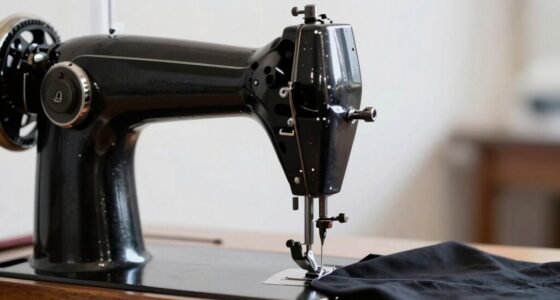
To reduce vibration in your sewing machine, make sure it’s placed on a stable, non-slip surface and use vibration absorption mats if needed. Adjust the machine’s feet for level positioning and keep external vibrations away from your workspace. Regularly check and tighten loose screws or components, and guarantee you’re using high-quality needles and proper thread tension. Proper maintenance, lubrication, and stable placement all help, so continue exploring these tips to keep your sewing smooth and quiet.
Key Takeaways
- Ensure the sewing machine is placed on a flat, stable, non-slip surface to prevent wobbling.
- Use vibration absorption mats or shock-absorbing bases to dampen external vibrations.
- Regularly check and tighten loose screws or components to maintain machine stability.
- Use high-quality, sharp needles compatible with your fabric to minimize operation vibration.
- Perform routine maintenance, including cleaning and oiling, to reduce internal friction and noise.

If your sewing machine vibrates excessively during operation, it can lead to uneven stitches, noise, and even damage to the machine over time. To address this, start by checking the thread tension. Incorrect tension causes the machine to work harder, which increases vibration. Make sure the thread tension is properly adjusted for your fabric and thread type. Too tight or too loose tension can cause stitches to be uneven and the machine to shake more than necessary. Refer to your machine’s manual to fine-tune the tension dial and test on scrap fabric until stitches are even and smooth.
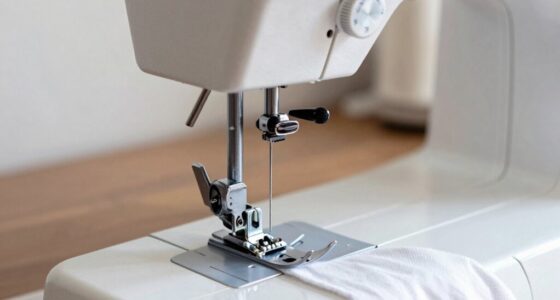
Next, consider the quality of your needle. Using a dull or incompatible needle can cause resistance and irregular movement, translating into more vibration. Always use a high-quality needle suited for your fabric and thread. Change the needle regularly, especially after finishing a project or every few hours of sewing. A sharp, well-made needle reduces strain on the machine’s components and promotes smoother operation. When inserting the needle, make sure it’s securely in place and aligned correctly; improper insertion can cause wobbling and excessive vibration. Additionally, using the correct needle type for your project can further minimize vibrations caused by incompatible parts.
Use high-quality, sharp needles suited for your fabric to ensure smooth sewing and reduce machine vibration.
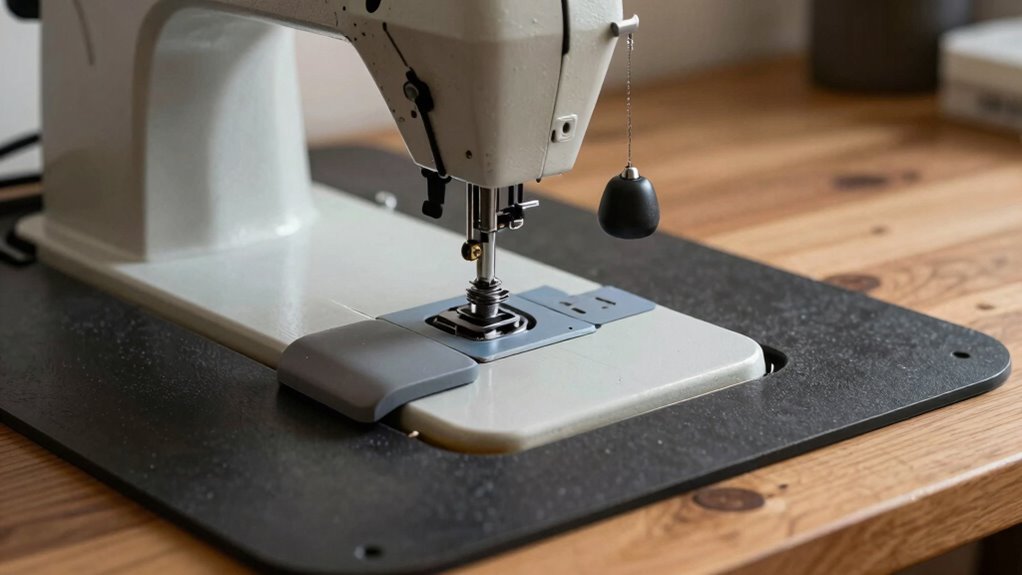
Another essential step is to make sure your machine is properly balanced and placed on a stable surface. An uneven or wobbly table amplifies vibration, making it harder to sew precisely. Use a flat, sturdy table with a non-slip surface to keep your machine steady. Additionally, check that the machine’s feet are properly adjusted and that it’s sitting level. If your sewing machine has adjustable feet, make small adjustments until it feels stable. Ensuring your sewing environment minimizes external factors such as external vibrations can significantly improve overall stability. Sometimes, adding a vibration absorption mat under your machine can also help dampen external influences. Using a shock-absorbing base can further reduce the transmission of vibrations from the surface to your machine.
Lubrication also plays an important role in reducing vibration. Regularly oil your machine following the manufacturer’s instructions. Proper lubrication minimizes friction in moving parts, which can otherwise cause noise and vibration. If you notice any squeaking or grinding, it’s a sign that your machine needs cleaning and oiling. Ensuring your sewing environment is free of vibrations from external sources can further improve stability and operation. Regular maintenance, including inspecting and tightening loose screws, helps keep your machine running smoothly and minimizes unnecessary vibrations.
Finally, inspect the machine for loose parts or screws. Over time, vibrations can loosen bolts or screws, which then increase instability. Tighten any loose components carefully, but don’t overtighten, as that could cause damage. If you’ve tried these steps and still experience excessive vibration, consider servicing your machine professionally. Sometimes, internal issues or worn-out parts need expert attention to restore smooth operation. By maintaining proper thread tension, using quality needles, securing your machine’s setup, and keeping it well-lubricated, you’ll greatly reduce vibration and improve your sewing experience.
sewing machine vibration absorption mat
As an affiliate, we earn on qualifying purchases.
As an affiliate, we earn on qualifying purchases.
Frequently Asked Questions
Can Using a Sewing Machine Cover Reduce Vibration?
Using a sewing machine cover can help improve sewing machine stability, which may reduce vibration. A cover acts as a buffer, absorbing some movement and preventing the machine from shifting during use. When choosing a cover material, options like thick fabric, foam, or rubber-backed covers are best because they provide extra grip and cushioning. Keep in mind, though, that a cover alone might not eliminate all vibrations, so consider other stability measures too.
Does the Type of Fabric Affect Machine Vibration?
Yes, the type of fabric affects your machine’s vibration. Fabrics with higher fabric density and material stiffness create more resistance, causing your sewing machine to vibrate more. Thicker, denser fabrics require extra power and can lead to increased vibrations, while lightweight, less stiff materials produce less. To mitigate this, adjust your sewing speed and make certain your machine is well-maintained. Using proper needles and tension settings also helps manage vibrations caused by different fabric types.
How Does Machine Age Influence Vibration Levels?
As your sewing machine ages, vibration levels tend to increase due to machine wear and gear deterioration. Over time, parts may loosen or become misaligned, causing instability during sewing. Regular maintenance, such as tightening screws and lubricating gears, helps mitigate these issues. If your machine is old, consider replacing worn parts or upgrading to a newer model to reduce excessive vibration and guarantee smoother operation.
Are Vibration Pads Effective for All Sewing Machine Models?
Vibration pads can be effective, but their success depends on your machine model compatibility and the vibration pad materials. For example, a hobbyist sewing machine saw significant vibration reduction after using a rubber-based pad designed for smaller models. Always check if the vibration pad matches your machine’s size and weight, and choose materials like silicone or dense rubber for better damping. Proper fit and quality materials make a real difference.
Can Improper Thread Tension Cause Increased Vibration?
Yes, improper thread tension can cause increased vibration. When your thread tension is too tight or too loose, it makes the machine work harder to sew smoothly, resulting in instability and more vibration. Ensuring your thread tension is correctly adjusted helps improve machine stability, minimizes vibrations, and creates even stitches. Regularly checking and adjusting thread tension keeps your sewing machine running smoothly and reduces unnecessary shaking during sewing.
Conclusion
Now that you’ve learned how to tame your sewing machine’s vibrations, imagine the smooth, flawless stitches waiting for you. But beware—sometimes, the tiniest imbalance can surprise you when you least expect it. Are you ready to put these tips into action and access sewing perfection? Keep an eye on your setup, stay attentive, and you might just discover a secret to sewing that transforms your entire experience. The next stitch could be your best yet—are you prepared?