
You might notice some embroidery threads knot more because of differences in thread quality, needle fit, and how you handle them. Lower-grade threads often have inconsistencies, rough fibers, or impurities that cause snagging and tangles. Using the wrong needle size can lead to catching or slipping, increasing knots. Proper storage and maintenance also play a role in preventing frays and tangles. Keep going to discover tips that can help you achieve smoother stitches and fewer knots.

Get business pricing on tools and workshop supplies
- Business-only prices and quantity discounts
- Tax-exempt purchasing
- Multiple users, one account, clear invoices
Key Takeaways
- Lower-quality threads have irregularities that increase catching, snagging, and tangling during stitching.
- Mismatched needle sizes can cause thread fraying and slipping, leading to more knots.
- Poor storage may cause thread fraying or contamination, raising the likelihood of knots forming.
- Inconsistent thread tension or improper handling can promote twisting and tangling.
- Material and tool incompatibility reduce stitch smoothness, boosting knot formation risk.
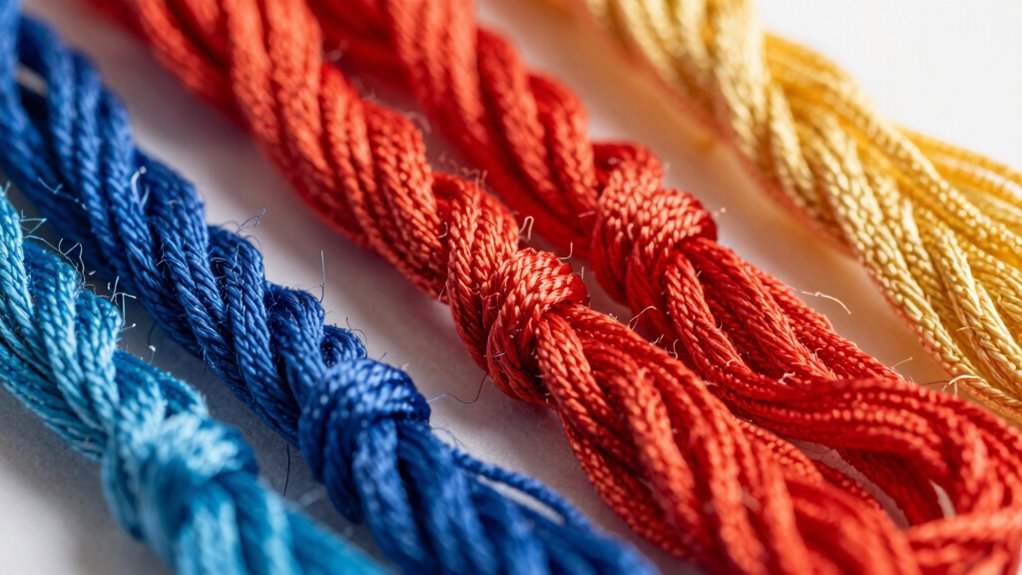
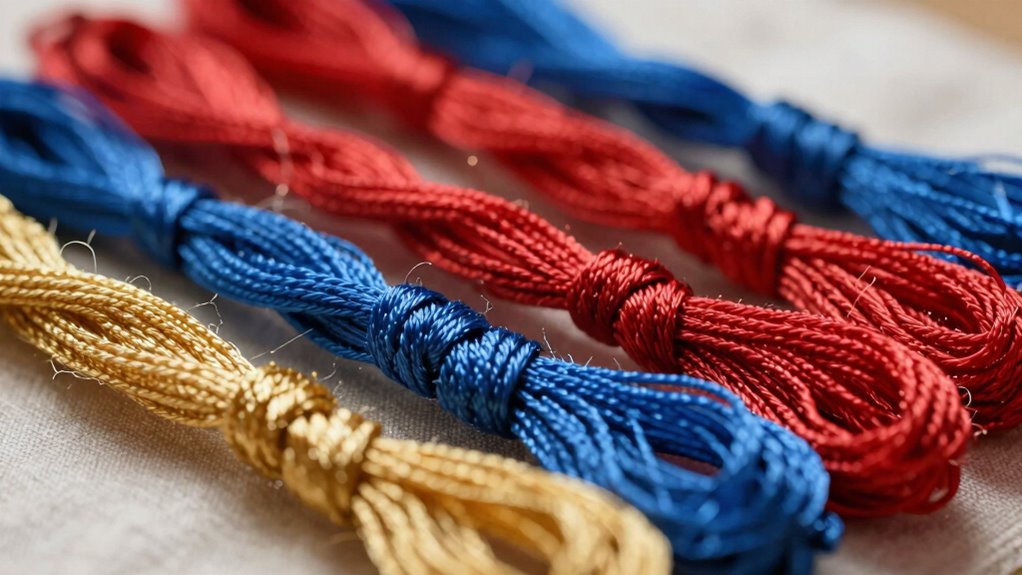
Have you ever struggled with your embroidery thread coming undone or forming unsightly knots? It can be frustrating, especially when you’re trying to create neat, professional-looking designs. One common reason for this issue is the quality of the thread you’re using. Thread quality plays a significant role in how smoothly your embroidery process goes. Lower-grade threads often contain inconsistencies in thickness, rougher fibers, or impurities. These flaws can cause the thread to catch, snag, or tangle more easily, resulting in knots and snags. High-quality embroidery threads, on the other hand, are made with better materials, ensuring uniformity and a smoother finish. This consistency helps prevent the thread from twisting or knotting unexpectedly as you work. Choosing good-quality thread can make a noticeable difference in your stitches and reduce the likelihood of knots forming.
Another factor that contributes to thread knotting is needle compatibility. Not all needles are suitable for every type of embroidery thread. If your needle eye is too small for the thread, you might find that the thread catches or frays as it passes through the fabric. Conversely, if the needle eye is too large, the thread can slip and twist, increasing the chances of knots. It’s essential to select a needle that fits your thread snugly, allowing it to glide smoothly without excessive friction. The right needle also helps maintain even tension, which is *vital* for preventing knots from forming. When your needle and thread work together seamlessly, you’re less likely to experience tangles and more likely to achieve clean, consistent stitches. Additionally, understanding how thread behavior impacts knot formation can help you troubleshoot common issues more effectively. Being aware of thread consistency and how it influences your stitching can help prevent frustration. Properly stored embroidery threads can also prevent them from becoming frayed or contaminated, which may contribute to knots. Using appropriate storage methods for your threads can extend their lifespan and maintain their quality. When your materials and tools are well-matched, your embroidery projects will become more enjoyable and less frustrating. Paying attention to thread quality and its influence on your stitches can make a significant difference in the final outcome. With patience and attention to detail, you can minimize knots and create beautiful, flawless designs that showcase your skills.
As an affiliate, we earn on qualifying purchases.
Frequently Asked Questions
Do Different Embroidery Thread Brands Have Varying Knot Tendencies?
Yes, different embroidery thread brands can have varying knot tendencies. Thread material plays a big role—silk, cotton, or polyester each behave differently under tension. Additionally, your thread tension influences knot formation; too tight or too loose can cause knots. Some brands produce smoother, more consistent threads that resist knotting, while others may be prone to tangling. Paying attention to thread quality and tension helps reduce knots and creates cleaner stitches.
How Does Thread Color Affect Knot Formation?
Thread color can influence knot formation because high contrast colors often require more tension, increasing the likelihood of knots. Bright, saturated dyes can make threads stiffer, leading to more tangles and knots during stitching. Conversely, softer or less saturated colors tend to be more flexible, reducing knotting. So, when choosing thread colors, consider how color contrast and dye saturation might impact your sewing process and knot tendencies.
Can Thread Thickness Influence Knot Frequency?
Yes, thread thickness can influence knot frequency. Thicker threads often have increased friction and tension, making them more prone to knotting. If your thread tension isn’t consistent or your needle isn’t compatible with the thread’s thickness, you’ll likely see more knots. Using the right needle and maintaining proper thread tension helps reduce knotting, especially with thicker threads, ensuring smoother embroidery without frequent tangles.
Are Certain Embroidery Stitches More Prone to Knots?
Certain embroidery stitches are more prone to knots because inconsistent tension and poor needle compatibility can cause the thread to tangle. When your tension isn’t consistent, the thread loops unpredictably, increasing knot risk. Using the right needle for your thread guarantees smooth passage, reducing knots. Stitches like long, loose, or uneven ones tend to knot more, so maintaining even tension and selecting compatible needles helps keep your embroidery tidy and knot-free.
Does the Age of the Thread Impact Knotting?
They say “a chain is only as strong as its weakest link,” and the same goes for embroidery threads. The age of your thread can impact knotting, as older, less durable threads tend to fray or weaken. Thread durability declines over time, especially if exposed to moisture or sunlight. Manufacturing quality also plays a role; well-made threads are less likely to knot, even as they age, ensuring smoother stitching.
Conclusion
Now that you understand why some threads knot more than others, you can approach your embroidery with a new sense of patience and insight. Think of your thread as a lively river—sometimes it flows smoothly, other times it gets tangled in unexpected ways. By choosing the right thread and handling it gently, you’ll tame those wild knots and let your creativity flow effortlessly, turning every stitch into a beautiful journey rather than a frustrating maze.
Evergreen bestsellers Picks
bestsellers
As an affiliate, we earn on qualifying purchases.