To assemble a great hand sewing kit, you’ll need a variety of sewing needles suited for different fabrics, like sharps or ballpoints, and a selection of high-quality threads in various colors. Keep your needles organized and store them properly to maintain their sharpness, while choosing the right thread to match your fabric for durability and a professional finish. Using the correct tools and materials makes your sewing more precise and enjoyable—continue exploring to discover even more essentials for your kit.
Key Takeaways
- A variety of sewing needles (sharps, universal, ballpoint) suited for different fabrics and stitches.
- High-quality, matching threads for durability and a polished finish.
- A good pair of scissors or rotary cutter for precise cutting and trimming.
- Seam ripper for correcting mistakes efficiently.
- A pin cushion or magnetic pin holder for organizing and easily accessing pins and needles.
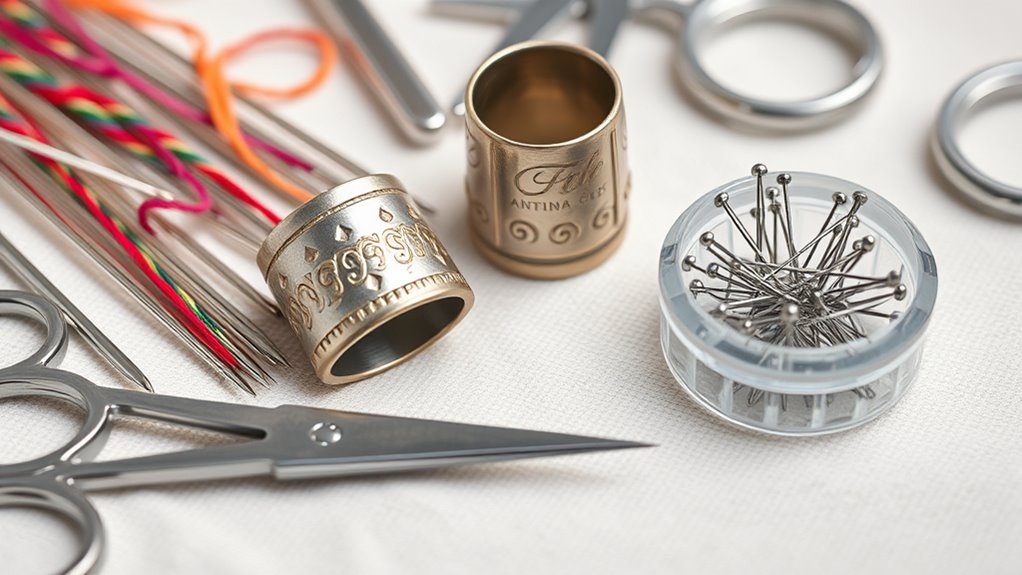
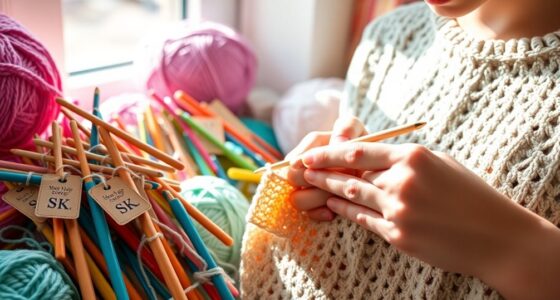
When you’re starting a hand sewing project, having the right tools makes all the difference. One of the most important tools you’ll need is a good selection of sewing needles. There are various sewing needle types, each designed for specific fabrics and stitches. For example, sharp needles like a sharps or universal needle work well for woven fabrics, while ballpoint needles are ideal for knit fabrics because they glide between the fibers without causing snags. If you’re working on delicate or fine fabrics, consider using finer needles to prevent damage. Thicker or upholstery needles are best suited for heavy or bulky materials. Choosing the right needle ensures your stitches are even and your fabric stays undamaged, making your sewing experience smoother and more enjoyable. Proper storage of your needles also helps prevent rust and damage, ensuring they stay sharp and effective over time.
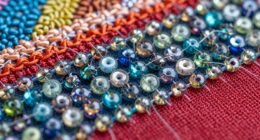
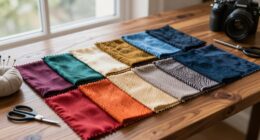
Thread selection tips are equally crucial to a successful project. When picking thread, consider the fabric type and the purpose of your sewing. For most general sewing, polyester thread offers strength and flexibility, making it a versatile choice. Cotton thread works well for natural fabrics and projects where you want a softer finish. When matching thread to fabric, aim for a similar weight and fiber content to ensure durability and aesthetic harmony. For decorative stitches or embroidery, specialty threads like metallic or rayon can add a touch of flair but require compatible needles to prevent breakage. Always check the thread’s thickness and quality; high-quality thread resists tangling and fraying, saving you time and frustration during sewing. Additionally, keep a variety of thread colors on hand for different projects, so you can match or contrast fabric shades as needed.
Having a selection of sewing needles and understanding thread tips can considerably improve your hand sewing results. Keep your needles organized in a small case or container to easily find the right one without rummaging through your kit. Store your thread in a cool, dry place, and wind it neatly to prevent tangling. When starting your project, test your needle and thread on scrap fabric to ensure compatibility. This simple step can save you from frustrating mistakes later. Remember, using the appropriate needle type for your fabric and choosing the right thread not only enhances the quality of your stitches but also prolongs the life of your tools. With these essentials in your sewing kit, you’ll be well-equipped to tackle any hand sewing project with confidence and precision. Additionally, understanding self watering plant pots and their benefits can inspire you to incorporate practical tools into your gardening projects.
Frequently Asked Questions
How Do I Choose the Right Needle for Different Fabrics?
To choose the right needle for different fabrics, consider the fabric types you’re working with and the needle sizes suited for each. For lightweight fabrics like silk or chiffon, pick a small needle size, such as 70/10. Thicker fabrics like denim or canvas require larger needles, like 90/14. Always match the needle type and size to guarantee smooth sewing, minimal damage, and professional results.
What Is the Best Way to Store Sewing Needles Safely?
Did you know that many sewing injuries happen because needles aren’t stored properly? To keep your needles safe, use a dedicated needle case or a pincushion, and always store them with the points facing down. Follow safety tips like keeping needles out of children’s reach and never leaving needles loose in your sewing kit. This way, you protect yourself and make sure your needles stay organized and easy to find.
Can I Use a Sewing Awl for Hand Sewing?
Yes, you can use a sewing awl for hand sewing, especially for heavy fabrics or leather. Sewing awl uses include creating strong, durable stitches and repairing thick materials. By mastering awl techniques, you’ll be able to punch holes and sew through tough fabrics efficiently. Just make certain you handle the awl carefully to avoid injury and keep your stitches tight for a professional finish.
How Often Should I Replace My Sewing Scissors?
You should replace your sewing scissors when they become dull or lose cutting precision, which can happen over time with regular use. To maintain their sharpness, practice good scissor maintenance by cleaning and storing them properly. Regularly check the blades for nicks or dullness. If sharpening doesn’t restore their cutting precision, it’s time to invest in a new pair to ensure clean, accurate cuts every time you sew.
What Are Some Tips for Threading a Needle Easily?
Try these threading tips to make needle eye tricks easier. First, twirl a tiny bit of wax on your thread to stiffen it, helping it glide through the eye smoothly. Use a sewing needle with a larger eye for simplicity. Hold the thread close to the eye and steady your hands. If needed, use tweezers to grip the thread. With patience and practice, threading becomes quick and hassle-free.
Conclusion
With these essential hand sewing tools in your kit, you’ll be ready for any project that comes your way. Some might think you need fancy machines or gadgets, but the truth is, the right simple tools can do wonders. Don’t worry if you’re just starting out—practice makes perfect, and these basics will serve you well. Grab your supplies, get sewing, and enjoy the creative journey ahead!