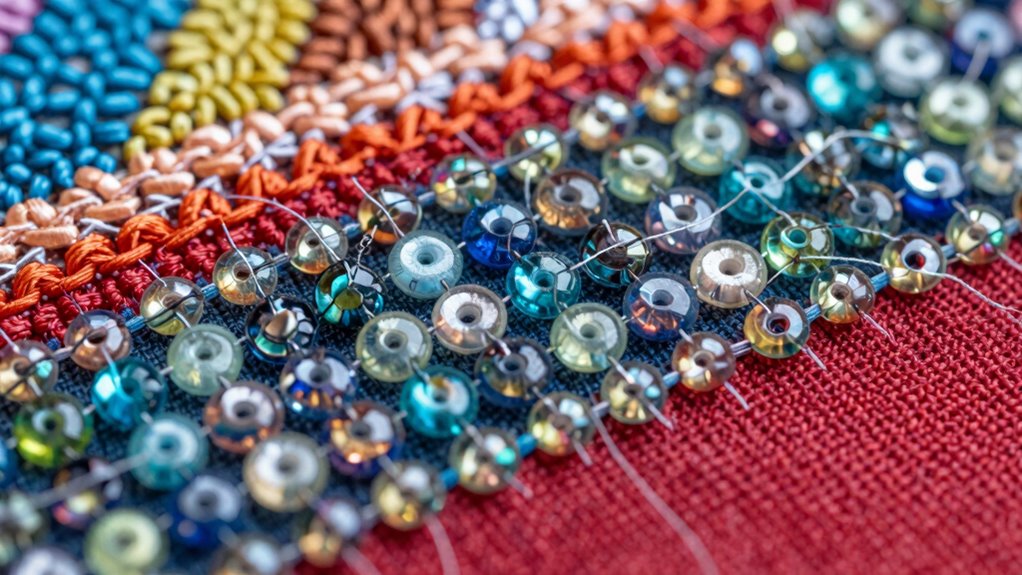

To keep your bead embroidery secure and prevent beads from popping off, choose high-quality beads with smooth edges and match your thread color closely for a seamless look. Use strong, durable thread and sharp needles suited for bead size. Secure each bead with tight, consistent stitches, reinforcing larger beads with multiple passes. Organize your workspace and avoid over-tightening to maintain bead security. Continue exploring to discover more tips for professional, long-lasting beadwork.

Get business pricing on tools and workshop supplies
- Business-only prices and quantity discounts
- Tax-exempt purchasing
- Multiple users, one account, clear invoices
Key Takeaways
- Use high-quality beads with smooth edges and consistent holes to prevent loosening.
- Select strong, appropriate thread and match its color to the beads for secure, invisible stitching.
- Reinforce larger or focal beads with multiple passes or looping stitches for added security.
- Maintain consistent tension in stitches to keep beads snug without causing breakage.
- Regularly check and adjust tension, and double knot or secure threads to prevent bead detachment.
As an affiliate, we earn on qualifying purchases.
How to Choose Beads and Thread for Secure Embroidery
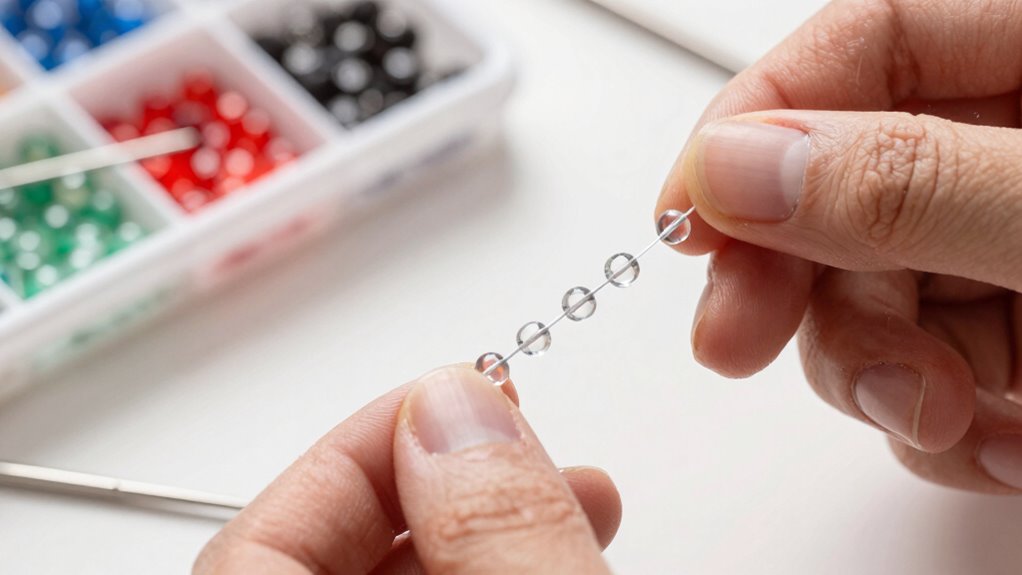
Choosing the right beads and thread is essential for secure and durable embroidery. When selecting beads, consider bead size; smaller beads are easier to control and less likely to pop off, especially on delicate fabrics. Larger beads create bold designs but require sturdy thread to hold them securely. For thread color, match it closely to your beads or fabric to hide stitches and keep the focus on your design. If you want the thread to blend seamlessly, choose a shade that complements your beads. Using the appropriate bead size and thread color guarantees your embroidery stays intact and looks professional. Proper contrast ratio in your thread and bead choices can also influence the visibility and overall aesthetic of your work. Additionally, understanding material compatibility ensures that beads and threads work well together and withstand wear over time. Considering thread strength is also crucial to prevent breakage during and after the embroidery process. Always test your choices on scrap fabric first to confirm they work well together before starting your project. Furthermore, paying attention to the embroidery techniques used can improve the longevity and security of your beadwork. Incorporating bead placement techniques can also enhance the durability and overall appearance of your embroidery.
Setting Up Your Workspace for Perfect Bead Security
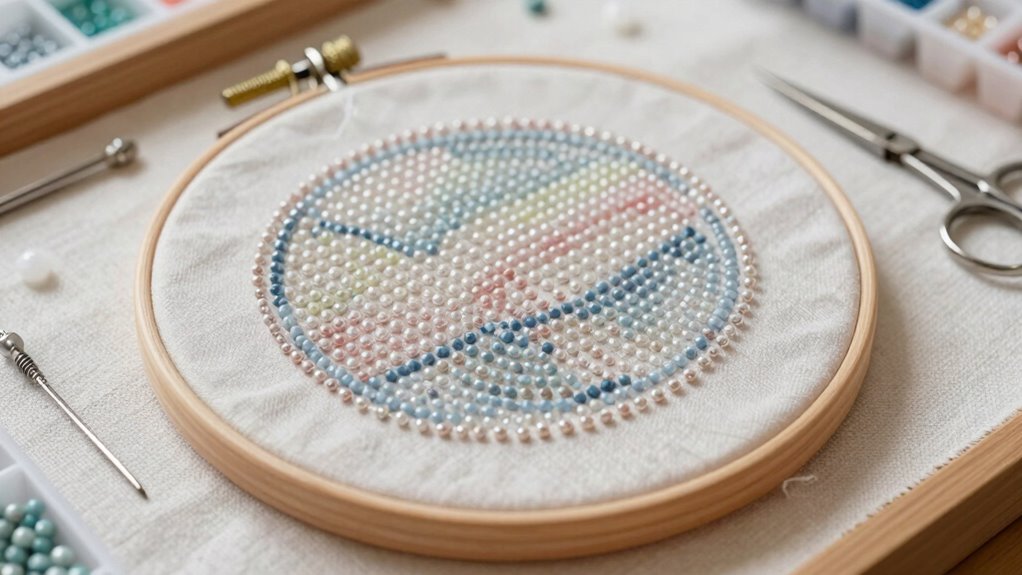
To guarantee your beads stay secure throughout your project, setting up an organized and distraction-free workspace is essential. Good bead storage keeps your supplies accessible and prevents tangling, while proper workspace lighting ensures you see your stitches clearly. Keep beads sorted by color or size in containers for quick access. Use bright, even lighting to reduce eye strain and improve accuracy. Arrange your tools within easy reach to maintain focus. Proper workspace organization can significantly enhance your sewing experience and help you achieve professional results. Incorporating quality lighting practices into your workspace setup can also help protect your investments from accidental damage. Additionally, using appropriate illumination can prevent eye fatigue and improve precision during detailed beadwork. Being aware of water quality factors can also influence your choice of storage and lighting, especially if working with delicate or specialty beads. Here’s a visual guide:
| Bead Storage | Workspace Lighting |
|---|---|
| Clear containers | Adjustable lamp |
| Labelled sections | Natural light option |
| Small compartments | LED lights for brightness |
| Easy access | Focused illumination |
Clear organization and lighting help you sew confidently, reducing mistakes and ensuring bead security.
Why Beads Fall Off and How to Prevent It

Ever wondered why beads sometimes slip off your embroidery? It often comes down to bead quality and how well you secure them. Lower-quality beads may have rough edges or inconsistent holes, making them easier to loosen or break. Using beads with better quality ensures they stay put longer. Additionally, thread color matters—if your thread blends with the beads, it can look neat, but mismatched thread can weaken the hold or cause slipping. Over time, threads can fray or weaken if not chosen carefully, increasing the chance of beads falling off. To prevent this, select high-quality beads and match your thread color thoughtfully. Properly securing your beads from the start reduces the risk of them popping off, keeping your embroidery looking polished and intact. Paying attention to bead durability and proper threading techniques can make a significant difference in the longevity of your beadwork. Also, understanding thread strength and how it interacts with different beads can help you choose the best materials for durable embroidery. Recognizing the importance of secure knotting at the start can further enhance bead retention over time. Additionally, practicing proper tension during stitching ensures beads stay firmly in place without damaging the thread or fabric. Developing a consistent embedding technique can also help keep beads secure and prevent them from loosening over time.
Step-by-Step Techniques to Secure Beads

Securing beads firmly requires precise techniques that guarantee they stay in place during handling and wear. Begin by choosing the right beading pattern, ensuring each bead is tightly stitched according to your design. Use a strong, clear beading thread and double knot it at the start for added security. When adding beads, pass your needle through the thread multiple times, especially in areas with frequent movement. Embellishment techniques like backstitching or couching help anchor beads more securely. For larger beads, reinforce the stitches by looping the thread multiple times around each bead. Understanding the importance of durable stitches will help ensure your beads stay firmly in place, preventing them from popping off. Additionally, maintaining consistent stitch tension throughout your work is crucial to avoid loose spots that could lead to bead detachment. Using high-quality thread choice can significantly improve the longevity of your embroidery, especially when working with heavier beads. Proper thread tension control during sewing helps prevent gaps and loose stitches that could compromise bead security.
Common Mistakes That Make Beads Fall Off
One common mistake that causes beads to fall off is using inadequate or weak thread. If your thread isn’t strong enough for the bead size you’re working with, it can break or loosen over time. Pay attention to the bead size; larger beads often require thicker thread to hold them securely. Additionally, neglecting color matching can lead to visibility issues, making loose threads more noticeable and prone to catching. Using thread that doesn’t complement the bead color might tempt you to pull more tightly, risking breakage or uneven tension. Always choose a sturdy, appropriate thread and match its color to your beads for a clean finish. Proper thread choice, thread strength, and attention to bead size and color matching help prevent beads from slipping off and ensure your embroidery stays intact. Ensuring proper tension and avoiding over-tightening also contributes to the longevity of your work, especially when using specialized embroidery threads. Selecting the right body jewelry materials can further enhance the durability of your beadwork and prevent premature breakage. Incorporating correct knotting techniques can also significantly improve bead security and overall durability. Using quality beads can also reduce the risk of beads cracking or breaking under tension.
Pro Tips for Durable, Professional Bead Embroidery
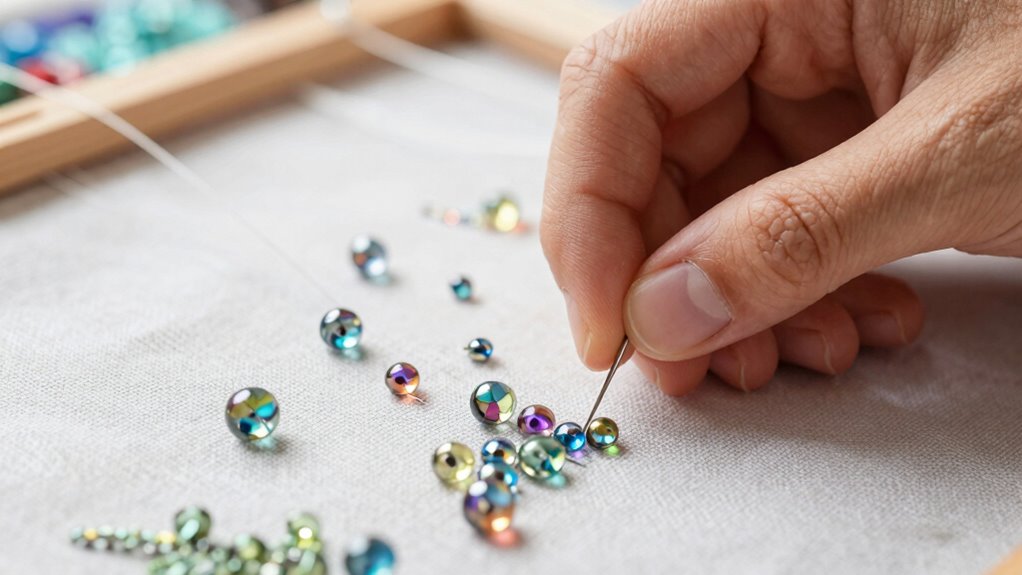
To achieve durable, professional bead embroidery, selecting the right materials and techniques is essential. Start with bead shape selection to ensure beads fit your design perfectly and stay secure. Use thread color coordination to blend stitches seamlessly, reducing stress points. Opt for high-quality, strong thread that matches your beads for durability and a polished look.
Consider this table to guide your choices:
| Bead Shape Selection | Thread Color Coordination | Technique Tips |
|---|---|---|
| Round for stability | Match thread to beads | Use small, consistent stitches |
| Bugle for sleek lines | Contrasting for accents | Double your thread for strength |
| Seed beads for detail | Neutral tones blending | Secure knots tightly |
These tips help create resilient, professional-quality bead embroidery.
Troubleshooting Bead Security Problems

If beads keep coming loose, start by checking your thread tension—too tight or too loose can cause issues. Make sure you’re using a quality needle that easily passes through beads without damaging the thread. Adjusting these factors can substantially improve bead security and keep your work looking polished. Additionally, paying attention to thread replacement schedules can help maintain optimal performance over time.
Proper Thread Tension
Have you ever wondered why beads sometimes slip off your embroidery or feel loose? Proper thread tension is key to keeping beads secure. If your tension is too tight, the thread pulls tightly against the beads, causing them to warp or break. If it’s too loose, beads can shift or wobble, risking popping off. To maintain the right bead alignment, adjust your tension so the thread holds beads snugly but not overly tight. Test your tension by gently pulling on the thread; it should feel firm yet flexible. Consistent tension ensures beads stay in place, creating a neat, even design. Remember, fine-tuning thread tension takes practice, but it’s essential for strong, secure bead embroidery.
Using Quality Needle
Using a quality needle can make a significant difference in how securely beads stay in place during embroidery. A good needle ensures smooth passage through fabric and beads, reducing stress on your thread. When selecting a needle, consider these factors:
- Needle quality: Higher quality needles are sharper and less likely to damage thread or fabric.
- Needle size: Match the needle size to your thread strength—thicker thread needs a larger eye.
- Needle type: Use a beading needle with a fine, flexible point for easier bead passage.
- Thread compatibility: A strong thread paired with a quality needle minimizes bead pop-offs and secures your design.
Choosing the right needle supports thread strength, preventing breakage and improving bead security throughout your project.
Frequently Asked Questions
What Types of Fabrics Are Best Suited for Bead Embroidery?
You should choose fabrics with good fabric compatibility for bead embroidery, like tightly woven materials such as silk, linen, or cotton. These fabrics provide a stable base that keeps beads secure. Also, select the right needle, like a size 10 or 11 embroidery needle, to pass through the fabric easily without causing damage. This combination guarantees your beads stay secure and your embroidery looks neat and professional.
Can I Reuse Beads From Old or Damaged Jewelry?
Yes, you can reuse beads from old or damaged jewelry, but first, clean them thoroughly to remove dirt and residues. Use gentle bead cleaning methods to avoid damaging the beads’ finish. Once cleaned, you can incorporate these beads into new projects or jewelry restoration, giving old pieces new life. Just confirm the beads are intact and free of cracks to ensure they stay securely in your bead embroidery work.
How Do I Fix Beads That Have Come Loose During Work?
To fix loose beads during your work, start by securing the bead repair with a fine needle and matching thread. Gently re-thread the loose bead, making sure to sew through the bead’s holes tightly. For extra security, add a few stitches around the bead to prevent it from popping off again. Always check your work regularly, so loose bead fixing becomes part of your embroidery process, keeping your design intact and beautiful.
Are There Specific Thread Types Recommended for Different Bead Sizes?
Sure, because choosing the wrong thread is just as fun as watching paint dry, right? For bead size selection, pick thread compatibility that matches your bead’s size—thin threads for tiny beads and sturdier ones for larger, heavier beads. Using the right thread guarantees your beads stay put, so don’t skimp on size! It’s the secret to a beautifully secure design that won’t unravel faster than your patience.
How Long Does Properly Secured Bead Embroidery Typically Last?
Properly secured bead embroidery can last for years if you prioritize bead longevity and choose thread with high durability. With careful stitching and using the right thread type, your beads stay in place through regular wear and washing. Generally, if you maintain your work and avoid excessive stress, it can remain beautiful and intact for several years, making your embroidery a lasting piece of art.
Conclusion
By mastering these techniques, you’ll turn your bead embroidery into a fortress of beauty, each bead a tiny soldier standing firm. Remember, patience and precision are your best allies—think of your stitches as the mortar holding each bead in place. With practice, your work will shine with confidence, and no bead will dare to escape. Keep these tips close, and watch your creations become unstoppable works of art that stand the test of time.
Fall yard work Picks
leaf blowers
As an affiliate, we earn on qualifying purchases.