
Understanding crochet charts is simple once you memorize a clear, straightforward legend that explains all the symbols, stitches, and pattern layouts. This legend acts as your key, helping you decode each visual element with ease. As you get familiar with common symbols for chain, single crochet, double crochet, and more, patterns become much less confusing. Keep exploring, and you’ll discover how to quickly follow any crochet chart like a pro.
Key Takeaways
- Understanding a pattern legend translates symbols into familiar stitches, making charts easier to read and interpret.
- Recognizing universal symbols like ○ for chain and T for double crochet simplifies decoding complex patterns.
- Learning to identify directional cues in charts helps you follow the pattern flow accurately.
- Familiarity with common abbreviations and their corresponding symbols speeds up pattern execution.
- Creating a personalized legend enhances clarity and confidence when working with various crochet charts.
What Are Crochet Charts and Why Do They Matter?
Crochet charts are visual representations of crochet patterns that use symbols to illustrate stitches and their arrangement. They help you see the overall design at a glance, making complex patterns easier to follow. When working from a chart, understanding your crochet gauge is vital because it guarantees your finished item matches the intended size. Selecting the right yarn also plays a key role; thicker or thinner yarn can change stitch size and affect how the chart looks. By using crochet charts, you can quickly identify pattern repeats, stitch placement, and symmetry, saving time and reducing mistakes. Additionally, knowing how high contrast projectors can improve visual clarity is similar to how proper gauge and yarn choices enhance your crochet work. Mastering symbol key interpretation is essential because it ensures you correctly understand each stitch and pattern element. Properly reading charts can also help you adapt patterns for different yarn weights and projects, making your crochet more versatile. Overall, these charts streamline your workflow, help you choose appropriate yarn, and guarantee your project turns out just as envisioned.
Decoding Crochet Symbols: Your Essential Legend
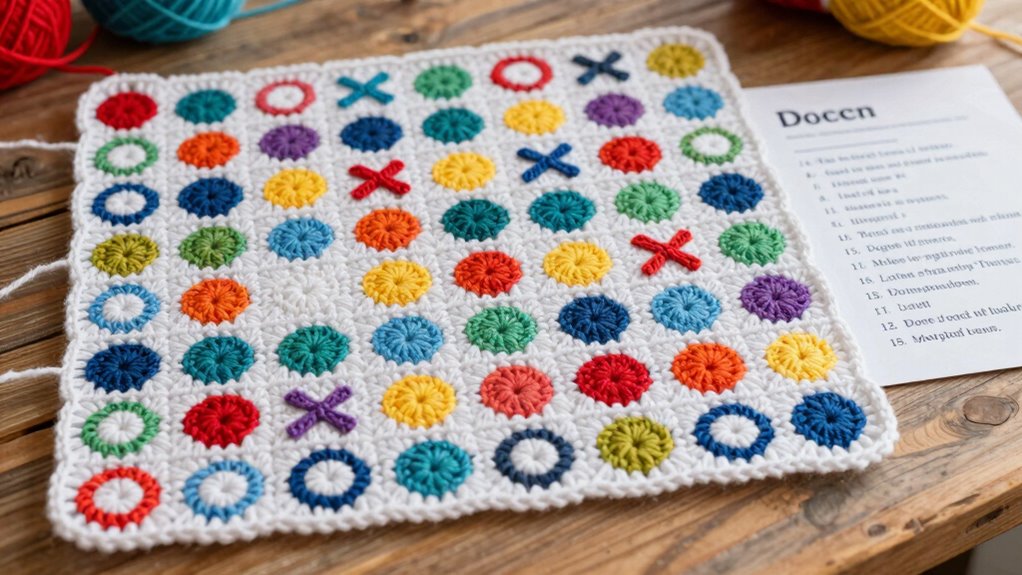
Understanding crochet symbols is key to reading charts efficiently. You’ll recognize common symbols and how they represent different stitches, making patterns clearer. Learning to interpret pattern legends helps you visualize stitch types and follow designs with confidence. Additionally, mastering these symbols is similar to understanding net worth estimates for public figures, which simplifies complex information and makes it more accessible. Recognizing graphical symbols in crochet charts enhances your ability to decode patterns quickly and accurately. Developing familiarity with symbol conventions improves your efficiency and reduces confusion when working through complex motifs. Becoming comfortable with these visual representations can greatly speed up your learning curve and improve your overall crochet experience. Knowing how to interpret these chart symbols allows for greater creativity and precision in your crochet projects.
Common Crochet Symbols
Decoding crochet symbols is essential for interpreting patterns quickly and accurately. Understanding common crochet symbols helps you follow charts effortlessly, connecting the visual language to your work. These symbols have a rich crochet symbol history, evolving from simple markings to a universal language. They often carry cultural symbolism, reflecting the traditions of different regions. Here are some key symbols:
- Chain stitch: small oval or circle
- Single crochet: plus sign or x
- Double crochet: tall T with a slash
- Slip stitch: small dot
Familiarity with these symbols speeds up your crochet projects and deepens your appreciation for the art’s cultural roots. Recognizing their meanings makes reading charts intuitive and accessible, regardless of pattern complexity. Developing a universal crochet language allows for easier sharing and understanding of patterns across different regions and communities. Learning these symbols also enhances your ability to decode complex patterns, making your crochet journey more enjoyable and less confusing.
Reading Pattern Legends
When you look at a crochet pattern, the symbols on the chart can seem confusing at first. That’s where reading pattern legends helps. These legends act as a key, explaining each symbol’s meaning. Many patterns use color coding to differentiate between stitch types or sections, making it easier to follow complex designs. Some legends also include options for symbol customization, allowing you to adapt or modify symbols to suit your preferences or the pattern’s needs. By understanding these legends, you can quickly interpret the symbols without guesswork, ensuring your project stays on track. Taking the time to familiarize yourself with the legend makes reading crochet charts much more manageable and less intimidating. It’s your essential tool for decoding even the most intricate crochet patterns. Additionally, understanding how balanced designs are represented can help you create harmonious and visually appealing projects. Recognizing standard symbols within the legend can streamline your workflow and improve your confidence as you work through different patterns.
Visualizing Stitch Types
Visualizing stitch types is essential to accurately interpreting crochet symbols on charts. To do this effectively, look for clear visual cues like distinct shapes and patterns. Color coding can help you quickly differentiate stitch types, especially when symbols are similar. Keep in mind that some charts use alternative symbols, so familiarize yourself with the legend to avoid confusion. For example:
- Use different colors to distinguish between chain stitches and double crochets
- Recognize that some symbols may vary between patterns, so always check for alternative symbols
- Study the shape and size of symbols to identify specific stitches
- Remember that a legend clarifies all visual cues, making it easier to follow complex patterns
mastering these visual cues boosts your confidence and accuracy in crochet chart reading.
Common Crochet Chart Symbols and Their Meanings

Understanding common crochet chart symbols is essential for following patterns accurately. While many symbols are universal, there are symbol variations influenced by regional differences, which can cause confusion. Familiarizing yourself with these symbols helps prevent mistakes. Additionally, keeping a symbol reference guide handy can streamline your crocheting process. Here’s a quick reference:
| Symbol | Meaning | Notes |
|---|---|---|
| ○ | Chain | Basic starting stitch |
| + | Single crochet | Common in US symbols |
| T | Double crochet | Different regional styles may vary |
Keep in mind, regional differences may alter some symbols, so always check the pattern’s legend. Recognizing these variations regional differences ensures you interpret charts correctly, no matter where you find them. Mastering these symbols makes crocheting from charts straightforward and enjoyable. Being aware of symbol variations helps you adapt to different pattern sources and become a more confident crocheter. Additionally, understanding these common symbols can speed up your learning process and improve your overall crochet skills.
How to Read a Crochet Chart Step-by-Step for Beginners
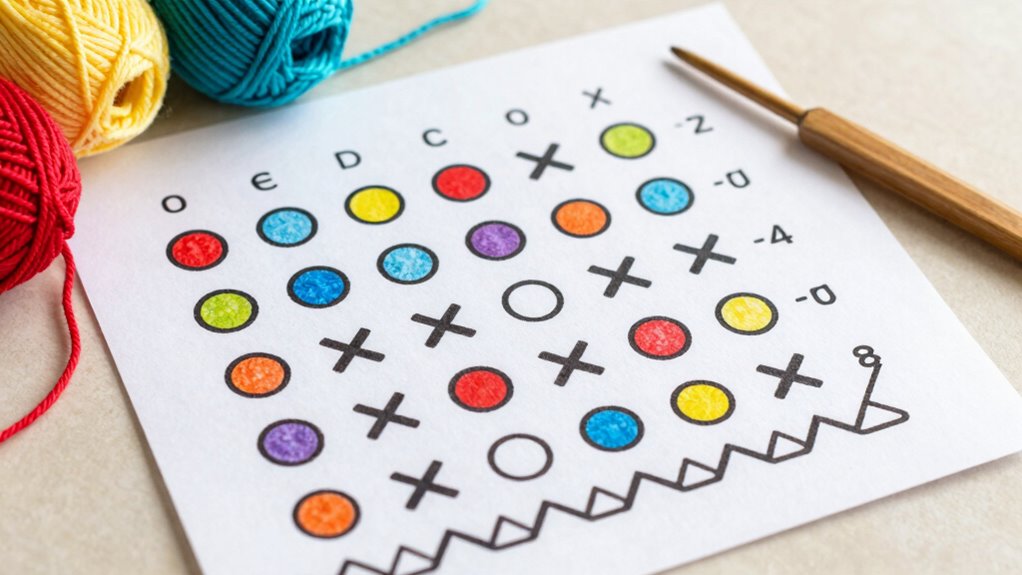
Learning to read a crochet chart might seem challenging at first, but breaking it down step-by-step makes it manageable. Start by understanding the crochet symbol history—knowing the origins helps you see why certain symbols are used. When you look at a chart, keep these steps in mind:
- Identify the starting point, usually marked at the bottom or side.
- Recognize the symbols and their meanings using your legend.
- Follow the stitches row by row, paying attention to direction.
- Keep track of increases, decreases, or special stitches as indicated.
Using a chart offers clear visual guidance, making pattern execution easier and faster. The chart reading benefits include improved accuracy and confidence, especially when you understand the symbols and their placement.
Tips to Memorize and Recognize Crochet Symbols Fast
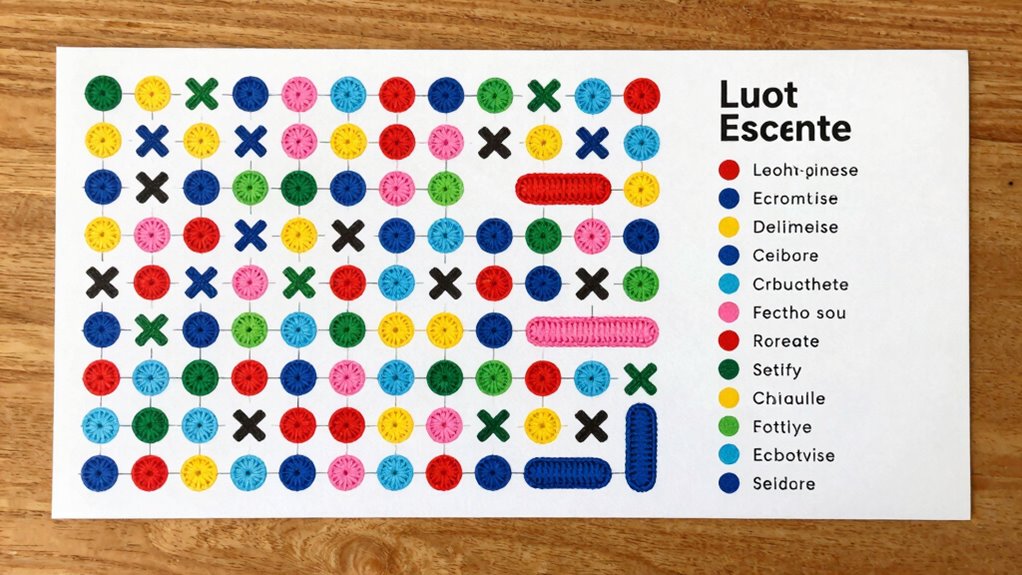
Ever wonder how some crocheters seem to recognize symbols instantly? The secret lies in using simple memory tricks and color coding. Assign specific colors to different stitch types—like blue for double crochets or red for chains—to create visual cues that stick. Practice by matching symbols with their meaning regularly, turning it into a quick game. Break down complex charts into smaller sections and focus on one part at a time. Repetition helps reinforce your memory, making recognition automatic over time. Color coding makes symbols more distinct and easier to remember, especially when you’re learning a new pattern. Incorporating visual aids can further enhance your ability to memorize and recognize crochet symbols quickly. Using visual learning techniques aligned with your pattern reading can boost your skill even more. Developing a consistent practice routine can accelerate your learning process and improve retention. Additionally, understanding the symbol system used in crochet charts can make reading patterns more intuitive. Recognizing common symbol conventions can help you decode unfamiliar charts faster. With regular effort and these tricks, you’ll find yourself reading crochet charts faster and with more confidence.
Troubleshooting: What to Do When a Crochet Chart Looks Confusing?
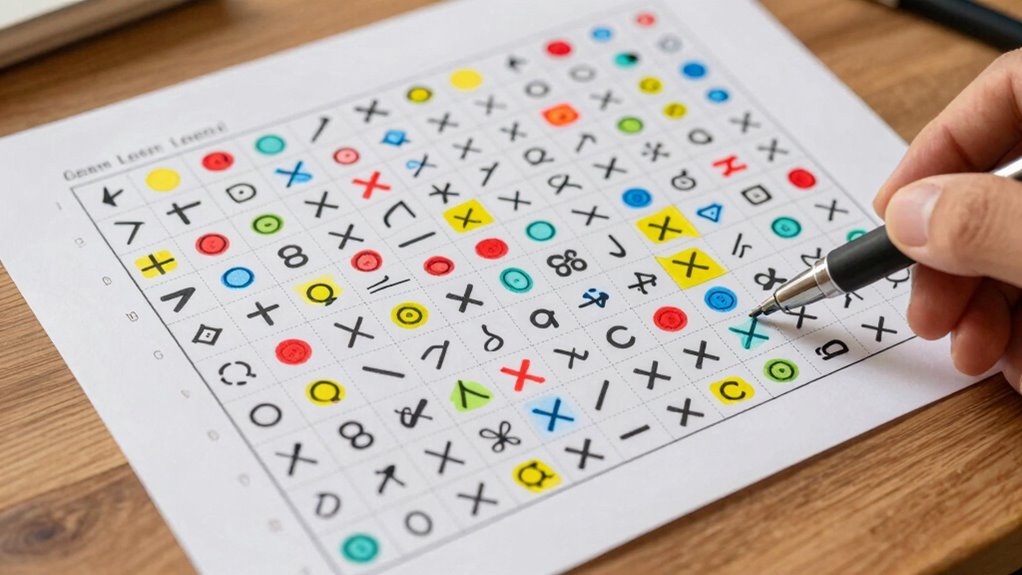
When a crochet chart looks confusing, start by carefully checking the symbols to make certain you understand each one. Next, verify that your stitch count matches the pattern’s requirements to avoid mistakes. If you’re still unsure, consult the pattern’s legend notes for clarification.
Check Chart Symbols Carefully
Have you ever found yourself puzzled by a crochet chart that seems confusing at first glance? The key is to check the chart symbols carefully. Sometimes, different patterns use symbol variations or customize the legend, which can throw you off. To avoid confusion, review these points:
- Confirm that you understand each symbol’s meaning, especially if the pattern has custom legend notes.
- Look for any legend customization that might alter standard symbol interpretations.
- Notice small details like line styles or shading that could change a symbol’s meaning.
- Cross-reference symbols with the pattern instructions if something seems unclear.
Paying close attention to these details ensures you interpret the chart correctly, saving time and frustration. Remember, symbols can vary, so always verify that you’re reading the correct legend for your pattern.
Confirm Stitch Count Accuracy
Double-checking your stitch count is a vital step if a crochet chart looks confusing or doesn’t match your work. Performing stitch count verification helps identify errors early, ensuring pattern accuracy assurance. To do this, count your stitches at regular intervals, especially after completing key sections or rows. Compare your stitch count with the pattern’s instructions or chart indicators. If the counts don’t match, review your work carefully for missed or extra stitches. Correcting these discrepancies early prevents larger issues later. Keep a tally or mark completed sections to stay organized. This simple step saves time and frustration, making your crochet project more enjoyable and accurate. Confirming stitch count accuracy guarantees your work aligns with the chart, giving you confidence in your finished piece. Floating on Water techniques can also be used to find inspiration or relaxation during your crafting process.
Consult Pattern Legend Notes
Ever feel confused by a crochet chart that doesn’t seem to match your pattern? The key is to consult the pattern legend notes. These notes clarify the pattern notation and highlight symbol variation, ensuring you understand each stitch. To troubleshoot effectively:
- Check if the legend explains any unfamiliar symbols or variations.
- Look for notes on special stitches or techniques used in the chart.
- Verify if the pattern notation differs from standard symbols.
- Confirm whether any abbreviations or annotations are clarified in the notes.
Practice Exercises to Improve Your Crochet Chart Reading Skills
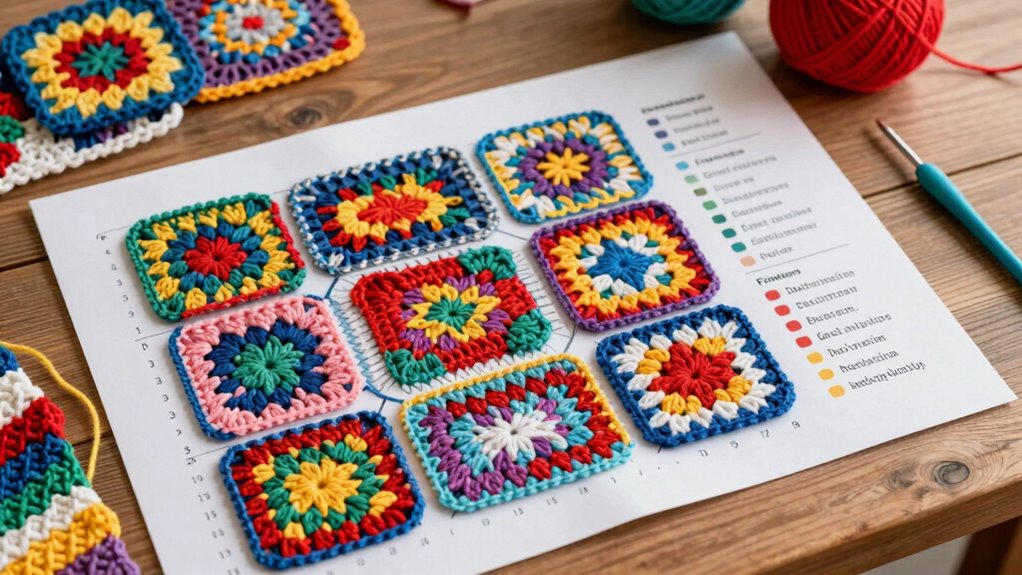
To become confident in reading crochet charts, practicing targeted exercises can make a significant difference. Start with simple patterns, focusing on how color theory influences your visual understanding. Experiment with different yarn selections, paying attention to how colors contrast or blend within the chart. Create exercises that involve decoding symbols while changing yarn colors or textures, which helps reinforce your grasp of the legend. Use color-coded charts to test your ability to follow complex designs, gradually increasing difficulty. Repeating these exercises builds muscle memory and sharpens your interpretation skills. Consistent practice with varied patterns improves your confidence and fluency, making chart reading feel more natural. Additionally, understanding visual perception can enhance your ability to interpret intricate crochet charts more effectively. Incorporating techniques from learning theory can further optimize your practice sessions and accelerate skill development. Developing pattern recognition skills also plays a crucial role in becoming more proficient at decoding charts quickly and accurately.
How to Use the Legend to Personalize and Design Your Own Patterns
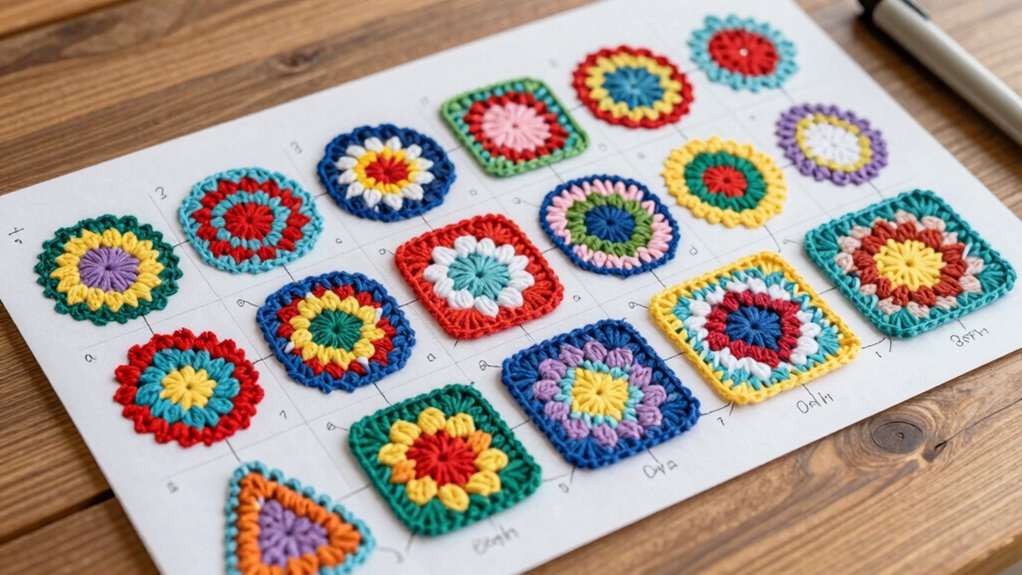
Understanding how to use the legend is essential for personalizing and designing your own crochet patterns. Once you grasp the symbols, you can modify existing patterns or create new motifs that reflect your style. Here are ways to leverage the legend:
- Swap symbols to change stitch types, customizing the texture and look.
- Combine different motifs by understanding specific chart symbols.
- Add your unique touches by integrating new symbols into the legend.
- Experiment with color placements, guided by chart symbols, to make your designs stand out.
Using the legend effectively empowers you to tailor patterns to your preferences, making each project uniquely yours. Whether you’re personalizing patterns or designing motifs from scratch, mastering this tool access endless creative possibilities.
Resources to Learn More About Crochet Chart Symbols

Exploring additional resources can greatly enhance your ability to read and interpret crochet chart symbols accurately. To deepen your understanding, consult guides that explain symbol variations and chart abbreviations used across different patterns. Many online tutorials and printable charts break down common symbols, showing their variations and how they relate to written instructions. Crochet books and pattern collections often include exhaustive symbol legends, making it easier to recognize and interpret unfamiliar signs. Additionally, joining crochet communities or forums allows you to ask questions and see real-world examples of chart symbols in use. By familiarizing yourself with these resources, you’ll become more confident reading charts, understanding different symbol variations, and mastering the nuances of chart abbreviations.
Frequently Asked Questions
How Do I Choose the Right Crochet Chart for My Project?
To choose the right crochet chart for your project, start by considering your skill level and the pattern’s complexity. Look at the color selection to verify it matches your yarn choices and aesthetic. Check the stitch symbols to confirm they include the techniques you’re comfortable with or want to learn. Picking a chart that clearly explains the symbols and uses colors you like will make your project enjoyable and successful.
Can I Convert Written Patterns Into Crochet Charts Easily?
Can you convert written patterns into crochet charts easily? Absolutely! With a little practice in symbol translation, you can turn a written pattern into a visual chart. Focus on pattern conversion by breaking down stitches and translating each instruction into standard symbols. This process helps you visualize your project better and makes complex patterns more manageable. So, give it a try—soon, you’ll be creating charts from your favorite patterns effortlessly!
Are There Digital Tools to Help Read Crochet Charts?
Yes, there are digital tools to help you read crochet charts easily. Many apps feature interactive tutorials that guide you through each symbol, making learning more straightforward. Plus, they often include color-coded legends, so you can quickly understand different stitches and patterns. These tools are perfect for visual learners and can boost your confidence as you follow complex charts, turning frustration into fun.
How Do I Adapt a Chart for Different Yarn Weights?
Sure, adapting a chart for different yarn weights is just a matter of some simple math. When you face yarn weight differences, you’ll want to adapt stitch sizes by adjusting your hook size or gauge. Ironically, a tiny change in hook size can turn a tight, dense fabric into a loose, airy one, making your project perfectly suited to the new yarn. Just remember to tweak your stitches accordingly!
What Are Some Common Mistakes to Avoid When Reading Charts?
When reading charts, avoid symbol misinterpretations by carefully checking the legend for each symbol’s meaning. Don’t overlook legend details, as missing small notes or line types can lead to mistakes. Always double-check your chart before starting, and stay consistent with your interpretation. Taking time to understand every symbol guarantees you follow the pattern accurately, preventing frustration and ensuring your project turns out just as you envisioned.
Conclusion
Once you master the legend, crochet charts become your map through a world of endless creativity. Think of symbols as keys revealing new patterns, each telling a story you can bring to life. With confidence, you’ll navigate stitches like a seasoned explorer, turning abstract lines into beautiful masterpieces. Embrace the symbols, trust your skills, and let your imagination weave magic—your crochet journey is now a clear, exciting adventure waiting to unfold.