When sewing leather, vinyl, and fur, use sharp, heavy-duty needles like leather or jersey needles, and choose strong, durable threads such as polyester or nylon. Equip your machine with special tools like Teflon or roller presser feet to prevent sticking, and consider longer stitch lengths for fluffy fur. Regularly clean and maintain your machine to handle dense materials efficiently. Keep exploring these tips to achieve professional, long-lasting results with tough fabrics.
Key Takeaways
- Use sharp, heavy-duty needles like leather or Teflon-coated for vinyl to ensure clean, precise stitches.
- Select strong, durable threads such as polyester or nylon, and match thread weight to needle size for optimal results.
- Employ specialized presser feet like Teflon or roller feet to prevent sticking and facilitate smooth sewing of dense materials.
- Adjust stitch length to be longer when sewing fur for cleaner seams and better material handling.
- Regularly maintain your machine, including cleaning, oiling, and replacing worn parts, to handle tough materials effectively.
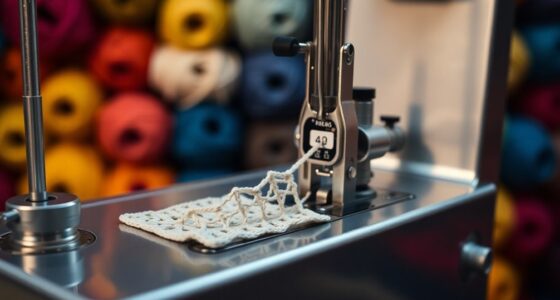
Sewing leather, vinyl, and fur requires specialized techniques and tools to achieve professional results. These materials are tough, thick, and often difficult to manipulate with standard sewing equipment. To get the best outcome, you need to pay close attention to your machine maintenance and thread selection. Proper machine maintenance ensures your machine runs smoothly, reducing the risk of skipped stitches, thread breakage, or needle jams. Regularly clean your machine’s bobbin area and feed dogs, and oil it according to the manufacturer’s instructions. This keeps everything operating efficiently and prevents unnecessary wear and tear, especially when working with dense materials that put extra strain on your sewing machine. Additionally, understanding the contrast ratio of your equipment helps you gauge how well your project will stand out in different lighting conditions and achieve the desired visual effects.
Thread selection is equally critical when sewing leather, vinyl, and fur. You want a strong, durable thread that can withstand the tension and friction these materials create. For leather and heavy vinyl, polyester or nylon threads are ideal because of their strength and flexibility. They resist breaking and won’t easily snap under pressure. When working with fur or delicate surfaces, you might opt for a thinner, high-quality thread to prevent puckering or damage. Using the right thread also involves matching the thread weight to your needle size; thicker threads require larger needles to pass through the dense material smoothly. Always test your thread on scrap pieces first to see how it behaves and to adjust tension settings accordingly.
Your choice of machine needles is just as important as thread selection. Use sharp, heavy-duty needles designed specifically for leather, vinyl, or fur. Leather needles feature a chisel point that easily cuts through tough fibers, reducing skipped stitches. For vinyl, a Teflon or roller foot can help prevent sticking and slipping, which can occur with standard presser feet. When sewing fur, consider using a longer stitch length to prevent bunching and to give the seams a cleaner finish. Keep in mind that different materials require different tension adjustments. Leather and vinyl often need slightly looser tension settings to accommodate their thickness and avoid puckering.
Lastly, remember that machine maintenance doesn’t stop at cleaning and oiling. Regularly check your machine’s belts, feet, and bobbin case for signs of wear, and replace parts as needed. A well-maintained machine combined with the right thread and needles makes sewing leather, vinyl, and fur not only easier but results in a professional, polished look. With these tips, you’ll be better equipped to handle these challenging materials and create durable, attractive projects that stand the test of time.
Frequently Asked Questions
How Do I Prevent Leather From Stretching While Sewing?
To prevent leather from stretching while sewing, you should first check your stitch tension and keep it balanced; too tight or loose can cause distortion. Use fabric stabilizers or interfacing designed for leather to provide extra support and reduce stretching. Additionally, sew slowly and evenly, ensuring you don’t pull or stretch the material as you go. This combination helps keep your leather pieces stable and maintains their shape during sewing.
What Are the Best Needle Types for Thick Vinyl?
For thick vinyl sewing, use heavy-duty needle types like denim or leather needles. These needles have a sharp point and stronger shaft, allowing them to pierce tough materials without skipping stitches. Avoid standard sewing machine needles, as they may break or cause uneven stitching. Opt for size 90/14 or 100/16 needles for ideal results. Proper needle selection is key to achieving smooth, durable stitches in thick vinyl projects.
How Can I Sew Fur Without Damaging the Fibers?
Think of sewing fur as threading a delicate dance—you want to protect the fibers and keep that inviting softness intact. To do this, use a fine needle and slow your stitch speed, preventing fiber damage. Carefully handle the fur, supporting fibers as you sew, and consider using tissue paper or interfacing underneath to safeguard fur fiber protection. This approach preserves tactile softness and ensures your project turns out plush and beautiful.
What Thread Is Most Durable for Leather Projects?
You should use heavy-duty thread like polyester or nylon for leather projects, as they’re the most durable options. These thread types withstand tension and resist wear better than standard threads. When sewing leather, employ strong sewing techniques such as backstitching and using a leather needle to prevent breakage. This combination guarantees your project holds up over time and maintains a professional look, especially with thick or tough leather materials.
How Do I Handle Sewing Curves in Tough Materials?
When sewing curves in tough materials, you should reduce your seam allowances to make turning easier and help achieve a smooth finish. Finish the edges with edge finishing techniques like trimming or using a leather edge beveler to prevent fraying. Take slow, steady stitches along the curve, and use clips or pins to hold the fabric in place. This approach guarantees your seams stay neat and your curves stay precise.
Conclusion
Sewing leather, vinyl, and fur is like maneuvering a rugged mountain trail—you’ll face challenges, but with the right tools and patience, you can conquer each peak. Think of your sewing machine as your trusty mountaineer, equipped to handle tough terrain. Keep your tools sharp and your mindset steady, and you’ll turn these rugged materials into stunning creations. Remember, every tough trail leads to a rewarding summit—your masterpiece.